Showing posts with label novel. Show all posts

Thursday, December 18, 2014

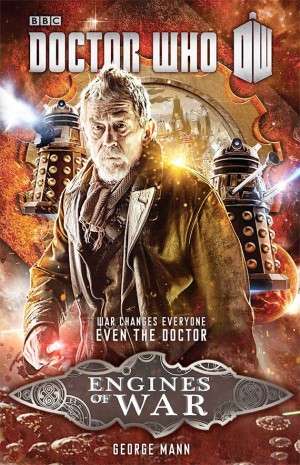
Doctor Who: Engines of War - A Book Review

The Great Time War has raged for centuries and across millenniums. Scores of worlds have been destroyed by the machinations of both The Daleks and The Time Lords. And it is in The Tantalus Eye - a nebula now dominated by Dalek forces - that the Time Lord once known as The Doctor crash-lands after the fleet of Battle TARDISes that he was leading is destroyed.

It is on the world of Moldox that he will meet Cinder - a human Dalek hunter rebelling against the occupying Dalek forces.  This puzzles the Time Lord, as Daleks never use slave labor unless they are building something. But what could they be building on the outskirts of the galactic rim?

The answers will unearth a terrifying secret and send the two warriors from the slums of Moldox to the gleaming towers of Gallifrey and back. For The Daleks are not alone in having secrets. And in order to save billions of lives, an embittered old soldier must become The Doctor once more.


The most regrettable thing about Engines of War is its finality. It spoils little to say that this story is The War Doctor's lead-up into the events of The Day Of The Doctor and we get to see the exact chain of events that lead to him uttering the immortal words 'No More". This does make the climax of the book somewhat predictable, as the exact ending is clearly foreshadowed.

The events leading up to that ending, however, are some of the best writing I've seen in any Doctor Who novel to date.  And George Mann is to be hailed for how much drama he wrings out of what could have been a dry, by-the-book pastiche. Gruff and crusty though he may be, The War Doctor is still a likable hero and Cinder is now on my top-ten companions list.

There's a fair amount of continuity for long-time fans of the series, but nothing newcomers will prove unable to cope with.  Fans of the classic series will no doubt enjoy the references to The Five Doctors and The Deadly Assassin. And if nothing else this book is noteworthy for confirming that the Rassilon we see in The End of Time is indeed THAT Rassilon and that the depravity he got up to behind closed doors was even worse than the plans he discussed openly.

Bottom Line: If you're a Doctor Who fan of any age or era, you should check out Engines of War.

Saturday, August 2, 2014

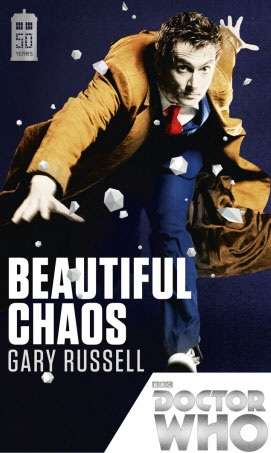
Doctor Who: Beautiful Chaos - A Book Review

Wilfred Mott is having a good week.  His beloved granddaughter Donna Noble has returned home from her travels with The Doctor for a quick visit.  More, the amateur astronomer has discovered a new star and is being honored with a dinner at the Royal Planetary Society, where the star will be officially named after him!  It almost makes the fights that are sure to spring up between Donna and his daughter Sylvia worth it.

The Doctor doesn't "do domestic" but he's all too eager to attend the dinner as Wilf's guest - if only to get away from Sylvia (who does NOT approve of her daughter running around with this Doctor fellow) for a few hours.  But The Doctor soon discovers that Wilf's new star is but one of several new stars suddenly lightning up the skies of Earth.  And what this means is that an old enemy has returned - an ancient force from The Dark Times who seeks revenge against The Doctor and all of humanity!


There is little I can say about how wonderful Beautiful Chaos is that is not already said in the book's introduction.  Actor Bernard Cribbins - who played Wilfred Mott and read the audiobook - is said to have thought the novel to have been written by Russel T. Davies under a pen-name because it did such a grand job of capturing the characters from the show.  High praise indeed!

Russell T. Davies himself said he found the story of Beautiful Chaos so touching it moved him to tears.  Writer Gary Russell may doubt RTD's sincerity on that point but what nobody can deny is that Davies apparently liked Wilfred Mott's lady-friend Henrietta "Netty" Goodheart enough to give her a mention in the final Tenth Doctor story The End Of Time - an honor I don't believe has ever been accorded to any character introduced in the Doctor Who novels!

It is Wilfred's relationship with Netty that is the core of this book.  Netty has Alzheimer's Disease and her bad days are beginning to outnumber the good ones, though Wilfred enjoys her company enough to muddle through things.  Theirs is a muted romance, with neither of them truly willing to push for a stronger commitment given the tragic ending they both know is coming.

Their relationship adds a welcome note of humanity to the tale, which would be a perfectly serviceable Doctor Who story without it.  Fans of the classic series will likely figure out the identity of the villain long before The Doctor thanks to Russell's masterful foreshadowing.  Fan of the new series will be glad to see The Doctor, Donna and Wilf captured in all their glory and the whole story acts as a welcome coda to Wilfred Mott's story in The End of Time.

Bottom Line: This book is a must read for all Whovians, great and small, classic and new, young and old.

Monday, April 21, 2014

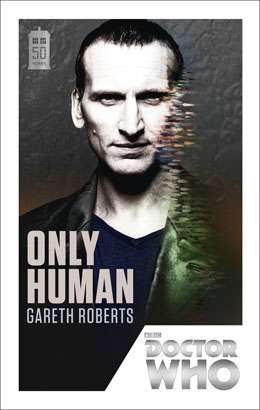
Doctor Who: Only Human - A Book Review

When the TARDIS' disturbance alarm goes off, The Doctor is quick to investigate.  With Rose Tyler and Captain Jack Harkness in tow, The Doctor travels to modern day London, where a young Neanderthal man named Das has suddenly appeared some twenty-eight thousand years after humanity wiped out his species.  Unfortunately, due to the cheap and nasty method of time travel responsible, The Doctor cannot take Das home since he is so chronologically unstable that another trip through time will vaporize him.

As Captain Jack sets about the difficult task of acclimating Das to the culture of the early 21st century, The Doctor and Rose follow the trail back to the dawn of humanity.  It is there they find a hidden colony of humans - all of them with movie-star good looks and glazed, emotionless expressions.  They also find Chantal Osterberg, whose plans for humanity can't be properly called "mad" as she has eradicated madness along with all of the other deviant mental states, such as depression, anger and unhappiness.

Can our heroes save the human race from extinction?  Yes, but not unless The Doctor becomes the God of the Horses, Rose introduces manicures to humanity several thousand years early and Captain Jack manages to explain that Mrs. Slocombe from Are You Being Served is not real to a crisp-addicted caveman.


Gareth Roberts has fast become one of my favorite Doctor Who writers, not only for his wit but for his versatility.  Even if you don't enjoy the multiple media of Doctor Who, you've likely chuckled at his work in episodes such as The Shakespeare Code and The Unicorn and The Wasp.  He's written novels, audio plays, a stage-play and comics as well as episodes of the show and proven equally capable of writing in all mediums skillfully.

Reading Only Human, one wishes that Roberts had been on the writing team for Series One.  This would have been a great story to see adapted into a shooting script.  Roberts does a grand job of capturing the essence of the characters and one wishes we could have seen Christopher Eccleston trying to be sarcastic towards a villain who has chemically removed his ability to be sarcastic.

Despite that, I can't help but think perhaps it is best that this story stayed a novel, as the greatest moments of the book involve elements that would not translate well to other media.  For example, rather than writing out the action of Jack and Das' misadventures in modern London, Roberts' relates these events to us through the personal diaries of both men.  Roberts also avoids the easy jokes one might expect from a film like Encino Man and derives just as much humor from Jack's frustration at being stuck in such a primitive (from his perspective) and boring point in time as he does from Das' failure to grasp basic concepts such as lying and fiction.  One wonders how much of this sequence and the base idea of a time-traveler trying to acclimate to an ordinary existence inspired Roberts' later work on The Lodger.

If this book has a flaw, it is that the character moments and comedy are far more riveting than the actual plot.  The story is fairly standard stuff for Doctor Who and the villain is ultimately a bargain basement Davros.  But readers are likely to forgive this since Roberts disguises the drab plot with such glorious moments as Captain Jack streaking to provide "one of the biggest distractions you'll ever see", the swear-filter on the TARDIS translator causing a group of primeval humans to sound like the cast of EastEnders and the revelation that psychic paper also works on animals.

Bottom Line: Only Human perfectly captures the feeling of a Ninth Doctor era story.  If you like New Who, you'll love it.

Friday, April 18, 2014

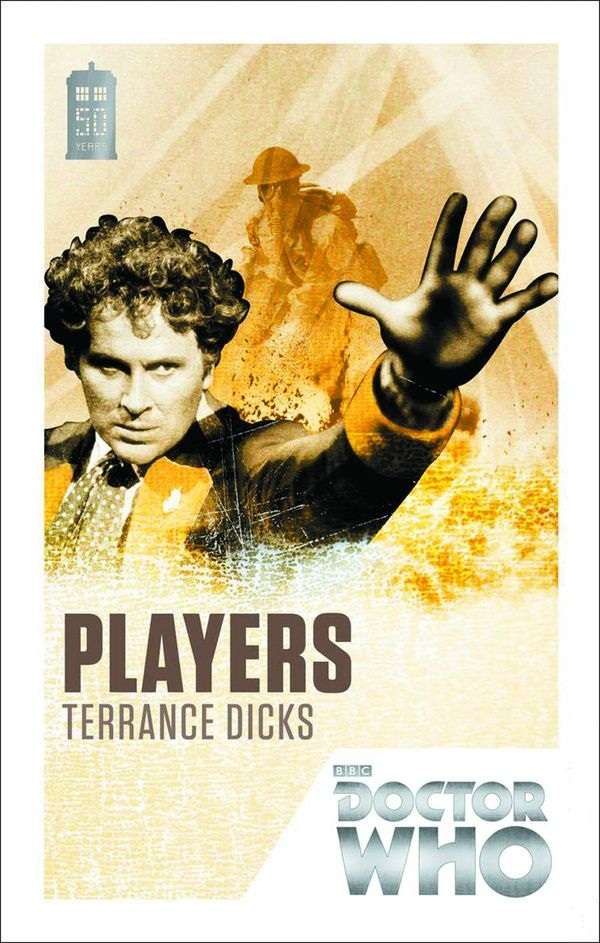
Doctor Who: Players - A Book Review

1915.  Major Winston Churchill is attacked by renegades in No Man's Land.  After the death of his driver and bodyguard, The Major thinks he's found salvation twice - once when he is rescued by a funny little man named Dr. John Smith and once again when they find a nearby chateau at which to take refuge.  Pity the chateau is owned by hostile nobles ready to hand Major Churchill over to The Kaiser!

1899.  The height of the Boer War.  A young war correspondent named Winston Churchill is on a military patrol stopped by a rockslide on the train tracks.  It seems a routine delay until a sniper in the hills tries to take-out the young writer.  Only the timely arrival of The Doctor and his companion Peri Brown saves Churchill's life, though it also sees the three of them locked away in a South African prison...

His interest piqued after recalling the tale of how his second incarnation met Winston Churchill, The Doctor concludes that some unseen player is trying to kill the great leader at a young age to alter the course of history.  With Peri Brown in tow, The Doctor journeys to 1936 at the height of The Abdication Crisis and assumes the identity of Ambassador John Smith.  It will take all of The Doctor's cunning to ensure Winston Churchill's survival as well as his own, as unseen hands pave the path for an alliance between the empire of King Edward VIII and Adolph Hitler!  


I've heard a number of criticisms leveled at Terrance Dicks as a writer.  He's incredibly dull.  He writes women badly and depends too heavily on rape threats and cliched peril whenever a female companion gets captured.  He writes every Doctor exactly the same, regardless of incarnation.  I've even heard differing opinions that he depends too much on the continuity of the show in his writing and that he ignores it completely!

None of those complaints seem evident to me in Players, though it must be admitted that the concept of some unknown figure meddling with the time-stream is perhaps the closest thing to a stock-plot one can find in Doctor Who.  The titular Players, however, are unique in that they seem to have no motivation past seeing what changes they can cause through the most simple and basic of manipulations.  True, this is reminiscent of The Meddling Monk, but his schemes were not so subtle as what we see the Players attempt.

I don't think the female characters are treated badly at all in this story. Indeed, I thought Peri better acquitted herself as a companion in this story than she ever did in any of the episodes  where she was paired up with The Sixth Doctor.  No bouncy California girls in this story.  This is the Peri who starred down The Master and told him that she could shout just as loud as he could!  

Terrance isn't as overly-demonstrative in his depiction of the various quirks of different versions of The Doctor as some writers.  Yet I do think Dicks does a fair job of putting a few fine details in the text, here and there.  For instance, his Second Doctor rubs his hands together when he is working out a problem and responds to veiled threats from villainous captors with a polite, clownish enthusiasm that belies his strong mind.  And his Sixth Doctor has a fondness for bad puns, a snarky wit and a habit of playing at pretending he is someone he isn't.

Dicks does lean heavily on the continuity of the show but not at the expense of the story.  The 1915 flashback scene is based on Dicks' story The War Games but no familiarity with that episode is required to enjoy the sequence.  More often than not these references are just in-jokes to amuse the devout fan or, failing that, Dicks himself.  One of the better ones involves Pinkerton detective Tom Dekker (a character from Dicks' novel Blood Harvest) who notes that he once knew a Doc Smith who hung out with a girl named Ace back in Chicago. When Peri asks if there's a chance that might be a future incarnation, The Doctor bristles and says that he doubts his future includes "being a 'funny little guy' running a speakeasy in Chicago during Prohibition!'

The most amazing aspect of this story is that Dicks does a fair job of making as educational as it is thrilling.  As an American, I'm largely unfamiliar with Winston Churchill's life before the second World War.  Dicks plays up the adventurous aspects of Churchill's youth, going out of his way to tie The Doctor into real events such as Churchill's escape from a Boer prison in 1899.  It must be said that the exposition The Doctor must recite doesn't seem quite so forced as Peri, being an American, is as equally unfamiliar with The Boer War and The Abdication Crisis as the average American reader.  Dicks also does an effective job of playing off the real-world events and playing up how very fortunate we were not to have wound up with an English King who was friendly to the Nazi regime.

Bottom Line: Players is a grand game from start to finish.  Highly recommended for all Doctor Who fans.

Monday, April 7, 2014

Midkemia: The Chronicles of Pug - A Review

Last year, Raymond E. Feist brought his Riftwar Cycle to a close with Magician's End.  In my review of that work, I noted that the book was disappointing only in being the final tale in a grand saga I first started reading as a teenager and that its only flaws lay in it not quite covering every detail of that saga in its final summation.  By contrast, Midkemia: The Chronicles of Pug is a disappointment on nearly every front.

Co-authored with Stephen Abrams (the game-master who created much of the world of Midkemia for a home-brewed RPG campaign that Feist later utilized for his books), I would like to say that the book tries too hard to be too much.  I would LIKE to say that but the truth is that - as with many of Feist's later novels - it feels like the bare minimum of effort was put into this book's creation.

It is true that this book attempts to be both an atlas and travel guide for the world of Midkemia as well as a history of the world as seen through the eyes of the sorcerer Pug of Crydee.  But the flaws with this book have nothing to do with it overreaching its goal and everything to do with sloppy editing.


A prime example of this slapdash editing can be found in the List of Characters at the start of the book.  For some strange reason, a listing is given for a son of Arutha conDoin who never existed (Lyam II) and the name of one of the most prominent heroes in the series - Erik von Darkmoor - is mispelled Eiek von Darkmoor.  A more disturbing problem is that few of Feist's female protagonists are mentioned in this list of important characters, particularly heroines from his later novels like Sandreena the Knight of Dala and the spymaster Lady Francizeka.  Yet both of these heroines are notable enough to have pictures devoted towards them... though Francizeka's name is misspelled Franziska!

I could go on at length about the number of continuity errors and spelling mistakes in the text and how the maps themselves are inaccurate. One map, for instance, depicts the city of Port Vykor (or Port Vikor, depending on which map you look at) as existing some fifty years before it was founded.  Another map is said to be a gift from Earl Vandros who was, at the time that map was said to have been made, a Duke.

Even Pug's recounting of his own life is filled with errors to a degree that cannot be written off as the fault of memory over the years or Pug being an unreliable narrator.  Indeed, Feist plays with this concept a bit, starting chapters with Pug chiding himself for not discussing some detail in the previous chapter which he really should have mentioned before.  Feist further expands these sections with notes by Pug's son Magnus, who adds his own thoughts on his father's state of mind at the time each chapter was written.

The most vexing thing about this narrative is that Pug avoids offering any personal insights into many of the events he discusses and writes, to borrow a phrase from the first Raymond E. Feist novel I ever read, "with all the passion of a scribe doing year-end tax tallies."  He avoids discussing personal matters in his recanting of the history of his world, leaving Magnus to chime in about how certain events occurred after certain characters died and how upset he recalls his father being at those times.

The aforementioned artwork of the book is another sore point.  Described on the dust jacket as "thirty pieces of specially commissioned artwork that bring key moments in the Chaoswar Saga to vivid life", the artwork is comprised of a series of poorly Photoshopped images of actors in Renn Fest clothing inserted into generic fantasy backgrounds.  One wishes they had used Smithmicro Poser or a similar program instead of live actors so there would be a chance of the characters matching their descriptions in the book.

For instance, here is the sole image we have for the sorcerer Macros The Black, described within Pug's recollection in this book as "... grey-haired at the temples with otherwise long, dark locks... with deep, dark eyes as he held a sturdy oak staff."
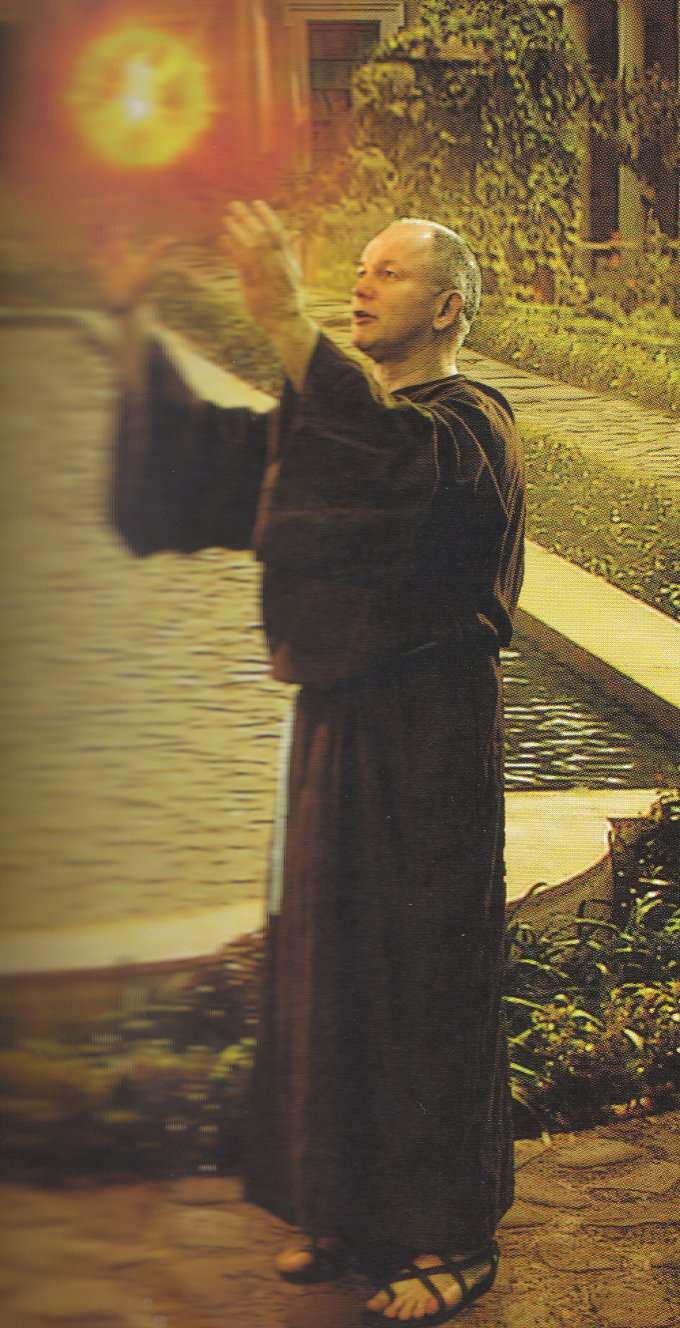

No long locks.  No oak staff.  And those familiar with this scene in Magician will recall that Macros never worked overt magic during the scene depicted.  The other images are similarly confounding, with a generic mountain-based castle being given as an example of the fortress city of Amengar from A Darkness At Sethanon and the one scene depicting a dark elf showing a ebony-skinned, white-haired figure like Drizzt Do'Urden when Feist's "mordehel" look just like their pale-skinned, good-hearted "eldehel" cousins but with mad eyes.  The selection of scenes depicted defies logic as well, favoring landscape depictions of certain areas rather than action-filled close-ups.

The only thing that redeems this book is when Feist and Abrams cease giving us the Cliff Notes version of The Riftwar Legacy and let loose details of other stories we did not see in the earlier novels.  Chief among these are an opening section where Pug talks about his life before the events of the first novel and a later one where he discusses the events that were going to make up Feist's unwritten novel Return Of The Buccaneer.  There are also some sections where Pug breaks his narrative to turn the history over to figures who were there for events he did not participate in, such as Admiral Amos Trask's recounting of the events of The King's Buccaneer.

In the end, there is little to recommend Midkemia: The Chronicles of Pug to even the most devout fans of Feist's work.  The chronicles themselves offer no new insights on the series and there is very little information on the lands depicted in the maps of the atlas.  Throw in some poor artwork and poorer editing and I have no qualms about saying you should pick this book up at the library rather than purchasing it for yourself, if you truly must see it for yourself.

Monday, March 31, 2014

Raising Steam - A Book Review

The basic principles of steam having power enough to move things are well known to anyone who ever had the lid blow off of a boiling kettle.  But no one on The Discworld had ever thought of trying to harness such power.  Nobody, that is, except for a canny lad by the name of Dick Simnel, who dreams of steam-powered engines and a brave new world.

Unfortunately, there are many in the cowardly old world who take to change as readily as a duck takes to lava.  And even The Patrician of Ankh-Morpork, while not the sort of tyrant to stand in the way of progress, is likewise not the sort of tyrant to allow the status quo to be altered without certain assurances.  Or, at the very least, a suitable amount of taxable revenue.

Enter Moist Von Lipwig - Master of Ankh-Morpork's Post Office, Mint, Royal Bank and Vetinari's top scoundrel.  Moist is all too eager to throw himself into the exciting new business of organizing everything springing up around Simnel's Iron Girder... especially once Vetinari makes it clear that the alternative involves being thrown to the kittens.  Of course Moist is a firm believer that a life without danger is not worth living and he'll find danger aplenty apart from his execution-minded employer trying to keep this new "rail-way" on-track.


Raising Steam - despite nominally being about the discovery of steam-power on the Discworld and the joy of trains - is perhaps the most topical book Sir Terry Pratchett has ever written. No stranger to tackling controversial issues, Pratchett's previous works have explored such heavy topics such as gun control (Men At Arms), the role of women in the military (Monstrous Regiment) the perils of mindless nationalism in a time of war (Jingo) and the battle between organized religion and spirituality (Small Gods).  Even Pratchett's earlier works, more concerned with parodying the cliches of fantasy than in satirizing modern life, took a serious look at sexism and racism.

Raising Steam does not content itself with one topical issue, tackling a whole host of societal ills as the story progresses.   Change vs. Tradition.  Urbanization vs. Ruralization.  Misogyny vs Feminism.  There's even a bit that could be seen as a parable for Transsexual Rights!

Why so much societal commentary?  Maybe the master satirist has become more thoughtful after thirty years of writing?  Or perhaps his diagnosis with Alzheimer's Disease back has spurred Pratchett into action, rushing to get all his serious thoughts out into the world while he is still capable of articulating them?

Whatever the case, it must be said that while Pratchett does tread some new ground with this story, there's a lot of rehashing as well.  There are a lot of bits with various characters realizing that It Is Wrong To Judge Someone By The Color Of Their Skin in relation to their dealings with goblins, who have quickly (i.e. since the end of the last Discworld novel, Snuff) achieved a valued position in Ankh-Morporkian society by proving their worth as telegraph operators.

To Pratchett's credit, this is all written in a fairly broad manner.  Indeed, the villains of the piece - the dwarvish priest/scholars know as grags, who hate everything that might be considered undwarvish - could be compared to any number of real-world organizations from religious fundamentalists to Luddites.  Pratchett preaches not against any one group but against the attitude that all which is new or unknown should immediately be regarded with scorn.

Still, the fact that Pratchett has to preach at all is worrisome.  And the sad fact is that while previous Discworld books have made me laugh so hard I had to put the book down for a moment, I did not laugh-out-loud once while reading Raising Steam.  There are witty lines and puns aplenty but not as much high-level hilarity as in times past.

Does this mean that the book isn't worth reading?  Not on your life!  It is different, yes, but it is not bad.  If nothing else, Pratchett deserves credit for trying to examine how something so revolutionary as steam-power would change nearly every aspect of life on the Discworld and trying to bring as many of his cast of characters into play, however briefly. I should like to have seen The Librarian get a chance at driving the train but I can content myself with the footnote where Rincewind - despite spending his first train ride hiding under the seat - eventually concedes the value the rail way could offer someone seeking to run away from something very quickly.  

In the end, Raising Steam is not a great Discworld novel but it is a good book. Even the worst Discworld books are still good reads.  And while there's little that might make a reader laugh boisterously, there is still much that will make them smile.


Monday, March 24, 2014

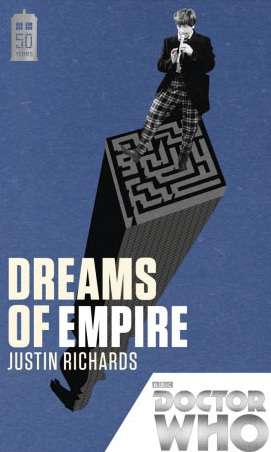
Doctor Who: Dreams Of Empire - A Book Review


The once-great Haddron Republic stands on a knife's edge.  A civil war has shaken the government to the breaking point, with Consul General Kesar having tried - and failed - to lead a military revolution that would have made him Emperor.  His fellow Consuls - both close friends since childhood - elected to see Kesar exiled rather than executed, thinking their friend more dangerous as a martyr than as a prisoner.

Now confined to the distant asteroid of Santespri, Kesar himself is hidden away behind an iron mask and special life-supporting armor.  This was, it was said, a necessary step following Kesar's disfigurement and near-fatal wounding following an assassination attempt after his sentencing.  Yet there are those who share Kesar's Dreams of Empire and believe that though he is wounded and weakened, Kesar is still the only man capable of restoring the glory days of the Republic.

It is into this conflict that The Doctor and his companions Jamie and Victoria wander, arriving on Santespri on the same day that Kesar's old friend and military opponent Consul Trayx has come to inspect the facility.  Questions arise immediately, as the crew of the TARDIS uncover a dead body in the heart of the heavily secured facility.  And far above them all, a silent ship approaches the prison with an unknown crew and unknown goals...


Your opinion of Dreams of Empire may depend upon how you feel about adherence to certain tropes in Classic Doctor Who.  It is fair to say that author Justin Richards succeeded in capturing the feeling of a classic Second Doctor story.  Unfortunately the story he chose to emulate was not a particularly memorable one, the action of this story being centered upon yet another Base Under Siege.

That said, Richards has a number of good ideas that do dress up the standard plot.  The basic conceit of the story, as Richards explains in his introduction, came from him wondering what might have happened had Julius Cesar not ridden a wave of popularity onto the Emperor's Throne.  Hence the Roman Empire becomes the Haddron Republic, the Legionaries are replaced with kill-bots and all the other names and dates are filed off.  Thrown in a bit of The Man In The Iron Mask ala Darth Vader and a metric ton of chess metaphors and you have yourself a Doctor Who story!

This works much better than it should because Richards takes the time to develop Kesar, Trayx and the rest of the supporting cast as individuals before introducing The Doctor and his companions into the mix.  It is a small thing but it does help to increase the reader's interest.  It also helps that Trayx, in defiance of every other trope regarding military leaders in a Doctor Who story, is a competent, intelligent man who is not ready to shoot first and ask questions later when three oddly-dressed civilians appear in the middle of his prison at the same time a guard turns up dead.

This, ironically, is the book's greatest problem - the supporting cast are much more interesting and proactive than The Doctor and his companions!  It is clear that Richards had great fun thinking up these characters and there is a good deal of human interest - from the subplot involving Trayx's wife and her dark secret to the forbidden romance between Kesar loyalist Haden and Republican soldier Darlking.   It's a shame then that he gives Victoria and Jamie so little to do as the story progresses and even The Doctor is largely passive for the majority of the book.

Then again, while this is aggravating from a writer's perspective, it is also indicative of the Doctor Who stories of the era.  Victoria was always one of the more passive, scream-prone female companions and Jamie - even at his best - has rarely been utilized anything other than dumb muscle, existing only to do The Doctor's heavy lifting and to give him someone to be talked at when things need explaining.  Allowing for those limits, Richards does perfectly capture the voices of both characters and he does a particularly fine job of capturing the essence of Patrick Troughton's "cosmic hobo" antics.

Bottom Line: If you're a Second Doctor fan, you'll love it.  Everyone else will probably like it too, if they can suffer through Victoria's constant screaming and Jamie's constant grumbling while everyone else gets on with the plot.

Sunday, February 2, 2014

Doctor Who: Ten Little Aliens - A Book Review

Deep in the heart of a hollowed-out asteroid, The Doctor and his companions - socialite Polly Wright and sailor Ben Jackson - stumble into the middle of a military exercise.  More, they stumble across a mystery - ten alien corpses, belonging to the most wanted anti-human terrorists of the era. 

Their discovery could help end the war between the Earth empire and the enemy Schirr... if only they can survive.  For whatever killed the Schirr terrorists is still lurking in the tunnels around them.  And the asteroid itself is moving toward the home world of another hostile group of aliens with sinister plans for the human race...


When I read the introduction to Ten Little Aliens, I began to dread reading further.  According to author Stephen Cole, his original pitch for this book was summed up, rather neatly, as "Starship Troopers meets Agatha Christie".  For someone like me who loathes militaristic science fiction in general (Heinlein in particular) and is generally indifferent to the parlor mystery genre, there is little - save the phrase "Written by Stephenie Meyer" - to turn me away from a work of fiction faster.

Apart from my desire to read all of the Doctor Who 50th Anniversary Collection of novels, only one thing kept me going - the fact that the companions in attendance for this tale were Polly and Ben.  I've found the two of them oddly compelling ever since I saw The War Machines and was saddened to discover that most of the episodes featuring the young couple were lost in time along with much of the rest of the later First Doctor stories and early Second Doctor stories.

Thankfully, Stephen Cole does a fine job of capturing the character's voices and not descending into cliches.  There is a tendency in some Classic Who stories for the male companions to be dumb muscle that exist only to protect The Doctor from physical threats as the female companions' only purpose is to scream at the monsters and be rescued.  While Polly and Ben do fill these roles somewhat, they also go beyond simple stock characters.  At first Polly seems to be a girly girl whose chief moment of excitement in exploring an alien world involves her discovery that The TARDIS has a number of space suits in designer colors but she is shown to be an intelligent and resourceful young woman as well as a fashionista.  Similarly, Ben fits the scrapper profile save for the fact that he is of below-average stature and is determined to prove that he can make up in heart what he lacks in height.

Shockingly, Cole's script also manages to avoid cliches in other regards.  Admittedly, the first fifth of this book reads like a dreadful Starship Troopers fanfic overlapped with a slow Doctor Who episode.  There's even a roster of the soldiers, complete with faux-patriotic quotes about this universe's equivalent of the bugs - a necessary evil, as you'll have a hard time telling the soldiers apart at first without it.  And, of course, we have the requisite scenes of the soldiers not trusting The Doctor and company but gradually coming to release that We Are All In This Together.

However, things start moving beautifully once the danger is established and the soldiers begin splitting up to figure out just what is going on.  By the time the third act begins, the reader will be well and truly involved in the action of the piece.  It is here that Stephen Cole adds yet another literary device into the mix - a Choose Your Own Adventure style section of the book, where the reader jumps between the viewpoints of multiple characters and sees the action through their eyes as multiple events occur simultaneously. 

This gimmick works far better than it has any right to, which is a fair statement about this book in general.  It combines two sub-genres driven by cliches that have no business being mixed.  And yet it works.  It all works.  Somehow, in defiance of all logic, this book works.  As such, its well worth slogging through the slow start to get to the excitement at the end.   

Thursday, January 23, 2014

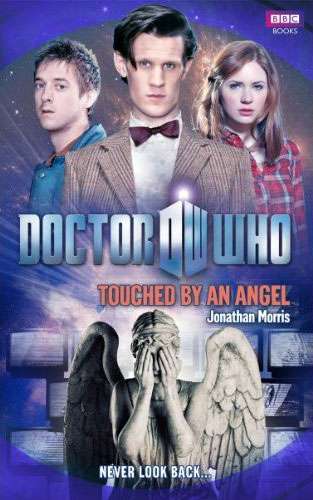
Doctor Who: Touched By An Angel - A Book Review

In 2003, Rebecca Whitaker died in a traffic accident.  Eight years later, her husband Mark is still grieving and unable to move on with his life.  Then one day he receives a battered old envelope.  An envelope that is addressed to him in his own handwriting!

He has a chance encounter with The Doctor and The Ponds before he has the chance to open it.  The Doctor says that Mark has somehow gained the attention of something called a Weeping Angel.  This means little to Mark until he is touched by a scary statue and suddenly finds himself back in 1994.  It is here that Mark opens the envelope and finds several thousand pounds in cash as well as a numbered list - also in his own handwriting - of things he must be sure to do over the next decade. 

Once he's tracked Mark down again, The Doctor begrudgingly agrees to let Mark remain in the past since the consequences of him not following the instructions on the list could be even more dangerous than not returning Mark to 2003.  But what the The Doctor doesn't know - because the list told Mark not to show it to anyone else - is that the instructions from Mark's future self ended with a simple message.

"You can save her.   Just as I did."


I greatly enjoyed Johnathan Morris' Festival of Death so I thought I might give one of his other Doctor Who novels a try.  I'm glad I did, because Touched By An Angel is easily the equal of Festival of Death in quality.  Indeed, in some respects it is even better thanks to three elements - the clever use of The Weeping Angels, the humor and the wonderful supporting cast.


Morris introduces a new wrinkle to The Weeping Angels with this story - the idea that there are different species of Angel that feed on different sorts of energies.  In this case, the Weeping Angels in this story grow stronger by absorbing the energy generated by paradoxes.  This adds a whole new wrinkle to the usual Weeping Angels story, as The Doctor and The Ponds have to not only avoid turning their backs on The Angels but also in preventing Mark from accidentally altering his own time line and "ringing the dinner gong".

One of the aspects I enjoy most about Morris' writing is his use of humor.  In Festival of Death, he did a fair job of aping the style and cadence of Douglas Adams.  There is very little of that in Touched By An Angel but there are still some funny farcical moments.  The best of these involves an increasingly annoyed Doctor finding himself accidentally interfering with Mark and Rebecca's wedding day while trying to avert a paradox yet slowly digging himself in deeper the more he tries not to get involved. 

What really sells this story, however, is the wonderful supporting cast.  We see all of Rebecca and Mark's relationship play out over the years and Morris does a great job in making us care about them as people.  Indeed, the reader will sympathize with Mark's dilemma and the increasingly destructive actions he takes as he gets closer to his chance to save the woman he loves, in spite of the damage he might cause.  As Rory notes at one point, he'd be doing the exact same thing if he were in Mark's place.

If this novel has a weak spot, it is that Amy - like in many of the Series Six stories - has very little to do.  There's little sign of the Scottish spitfire we're used to, apart from Amy's scorning The Doctor's suggestion that she should do what her husband says when Rory pleads caution.  Still, Rory is in fine form, kvetching as he winds up spending a good deal of the story waiting on Amy and The Doctor (as usual) and you'll likely hear Matt Smith's voice as you read The Doctor's dialogue.

Bottom Line: If you like good Doctor Who stories, you'll love Touched By An Angel

Thursday, January 9, 2014

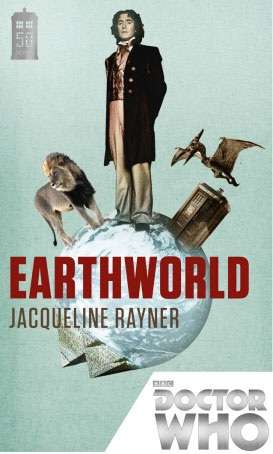
Doctor Who: EarthWorld - A Book Review

Anji Kapoor has just had the worst week of her life, having lost her boyfriend Dave to alien invaders. 

This week is not looking any better.

Trapped on board the TARDIS, The Doctor was trying to get Anji home.  The problem is The Doctor isn't feeling quite himself and is incapable of operating his sonic screwdriver much less piloting the TARDIS.  Fitz, The Doctor's companion, is in a similarly useless state of mind. 

Perhaps this is why they wind up somewhere far away from Anji's office in modern London.  Someplace with robot dinosaurs, poorly researched exhibits inspired by "real Earth history", a trio of psychotic preteen princesses running the show and a group of teenage terrorists trying to shut the thing down.  Only one thing is certain - Anji will never complain about reporting to her office on Monday morning again!  Assuming she lives...


One wonders if they could have chosen a more accessible Eighth Doctor story for inclusion in this collection.  EarthWorld is not a bad story but it is largely dependent upon the reader being familiar with a number of earlier stories.  Writer Jacqueline Rayner gamely tries to explain things in both the introduction to this reprint volume and throughout the novel, yet it is still too much for a neophyte Whovian to cope with.

Anji is perhaps the best example of this.  Rayner makes use of a neat literary device by having Anji write e-mails to her deceased Dave in the midst of all the chaos that is occurring around her.  While this does an effective job of building sympathy for Anj and giving the reader insight into her mind, it gives the reader surprisingly little detail about Dave and the circumstances of his death, presuming the reader has already read the previous novels in the series.

The subplot involving The Doctor's other companion Fitz suffers from similar problems.  Without giving too much of the game away, Fitz undergoes an identity crisis that mirrors The Doctor's current troubles with amnesia while simultaneously conflicting with them.  Whereas The Doctor cannot remember, Fitz cannot forget.  Of the two companions, Fitz's conflict is definitely the more interesting and his plight is a more sympathetic one.  Yet Fitz's problems are even more dependent on an encyclopedic knowledge of Fitz's actions in the stories leading up to this one!

Thankfully, the final execution rises far above the rote plot.  The story moves at a brisk pace, managing to reach the conclusion before the reader is likely to notice just how thin everything is.  All in all, I'd say EarthWorld is worth reading but it might be best read as part of the whole of the Eighth Doctor Adventures than as one part of the 50th Anniversary Reprints series. 

Monday, December 16, 2013

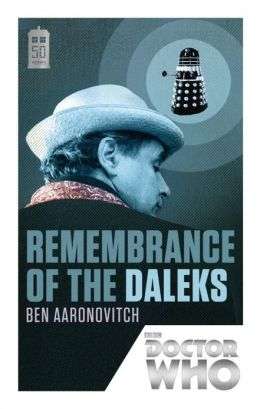
Doctor Who: Remembrance of the Daleks - A Book Review

Coal Hill School. 1963. About 700 years (relative time, of course) after he left it, The Doctor returns with his newest companion, Ace, to take care of some unfinished business. Before he left Earth with his granddaughter and two of her teachers, The Doctor left something behind - a powerful Time Lord artifact known as The Hand of Omega, which holds the power the power to move the stars themselves.

Such power does not exist with notice and it has, much to The Doctor's chagrin, been noticed. Two rival factions of his greatest enemies - The Daleks - are even now taking root in the area around Coal Hill School. One has taken over the school itself and its headmaster. The other has recruited the aid of a neo-Nazi businessman. Both will stop at nothing to retrieve The Hand of Omega and, with it, the secrets of controlled time travel!

Can The Doctor recover The Hand before the Daleks get their plungers on it? If so, can he stop them from destroying London and The Earth in the process?  Time will tell.  It always does.


The television episode Remembrance of the Daleks is held as one of the best episodes of the Classic Doctor Who Series and is considered by many to be the best Seventh Doctor story of all.  The novelization - written by series writer Ben Aaronovitch - enjoys a similar reputation.  It was one of the first of the Target line of Doctor Who novels to be written with older readers in mind, making it a spiritual precursor to the Virgin New Adventures book-line.

As Aaronovitch notes in his introduction to this reprint edition, one can't take a television script and just add in "he said" or "she said" to turn it into a novel.  At the very least, HE couldn't do that.  Depth has been added to many of the characters in this novel version of Remembrance of the Daleks.  At the very least, they've been giving more detailing if not actual depth of character.

Perhaps the best example of this is the relationship between Ace and Mike - an army sergeant with secret ties to the neo-Nazi group aiding the Imperial faction of Daleks.  There is a hint of romance between the two characters before Mike's true colors are revealed and Ace turns on him.  Ace turning violently upon a racist is hardly surprising but the novel gives her a personal reason for loathing racists beyond culture shock.  Mike is likewise made into a more sympathetic figure, being painted not as a truly hateful man but a decent bloke who is led astray by a hate-monger, who plays on his fears of bad things happening to his friends and family.

Curiously, the only character who doesn't benefit from this increased depth is The Doctor himself.  Apart from one scene where The Doctor wonders why The Earth can't seem to go one day without it needing him to save it, we never really get into The Doctor's head at all and very little of his dialogue is offset with adjectives to describe how he says things.  This makes sense given that The Doctor's thoughts and actions for much of this episode are meant to be a mystery to everyone.  Still, this lack of perspective causes many of the best scenes in the television episode to fall flat in the novel.  Many readers will be left with a greater appreciation of how much depth Sylvester McCoy gave The Doctor through pure physicality.

My advice?  Treat this novel like the extras on a DVD.  Watch the classic episode and then read this book.

Sunday, December 8, 2013

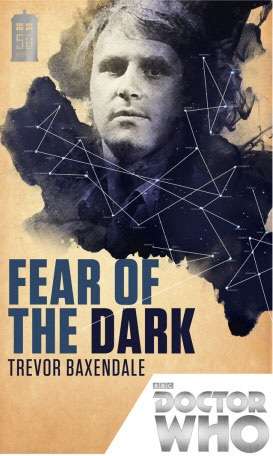
Doctor Who: Fear Of The Dark - A Book Review

The planet Akoshemon is widely regarded as the most wretched hive of scum and villainy the universe has ever produced.  Even now, generations after the planet and its people fell, it is viewed with hostility and suspicion - even by those who do not believe the old legends of an ancient evil living in the heart of the Akoshemon system.  The planet itself is a polluted wreck and its location on the edge of the universe makes it impractical for exploration.  Which makes it a prime target for Jyl Stoker and her band of mineral pirates.

Of course The Doctor has little interest in minerals or pirates.  His concern lies with a telepathic force that is attacking his companion Nyssa.  His attempts to track the assailant lead him to the moon of Akoshemon, where Stoker and her crew have just uncovered a hidden underground laboratory.  But there is more beneath the surface than old labs and strange tombs.  And in the heart of a dark world, The Doctor will have to confront more than an ancient evil beyond even his understanding - he must also confront his own fears.


In may ways, Fear Of The Dark perfectly captures the essence of the Fifth Doctor era.  The problem is that it captured the essence of a mediocre episode of said era.  Author Trevor Baxendale has some incredibly good ideas but fails to fully realize most of them.

The base concept of the villain is a prime example of this.  The menace The Doctor faces is Lovcraftian in nature, lacking form and existing only as malevolent, possessive thought. Baxendale slowly builds the horror of the story, portraying The Doctor's out of character behavior as a result of subtle psionic manipulation.  The idea that The Doctor - never cowardly and never cruel - could be so easily turned by this menace is truly horrific.  And yet the other-worldly menace - when finally revealed after over 200 pages of subtle manipulation - monologues like The Master at his hammiest! 

Another problem is the supporting cast.  Baxendale is capable of creating interesting character concepts that defy the standard cliches of science-fiction.  And yet, as soon as we feel some emotional attachment to a character, they are killed off before anything can be done with them.  Vexingly, it is the dullest characters with the least definition who survive the longest.  Some cite The Fifth Doctor's tenure as the bloodiest in the show's history in terms of supporting character deaths and this novel does little to prove them wrong.

In the end, Fear Of The Dark is not a bad story but it hasn't aged particularly well.  The Impossible Planet & The Satan Pit presented the same basic plot more effectively.  And it may be difficult for modern science-fiction readers to read about the cigar-chomping, tough-as-nails but still model-gorgeous Jyl Stoker without thinking of Katee Sackhoff.  Fifth Doctor fans will probably enjoy it but other Whovians can safely skip this one. 

Wednesday, December 4, 2013

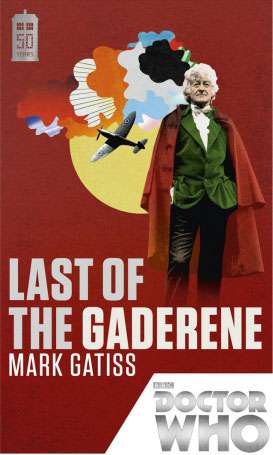
Doctor Who: Last Of The Gaderene - A Book Review

Declared redundant after an unfortunate round of budget cuts, the aerodrome in Culverton was quick to find new life.  Bought up by the mysterious Legion International, the company's Miss Bliss promises a new era of prosperity for the quiet village. And who knows?  Perhaps someday they shall have an international airport to rival Heathrow!

Retired Wing Commander Alex Whistler is suspicious of Legion International and doubly suspicious of Miss Bliss.  And that was before he saw soldiers clad in black uniforms and too-wide smiles stomping around the town!  Thankfully, Whistler is not without friends and one of them is Brigadier Alister Gordon Lethbridge-Stewart of UNIT.

In short order, The Doctor and his assistant Jo Grant are on their way to Culverton, little knowing what oddities await them.  For sinister forces plot the invasion and colonization of the Earth and they've sought the aid of a familiar foe of The Doctor.  The last of the Gaderene are on their way... and even The Doctor may not be able to stop their arrival.


Mark Gatiss perfectly captures the Third Doctor era of Doctor Who for good and for ill.  Last Of The Gaderene is a ripping yarn but not a particularly deep one.  Like many Third Doctor stories, it is high on action and low on emotional depth.  There's no real surprises and only newbies to the series will fail to guess who The Gaderene's ally on Earth is long before they are revealed. 

It's somewhat vexing as one feels Gatiss could have done so much more with this story.  Numerous minor characters are introduced only to have their stories cut short as their bodies are taken over by The Gaderene.  Only Wing Commander Whistler is given any true definition and even he seems like the stock Action Grandfather figure so common to the Doctor Who stories of the day.. 

One wonders if Gatiss intended to write more but was forced to cut his story short.  Numerous passages hint at things to come that never arrive, such as Jo's worries that The Doctor will soon abandon her now that his TARDIS is fully functional.  Likewise, The Doctor briefly considers the conflict between his new-found wanderlust and his desire for the companionship of his friends at UNIT but nothing comes of these thoughts.

That being said, Last Of The Gaderene is enjoyable for what it is and well worth reading if you're a Third Doctor fan.  Or indeed any kind of Doctor fan.   

Friday, November 15, 2013

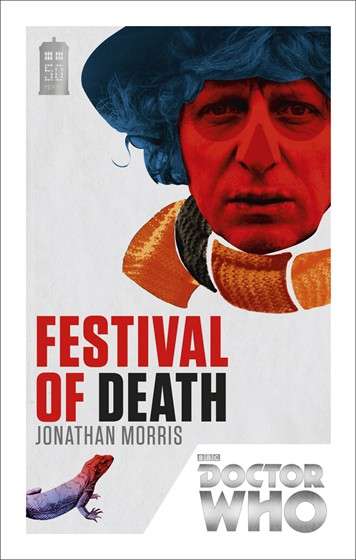
Doctor Who: Festival of Death - A Book Review

The G-Lock - a way-station in hyerspace notable only for being the site of a mysterious mass disappearance back in 2815.  Now, nearly 200 years later, The G-Lock is home to the galaxy's most popular theme-park ride - The Beautiful Death - which claims to offer tourists a glimpse of The Great Beyond.

None of this is of much interest to The Doctor and Romana until they find themselves in The G-Lock in the aftermath of a great disaster.  To The Doctor's delight, he is credited with having saved the population of the G-Lock from total destruction by a horde of zombies.  At least, he's delighted until it is pointed out he hasn't actually saved everyone yet and that the bureaucrat running the G-Lock has just issued a "kill-on-sight" order for a saboteur wearing a long scarf.

In order to save millions of lives, prevent the destruction of the space-time continuum and stop Ramona from giving him yet another lecture about the consequences of violating the First Law of Time (or is it The Second?), The Doctor must go back in time to a slightly earlier point and figure out what he's done.  He must then figure out how he did what he's done.  He also has to figure out how to do what he's already done without causing a paradox. 

There's just one problem - once he's done that, he still has to actually do what he's already done even if it kills him.  And it will.  Confused?  So is The Doctor.  Except for the part about his imminent but heroic death. 


In his introduction to this reprint edition of Festival of Death, Jonathan Morris admits "a clear and obvious debt to the works of Douglas Adams"  This is a bit of an understatement.  Indeed, to say that Douglas Adams was an influence upon this book would be as great an understatement as saying that Matt Smith was an influence on the sales of bow-ties over the past three years.

There's several direct tributes to "The Guide", with a supporting cast that includes a suicidally depressed computer named Eric and a space-hippie lizard named Hoopy.  But do not make the mistake of thinking this book is a simple pastiche of the Adams' style, packed with in-jokes for the fanboys.  While Morris perfectly emulates the Adams style of humor he does it while tackling an original plot more complex than all five books in The Hitchhiker's Trilogy put together.

That being said, fans of Adams' work will notice a lot of the same themes dominate the plot of Festival of Death.  The plot centers around an Adamsesque concept - a theme-park ride through the afterlife.  As in most of Adams' fiction, the most dangerous villains are not the mad-scientists or the world-conquerors but the bureaucrats who destroy the universe a little at a time with every bad decision they make.  There's also the classic theme of technology not working properly and everything designed to be idiot-proof underestimating how very good idiots are at hastening entropy. 

Morris perfectly captures the characters from the show and fans will undoubtedly hear Tom Baker and Lalla Ward bickering in their head as the story progresses.  The plot is a complex affair and was something of an anomaly when this story was first published in 2000, with The Doctor rarely indulging in "Bill and Ted" antics such as deciding to go back in time after being captured to provide the means for his escape in the present.  Modern Doctor Who fans shouldn't have any trouble keeping up.  Indeed, this novel might be a good introduction to The Fourth Doctor for fans of the New Series who have yet to be exposed to the Classic Series. 

Bottom Line: If you're a fan of old Who, new Who, Douglas Adams, funny stories or stories involving Time Travel, you'll want to give Festival of Death a try.

Wednesday, June 26, 2013

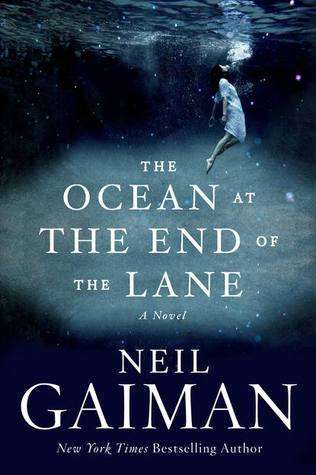
The Ocean At The End Of The Lane - A Review


It would be all too easy for me to say that The Ocean At The End Of The Lane is a good book and that people who have enjoyed Neil Gaiman's writing in the past will enjoy this book as well.  It would be true but it wouldn't actually tell you anything about the book.  Nothing useful, anyway.  Not what the sort of people who read book reviews would call useful.
 
Thinking on it, that's the laziest sort of writing for a critic to indulge in, isn't it?  A "For those who like this sort of thing, this is the sort of thing they would like" sort of thing?  And yet I struggle to think of a better way of describing this book without using phrases like "This novel is built around a typical Gaiman conceit".  As if anything involving Neil Gaiman could ever be "typical"!

While I'd never sully this book with a word like "typical", it would be fair to say that we've seen Gaiman use some of these props before.  Yet like the improvisational artists who turn unlikely objects into other unlikely objects as part of a skit, Gaiman plays with his toys in entirely different ways this time around.  There is a trio of women, for instance, who will draw inevitable comparisons to The Maiden, The Mother and The Crone of Sandman but are most definitely NOT witches or The Fates.  Precisely what they are is open to interpretation, as is much of this novel.  There's also a character who may well be the closest we ever get to seeing The Doctor from Doctor Who as an eleven-year-old girl with reddish-brown hair.  Still not a proper ginger, yet.  Sorry Doc. 

Likewise, the basic plot - largely told in flashback - seems reminiscent of Coraline at first, in that it deals with the magic of childhood.  And by "the magic of childhood", I mean the sinking sensation in the back of your head at all times up until you discover boys and/or girls that adults know a lot of things you don't and yet there are monsters in the world that only you can see hiding in the shadows and that they're just waiting for the right moment to eat your body, your soul or worse.  There's always an "or worse".  You know that too when you're a child.
 
There's also several cats.  Cats are nice.  Unlike Coraline, none of the cats talk in this book.  At least, not to the people.  Not with words, anyway.  Not with telepathy either, but I wouldn't put it past Gaiman to include a telepathic cat in some story in the future.  
 
You can have that one for free, Neil.  I don't mind.
 
In the end, there is little I can say about this book that wouldn't give away the whole game except for a few short sentences.  It's a modern fantasy.  It's about the magic of childhood, by which I mean horrible things happening to children that should never happen to children, as viewed through the lens of maturity.  There's cats, a clever girl, a well-meaning boy who prefers books to people, a wide variety of monsters and a threat to the whole universe and maybe even something bigger!

In short, it's the sort of story that you'll enjoy if you're the sort of person who enjoys Neil Gaiman stories. And I did enjoy it.  Perhaps that is all that needs be said.