Showing posts with label David Tipton. Show all posts

Saturday, May 25, 2013

Star Trek: The Next Generation / Doctor Who: Assimilation Squared - A No Flying, No Tights Review


The cross-over has been a speculative fiction tradition since at least the time of the first pulp novels and magazines. The Green Hornet radio show established that The Lone Ranger was the great uncle of The Green Hornet and had a hand in inspiring the younger hero to take up the role of an outlaw hero. Robert E. Howard and H.P. Lovecraft worked elements of one another’s stories into their own work, with Lovecraft outright saying that Howard’s Hyboria was the long distant past of the Earth where his stories took place. And of course the idea of shared universes and inter-company crossovers – rare as they are now – is part and parcel of the superhero genre and comic books as a medium.

That brings us to this series: Star Trek: The Next Generation / Doctor Who – Assimilation Squared. The longest running American science-fiction franchise and Britain’s longest-running science-fiction franchise, together for the first time. An unlikely pairing? To put it mildly. Trekkers and Whovians tend to be very different breeds of fan, though both are equal in their fanaticism. Trekkers tend to be obsessive about details and realism and knowing how everything in the universe works. Whovians, by contrast, are generally more concerned with a ripping yarn and will gladly accept a hand-wave that something is caused by time going wibbly-wobbly so long as there’s a good story at the heart of it.

However you may feel about one franchise or the other, it cannot be denied that Assimilation Squared is a good story and that Trekkers and Whovians alike will find it enjoyable. Astonishingly, so will casual readers who might not be familiar with one series or the other. The script by Scott and David Tipton takes great pains to establish the settings of both worlds before colliding them and thrusting both sets of heroes together against a common (and uncommon) enemy. Indeed, the entire first chapter of the first volume of this mini-series depicts a typical adventure of both Captain Picard and his crew and The Doctor and his current companions. The cast is fleshed out and we get a number of good character moments for all involved, allowing new readers the chance to get to know The Enterprise Crew as well as The Doctor, Amy Pond, and Rory Williams before we are thrust into the action.

And what action! The plot concerns an alliance between The Borg and The Cybermen – both technology-based species (the former from Star Trek, the later from Doctor Who) who depend upon the assimilation of organic life in order to propagate their species as they work toward their goal of universal domination. Thankfully, the Doctor’s transport – The TARDIS – manifests on-board The Enterprise as Captain Picard becomes aware of the new threat. It will fall to both teams of heroes to work together to save not only their own dimensions but perhaps all dimensions!

Fans of both series will no doubt love the interplay between the characters. The meeting between The Doctor and Guinan – The Enterprise’s mysterious, seemingly all-knowing but rarely all-explaining bartender – is quite a treat. So is trained nurse Rory discussing advancements in medical technology with Dr. Crusher. For my money though, nothing quite tops Rory’s response to Worf’s recitation of the classic Klingon saying “Today is a good day to die!”

The artwork is equally impressive, with J.K. Woodward having painted nearly every panel of the entire eight-part mini-series in a photo-realistic fashion that perfectly captures the likenesses of all the actors involved. The one exception to this is a brief flashback sequence in Chapter Five, rendered in a more traditional sixties comic-book style by The Sharp Brothers. This scene depicts an earlier story, just discovered among the Enterprise’s records, where the crew of Star Trek: The Original Series once encountered the Cybermen and a smiling, long-scarf wearing man who called himself The Doctor.

In the end, Star Trek: The Next Generation / Doctor Who – Assimilation Squared is that rarest of all crossovers – one that will please everybody. Trekkers and Whovians alike will appreciate how their respective franchises have been handled and the story, while steeped in the mythology of both series, will prove accessible to those unfamiliar with Star Trek or Doctor Who. I dare say this mini-series could create a number of new Whovains and Trekkers.

Star Trek: The Next Generation / Doctor Who: Assimilation Squared, vol. 1 & 2
by Scott Tipton, David Tipton
Art by J.K. Woodward, The Sharp Brothers
Volume 1 ISBN: 9781613774038
Volume 2 ISBN: 9781613775516
IDW Publishing, 2013
Publisher Age Rating: (13+)

Sunday, April 21, 2013

Doctor Who - Prisoners of Time #4 - A Review

It's been a few months since I picked up Doctor Who: Prisoners of Time.  As you may recall, I was less than impressed with the first issue and the cost of the issues ($3.99 each) left me thinking I might be better off waiting for the inevitable trade collection.  Still, the Tom Baker incarnation of The Doctor is my favorite and my Friendly Local Comic Book Shop saw fit to set aside a copy of this issue for me.  So I decided - why not?  I'll give it a go again.  And I'm quite pleased to have done so.


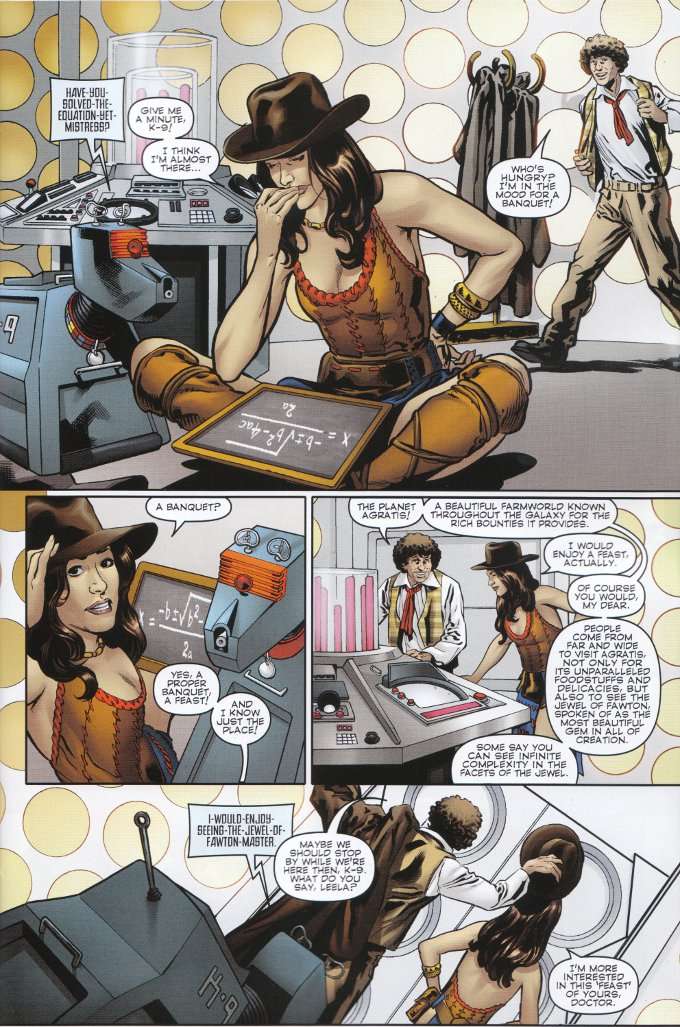
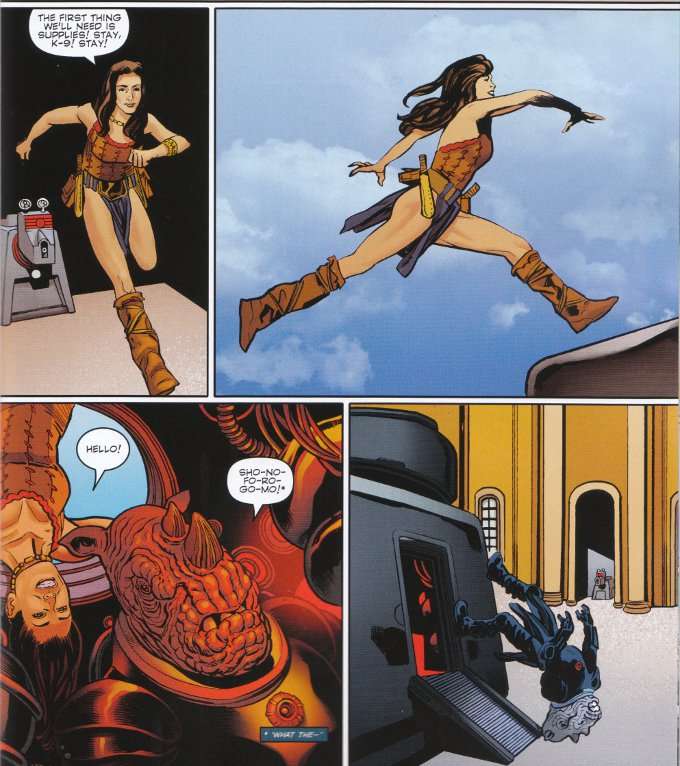
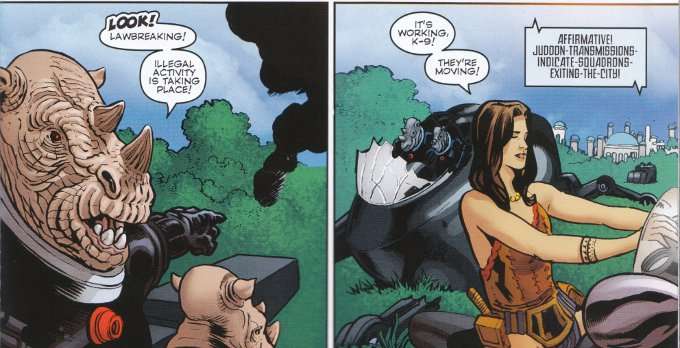
Visually, this book is a definite improvement on the first issue.  I found the style reminiscent of that used for depicting the adventures of The Fourth Doctor in the old Marvel UK Doctor Who comics.  The established characters are all well caricatured and the action of the issue flows well from panel to panel.  Hats off to Gary Erskine and Mike Collins for a job well done! 


In terms of story, this issue is on par with the first and continues the idea of telling previously untold tales of The Doctor's past with elements from the new series being added in.  The plot focuses upon The Fourth Doctor, his best friend K-9 and his current companion - the savage warrior woman Leela.  The trio must locate a stolen jewel before the planet they are visiting is torn apart by the Judoon mercenary police officers who have been brought in to locate the gem at any cost.  The script by David and Scott Tipton is fun and well-paced, perfectly capturing the spirit of all the established characters.


I'd rate this comic as a Must-Read piece of work.  The artwork is good, perfectly capturing the feel of a classic Doctor Who comic.  The story is action-packed and interesting.  Really, there's no good reason not to get this comic if you're a fan of Doctor Who in general and The Fourth Doctor and Leela in particular. 

Friday, February 1, 2013

Doctor Who: Prisoners of Time #1 - A Review


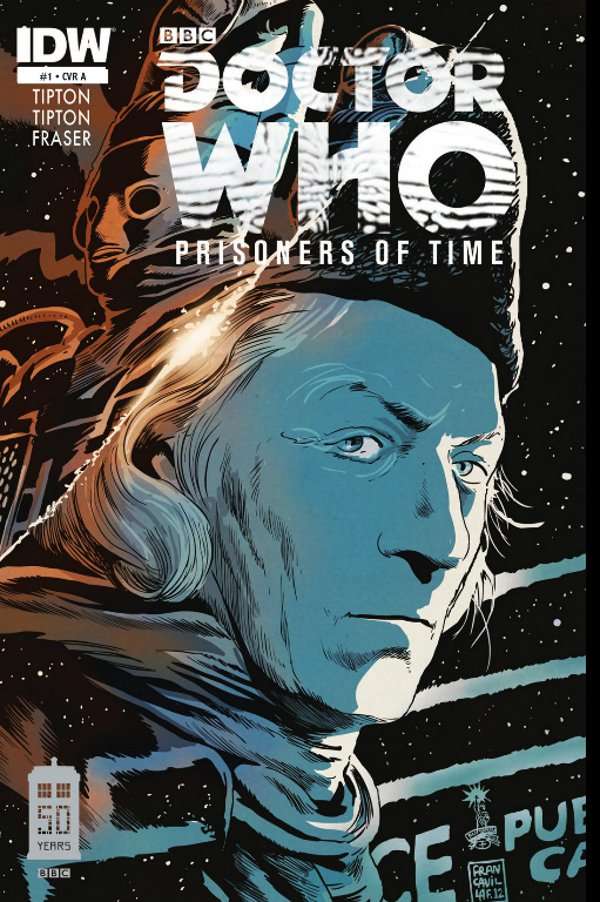
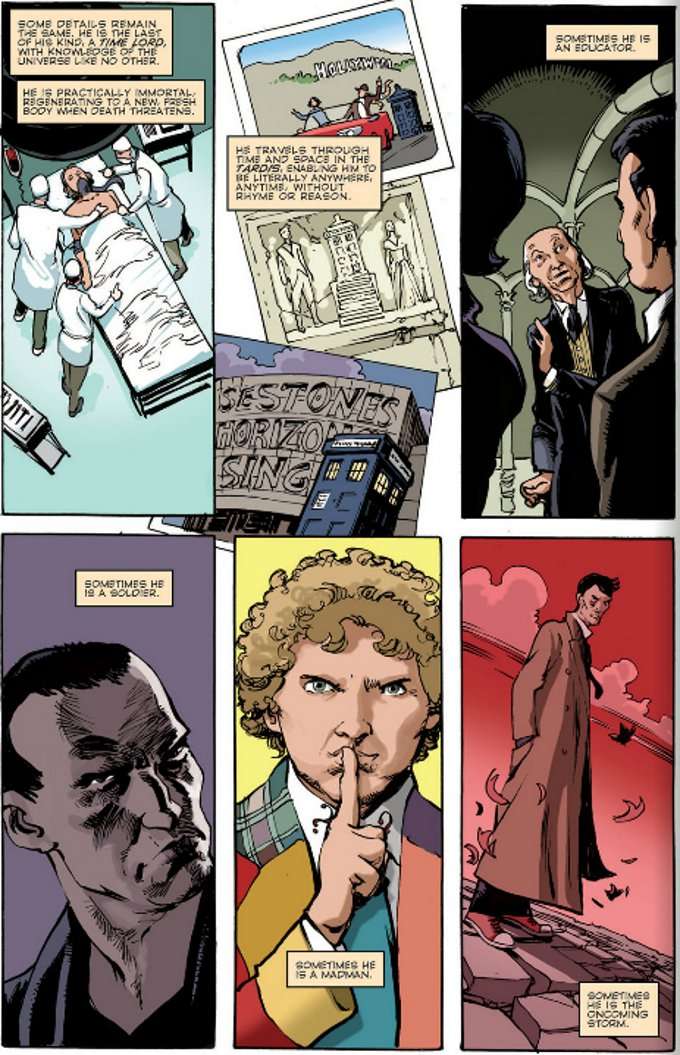
With Doctor Who's 50th anniversary this year, it's only natural that we'd see quite a bit of media looking back at the rich history of the world's longest-running science-fiction TV show.  Enter Prisoners of Time - a 12-issue mini-series which - based on this first chapter - will show readers something of every one of The Doctor's eleven incarnations.  It spoils little for me to say that this chapter is largely devoted toward The First Doctor and establishing the unifying trend between this and the upcoming chapters.   


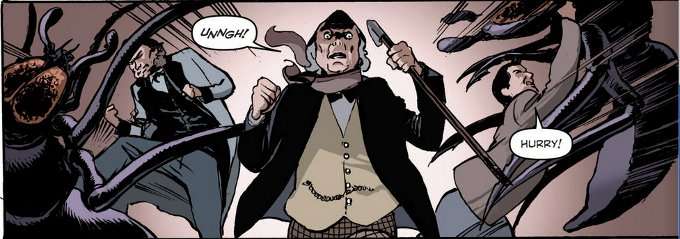
Prisoners of Time is a also a fine example of the twin problems a creative team faces with adapting an established series from one medium into a comic book  For the writer, the problem lies in crafting a story appropriate to the series they are adapting.  Doctor Who allows for more freedom than traditional science-fiction shows but it still has a certain bouquet that must be matched to feel authentic.  For the artist, the problem lays in caricaturing the established characters so that they are recognizable without creating the appearance that they are tracing photographs.   


Writers Scott & Paul Tipton meet the first challenge ably.  Prisoners of Time feels exactly like the start of an extended Doctor Who story.  We open with an unseen figure plotting against The Doctor, considering what is known about him regardless of incarnation and deciding the best way to deal with The Doctor is by separating him from his companions.

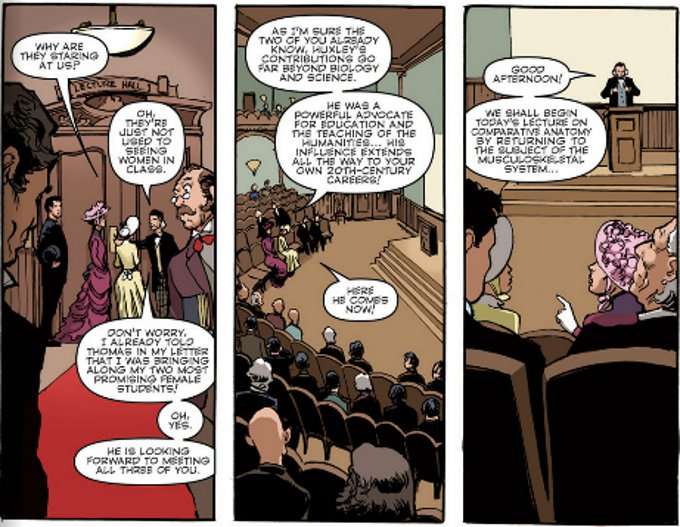
We then launch into a likely scenario for The First Doctor to engage in - taking a journey to introduce his companions to his old friend, the biologist and educator Thomas Huxley.  We learn of Huxley's past in an information dump similar to the ones used during The First Doctor's tenure, when Doctor Who was still nominally an educational show for children.  Thankfully, this section is rather brief and we are quickly swept up in an adventure involving the ant-like Zarbi from the classic First Doctor story The Web Planet.


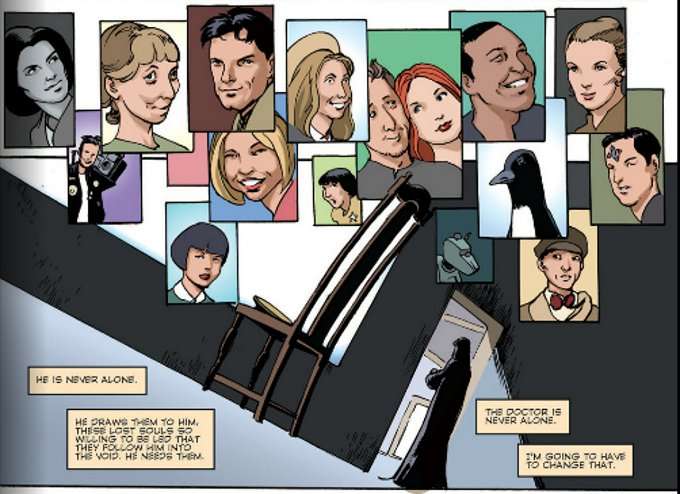
Simon Fraser doesn't fair so well in meeting the challenges required of a Doctor Who artist.  While he does a fair job caricaturing William Hartnell and the other Doctors in the close-up panels, he does a poor job of caricaturing the rest of the First Doctor's cast.  Vicki in particular comes off looking badly misshapen.  Some of the Doctor and Companion portraits we see at the start of the issue are incredibly vague and indistinct, with Adric only being identifiable by his star-badge.  Thankfully, Fraser's visual storytelling is top-notch and the action from panel to panel flows well even if the actual figures appear warped.    
 

Would I recommend this book?  That depends upon your fondness for The First Doctor and your tolerance for dodgy artwork.  I think the story was good and perfectly captured the spirit of the early Doctor Who episodes but the artwork is just too uneven for me to justify buying this book on a monthly basis.  I'll probably pick-up the inevitable TP collection but at $4 a monthly issue for a regular-size comic, this series isn't quite good enough for me to justify the expense.  I may change my tune when Issue #4 comes around (Tom Baker is my favorite!) but for now, I'll have to suggest giving this one a miss unless you're a die-hard Doctor Who collector or if your wallet is a bit fuller than mine.

Sunday, January 6, 2013

Star Trek: Khan - Ruling In Hell - A No Flying No Tights Review


SOURCE: Khan - Ruling in Hell

The character of Khan Noonien Singh (or simply Khan) has become famous even to those who are not familiar with Star Trek in specific or science fiction in general. Played by the charismatic Ricardo Montalban on both the small screen and silver screen, Khan proved to be far more than a simple villain-of-the-week. Indeed, despite his background as a genetically engineered super-soldier and attempted dictator, Khan was a surprisingly sympathetic figure. Though his means were cruel, he was a product of his creation and he struggled against his nature to be something greater, becoming a man of honor who honestly did wish to provide for his followers. Small wonder then that Captain James Kirk chose to give Khan and his followers the chance to colonize a hostile but habitable world rather than punish them for attempting to usurp his command.

Most of us know where the story went from there. How the planet Khan and his followers settled on was ravaged by natural disasters shortly after they began their colonization efforts. How neither Starfleet Command nor Captain Kirk himself ever checked-up on the colony to monitor their progress or see if they needed help. How Khan’s wife and many of his followers died in the decades that followed, leaving Khan bitter, disillusioned, and desperate for revenge.

Khan — Ruling In Hell tells the story of the time between where Star Trek: The Original Series left off and where the film Star Trek II: The Wrath of Khan began. Unsurprisingly, given the popularity of the character, this is not the first time this tale has been told. Author Greg Cox wrote a Star Trek novel detailing the same period of time – the similarly named To Reign in Hell. This book, however, is an entirely original work and the first time Khan’s exile has been detailed in a graphic novel format.

One might rightly think it difficult, if not impossible, to tell a gripping, action-packed story where one already knows the ultimate ending. However, writers Scott Tiption and David Tipton meet this challenge handily, largely focusing the story not upon the disasters but on the people. Much of the plot details Khan dealing with treacherous underlings who lack his faith that Captain Kirk will treat them fairly. Khan’s romance with Lt. Marla McGivers – the Starfleet historian who aided him in his attempted coup of the S.S. Enterprise – also offers readers an interesting subplot, showcasing Khan’s nature as a man, not a leader or warrior.

The artwork by Fabio Mantovani proves impressive. Mantovani perfectly caricatures the actors from the original Star Trek show and does a good job of slowly and subtly aging them as the story progresses. The use of color and shadow is particularly impressive, with some fine detail blending the colors in such a way as to make the light of fires seem to glow upon the page!

IDW did not offer an official rating for this book. I would personally rate it as being fit for most teenage audiences. There’s a fair bit of violence but no blood is shown and there’s no outright nudity, though Lt. McGivers does trade her Starfleet uniform for a skin-tight bodysuit that leaves little to the imagination.

Star Trek: Khan – Ruling In Hell
by Scott Tipton and David Tipton
Art by Fabio Mantovani
ISBN: 9781600109096
IDW Publishing, 2011