Showing posts with label Kelly Sue DeConnick. Show all posts

Sunday, February 22, 2015

Bitch Planet #3 - A Review

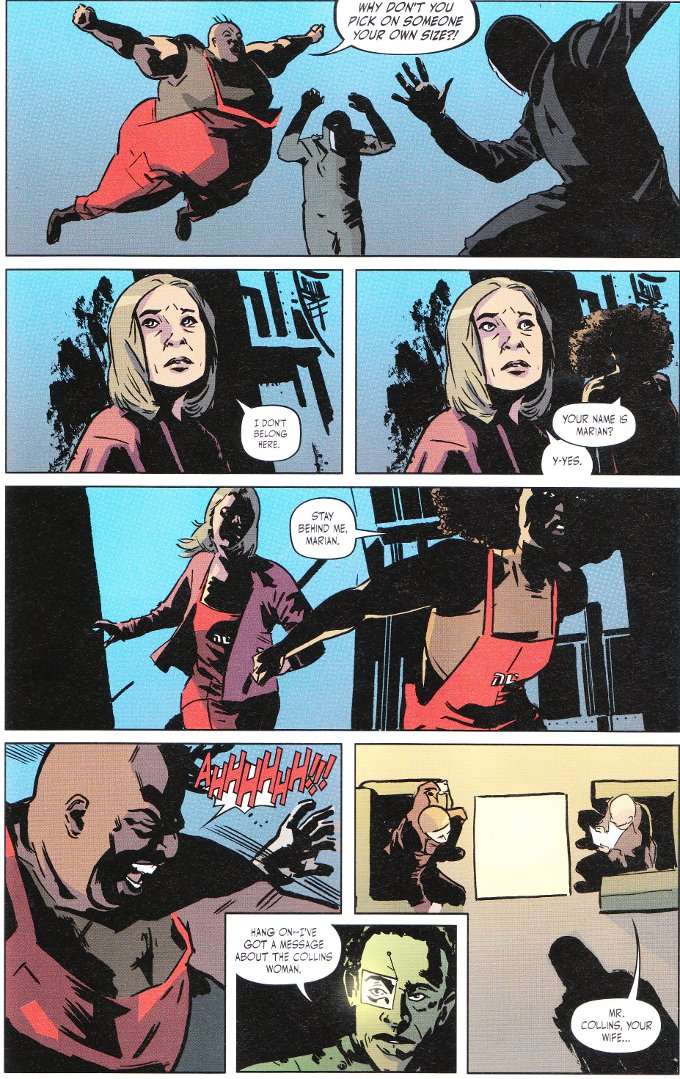
Whereas the first two issues of Bitch Planet were devoted to establishing the setting and the theme, Bitch Planet #3 is a character study.  The focus here is upon Penelope "Penny" Rolle - a.k.a. the overweight hell-raiser who had been seen in the background of the first two issues but was never the focus of the action... until now!


Kelly Sue DeConnick has done great character analyses in other series and that talent is on full display here.  We get a good look at Penny's formative years and see how she's been triply-cursed, being a woman, not White and overweight in a society that shuns BBWs. Ironically, this personally focused story does a better job of displaying the culture of Bitch Planet than the first two issues or at least in showcasing the problems such a world poses for non-compliant women.


Robert Wilson IV handles the artwork this time around and proves a capable substitute for Valentine De Landro.  Wilson's style is reminiscent of Mike Allred's, but with a gritty edge that does not diminish its clarity in the least.  All in all, the artwork is once again a match for DeConnick's writing and this series continues to be one of the best comics in existence.

Saturday, January 31, 2015

Bitch Planet #2 - A Review

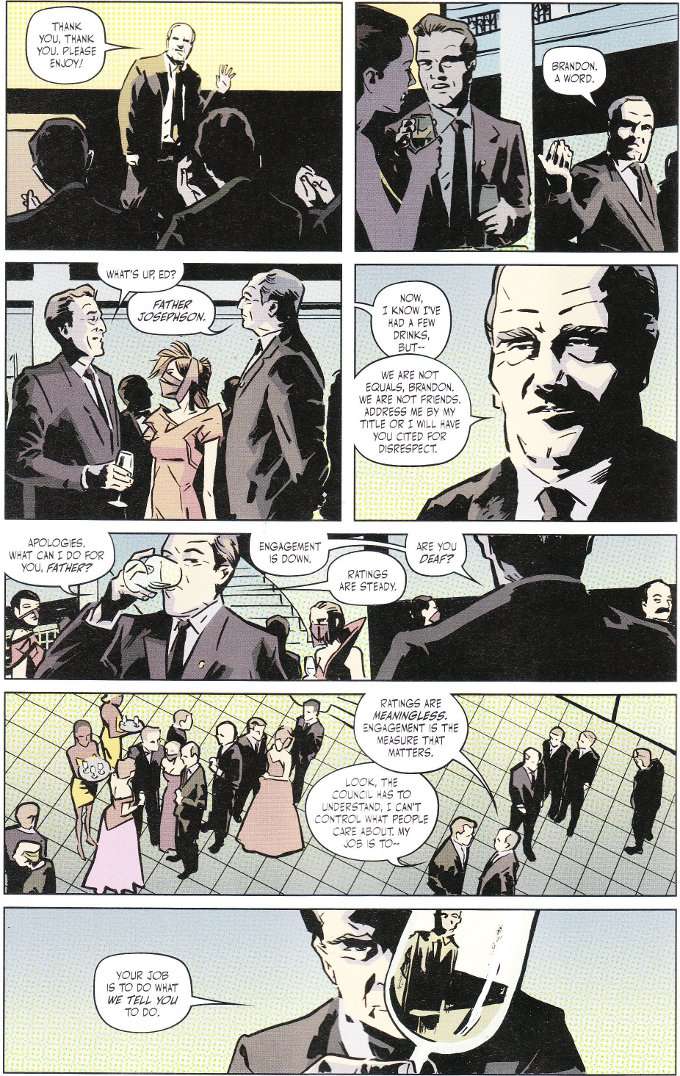
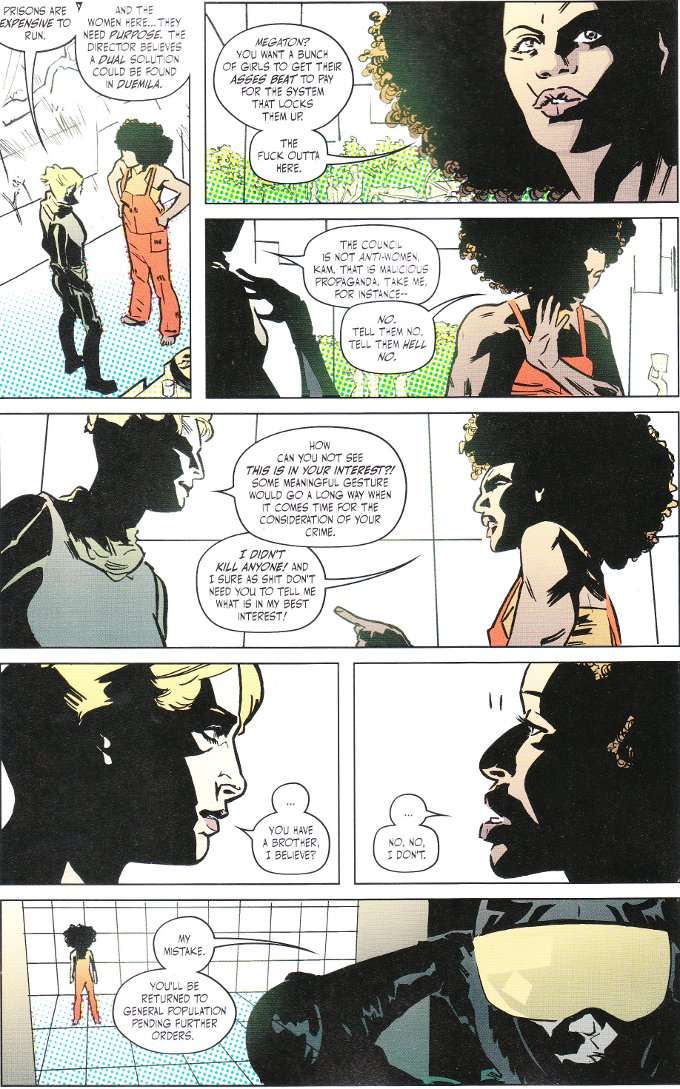
With the basic premise of its world established in the first issue, Bitch Planet #2 travels at a more sedate pace as the basic plot begins to unfurl. We find out that the society of this world is built around an annual sporting event called Megaton - or Duemila if you're a snob.  Apparently general interest in the bloodsport is waning, which displeases The Powers That Be. Luckily, the overseer of Bitch Planet has an idea on how some of his charges might be put to work in solving this problem.


It seems paradoxical that after all the originality we saw in the first issue, that this second issue should prove so relatively mundane. The idea of a dystopia built around bread and circuses is nothing new (Do the words Hunger Games ring a bell?) and The Overseer's plan is straight out of the 1974 Pam Grier film The Arena. Yet while one may have heard a song before, how the band plays can alter the tune. Such is the case with Kelly Sue DeConnick's script, which wrings new life out of the familiar premises.


Talking of Pam Grier, one can't help but see her in artist Valentine De Landro's design for our protagonist Kamau Kogo. Not because the character seems to be a direct caricature of Grier but because she's evocative of the sort of grindhouse heroines Grier built a career on playing.  Whether the homage is intentional or not, it speaks to how effectively De Landro captures the aesthetic of the genre that I should immediately hear the voice of Cofy as I read the dialogue and look at the artwork.

Sunday, December 14, 2014

Bitch Planet #1 - A Review

To say that Bitch Planet defied my expectations would be an understatement. The series was originally described to me as as a satire of sexploitation - a feminist reworking of the classic Grindhouse pictures of yore, specifically targeting movies like Black Mama White Mama and Chained Heat with a sci-fi twist. Technically that is true, but it is as helpful in describing this series as saying that the sun as "a big hot thing that can kill you."

In truth, I'm reluctant to describe Bitch Planet as science-fiction because of the optimistic connotations that go along with that phrase. Yes, it does take place in the future on another planet, but this is not Star Trek. The world of Bitch Planet is no Utopia, unless you're a Gamergate supporter or an Evangelic Christian. Let us instead call it Future Fiction, for the story of Bitch Planet is a cautionary tale akin to It Can't Happen Here or The Handmaiden's Tale.
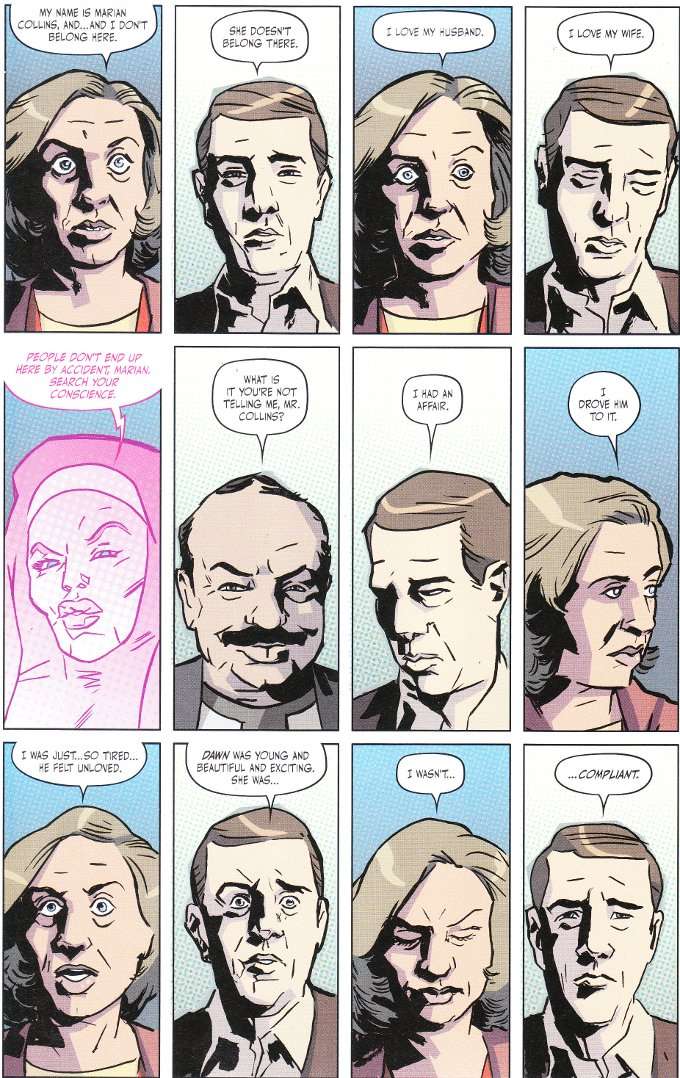

We don't get any details of how this Earth came into existence. In truth, we don't need any. It is enough for us to know that, on this version of Earth, women who fail to conform to society's expectations are shot into space and put to work off-world on an "auxiliary compliance outpost" known as Bitch Planet.  This goes beyond simply sending away murderers and career criminals - it also includes sending away feminists, women who are overweight and wives who fail to submit to their husband's authority! Or wives whose husbands got sick of them and decided to trade them in for a newer model.

Far-fetched? Not really. As an essay by Danielle Henderson of Feminist Ryan Gosling in the back of the book notes, what we see in Bitch Planet is only a slight exaggeration of what is expected of women in modern American culture.  Any woman who fails to live up to the zeitgeist of what is proper runs the risk of becoming an outcast of the culture. And while Kelly Sue DeConnick explores these issues in the midst of a prison riot in space, that does not make the reality of these issues any less serious.

The artwork by Valentine De Landro subtly evokes the same B-movie aesthetic as the script.  For instance, the point-of-view shots linger on nude women in the background but are more modestly framed in the close-ups.  It is a small touch, but one that emulates a time-honored technique used in exploitation films, as the creators could argue with the censors that you really couldn't see the nudity if it is further away.

There is much to recommend Bitch Planet beyond its artistry in emulating the worst aspects of a low art-form. It stands on its own merits as a warning, a satire and a ripping yarn. And if nothing else, it is worth buying in order to piss off some people who need to be pissed off on a regular basis.

Tuesday, April 1, 2014

Legends Of Red Sonja #5 - A Review

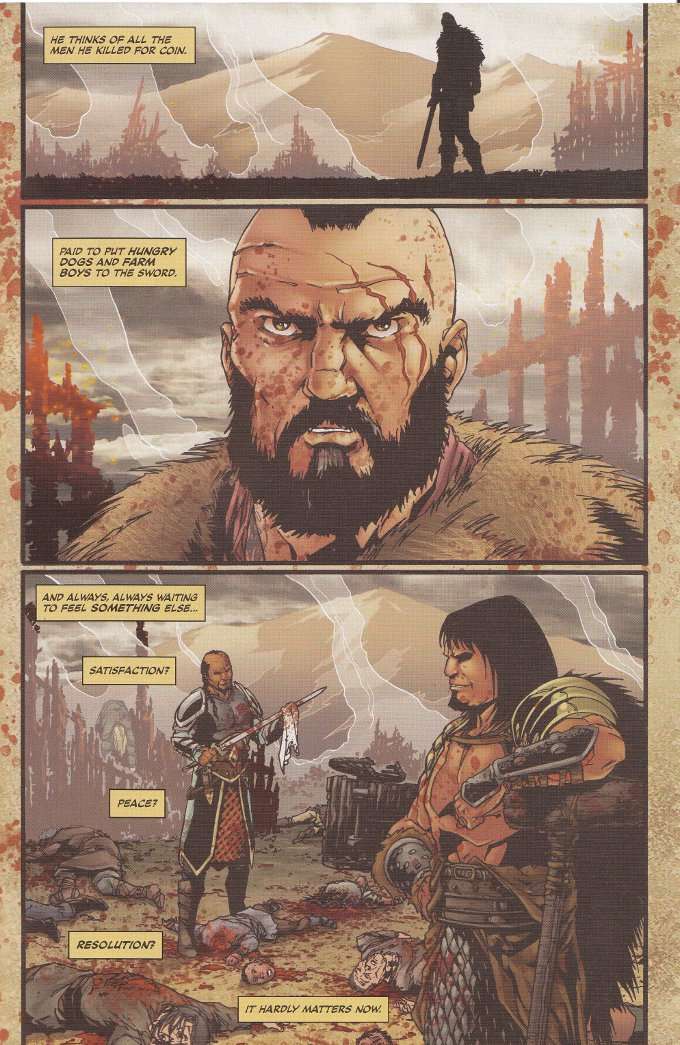
Legends of Red Sonja #5 ends this wonderful mini-series on a high note.  It is notable that there hasn't truly been a bad story in this anthology (no surprise given the talent involved) but there have been several stories that weren't really about Red Sonja.

The first tale in this issue is a prime example of this, being focused upon one of the mercenaries tracking down our favorite fire-haired amazon.  Written by Attack Of The Show host Blair Butler, The Pazyryk delivers a lot of action but isn't truly a legend of Red Sonja.  Sure, she shows up at the end to dispatch the titular warrior, but the tale isn't really hers.


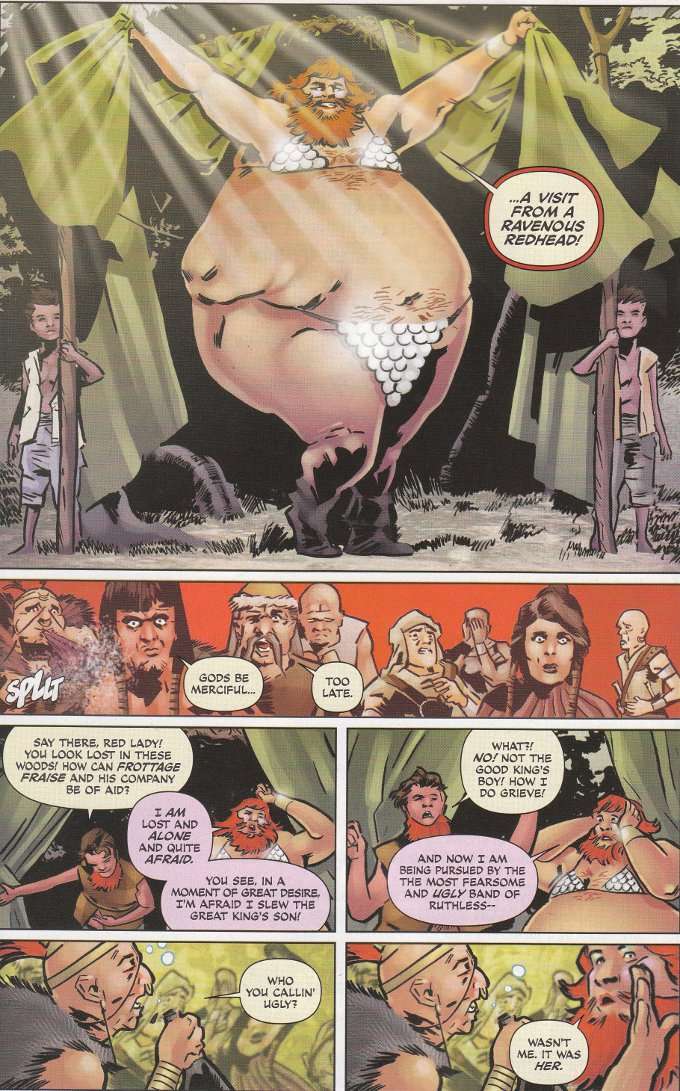
Ironically, the same can't be said of the second chapter in this volume - The Play's The Thing.  Scripted by Captain Marvel writer Kelly Sue DeConnick, Sonja doesn't appear in this story but it is definitely about her.  The humor is heavy in this tale where a group of players describe their encounter with the She Devil of Hyrkania to villains by putting on a show!


All of this is ably illustrated by some equally talented artists.  Leaving Megapolis artist Jim Calafiore does a truly epic job on The Pazyryk.  Valentine De Landro's sketchy style leaves The Play's The Thing fittingly looking like a painted woodcut.  And Jack Jadson - one of the finest sword and sorcery artists in the business - brings everything to an epic conclusion along with Gail Simone in the final pages.

Friday, March 22, 2013

Captain Marvel #11 - A Review

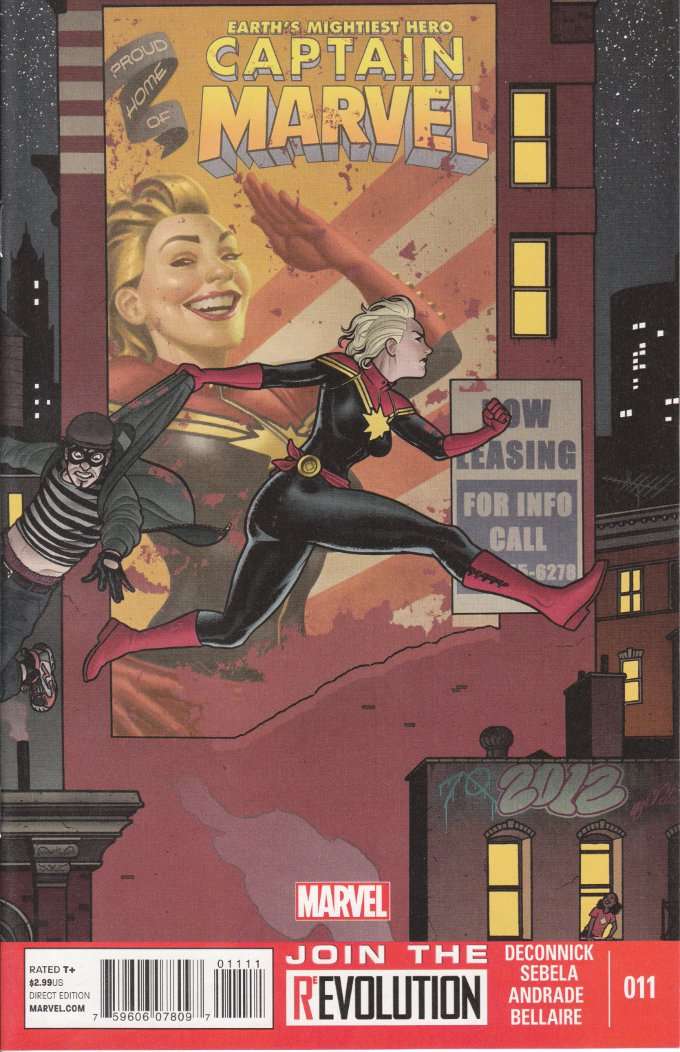
It is a rare thing for bad artwork to spoil my enjoyment of a well-written comic book.  Yet Filipe Andrade has managed that feat and as a result I'm dropping Captain Marvel from my subscription.  Andrade's artwork is so awful I can't even bear to feature any more of it on my blog than I have to - hence the scan of this issue's far superior cover below.   


To my mind, this image is above is how Captain Marvel should be presented.  Strong.  Capable.  Tough.  At the very least, she should appear to be a human female and not evoke thoughts of the super-skinny aliens from the movie A.I. as Andrade's characters do.  To describe the figures he depicts as freakishly skinny would deny me the opportunity to use a number of ten-dollar words such as emaciated, malnourished and anorexic.    


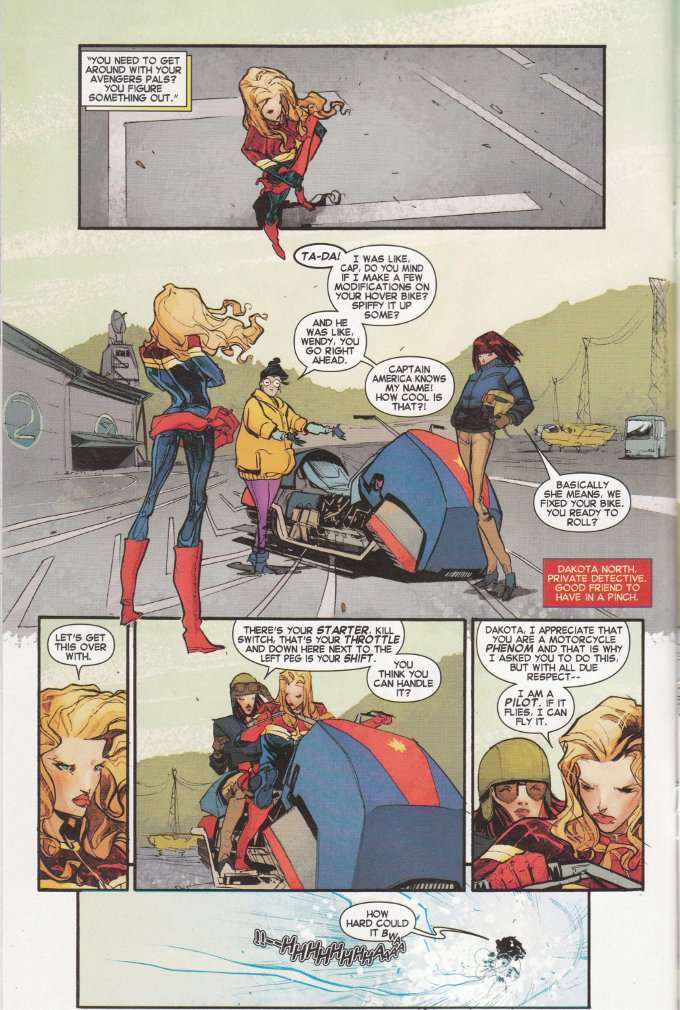
I wish I could stay for the excellent writing of Kelly Sue DeConnick and Christopher Sabela.  There's a good story underneath all this about Carol Danvers coping with a medical problem that leaves her unable to fly and dependent on a SHIELD-issue flying motorcycle.  However, I fear it's not worth the aggravation of trying to interpret what I'm looking at on every page. 

Saturday, February 23, 2013

Captain Marvel #10 - A Review

Much of what I have to say about Captain Marvel #10 I already said in my review of Captain Marvel #9.  Kelly Sue DeConnick (assisted, this month, by Christopher Sabela) still writes great, action-packed scripts that give us new insights into the character of Carol Danvers every issue.  The artwork, by Filipe Andrade, is still aesthetically displeasing to my eye and I still think it resembles a poor attempt to ape the style of Aeon Flux


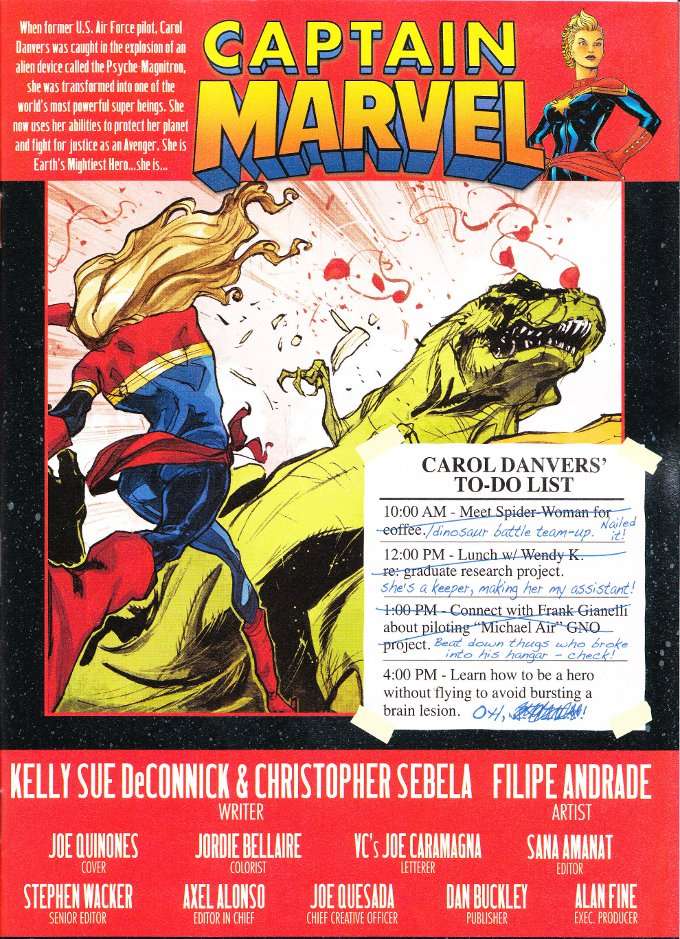
Thankfully, there is still much to admire about this comic and some things I can speak about that I did not note last month.  For instance, I love how Captain Marvel - unlike so many comics of late - uses its' title page as a reference guide for those fans who may have missed an issue, new readers picking the book up for the first time or absent-minded critics who sometimes forget the story after reading 50 other comics in the past month.  Naturally, given the usual tone of this book, this recap page is as insightful in terms of characterization as the rest of the script.

Speaking of the script, Deconnick's plot in this issue has become "real".  Suffering from some strange symptoms, Carol's doctor has advised her that she needs to stop flying as the strain on her body seems to be slowly killing her.  Naturally Carol isn't taking the news well, as being a pilot AND a superhero with the power of flight... well, NOT flying is not an option to her.  The drama here is played out well but I hope the hints that this is a temporary, orchestrated condition ring true as I fear it will seem far too derivative to have this lead into a serious medical storyline ala The Death of Captain Marvel.


I must also note that while I'm not a fan of Filipe Andrade's art, upon reflection I don't think it's quite so bad as I said it was last month.  His action scenes are atrocious but his stylized characters with their elongated limbs and angular features are not quite so off-putting in the slower scenes that just feature characters talking.  Faint praise I know but it is praise none the less, which is far more than I was willing to give Andrade's last month when his art came close to driving me off this book.

I'm still here though.  And I'll be here for one more month, at least. 

Saturday, January 26, 2013

Captain Marvel #9 - A Review

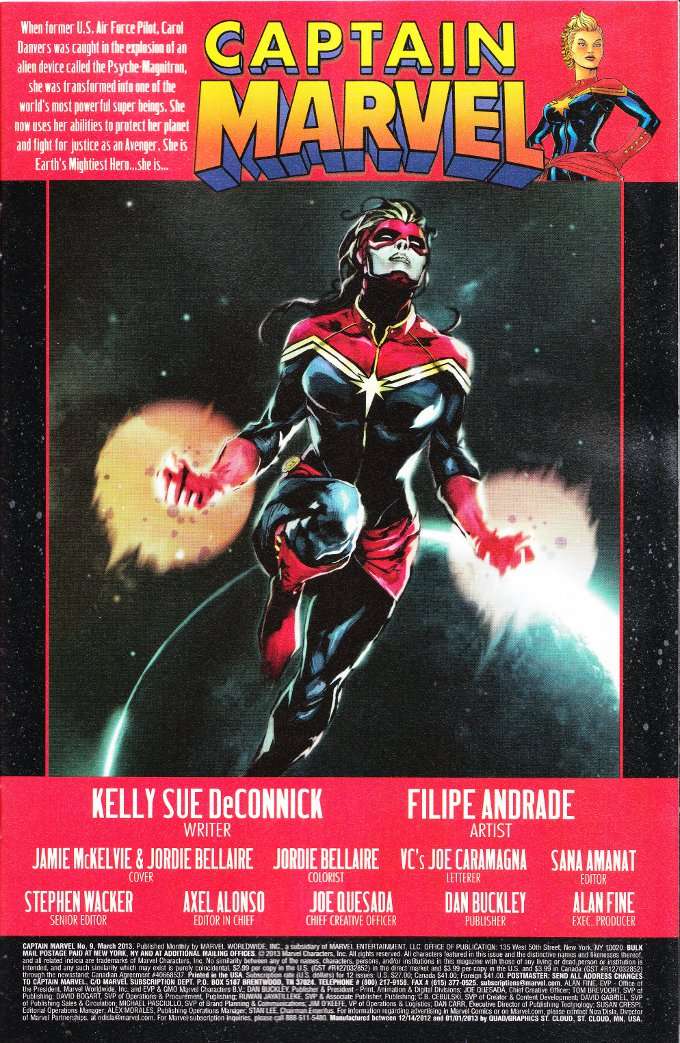
Never have I seen so great a disconnect between the quality of artwork and the quality of writing than Captain Marvel #9. The writing by Kelly Sue DeConnick is as fine as ever, of course.  The script for this issue, focusing on Carol Danvers trying to get through a typical day-in-the-life, presents a wonderful jumping-on point for those who have not yet begun reading this title.  The title page even gives us a basic summary of our hero and the book, satisfying the old Stan Lee dictum that every comic book should be built as if it were going to be someone's first comic ever, because it probably will be. 


Sadly, once we get past the title page and the recycled Dexter Soy artwork, the pencils and inks of Filie Andrade drag this comic into the abyss of mediocrity.  The kindest adjective I can apply to Filipe Andrade's artwork is "stylized".  Sadly, it is the style of someone who appears to be aping Aeon Flux after having a couple of stiff drinks. 

To call Andrade's figures disjointed would be putting it mildly.  As it is, I find this manner of artwork visually displeasing and it killed my enjoyment of this issue. I still recommend Captain Marvel as a series to all comic readers but I'd also suggest skipping this issue.  If you need an introduction to this series, start with Issue #7 instead. 

Thursday, December 27, 2012

Captain Marvel #8 - A Review

I'm a deep believer in the Stan Lee dictum that every comic should be written as if it were going to be someone's first comic, because it very well might be.  At the very least, if the story itself cannot recap the action thus far, there should be some manner of summary page at the front of the comic.  Sadly, this lesson is frequently lost in these days of decompressed storytelling and writing for the trade.  Thankfully, Captain Marvel #8 gives us both a summary page and a first page that gives new readers a chance to catch-up.


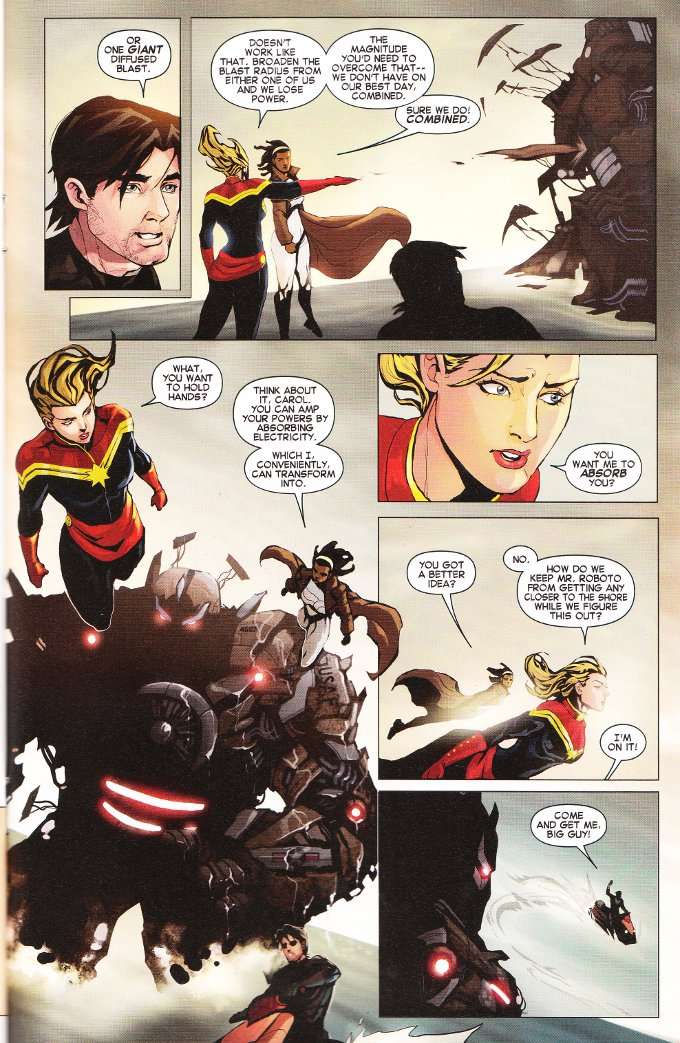
Writer Kelly Sue DeConnick has made this title something unique and special. Sharing the writing duties this time with Christopher Sebela, DeConnick spins a tale that is action-packed but filled with a lot of wonderful character moments as well.  The odd friendship between Carol Danvers and Monica Rambeau grows even stronger as the two are forced to bond in a rather literal fashion.


I've said it before and I'll say it again - Dexter Soy deserves an Eisner nod for his work on this title.  There are some panels that I can't believe aren't painted, such is the level of detail and quality achieved with simple pencils and ink.  Coupled with DeConnick's scripts, this book is a must-read for all fans of strong heroines, big action and good comics.

Sunday, November 25, 2012

Captain Marvel #7 - A Review

It amused me when this new Captain Marvel book started, seeing so many sexist little fan-boys complaining about how Captain Marvel can't be a woman, how Carol Danvers taking the title was a slap in the face to tradition and the existence of this book was base pandering to the vocal minority of female comic readers, blah blah blah.  It amused me, because in their grousing they revealed their ignorance.  For this is not the first time a woman has taken the name of Captain Marvel!  And amusingly enough, we find that she's not too happy about Carol Danvers taking the name either in Captain Marvel #7


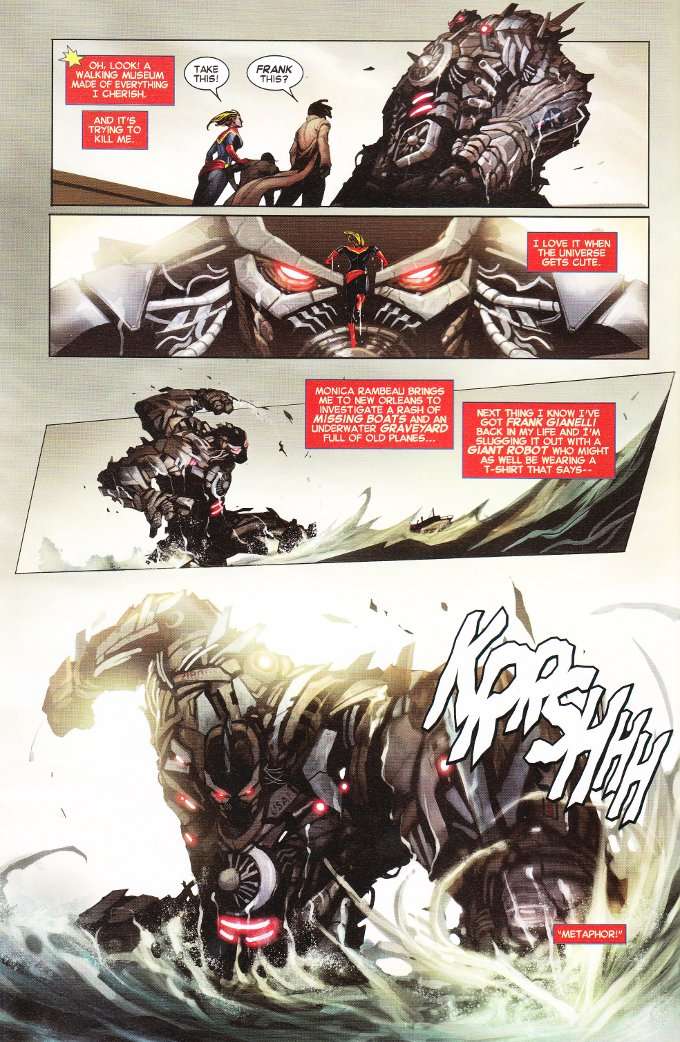
One thing I've loved about this book is the exploration of how super-powers might be used in a capacity other than fighting super-villains.  Other books have explored the concept before but - to my knowledge - none have done so with an Avengers-level hero.  We saw it in the first arc and get more of that in this issue as we see Carol Danvers assisting harbor patrol agent and ex-Captain Marvel Monica Rambeau with a salvage operation. 

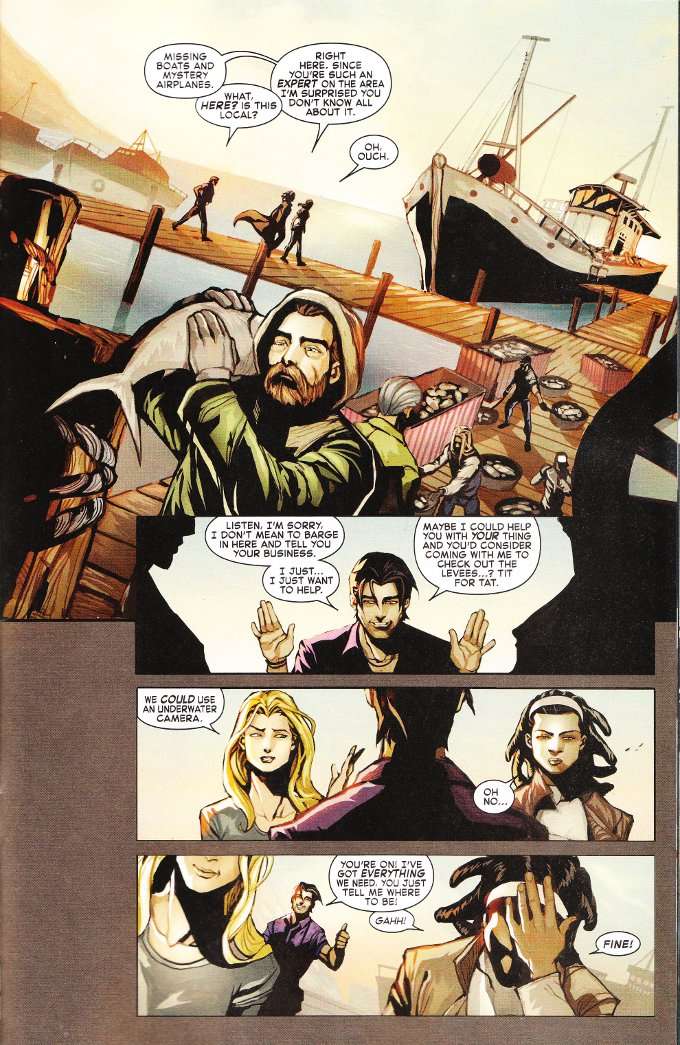
The story focuses upon the two heroes as they try to locate several downed airplanes and sunken ships  that were brought down under mysterious circumstances.  Frank, a photographer colleague of Carol's from her magazine writer days, shows up pleading for help regarding New Orleans' decaying levies, thinking that a prominent superheroine might be able to help in some way.  A bargain is reached as Carol agrees to see what she can do if Frank agrees to help them with taking pictures of the wreckage.  Naturally, there are complications and the issue ends with our heroes discovering just what might be responsible for the sunken vehicles. 


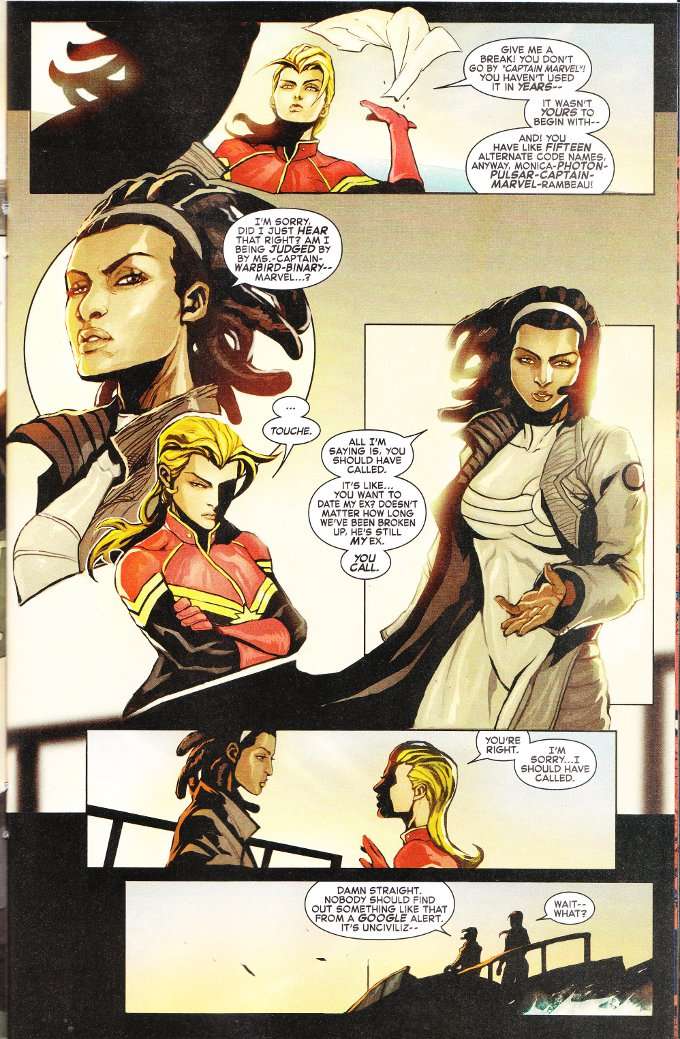
The relationship between Carol and Monica takes center stage for most of the issue.  Not surprisingly, given the book so far and co-writer Kelly Sue DeConnick's pedigree, this issue passes The Bechdel Test.  More impressively, Monica Rambeau's backstory and just why she refuses to work underwater anymore (the result of a classic Avengers storyline)  are neatly and naturally explained in the dialogue and marked off with a famous "As Seen As" caption box.  Hats off to DeConnick and co-writer Christopher Sabela for bringing back that little slice of Marvel history!


Dexter Soy continues to wow me with his artwork.  I usually prefer a more realistic style, but Soy's stylized characters suit this book well.  Soy leaves most of his pencils lightly inked, effectively using the shadows in the heavily inked areas to emphasize the parts that are "in light".

If you haven't picked up Captain Marvel before, this is a good issue to start with.  I recommend this book to any who like stories with strong female protagonists, quirky superhero books that look at the effect superpowers might have on the day-to-day operations of a world and quality comics in general. 

Tuesday, November 6, 2012

Captain Marvel #4-6

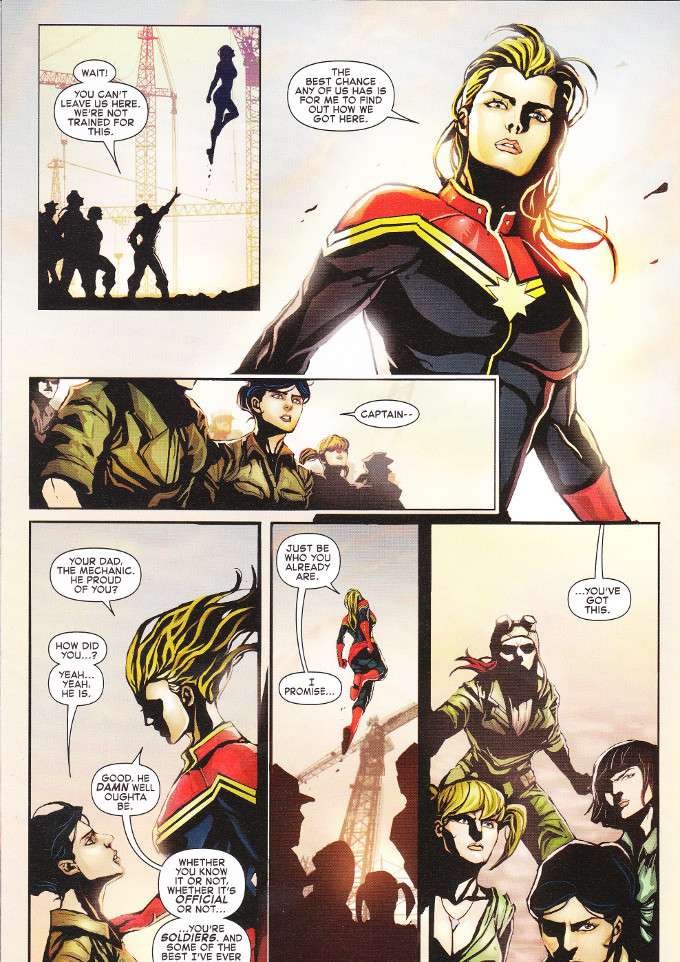
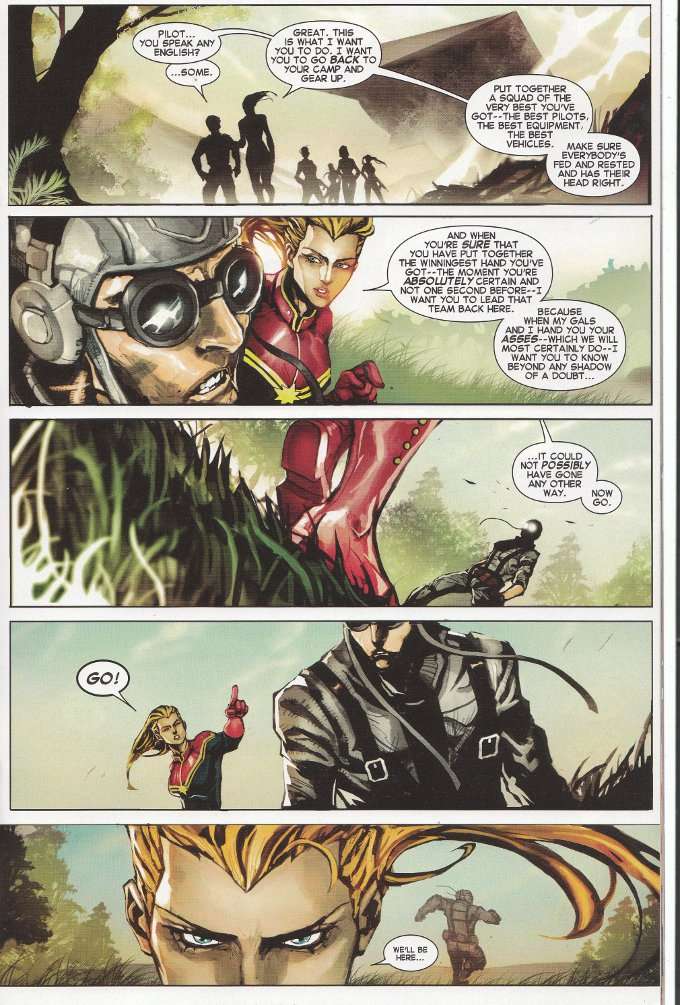
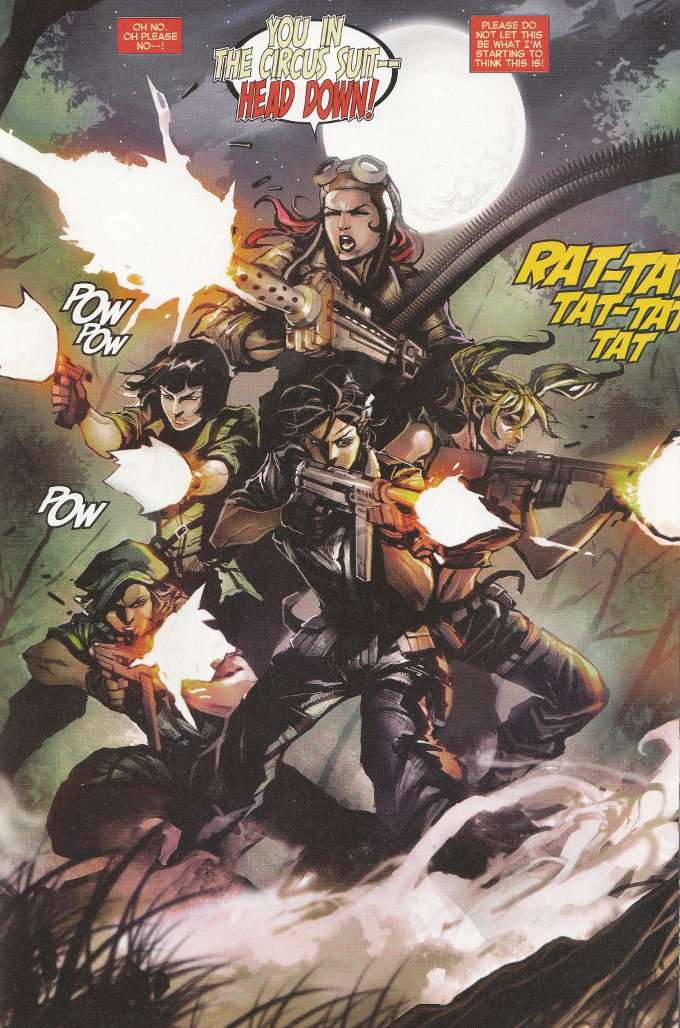
I've held off on reviewing Captain Marvel for the past few months because I was, for a time, confused by its' storyline.  The book opened up simply enough, with Carol Danvers being quickly established as a tough, no-nonsense career soldier turned superhero.  Things became a little more complicated as Carol, in the midst of trying to top a flight record unofficially set by her childhood idol (pilot Helen Cobb) became lost in time and wound up partnering up with a group of all-female pilots in World War II against a group of Japanese soldiers equipped with alien technology.


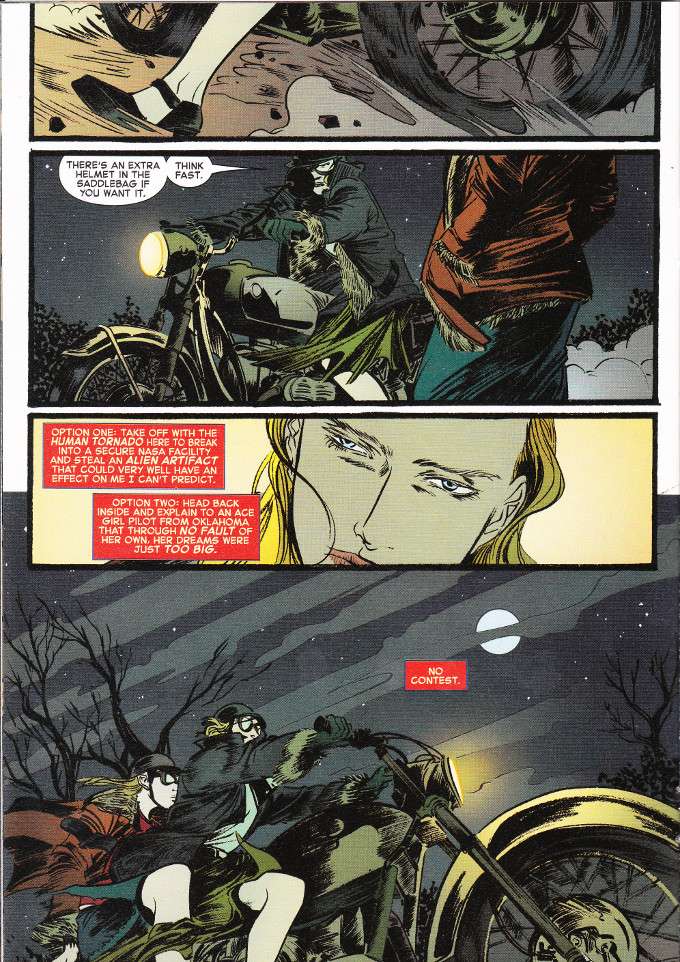
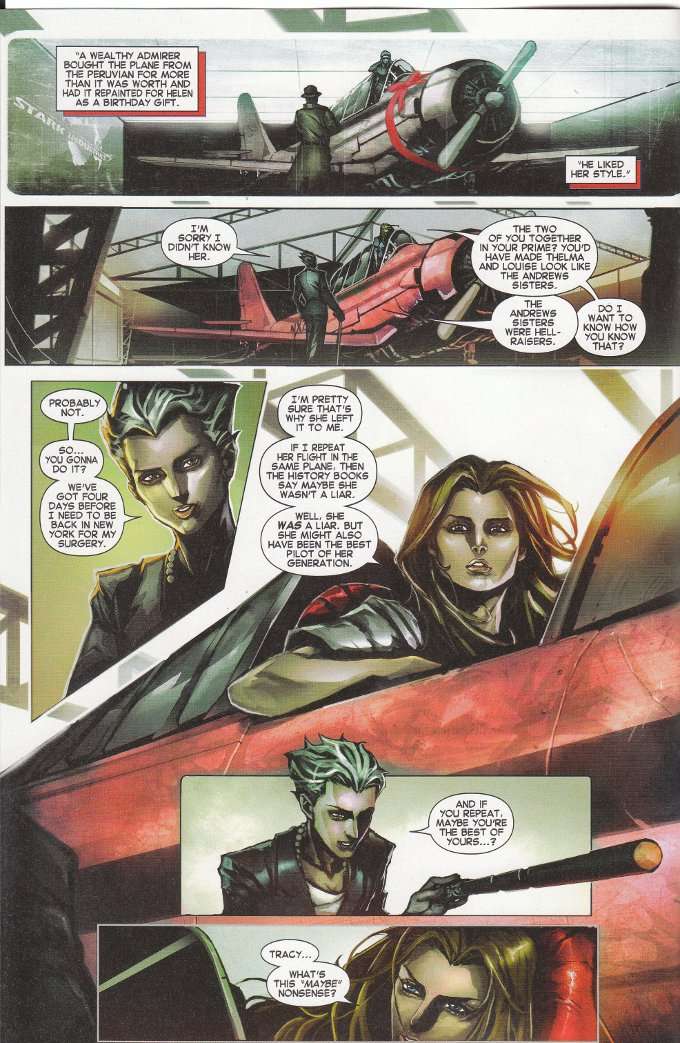
Issue 4 continued the storyline, with Carol continuing to fight alongside the "Beautiful Banshees" until she had a vision of her plane overhead.  Her attempts to catch up with it sent her through time again, this time winding up in the United States at a time when Helen Cobb was fighting for the right of female pilots in the USAF to fly jets and get the experience needed to become astronauts.  Somehow, Carol is able to enlist in the same program and winds up befriending her idol, all while trying to learn the history of an alien artifact that Helen Cobb may have come into contact with.  This adventure makes up the action of Captain Marvel #5.


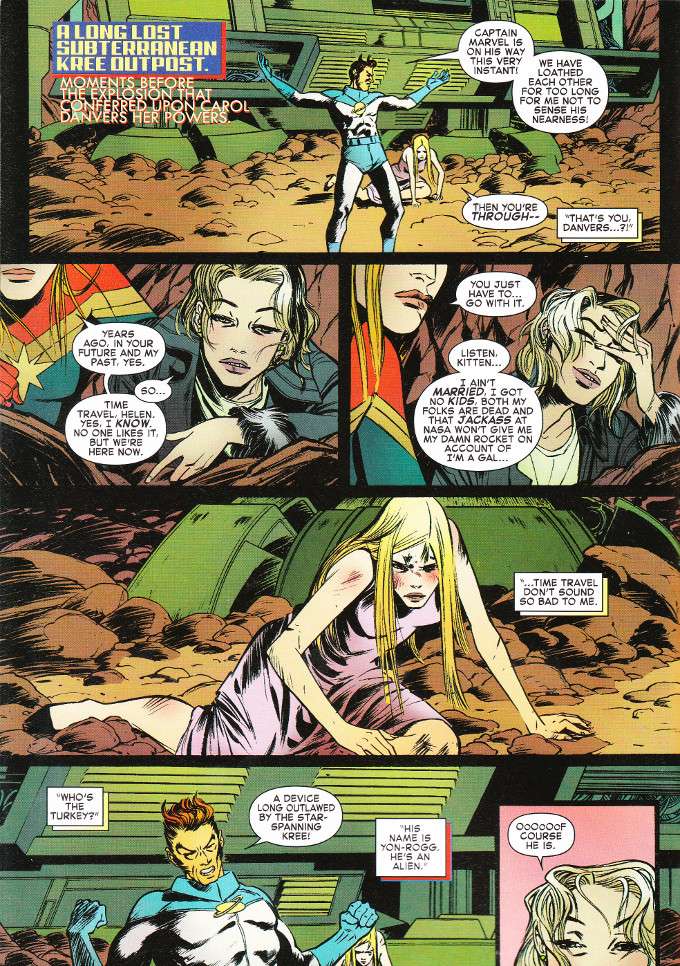
Captain Marvel #6 sends both women forward in time to the moment when Carol Danvers gained her super-powers.  Where it goes from here, I shall not say.  Suffice it to say, whatever confusion I experienced in the earlier issues was banished by the issue's end.  Kelly Sue DeConnick wrote a great story here, though the latter chapters scan far more easily in one sitting.  If you haven't picked this book up yet, you might wait for the inevitable TP collection.  I think it will be worth the wait. 


The artwork is primarily provided by two different but skillful artists.  Issue #4, whose main story was drawn by Dexter Soy, offers more of the stylized painted artwork that wowed me in the first issue.  Al Barrionuevo and Will Quintana produced the artwork for the flashback sequences at the issue's end, offering a more classic comic book style than Soy.  Issues 5 and 6, penciled by Emma Rios with inks by Rios and Alvaro Lopez, are more Mangaesque in appearance, looking not unlike some of the early Shojo created by the Fabulous 49ers.  It's a different choice for an American comic-book, but an effective one.

All in all, Captain Marvel's been an interesting read.  It might not be everybody's cup of tea but I appreciated the story, which proved quite accessible to someone like me who hears the name Captain Marvel and thinks Billy Batson.  Give it a shot once the trade comes out. 

Wednesday, September 5, 2012

Captain Marvel #3 - A Review

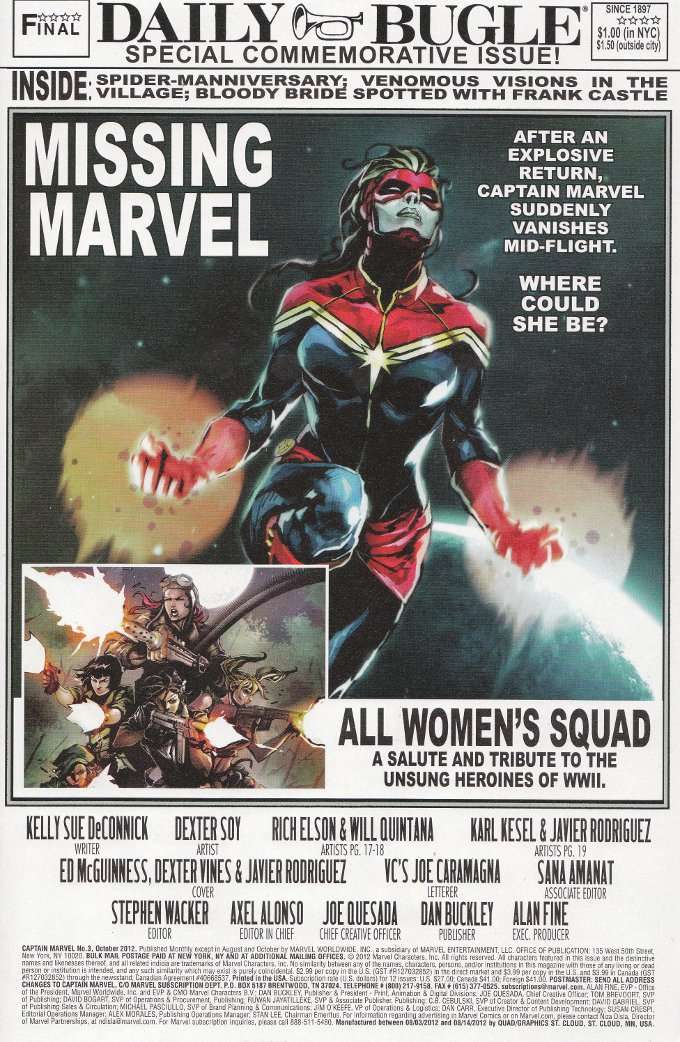
I have a suggestion for The Eisner Award committee. Start a new category for 'Best Recap Page'. Then give it to Captain Marvel.


No book I've read in recent memory has handled its' own exposition so smoothly as this one. After being informed of the disappearance of Carol Danvers (a.k.a. Captain Marvel) on the first page, the story quickly brings us up to speed on how - for some reason - Carol has been teleported into the past. She finds herself alongside The Banshee Squad - an elite all-women unit from World War II. The plot thickens in this issue as the Banshees discover that the Japanese Air Force is using some very advanced technology. Technology that Carol immediately recognizes as belonging to The Kree - the alien race responsible for her super powers.


Kelly Sue DeConnick proves to be as phenomenal as ever. The action scenes contained within this issue are well-paced and exciting. But this issue truly shines during the quieter scenes where Carol Danvers bonds with a group of women who revolutionized the idea of female soldiers and blazed the trail that she eventually walked down. This scene also sets up a cute gag at the end of the book, where we see what appears to be a "lost comic" penned and drawn by the Banshee Squad's aspiring writer and artist, starring a somewhat familiar looking heroine.


This sequence is illustrated by Karl Kessel and Javier Rodriguez, who provide a picture perfect parody of the Golden-Age superhero style. There is another two-page back-up scene, well-illustrated by Rich Elson and Will Quintana, which seems to be setting up a future storyline for Carol to deal with. The lion's share of the artwork is once again handled by Dexter Soy, who is quickly becoming one of my favorite artists.

Bottom Line: If you aren't reading Captain Marvel, you should be!

Friday, August 31, 2012

Captain Marvel #2 - A Review

Captain Marvel #2 continues on from where the first issue left off, once again focusing on Carol Danvers as a pilot - not as a superhero. Still thinking of the female pilot who inspired her as a girl, Carol sets out to prove that it would have been possible for her to have broken a record that was never officially recognized. How? By taking the exact same plane out for a ride and tying the record herself before trying to break it!


I have no doubt that Kelly Sue DeConnick could have written an amazing story built around just this concept. Her take on Carol Danvers proves herself worthy of the name Marvel on every page- smart as a whip, tough as a two-bit steak, confident and powerful enough to back up her high opinion of herself. A story about her trying to prove herself as a pilot independent of her abilities as a superhero would be a fine ripping yarn. But things are rarely that simple for Carol Danvers and - naturally - there's complications to the flight that lead to Carol winding up captured by strange soldiers and having a run-in with a most unusual group of soldiers, whose presence suggests Carol may have gone even further astray than she thought.


I'll be sorely surprised and disappointed if Dexter Soy doesn't get an Eisner nod for his work on this book. His character designs are stylized without being inhumanly distorted and his color palettes are perfectly chosen throughout. His artwork perfectly matches DeConnick's scripts every one of his splash-pages is poster worthy.

How to sum up my feelings of this series? Three words: READ THIS BOOK.

Wednesday, July 18, 2012

Captain Marvel #1 - A Review


I must confess I only bought this book to make a statement. To prove a point. To strike a blow against the male-dominated Powers That Be in the comic books industry in general (and at Marvel Comics in specific) and all the trolls who declared this book Dead On Arrival.

I'm doing this despite my personal ban on most things Marvel in the wake of One More Day. I decided to lift it to support this book. Because some things are more important than my own vendettas. Because while I still can't bring myself to buy Spider-Man comics when the people running Spider-Man believe his defining trait to be youth rather than responsibility, I can buy a book to show that there are readers out there who want stories with strong female characters. That we want books written by female writers.

In saying all that, I must also say this: this book is well worth buying even if you don't want to make a statement, prove a point or strike a blow.


Carol Danvers is not a character I've ever thought about much. I know her back-story - USAF pilot is infused with alien DNA, gaining superpowers in the process. One of Marvel's first ham-fisted attempts at creating a feminist superhero, back in the 1970s. Part of what was easily the most sexist, disturbing storyline in comic book history. And she had a storyline in the Avengers where Tony Stark confronted her about her alcoholism. She's a notable character but not one I've ever been a big fan of.

This issue doesn't discuss most of that but it does lay clear who Carol Danvers is outside of a series of statistics and storylines. She is tough. She is no-nonsense. She is capable. She shouts orders at Captain America and can match him in tactical knowledge. She snarks back at Spider-Man and can hold her own in a fight against him. She loves flying under her own power but missing flying in an airplane.

All of this and more is revealed to us through Kelly Sue DeConnick's masterful script. Broken into four rough acts, we see Carol fighting the Absorbing Man alongside Cap, discussing her new costume and taking up the name of Captain Marvel with cap later, sparring with Spider-Man in The Avengers gym, checking up on a cancer-patient friend and thinking about her hero, record-breaking female pilot Helen Cobb. There is Ethos, Pathos and Logos - all in balance.


The artwork by Dexter Soy is nothing less than amazing. Reminiscent of Tony Harris' work on Starman, though with brighter colors and less heavy inks, Soy's artwork throughout changes palettes as needed. More muted tones are used in the flashback scenes and more vibrant shades are used in the scenes depicting superheroes in motion.


I may have bought this book to make a statement. I will continue to buy it because it is damn good.