Showing posts with label Rob Hunter. Show all posts

Saturday, October 5, 2013

Green Lantern #24 - A Review

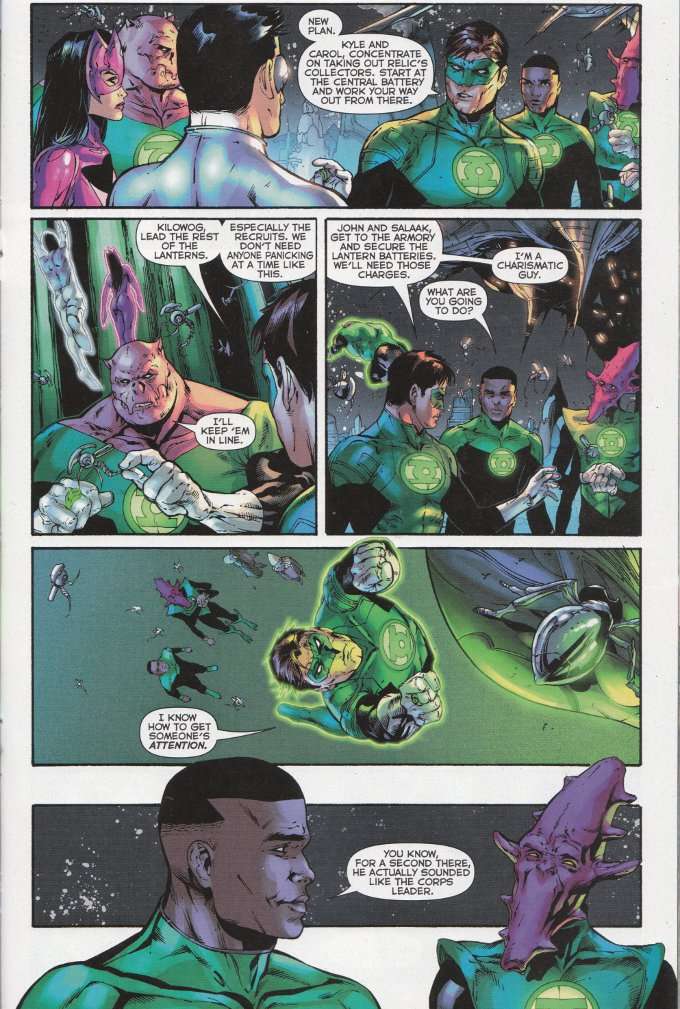
My fears that the Green Lantern titles were becoming increasingly interdependent on one another seem to have been invalidated as of Green Lantern #24.  This is ironic, given that this issue is the first part of yet another crossover storyline between all of the Green Lantern books.  Despite this, writer Robert Venditti takes care to establish the status quo for those readers completely unfamiliar with the series as well as readers like me who have only been reading one or two of the line.  Impressive, he does this in the span of one page!


Alas, I find myself with a whole new set of fears and worries regarding the future of my favorite franchise.  Ignoring the metaphorical implications that Hope as a force is literally dead within the new DC Universe in the wake of the Blue Lanterns' destruction, I find myself troubled by the accusation of new villain Relic that the various Lantern Corps have been hastening the destruction of the universe just by existing.  The idea that The Green Lanterns have been slowly destroying the universe for years is a troubling one and the suggestion our heroes would have been better off never becoming heroes spits in the face of the heroic spirit.

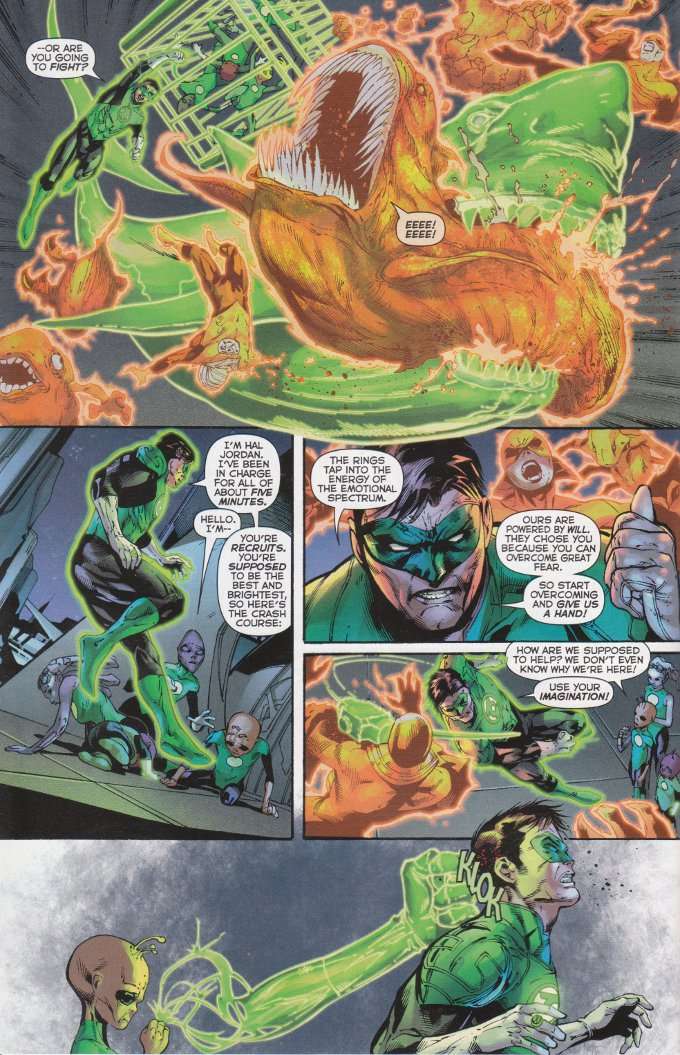
That being said, this issue is incredibly well-written and enjoyable.  Venditti sets up all this exposition without making it seem at like a lecture.  Most impressively, there's some actual signs of character growth in the usually lackluster Hal Jordan.   


The artwork by Billy Tan and Rob Hunter is as impressive as the writing.  Tan was born to pencil the Green Lantern series, having a real knack for depicting unusual aliens and amazing constructs.  Hunter offers just the right amount of defining shadow amidst the light that dominates the artwork. 

I'm uncertain what the future holds for Green Lantern but that may not be an enitrely bad thing.  The book may be heading into a depressing downward spiral but it is, I must admit, an engaging read in spite of that.  For now, I shall hope that Relic is mistaken or lying and remember that old saying, "It is always darkest before the dawn."

Wednesday, August 14, 2013

Green Lantern #23 - A Review

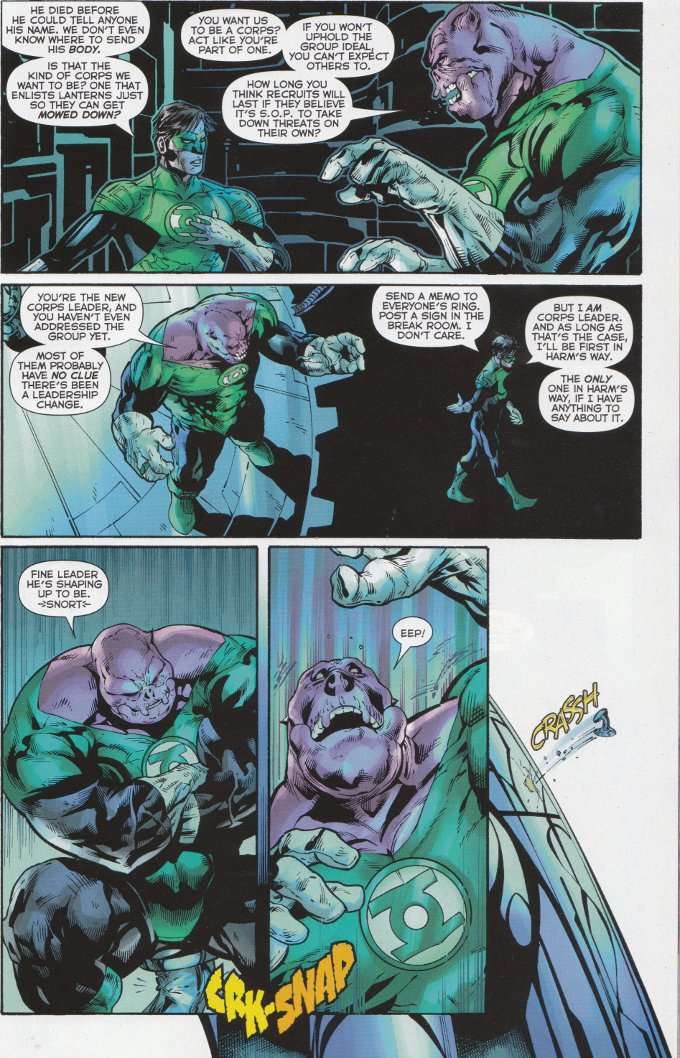
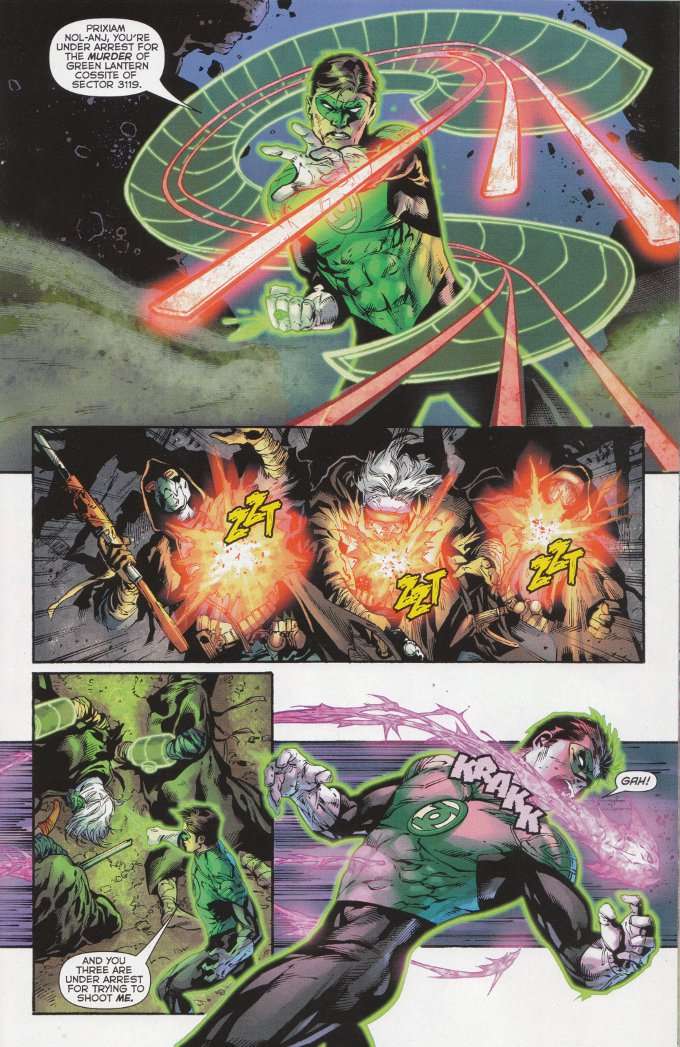
The previous issues of Green Lantern have set up a number of problems for newly appointed GL Corps leader Hal Jordan to deal with, including a new batch of rookie Lanterns that seemed ill-equipped for service, a new recruit who died before anybody found out who he was and where he was from, a mysterious energy fluctuation that causes their power rings to deactivate at random and an escaped prisoner.  Being a man of action and simple tastes, Hal wants to deal with the prisoner first since that seems to be a problem he can solve.  As usual, things are more complicated than Hal knows and what seems to be an easy capture will prove to be anything but simple.


There are two ways Green Lantern has traditionally been written in the past.  One way is as a cosmic space opera, with gigantic enemies and the colossal power of the Green Lanterns emphasized.  The other way is to view it as a cop drama that just happens to focus upon a police force with superpowers whose beat is the entire universe.  Geoff Johns took the former view and it seems Robert Venditti is taking the later.  Venditti's script does a fine job of revealing the personalities of the various Lanterns casually through their conversations and there's a good balance between action, drama and humor.  One can almost hear Nathan Fillion's voice reading Hal Jordan's dialogue.


Green Lantern demands much of an artist but Billy Tan seems capable of meeting and exceeding those demands.  Tan easily depicts the exotic aliens and unusual ring constructs that the story requires.  Praise must also be paid to inker Rob Hunter, who does a fine job of highlighting Tan's original pencils and enhancing the mood of the story without obscuring the action in ink.

Wednesday, July 10, 2013

Green Lantern #22 - A Review

The first thing one is likely to notice about Green Lantern #22 is the stunning artwork of Billy Tan.  Green Lantern demands much of any artist and it is a rare artist who can manage to portray a variety of unusual ring projections as well as the exotic alien races that dominate The Corps.  Thankfully, Tan proves up to the task and this issue gives him ample opportunity to show his skill in drawing interesting outworlders and complex contraptions.   


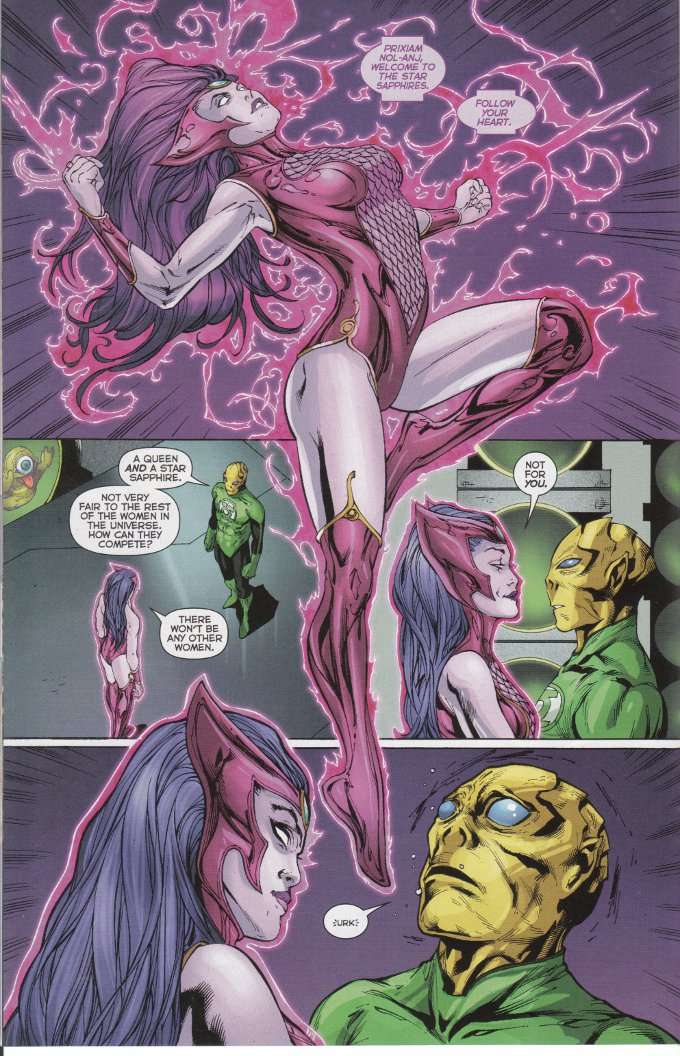
Robert Venditti's first issue of Green Lantern last month showed us that he was not content to tread the same path as Geoff Johns and this issue showcases his inventiveness while simultaneously making use of the diverse cast and mythology that Johns created during his long run on this series.  For instance, the Blue Lantern Saint Walker shows up and is given the first vestige of a personality beyond the easy-going space hippie we've seen for so long.  Venditti also introduces an interesting new villain in the mold of the original Star Sapphire with the alien warrior queen Prixiam Nol-Anj.   


If you haven't been reading Green Lantern before, this is a good time to start.  The artwork by Billy Tan and inkers Rob Hunter and Jon Sibal is truly breathtaking.  Writer Robert Venditti presents some great action sequences and utilizes the rich mythology of the series while still making things accessible to new readers.  I had been on the fence about continuing with this title in the wake of Johns' departure but now... well, what else can I say but "Once a Green Lantern, always a Green Lantern"?

Tuesday, June 11, 2013

Earth 2 #13 - A Review

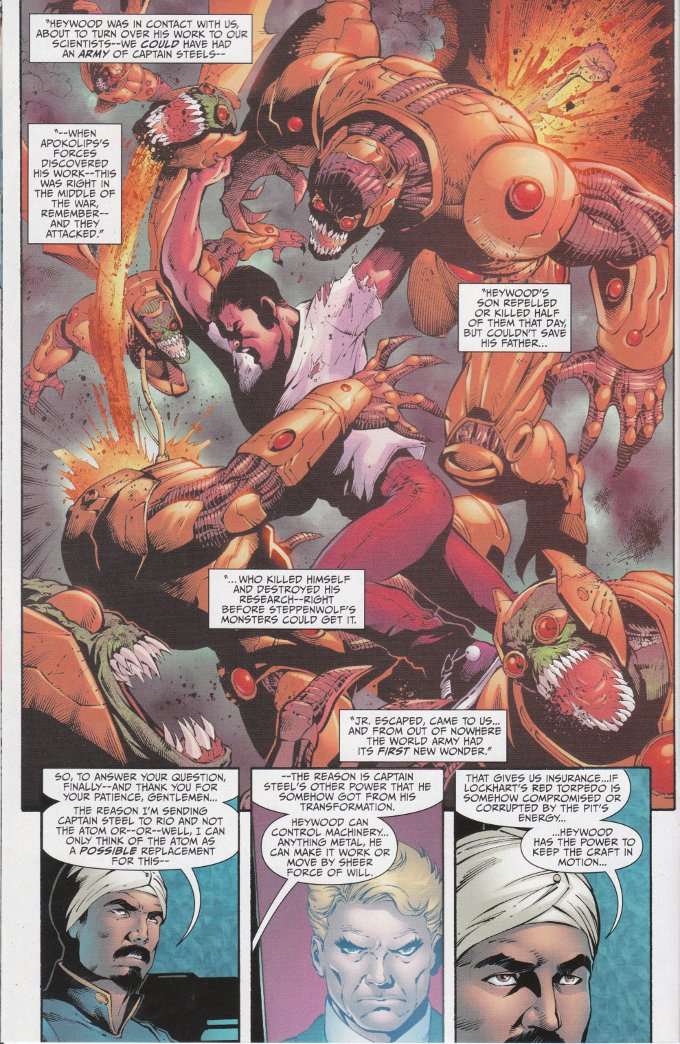
Picking up where the recent Earth 2 Annual left off, Earth 2 #13 further explores the various "Wonders" recruited or created by The World Army.  The primary focus is on Captain Steel, whose origins and powers are explained in detail as he undertakes a mission to explore one of the fire pits created during the Apokolyptian invasion.  We also get another glimpse of the new Batman, who is following Hawkgirl even as she continues her investigation into the the death of Alan Scott's lover.  Mention is also made of several other World Army agents, all of whom share the word "Red" in their code-names. 


No one can deny that James Robinson is in his element when it comes to this series.  No writer can match Robinson for his knowledge of the classic Golden Age heroes and his revamps of these classic characters have all proven skillful and satisfying.  The conceit of drawing a connection between several unaffiliated heroes who had nothing in common but a color in their name is a brilliant one and typical of the thought that went into Robinson's classic Starman series.  With mentions of The Red Tornado, Red Torpedo, Red Arrow and a Red Lantern, one wonders if we might see a Red Bee before Robinson is done.


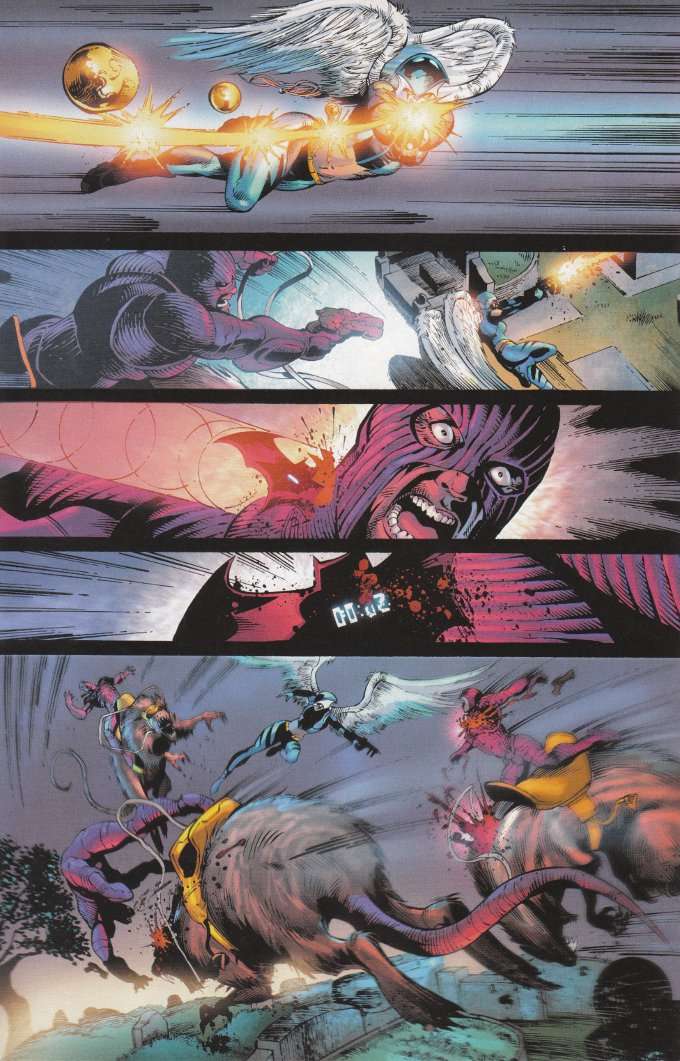
Yildiray Cinar once again subs for Nicola Scott.  I've had issues with Cinar's work in the past but suspected that my objections might be due to two different inkers with two entirely different styles.  That suspicion seems to have been born out by this issue, which only employed one inker - Rob Hunter.  Cinar's figures seem less distorted and warped than in that previous outing.  More, Cinar proves to be no mean visual storyteller, capable of conveying the action effectively on those pages without any dialogue.

Wednesday, May 29, 2013

Aquaman #20 - A Review

When Geoff Johns first introduced the idea of The Others during his second big Aquaman storyline, I wished that more time had been spent developing the team and showing their adventures.  Made up of a variety of unique characters whose only common bond was possession of a magical Atlantean artifact. The Others represented something I feel that The New 52 was largely lacking - history, diversity and something we hadn't seen before.  Guest Writer John Ostrander takes a closer look at these characters while introducing a new team member in this interlude issue, which shows the surviving Others taking on a mission that Aquaman can't, due to all the things that currently have him busy in Death Of A King.


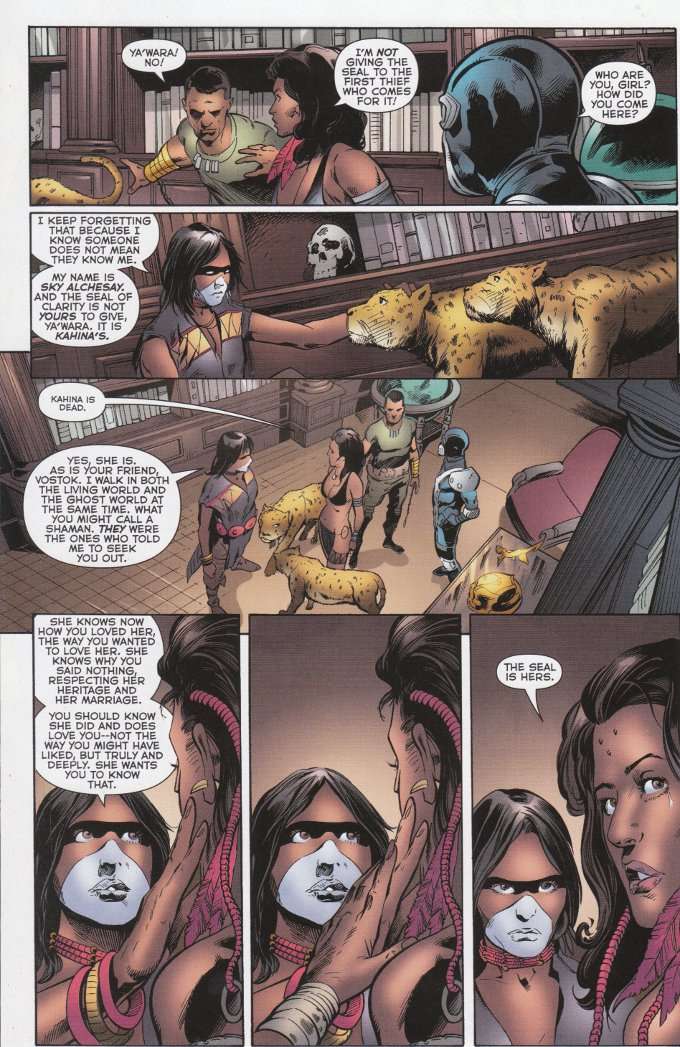
Those familiar with Ostrander's work on Suicide Squad will find much to enjoy with his script here.  Like The Suicide Squad, The Others are made up of people who do not always get along with one another but are professional enough to put aside their disagreements for the common good - one way or the other.  Ostrander also deserves some credit for further diversifying the team, introducing a new Native America hero, who avoids being stereotypical despite her mystic origin.  Ostrander also reveals something of Ya'wara (the only jungle-princess character I can think of in modern comics who isn't a blonde-haired Caucasian) and her romantic preferences that further sets the character apart from the common cliche.


Sadly, the art fails to live up to the script.  Manuel Garcia's pencils are competent enough and his figures are crisp and clear in places.  The problem lies with the inkers, of which there are four.  Anyone who doubts the power of an inker to make or break a comic would do well to take a look at this issue and take note of how the inking in this book is far from uniform.  The inking is too thick in some places, too thin in others and just right in a rare few moments.  I applaud DC Comics efforts to give work to as many artists as possible but it would be nice if this book had a single inker or greater effort was made to ensure a more consistent look. 

Monday, May 27, 2013

Justice League #20 - A Review

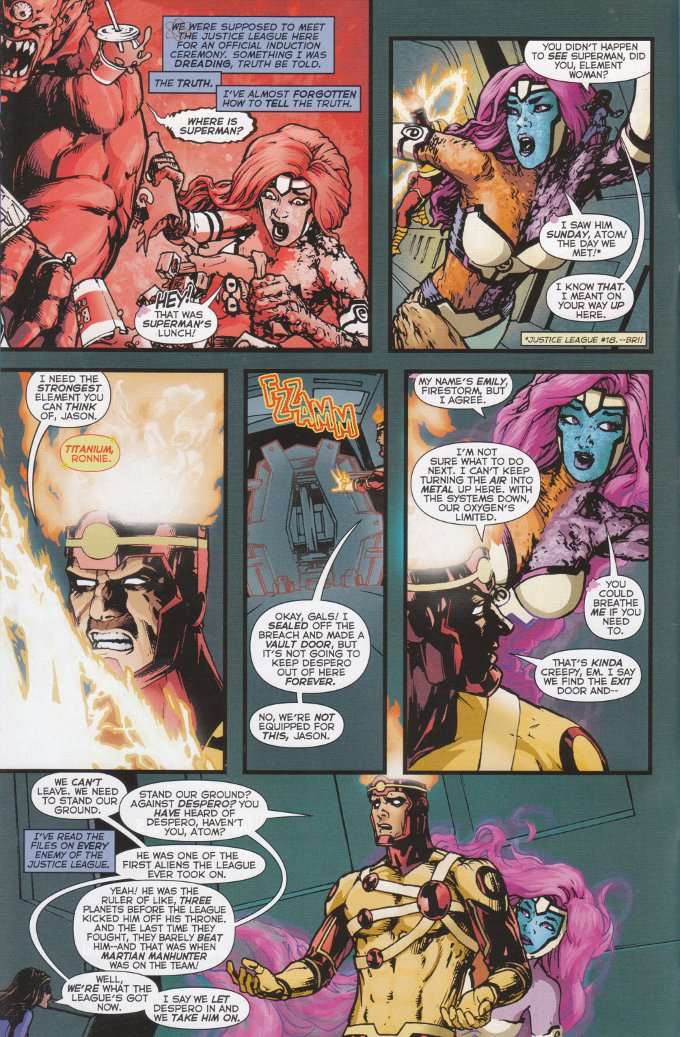
 Justice League #20 is something of a mess, in terms of both story and artwork.  Reportedly, the main story was laid out by one man and then illustrated by three different pencilers and three different inkers.  Art by committee works even less often than writing by committee and it really doesn't work here.  Even accounting for the differing styles at work, everything looks horribly uneven.


The story by Geoff Johns, focusing primarily upon the newest members of The Justice League as they fight the telepathic powerhouse Despero, isn't much better.  Johns does his best but the underdogs fighting outside of their weight class story has been done to death.  Not helping matters is that much of the "charm" of this issue depends upon your enjoyment of the flighty bimbo that is Element Woman or the continual squabbling of the two teenagers who make up Firestorm.  And given that Fury of Firestorm was cancelled this month, it appears that the vast majority of comics fandom find the antics of Ronnie Raymond as tiresome as I did when they played this exact same conflict out during Brightest Day

There's only two things that save this comic at all.  The first is the Shazam back-up story, which finally seems to be gaining some legs or maybe I'm just viewing it more sympathetically now that Billy Batson is beginning to act like the hero he should be.  The other bright side in all this is a scene involving several of the Justice League founders and Superman having a talk with Batman about his creation of protocols to take down every other member of the Justice League... including himself. 


This book seriously needs one artist, one inker and one person deciding its' look.  The multiple teams working on the main story this time around do not work well together.  And Johns would do better to develop his new characters alongside the established crew for a time rather than throwing them all into a spotlight that none of them deserve yet. 

Wednesday, September 12, 2012

Team 7 #0 - A Review


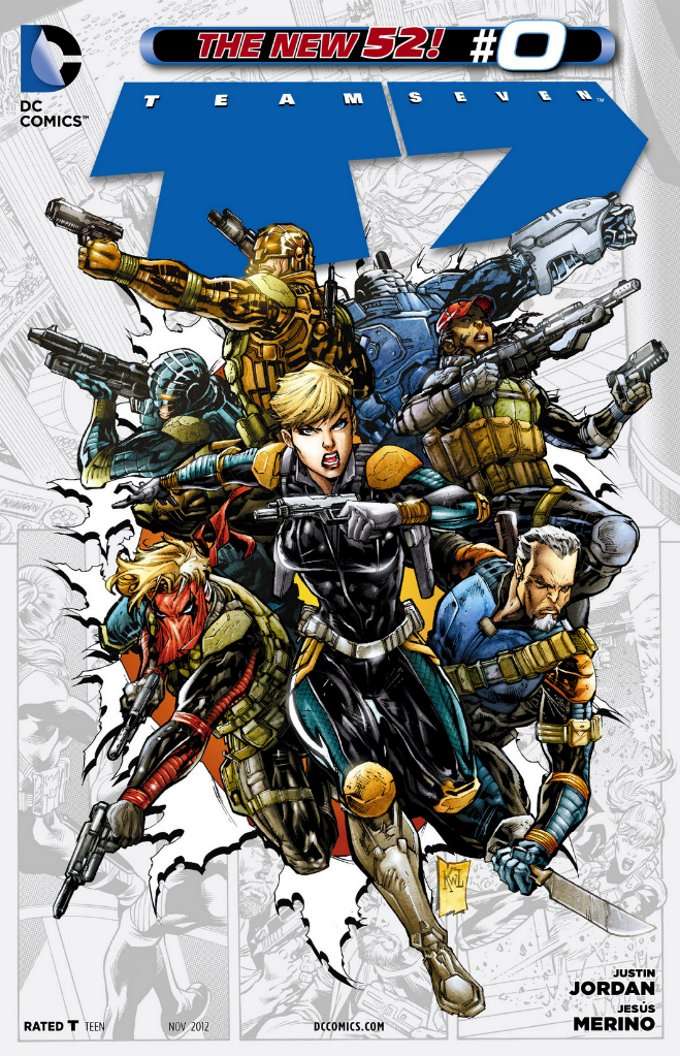
I never read any of the original Team 7 comics. Come to think of it, I've read precious little of the original Wildstorm Comics period. I know enough of the base concept of the original book - an elite US government team formed in response to the appearance of the first superhumans. Eventually, they were experimented upon themselves with several members of the team going insane and/or committing suicide.

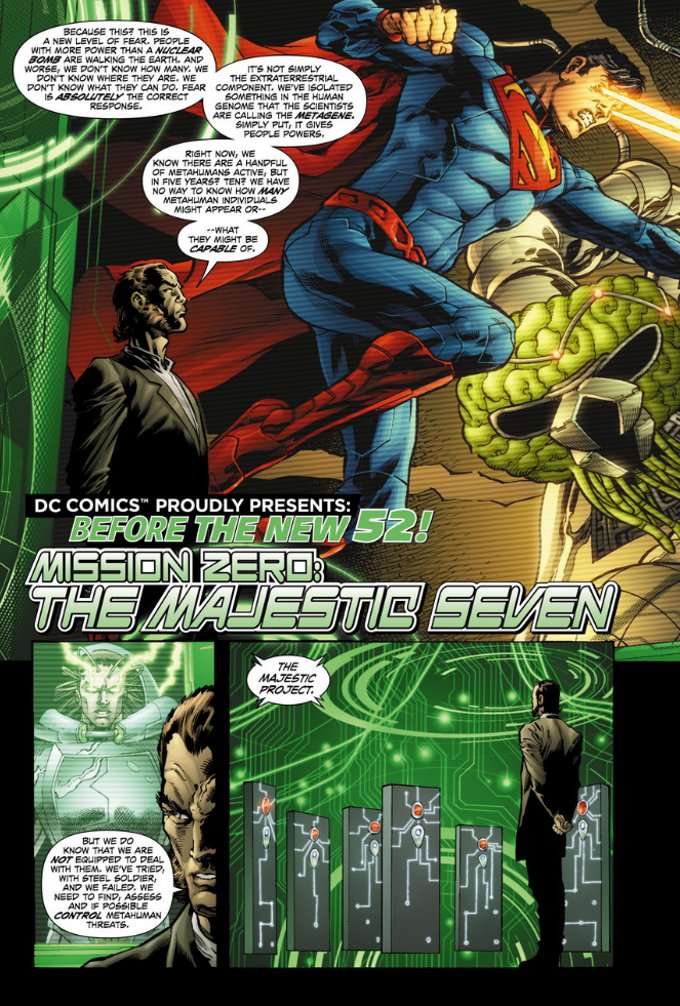
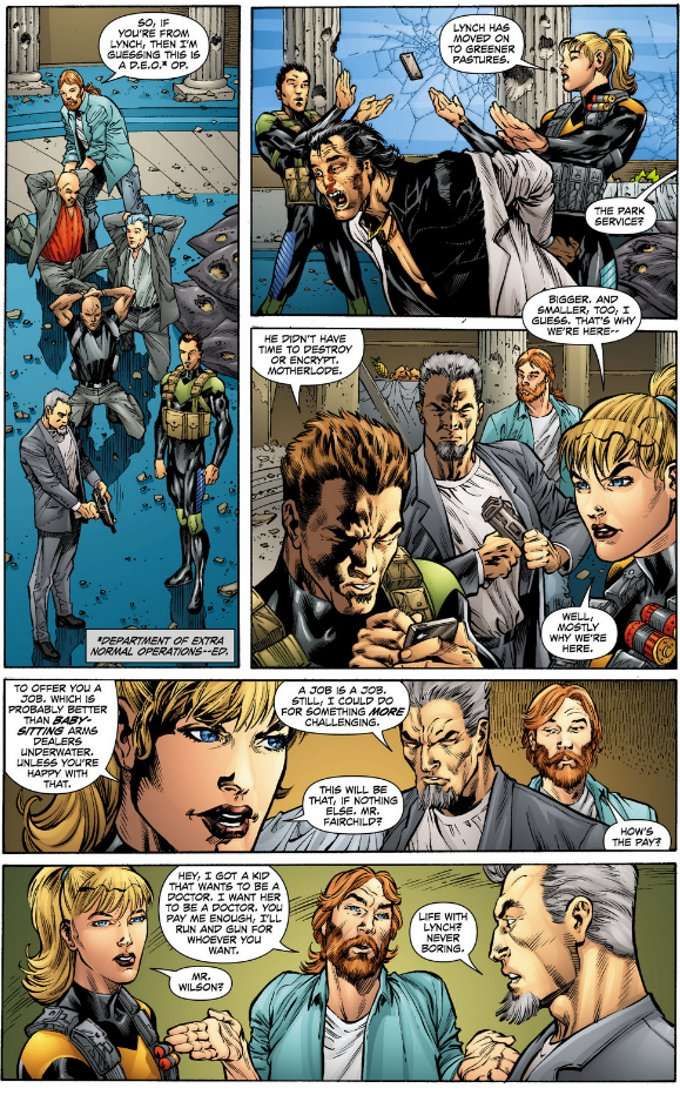
Team 7 #0 starts out with this same base concept, as team leader John Lynch speaks to an unseen audience. Lynch speaks of the alien menace that nearly stole a part of Metropolis (as seen in the opening arc of Action Comics) and the failure of the government's Steel Soldier project to deal with the menace. Lynch then describes his dream of an elite team of agents that will be capable of meeting the challenges posed by the apperance of these new super-beings. The rest of the issue shows Lynch's two best agents - infiltration expert Dinah Drake and operations expert Kurt Lance - as they go about recruiting the rest of Lynch's wish list.


The team roster reads like the Who's Who of Covert Ops in the DCU. Tactician Slade Wilson. Weapons Expert Alex Fairchild. NSA Analyst Amanda Waller. Special Forces/Conman Cole Cash. Thrown into this all-star lineup are three newcomers - Jack-Of-All-Trades James Bronson, Master-Pilot Summer Ramos and Military Intellligence Expert Dean Higgins.

I have to approve of the concept of this book on general principle. One of the biggest problems many readers had with The New 52 universe was the sheer number of covert US government organizations. A book like this exploring how things got to that point was sorely needed and writer Justin Jordan seems prepared to explore not only how the government and military changed in the face of the metahuman threat but also how several key players evolved in the face of that challenge.

Don't think for a second that means this is going to be a dull treatise on how various branches interact! Jordan's script is focused firmly on the action and the set-up for more action. He gets the basic facts of each character's background presented but doesn't spend much time developing their personalities. Granting that's usually not the purpose of a Zero issue and that most of these characters are well-established in the minds of most comic readers, it is somewhat bothersome that we know little about Summer Ramos apart from she's a good pilot and she's apparently crazy. Hopefully there will be deeper development in later issues.


The art by Superman penciler Jesus Merino, with inks by Rob Hunter and Norm Rapmund is well executed throughout. The story is told well, flowing naturally from panel to panel And each character has a clear design, so there is little trouble telling who is who even in the far-shot action scenes.

I'm not sure this is a book I'll be picking up in the future. The general dark tone of people seeing superheroes as something to be afraid of rather than something to be inspired by also doesn't do a lot for me. Still, fans of the original Team 7 book as well as books like the oriiginal Suicide Squad will likely find a lot to enjoy here. This is a solid-looking title, even if it isn't my cup of tea.

Saturday, September 8, 2012

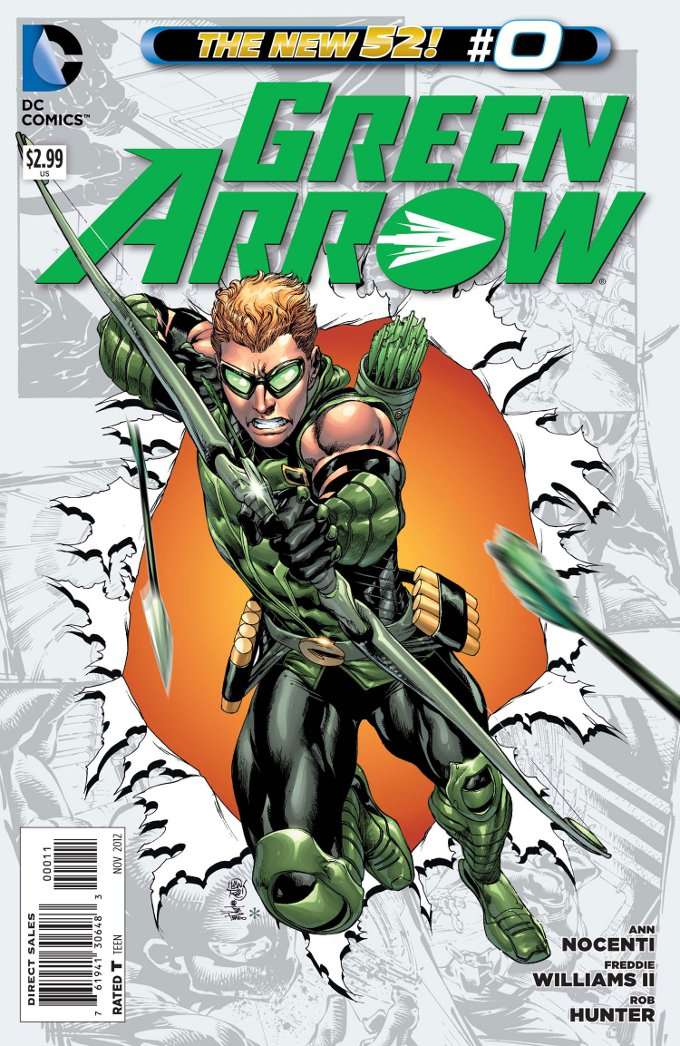
Green Arrow #0 - A Review

I dropped Green Arrow three months ago but some of you wrote in to tell me I should give the #0 issue a shot, if only because it was supposed to finally explain Ollie's origin story.

Honestly. One of you might have mentioned that it was written by Judd Winick!


I don't think I can fault you all, though. Even the cover scan on DC Comics website credits Ann Nocenti as the writer. I'd like to think it's because The Powers That Be finally realized that Judd Winick's name is a poison arrow to the heart to all Green Arrow fans. I'd LIKE to think that but given the reports that he was offered the Green Arrow title in order to keep him working with DC Comics (whether this was before or after Nocenti took over the book, I don't know) I know it ain't so.

I'm going to start off discussing the artwork this time because... well, Geebus Suffering Crackers, just look at the first page!
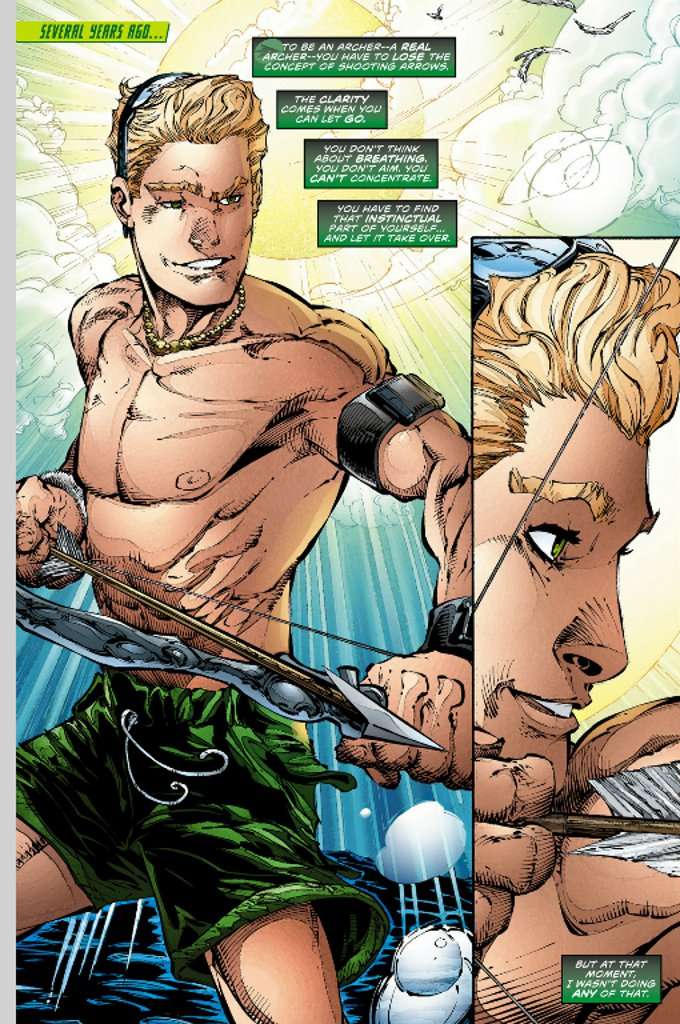


This is the work of Freddie Williams II, whose work you might remember from Captain Atom. Note that Ollie here is missing a pectoral, has an upper-left arm that is out of proportion to the rest of his body and the linework on the middle of his face leaves him looking like he has an arched unibrow. To call Williams' grasp of anatomy off would deny you the chance to use words like abysmal and nonexistent. And yet, thanks to the inking of Rob Hunter, this is still an improvement on Williams' work on Captain Atom, where he handled his own inks and you frequently couldn't separate the characters from the backgrounds.

Incidentally, am I the only one amused that a man named Rob Hunter is working on a book about a superhero inspired by Robin Hood? Probably so. But if that thought does amuse you, even a little, hold on to that happy thought. It's may help you get through what is to come.

Our story opens with 19 year old Oliver Queen throwing a party. On an oil drilling platform his dad owns. Where he's supposed to be working as a supervisor as punishment for having blown off the last three jobs his dad gave him. All of this is explained to Ollie again (and us) with all the subtlety of a fart in a nunnery by Ollie's girlfriend, Leena.
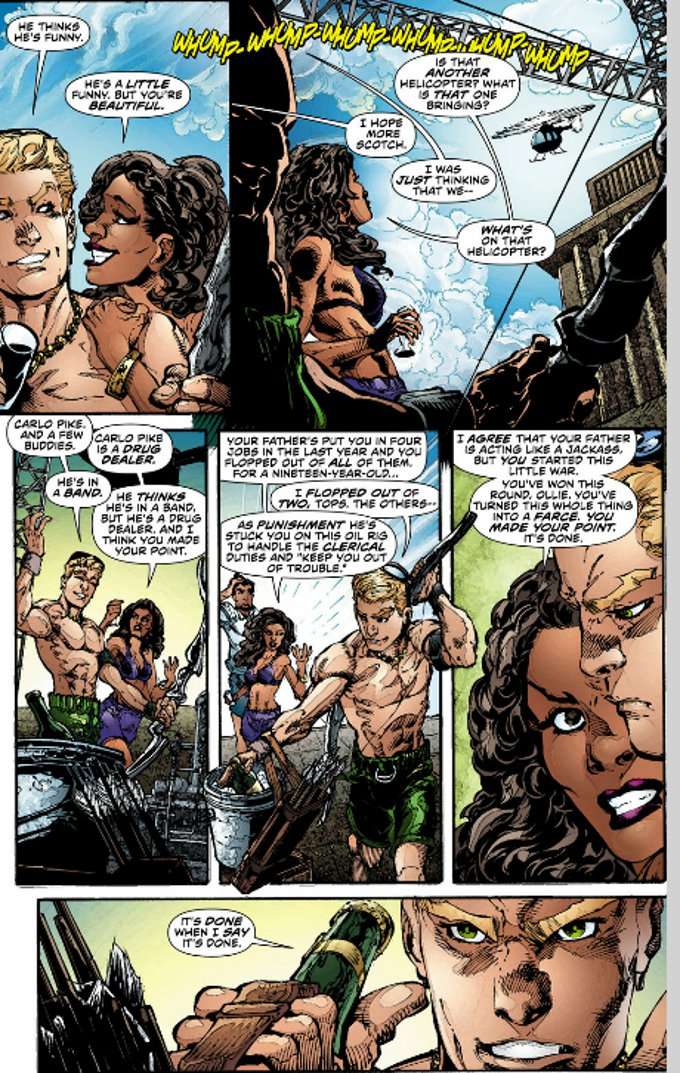


A quick side note about Leena. Leena is your typical Judd Winick girlfriend - going from Bimbo To Responsible in 2.3 seconds. One page she's defending Ollie's archery skills to his best friend. On the next, she's calling Ollie out for his irresponsibility for throwing the party she was enjoying until about two seconds ago.
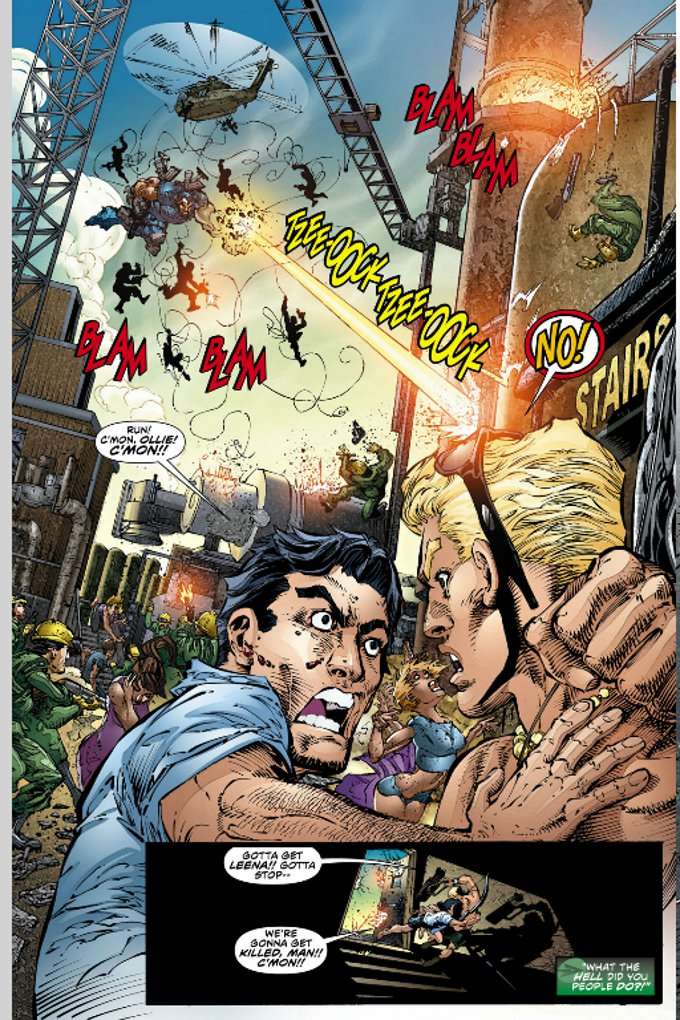


Faster than you can say Louis Gossett Jr., a cyborg terrorist who calls himself Iron Eagle crashes the party and starts trying to steal the oil. And faster than you can shout "WOLVERINES!", Ollie decides to abandon his cowardly best friend Tommy Merlyn and go all 80's action movie.

If the name Tommy Merlyn sounds familiar, you've obviously been keeping up on the announcements regarding the upcoming Arrow series. In that, as here, Ollie's best friend before being shipwrecked is named Tommy Merlyn. I bring this up because out of all the things Judd Winick could have taken from the information about the Arrow storyline we know so far, this point is the only thing he chose to bring over. I could forgive them blatantly ripping off the Arrow pilot - it's a highly anticipated show and the Green Arrow title right now could use all the help it could boosting it sales. But no - the only connection the two have is the name of Ollie's best friend. That's it.
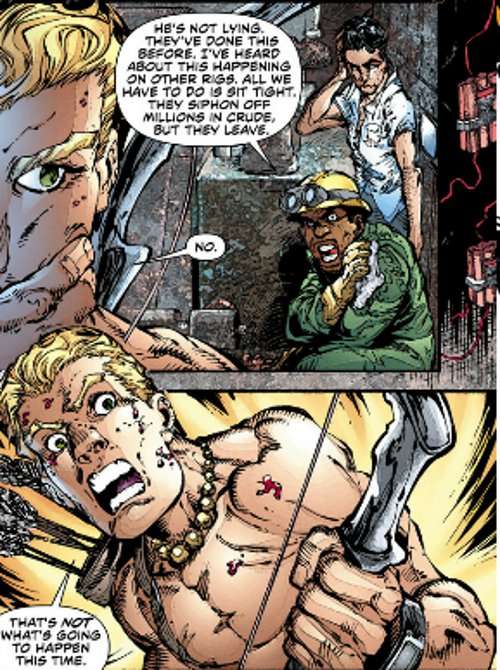


Goofy as Williams' rendering makes the ultimate layout, I have to admit this is an effective sequence. It establishes Ollie as someone who will try to fix his mistakes, taking responsibility for saving the lives of his friends after his lightening security at the oil platform for his party put them all in danger. Oliver proves himself to be resourceful and clever in a fight. And dare I say... he is both brave AND bold.

Of course since this is a Judd Winick story, and Judd has never been able to write a Green Arrow story where Ollie didn't screw up things up in the worst possible way, his attempt to shoot the bomb trigger out of the Iron Eagle's hand goes wrong. Seems the trigger is a dead-man's switch and the sudden lack of pressure results in one big gooey kablooey. Somehow, despite reportedly hiding downstairs, Tommy is suddenly propelled over the side alongside Ollie and is more horribly burned and disfigured than he is.
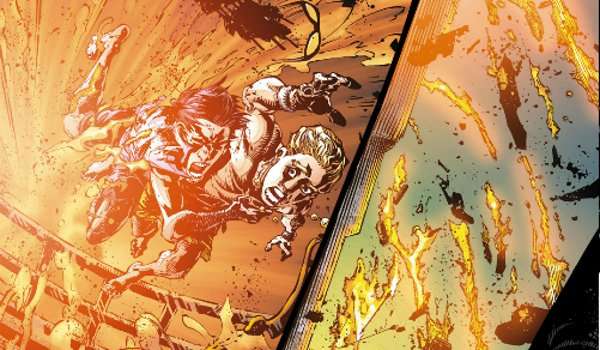


Perhaps the art is meant to imply that Tommy pushes Ollie out of the full force of the blast but - as I've pointed out - Freddie Williams II is a terrible visual storyteller.
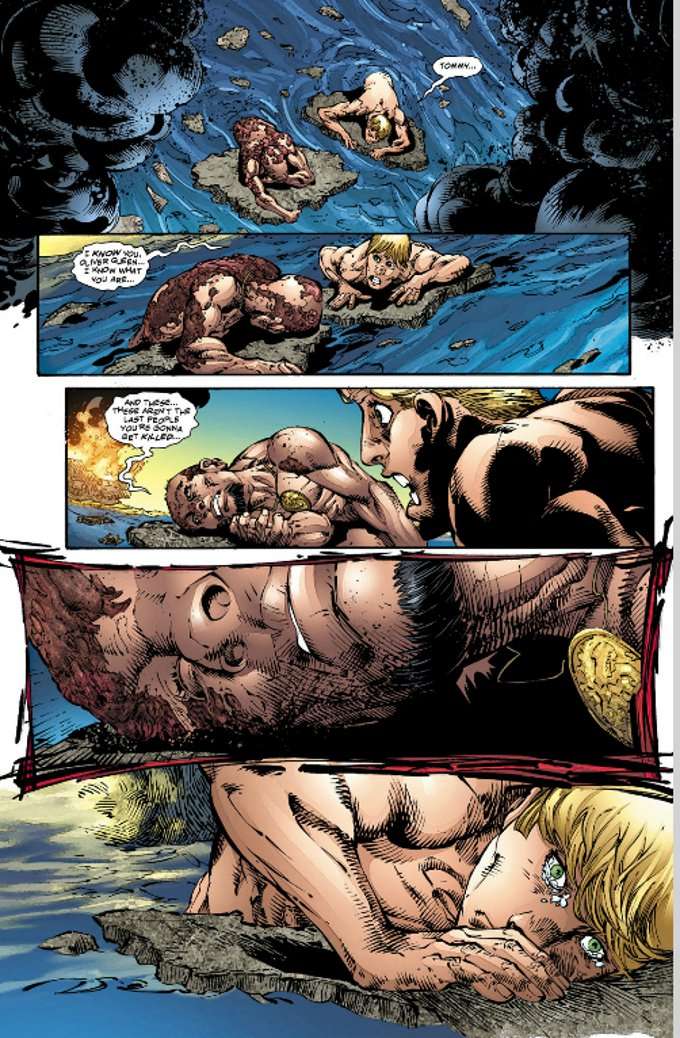


Somehow, despite the two floating on rubble only feet apart and being in the same current, the two get separated. One year and one one-page montage later, Ollie has spent a year on a desert island, somehow having learned how to make his own bow and arrows. This despite there not being any indication that his aforementioned $400 an hour archery lessons also included information on primitive bowery and fletchering or that Ollie had any survival training at all.
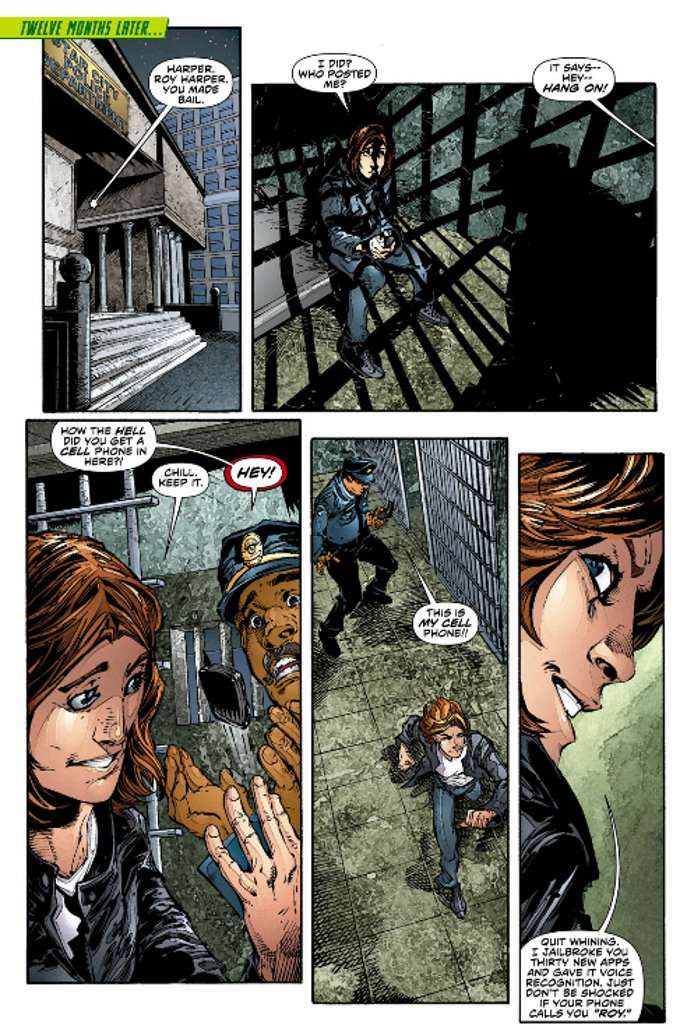


Twelve months later, Ollie is bailing a young rogue named Roy Harper out of prison and press-ganging him into helping him with a crusade to "make things right" after Roy hacked Queen Industries' computers.

Why did Roy do this? What are his motivations? Money? Boredom? Protest? And where did he pick up his mentioned - but not demonstrated - skills with weapons and technology? Why did Ollie think he could assure Roy's loyalty only by bailing him out and offering him a job? Was it a whim? Or some idealism he thought they shared?
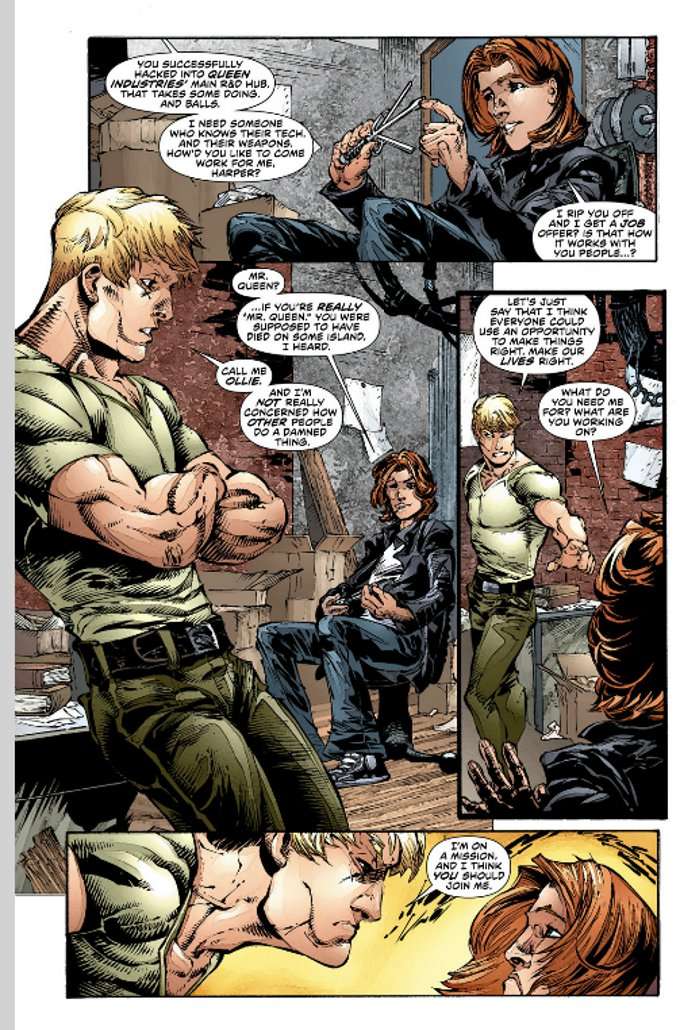


These are all good questions that are completely ignored and will probably be explained later. Maybe. In Red Hood and The Outlaws, once we get done figuring out how to explaining away how Bruce Wayne had four Robins in six years and one of them is a 10 year old ninja he sired with the daughter of his worst enemy. And if you think I'm being glib about them not bothering to explain anything about Roy Harper and his connection to Ollie in this book, take a look at the official history for Green Arrow.
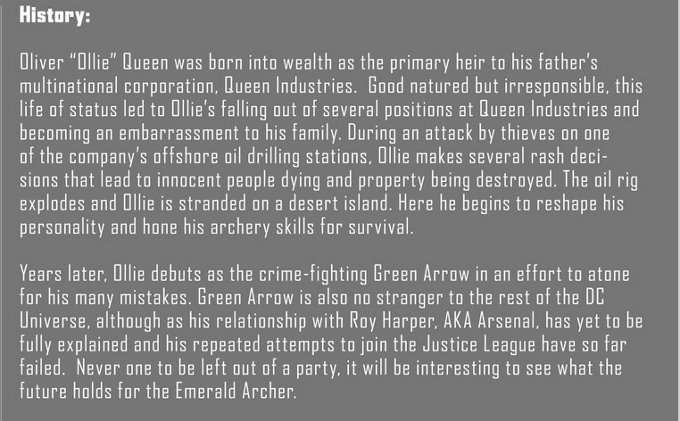


It has yet to be fully explained... because YOU COULDN'T BE BUGGERED TO EXPLAIN IT!

Make no mistake, children - this is a bad comic. It is incompetently produced. Some might guess - justifiably - that it was rushed to completion. The artwork is disjointed, over-stylized and generally terrible. The script explains too little and portrays Ollie as a total boob by forcing him into a situation where his attempts at heroism get people killed, thus attacking the very concept of heroism and taking responsibility for ones wrongs in the first place. And yet, despite that, I have no trouble damning it with the faint praise that this is the best thing anyone has done with Green Arrow title in the whole of the New 52 canon. Make of that what you will.

DC Comics? Please - forget this book, reprint Green Arrow: Year One and send a memo to anyone who might every write Green Arrow in anything ever, which reads "THIS IS HOW YOU DO IT".