Showing posts with label Sami Basri. Show all posts

Sunday, March 4, 2018

Batgirl #20 - A Review

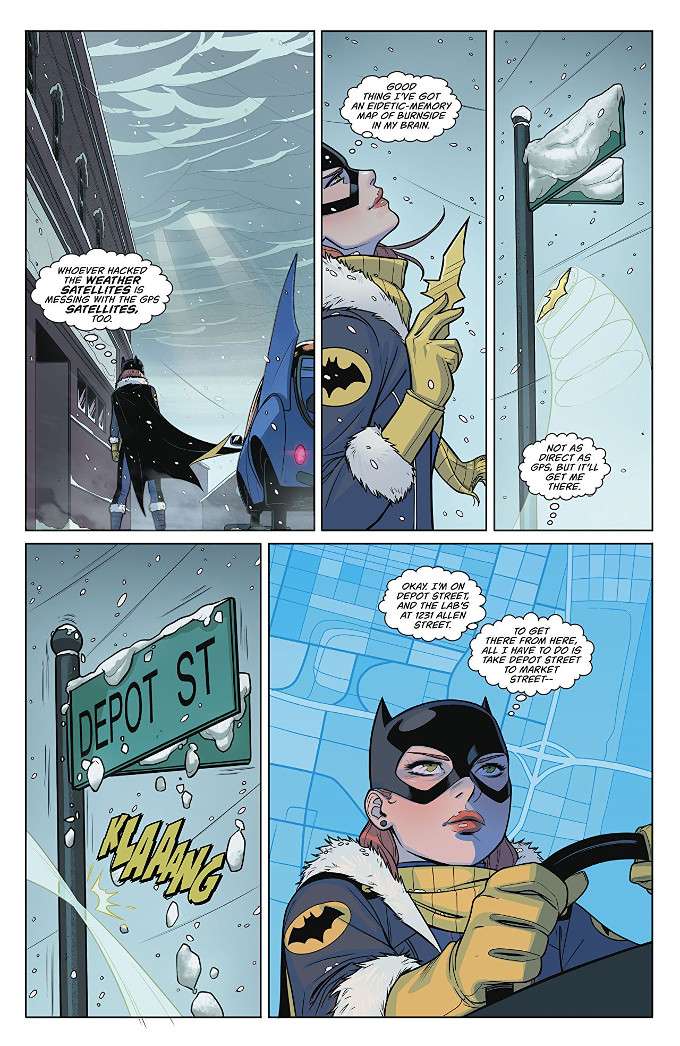
The Penguin has become Burnside's biggest hero, clearing the streets and offering shelter to the poor and hungry in the wake of a freak blizzard that took the city by surprise. Batgirl smells something far more sinister at work than a simple plot to disable Gotham's early-warning weather monitoring systems, however, and will soon find herself facing another old enemy...


A definite improvement on last month's issue, Hope Larson's script forgoes forced political commentary in favor of action. Guest artist Sami Basri proves perfectly capable of capturing that action and bringing it to life with Jessica Kholinne's colors providing the perfect finishes. Not a good entry issue to this series, but a fantastic finish to a troubled storyline.

The Final Analysis: 8 out of 10. A solid issue of a great series. 

Tuesday, October 23, 2012

Supergirl #13 - A Review

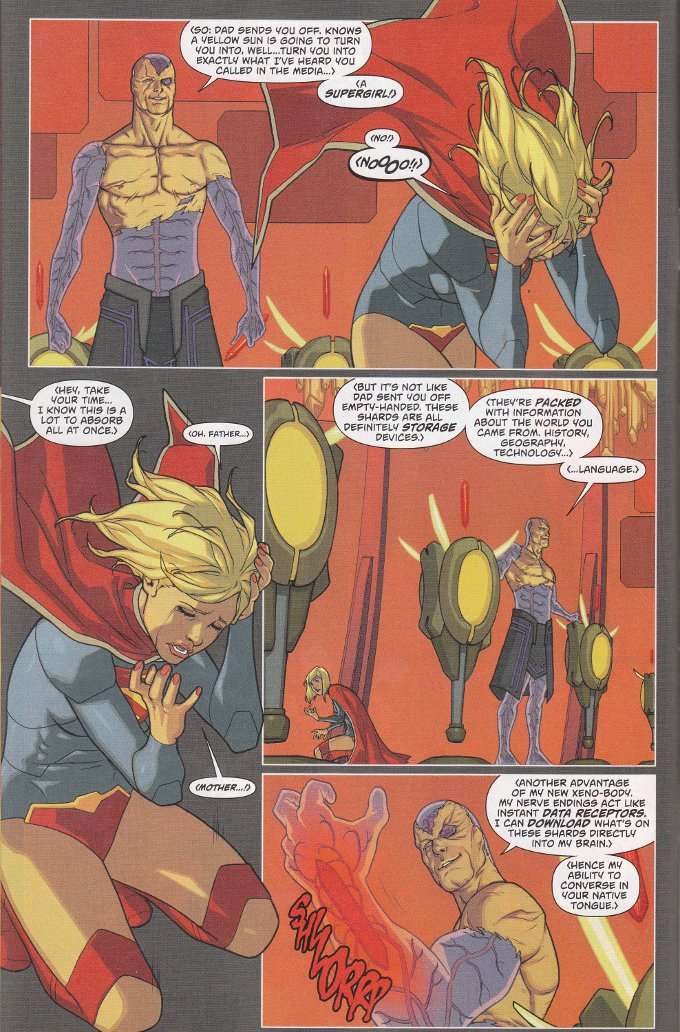
Supergirl #13 mingles elements both old and new.  It was written by one writer, Mike Johnson - now working solo after co-writing this book for the previous year with Michael Green.  It has a new artist - Sam Basri - most recently seen working on Voodoo.  And it brings us the return of the series' first original villain - Simon Tycho. Tycho is a billionaire collector of alien artifacts who, thanks to the injuries earned after he foolishly tried to add Supergirl to his collection, had what was left of his body grafted onto "a transluscent alien jelly-man".


Johnson does a good job setting Tycho up as a character and keeping the action flowing.  Unfortunately, despite Tycho's new powers solving the largest problem with his character concept (i.e. he's basically Lex Luthor with hair and OCD) he still doesn't seem to be much of a threat.  For all the build-up the character receives, Kara is able to defeat him fairly easily.

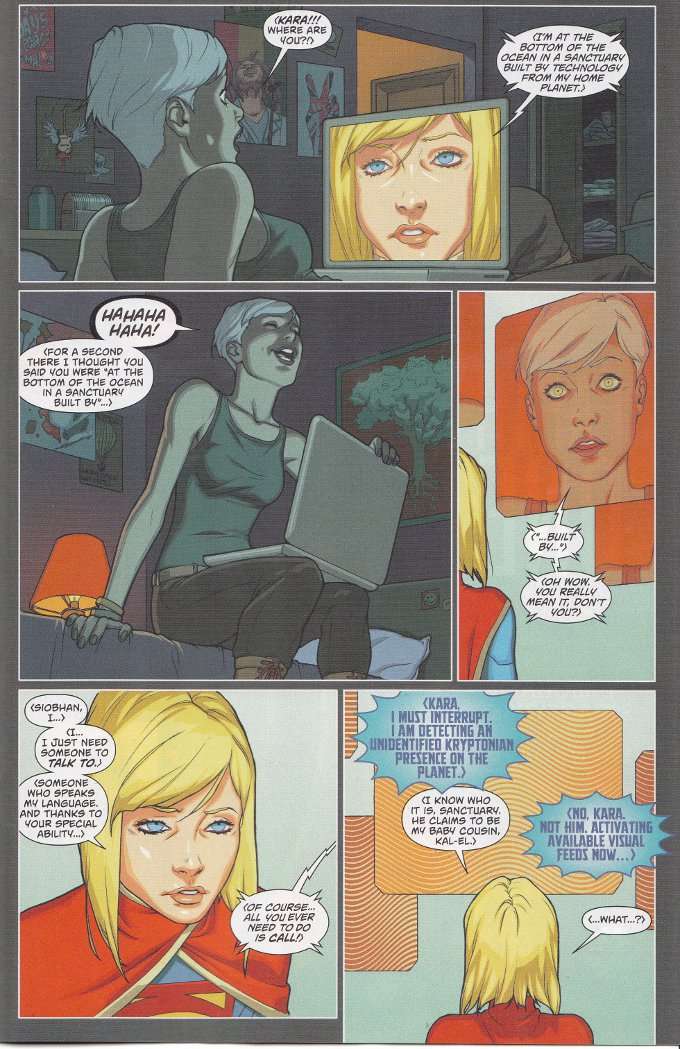
That being said, I do like how Kara is able to neutralize him in a fairly clever way that doesn't involve her punching her way to a solution.  The end of the issue also sets-up a wonderful new status quo for the book as Kara gains her own Fortress of Solitude.  She also finds a way to keep in touch with the outside world without being overwhelmed by it. 


Sami Basri's style differs greatly from this book's previous artist.  Basri's art possesses a feeling reminiscent of modern manga, with thin lines and light inks.  It's an effective look for the most part, though some of the character expressions seem muted and dull. 

Despite the changes, this book is still a good read.  Indeed, despite it basically being a cliff-hanger resolution for Issue #12, it still manages to be accessible to new readers who might be jumping on after Zero Month.  We can only hope the book remains as accessible and self-contained during the upcoming H'El On Earth crossover. 

Sunday, October 2, 2011

Voodoo #1 - A Review

Having finished reading Voodoo #1, I find myself asking one question - why am I not more offended by this? It’s a fair question. By all rights, I should hate this. How is it that a book which opens with a splash-page of the title character on her hands and knees, where all but one of the female characters are strippers, is less offensive to my feminist ideals than Catwoman #1 and Red Hood and The Outlaws #1?

At first glance, the art by Sami Basri would seem to inspire outrage. Save for one brief scene in a hotel room and one fight in an alleyway, nearly the entire story takes place in the confines of a strip-club and is drawn appropriately, with attractive women in various states of undress. Yet Basri does not draw these women in an exploitative fashion. They are all of plausible proportion, with none of the characters looking cartoonish. It also helps that Basri is a good visual storyteller who draws each woman as a body in motion, with hardly any panels past the first page above looking the least bit posed or pin-upish.

Perhaps the answer lies in the script by Ron Marz? Marz has some experience writing strong women in skimpy costumes, having authored the Witchblade comic for a number of years. Maybe that is what makes the difference because while there is a lot of skin in this book and it earns its’ T+ rating, Marz doesn’t revel in the setting. While every woman in this comic save one is a stripper, there is an honest attempt to portray every single woman in this book with a speaking role as a living, breathing person with relatable concerns rather than a sex object to be exploited.

Most of the issue centers upon Special Agents Tyler Evans and Jessica Fallon, who have been assigned to monitor dancer Priscilla “Voodoo” Kitaen who is suspected of being an extraterrestrial spy. Evans is a bit of a pig, who is enjoying his assignment to stakeout a strip club FAR too much, much to the annoyance of his partner. Meanwhile, we find that Pris is a talented dancer but not the most popular woman among her fellow performers due to her detached nature and refusal to get involved in others’ problems. Beyond that, I can say little without revealing a surprising spoiler on the final pages which suggests that the strip-club setting of this book is strictly temporary.

Last week, during the hubbub over sexism on the comic page, I heard several people say they were unwilling to give this book a shot purely on the artwork and the scenario. This is unfortunate because while this book isn’t quite my cup of tea, nothing in this book is as offensive as what was done to Starfire or Catwoman. The art is sexual without being sexist and the script treats its’ heroine and her stripper colleagues as real people. I’d give it another issue or two to confirm my suspicions but I suspect this book may surprise us all in the end.