Showing posts with label Steven Moffat. Show all posts

Friday, December 26, 2014

Doctor Who, Series 9 - Episode 1 - Last Christmas

THE QUICK, SPOILER FREE REVIEW

Derivative as most of Moffat's work for Series 8 and he doesn't do a damn thing to hide his sources. Still, it's hard to be a Grinch with Nick Frost as Santa Claus and the script does a fair job of balancing horror and comedy while Capaldi and Coleman make everything work through sheer charisma.
 

THE PLOT

Clara Oswald is woken from a long winter's nap to find Santa Claus and two argumentative elves on her rooftop.  The Doctor arrives not long after to tell her that humanity is under attack. Telepathic alien parasites that force their hosts to dream of a happy life as the vitality is sucked out of them have been awakened and it is up to The Doctor and Clara to save a team of scientists that are trapped at the North Pole. 

The problem is that it's all but impossible to tell that you are dreaming once you are caught and harder still to escape the Dream Crab's influence... even with obvious clues such as the presence of Santa Claus to warn you that things aren't real.  So why does Santa keep showing up trying to save everyone?  And just how deep does the dream go?


THE GOOD PARTS

*
For all its flaws, the script by Steven Moffat does do a fair job of balancing horror and comedy and most of the jokes are quite funny.

* Director Paul Wilmhurst does a fantastic job of pacing the horror elements of this episode and choosing just the right angles at which to film everything.

* Hats off to the production team for designing a motion-picture quality beasty with the Dream Crabs.

* As usual, Peter Capaldi and Jenna Coleman give a merely decent script far better treatment than it deserves.

* Nick Frost steals the show as Santa Claus.


THE PROBLEMS

* Albert Einstein once said "The secret to creativity is knowing how to hide your sources." By that definition, Steven Moffat is one of the least creative writers ever.  Bad enough that the script name-drops Alien.  Worse that it has a literal check list of movies that clearly inspired the episode (Inception, The Thing, etc.).

* The episode also "borrows" a lot from earlier New Who episodes and Moffat's old scripts in particular.  Santa's dismissal of the infected crew is exactly the same as The Doctor's dealing with the victims of The Empty Child in The Doctor Dances.  And the Dream Crabs are virtually the same monster as the beetles from Turn Left.

* While the Dream Crabs are well-designed monsters, surely a better name could have been provided for them?

* Like The Return of The King, the episode suffers from having a few fake-outs too many regarding the fake endings.


THE FINAL VERDICT

It seems less like a Christmas special and more like a continuation of the last season's more horror-based scripts.  Yet it is undoubtedly a Christmas story and it's quite an enjoyable one, in spite of its flaws.  Like a stocking filled with candy and one nectarine, there is enough right with this episode to justify the questionable bits.

Sunday, November 9, 2014

Doctor Who, Series 8 - Episode 12 - Death In Heaven

THE QUICK, SPOILER FREE REVIEW

Damn near perfect.  One of the best series finales ever, not only for this show but for any show ever in the history of television shows on any planet at any time. Have Kleenex on standby while you watch it, though.


THE PLOT

The Master is returned and building an army of Cybermen, crafted from dead humans.  But what is her game?  And how did she escape Gallifrey?  And for that matter, where in the universe is Gallifrey?!  The Doctor is desperate for answers but, as "Missy" notes, the best part about knowing is "not telling you". And even with all the resources of UNIT and a newly formed emergency world government at his command, The Doctor might not be able to save the world.

Clara Oswald has bigger concerns on her mind. Danny Pink has been converted into one of the tin men and he wants her to be the one to turn off his heart and activate his emotion inhibitor. Can Clara effectively kill the man she loves a second time, even if doing so means saving the world?


THE GOOD PARTS 

* The opening scene and change of the title credits is a brilliant fake out.  And it is a credit to Jenna Coleman's acting chops and the writers' development of Clara over the past series that you honestly do think, for just a moment, that somehow we've been thrown a curve ball and Clara has been another incarnation of The Doctor this whole time.  A female Doctor to match the Mistress.

* As in Dark Water, there's a lot of shout-outs to the classic series and UNIT in particular.

* The Doctor's hatred of soldiers is finally explained in a satisfactory manner.  It is not soldiers themselves but what soldiers represent that angers The Doctor.  Killing without question.  Obeying without thinking.  Given that most of The Doctor's greatest enemies are built around the virtue of unquestioning obedience, his attitude makes a lot of sense. But here, The Doctor realizes that for most people - and Danny Pink and The Brigadier in particular - submission to the soldier's lifestyle is born of love and a promise.  Some must fight the monsters in order for others to remain safe. And that is a sentiment The Doctor can very much agree with.

* Another brilliant Moffat conceit - mixing the traditional vision of Heaven as a city in the clouds and mixing that with the electronic cyber cloud where things are stored electronically.

* The episode is very well directed and well shot.  A particularly nice touch is depicting the Cybermen crawling out of their graves, given that The Cybermen have always basically been electronic zombies.

* One of Moffat's best scripts ever. Great dialogue.  Great exchanges.  Great lines.

* My pick for the best line in the whole thing? "We are the fallen and today we shall rise! The Army of the Dead shall save the Land of the Living!"

* The ending, in which both Clara and The Doctor lie to let the other one think they've got a happy ending.

* Santa Claus himself telling The Doctor that the ending is rubbish and that they can't let things with Clara end this way.


THE PROBLEMS 

* If you're the sort of fan who likes to have everything explained or rolls your eyes at the idea that love and a strong will can conquer all, you're going to hate this episode.  Of course if you're that sort of person, why in the name of Davros' diaper are you watching Doctor Who in the first place?

* As awesome as his appearance is, part of me is still unsure how to feel about a postmortem Brigadier Lethbridge-Stewart flying around defending the earth as an independent Cyberman.  As awesome as it is that the man could defy the Cyber-programming through sheer force of will, one wishes he'd be allowed to rest.


THE FINAL VERDICT

Greatness.  Just plain wonderful.

Sunday, November 2, 2014

Doctor Who, Series 8 - Episode 11 - Dark Water

THE QUICK, SPOILER FREE REVIEW

For good or ill based on the second part, this episode will be one to remember.  The whole may be less than the sum of its parts, but the individual parts are quite good though it remains to be seen how they will all tie together.


THE PLOT

After a tragic accident claims the life of Danny Pink, The Doctor and Clara go off on a journey that The Doctor's always meant to go on but never had a good enough excuse to pursue - the search for an Afterlife.  Surprisingly, The TARDIS manages the journey and the two find themselves in the offices of W3 - a company that claims to see to the comfort of those who have passed on. But The Doctor senses there is far more to things than meets the eye - particularly the mysterious woman named Missy who welcomes them there...


THE GOOD PARTS

* The stand-off between The Doctor and Clara is an amazing scene

* The moment that follows the stand-off, in which The Doctor tells Clara that there is nothing she can do that could make him stop caring about her - is simultaneously the proof we've been waiting for all season that while The Doctor's latest incarnation may play it cool he really does care deep down and the first sign we've had of The Doctor's feelings for Clara being more paternal than anything else.

* The script is full of lots of writing by "the good Steven Moffat" - i.e. lots of random ideas only Doctor Who could get away with like X-Ray water and the general cheek of using The TARDIS to go to What Lies Beyond...

* Michelle Gomez is clearly having a lot of fun as Missy.

* The reveal of the Cybermen is played up well.  The set design of their pods is reminiscent of Tomb Of The Cybermen and a neat clue for eagle-eyed fans of the classic series.

* Another great moment - an honestly panicked Doctor running through the streets of London trying to warn people about the approaching danger.  For all of The Doctor's posturing this year about who he is and how much he has changed, he is still the same man - or god pretending to be a man - when the chips are down. No aloof alien scientist here.  He is, as ever, The Man Who Fights The Monsters.

* The cliff-hanger.  Dear gods, the cliff-hanger!


THE PROBLEMS

* Not a problem with the episode so much as it is with the advertising, but the surprising reveal of The Cybermen was ruined by the poster for the episode.

* Very little is made of Clara's declaration that Danny's death was so "boring".  You'd expect her grandmother to register a little shock at so muted a reaction or for Clara to feel somewhat guilty about it...

* The middle part of the episode - everything between The Doctor and Clara arriving at W3 and the reveal of who Missy is - seems a bit flat.  In fact, one dares to say the subplot with Danny is... boring.

* A question that will hopefully be answered next time - how did The Doctor not sense who Missy was?  Another Chameleon Arch?


THE FINAL VERDICT

As with most Doctor Who two-parters, it's hard to fully judge this episode on its own merits.  That being said, the opening is very powerful and - as with every episode this season - Capaldi and Coleman utilize their great chemistry to sell it.  It's only in the middle sections that things lag a bit as Steven Moffat starts laying out exposition that may may or may not turn out to be completely meaningless based on the finale.  But the cliffhanger is the series' best one since Army of Ghosts, though it remains to be seen if all the build up behind the scenes might turn this episode into this generation of Whovians' Time-Flight.

Sunday, September 28, 2014

Doctor Who, Series 8 - Episode 6 - The Caretaker

THE QUICK, SPOILER FREE REVIEW

A funny, enjoyable episode that does a better job of defining the cast than any episode so far this Series.


THE PLOT  

Trying to balance her job as a teacher, her night-work as The Doctor's assistant and her burgeoning romance with fellow teacher Danny Pink is beginning to take its toll on Clara Oswald.  She's actually relieved when The Doctor says he'll have to leave her for a few days as he goes on a deep-cover assignment.  That relief turns to horror when a staff meeting at work the next day ends with the introduction of Coal Hill School's new caretaker - John Smith.  And balancing all the parts of Clara's life becomes very difficult indeed, as The Doctor intrudes on her classes, work gets in the way of her trying to help The Doctor and Danny starts asking too many questions about her relationship with John Smith.


THE GOOD PARTS 

* This honestly is one of the funniest episodes of Doctor Who we've had in a while and very little of that humor is based in the RomCom shtick that Steven Moffat usually indulges in when he goes funny.  But what else might we expect from Gareth Roberts, who is one of the best New Who writers when it comes to presenting comedy and drama in equal measure with equal skill?

* The triangle between The Doctor, Danny and Clara is played off not as a romantic one but more as a disapproving "Space Dad" taking issue with his daughter's new beau.  Apart from The Doctor's muttered remark about making the same mistakes again (a reference to the rivalry between himself and Rory Williams and/or Mickey Smith, perhaps?) there is no suggestion of a pseudo-romance between The Doctor and Clara.

* Danny Pink continues to impress as a character and good on him for pointing out The Doctor's hypocrisy as well as his aristocratic tendencies. ("I'm a soldier but he's an officer!").  His sarcastic "Sir, Yes Sir!" act was particularly delightful.  A lot of play has been made this season of The Doctor's antipathy for soldiers and military thinking which has been somewhat perplexing given The Doctor's history with UNIT and his long-friendships with the career soldiers there (Come to think of it, The Brigadier became a math teacher for a time...) and Pink's assertion here is a brilliant explanation of that contradiction.  Like Jon Pertwee's Doctor, Capaldi's Doctor is a patrician who is only anti-authority when he isn't in the role of the authority.

* Alternatively, Danny takes Clara to task for her attempts to fragment her life by pointing out that - for whatever reason - she doesn't trust him enough to let him know everything about her.  More, this scene offers an analysis of Clara's character that has been sorely lacking until recently.  Clara has been unique among companions with a romantic interest in trying to hide that life from her significant other and Danny's demanding an explanation for why she feels the need to keep that secret is not unreasonable.  Again, this is played not as a suspicion of her cheating on him romantically but a pain born of the idea that she could/would not be honest with him.

* Everything with Courtney Woods aka The Disruptive Influence.  Most of what we see of her suggests a potential companion and The Doctor even notes that he may soon have a vacancy.  But Roberts wisely takes the time to show why Courtney isn't really companion material at the end as we get a scene that shows that, however prickly he may be at times, Capaldi's Doctor really does have one care to give.


THE PROBLEMS

*
While not quite as bad as some of the Series 8 episodes in regards to feeling repetitive, a lot of the bits with The Doctor failing to fit in as he goes under deep cover do come off as a little too close to similar bits of business from Roberts' previous scripts for The Lodger and Closing Time despite the efforts at disguise this time being underplayed by Capaldi's Doctor.

* On that note, some of The Doctor's dialogue does seem to have been written more for Matt Smith's Doctor than Capaladi's, despite the performance.

* The Flip.  Just... The Flip.


THE FINAL VERDICT 

This episode provides high-quality character comedy while being a marvelous character study of both The Doctor and Clara, though one wonders how much influence Moffat had on the final product and how much the episode's few flaws might have been born of his hand.

Saturday, September 20, 2014

Doctor Who, Series 8 - Episode 5 - Time Heist

THE QUICK, SPOILER FREE REVIEW

A good, well-written episode. Capaldi's Doctor finally feels like his own man yet also seems much more like The Doctor we know and love. The guest stars are memorable and work well with what relatively little material they have. And the monster for this episode is one of the best in recent memory... no pun intended.


THE PLOT

The Doctor is ready to go off on an adventure but Clara has other things on her mind.  Specifically, her second date with Danny Pink.  But adventure has a way of finding you when you least expect it... or want it, in Clara's case!  So when The Doctor answers the phone on The TARDIS that never rings, the two quickly find themselves elsewhere, with a cyborg computer-hacker, a mutant shape-shifter and directions from a mysterious figure called The Architect on how they are to go about robbing the most secure bank in the universe!


THE GOOD PARTS 

* By necessity, a good heist film has to be tightly plotted and this episode is that.  There's no major plot holes and the story hangs lampshades on all the obvious problems (i.e. Why aren't they using The TARDIS, when a time machine would make any bank caper ludicrously easy?) before providing a logical explanation in the end.

* Great cinematic direction again this week by Douglas Mackinnon.

* All the guest stars in this episode are excellent.  Jonathan Bailey brings out the full humanity of the cyborg Psi as does Pippa Bennett-Warner the shape-shifting Saibra.  And Keeley Hawkes is an imposing villain, despite not being given much in the way of depth.

* The Teller is one of the most frightening monsters - physically and conceptually - in a good while, looking like something from Star Wars crossed with a particularly nasty beast from the 1st Edition Dungeons and Dragons Monster Manual.

* Every episode of the series so far has struggled with two questions - "Is The Doctor a good man?" and "Is he a hero?"  This episode is no exception but the answers this time  are a bit clearer.  We're still not sure where Capaldi's Doctor may stand at any given moment but, to paraphrase a line from Terry Pratchett, "...where you stand isn't as important as which way you are facing."  And this Doctor is firmly established as staring into the shadows with the light at his back.


THE PROBLEMS 

* While some of the twists in this episode are effectively played, most fans will figure out the identity of The Architect long before The Doctor does.  And not for the reasons given involving nobody liking to look at themselves but because of the good and logical reason that The Doctor and Clara bring nothing useful to the heist and there's no reason for them to be there... unless The Doctor is the one running things.  The one "in charge".

* I'm as sick of Clara's Mary Sue tendencies as everyone else, she has very little to do in this episode and contributes nothing of significance to the plot.

* Moffatt really needs to stop with the two word admonishments.  On top of everything else, "Don't Think!" sounds way too close to "Don't Blink!".


THE FINAL VERDICT

Easily the best episode of Series 8 so far.  The story is well plotted and the guest stars are superb. Most importantly, this is the first episode where Peter Capaldin's Doctor truly seemed like his own man rather than a hodgepodge of elements from earlier Doctors vying for dominance.  Here's hoping for more episodes like this!

Sunday, September 14, 2014

Doctor Who, Series 8 - Episode 4 - Listen

THE QUICK, SPOILER FREE REVIEW 

Those who have missed the Steven Moffat of Blink will be quite pleased by this episode.  Clara Oswald continues to get the development she should have gotten a year ago and the RomCom elements are perfectly balanced against some well-directed existential horror.


THE PLOT 

One day The Doctor has a revelation - an idea of some form of life that, instead of evolving into the perfect predator or tracker, became the perfect hider.  Beings that shadow all sentient life, giving birth to the feelings that one is being watched while alone and spawning the nightmare that something is under your bed that you can't see.

The Doctor goes to grab Clara to help him investigate this theory, as she is getting home from a disastrous first (and probably last) date with her co-worker Danny Pink.  What follows is a snipe-hunt of intergalactic proportions.  And by the time they're done, they will see the end of the universe and the start of something Clara had never imagined.


THE GOOD PARTS

* When Moffat is on, he is completely on and his script here is completely on.  One can see the usual Moffat staples throughout (dating drama, the silly fears of young children made manifest, monsters that can't be attacked or even perceived directly, etc.) but the execution this time around makes it a bit less obvious than in Deep Breath or Into The Dalek.

* Much of the credit for that goes to director Douglas Mackinnon, who sells every moment of this episode visually.  The pacing is played perfectly, with lots of long, lingering shots.

* A larger part of the credit goes to Jenna Coleman, who is finally starting to shine after being given material that allows her to display a personality beyond being Matt Smith's Impossible Girl.  As in Robot of Sherwood, Clara is the one who winds up getting to the bottom of things while The Doctor is messing about.  And we get not one but two scenes of Clara speaking to a scared child and helping them cope with their fears.

* We get more of the theme of soldiers and the idea of them being seen as killers instead of protectors.  Clearly Moffat is building toward something with this season and - unlike Into The Dalek - the points here are made with a bit more subtlety.  

* The last ten minutes, in which we learn more of The Doctor's background than I think may have ever been revealed in a single episode, are good and sure to spark discussion among Whovians.  To Moffat's credit, the answers we are given only spark further questions.  Was The Doctor adopted?  What made him so sad at a young age? And how much has Clara influenced him and to what degree throughout his entire life?


THE PROBLEMS 

* Though the episode does work well, one wishes Moffat would take some more chances with the material and move beyond his usual tropes.  For instance, the monsters here are thematically too close to The Weeping Angels and The Silence.

* On that note, The Doctor is given surprisingly little to do in this episode after the remarkable opening sequence.  And while Capaldi interprets the material through the prism of his Doctor, the script leaves him sounding a bit more like Matt Smith's Doctor whenever he interacts with other people.

* The jokes about The Doctor thinking Clara looks bad or that other people think she looks fat are beyond old at this point.

* Random Observation - NOBODY else notices the man in the space-suit wandering around in the background of the restaurant but Clara?


THE FINAL VERDICT

Steven Moffat indulges in his usual tricks but this time it works.  This is due, in part, to some amazing direction, enough changes that this doesn't quite feel like Moffat's Greatest Hits Vol. 3 and a stellar performance by Jenna Coleman, who proves to be more than a pretty face when she's given decent material.

Sunday, September 7, 2014

Doctor Who, Series 8 - Episode 3 - Robot Of Sherwood

THE QUICK, SPOILER FREE REVIEW

An enjoyable light and funny episode that is at its best when it isn't taking itself too seriously.  Ironically - after two episodes of being a highlight - Capaldi's more serious Doctor is the weakest link in this episode.  That's mostly due to a script by Mark Gatiss that leaves him acting more like Sherlock Holmes than any version of The Doctor we know but it's a minor point compared to the greater glory of a good story that will leave you wanting to believe that legends are real.


THE PLOT

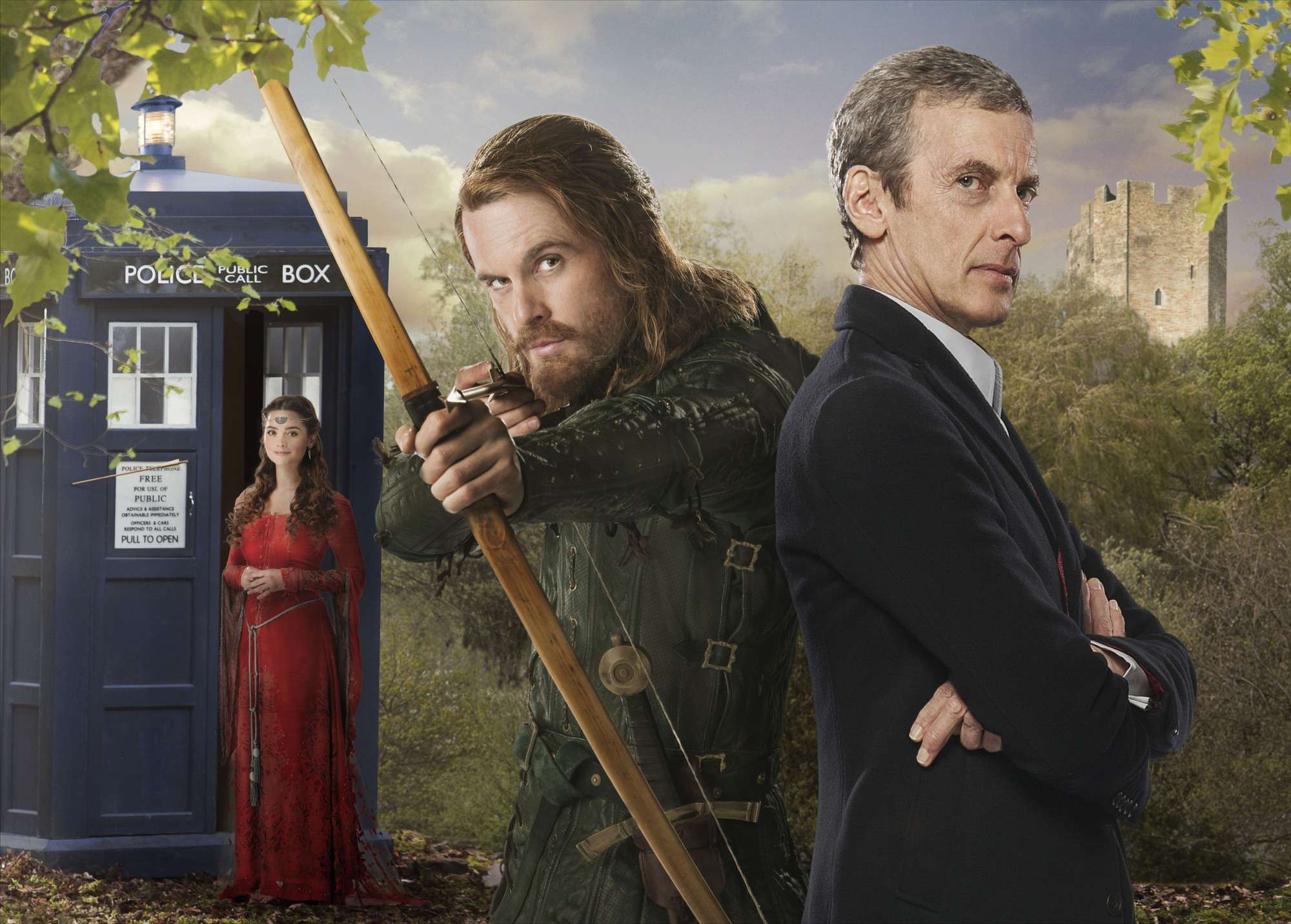
Offered a chance to go anywhere and meet anyone, Clara asks if The Doctor can take her to meet Robin Hood. Impossible, The Doctor says. Robin Hood is a myth. He isn't real. He never was. Still, The Doctor is willing to take Clara to Sherwood Forest around 1190-ish AD to prove the point... only to be confronted by an ever-laughing blonde bloke in green leathers with an immaculate beard and perfect aim.

There's also a Sheriff in Nottingham who is enslaving the peasants and taking their gold but The Doctor is less concerned about this injustice than he is about proving that he's right. Yet even after The Doctor discovers a castle disguised as a spaceship and robots disguised as knights, he still can't disprove the existence of a flesh and blood Robert of Locksley. But in a time of impossible heroes, will it be The Impossible Girl who saves the day?


THE GOOD PARTS

* The casting for this episode's guest stars was perfect.  Tom Riley is a picture-perfect Robin Hood and his Merry Men are all enjoyable for the all too brief moments we see them on-screen.  Ben Miller is an amazing Sheriff of Nottingham, who plays the villain as a glorious ham of the same school as Anthony Ainley's Master but not quite so hammy as Alan Rickman's famous take on The Sheriff.  One wishes BBC's most recent Robin Hood series had been more like this and one longs for a new Robin Hood spin-off to start with this cast.

* The script by Mark Gatiss is one of the most fun Doctor Who scripts we've had in a long time.  We get all the classic moments one would expect in a Robin Hood story (the duel on a log over a stream, the archery contest with a golden arrow as the prize, etc.) and Clara proves a grand expy of Marian as she undertakes all the tasks usually reserved for Marian in a Robin Hood story (i.e. milking the bad guy for information to tell Robin what he's up against).

* More than any script so far this series, Robots of Sherwood defines The Doctor and how much he has changed after 1000 years in Trenzalore without resorting to contrivances such as The Doctor having to ask Clara if he is a good man or not.  I believe most of the previous versions of The Doctor would be a bit more excited about meeting Robin Hood than they would be worried by the implications of his existence.  Matt Smith would be jumping through the trees shouting "Geronimo!" in an instant.  Tom Baker would smile and shake his hand vigorously excited at the honor of meeting such a great man.  Even Jon Pertwee's more patriarchal Doctor would probably offer a polite greeting and inquire about a sparring match later on. This new Doctor is a skeptic and a scientist with little use for romance or fun.

* Clara has gotten far more development in these past three episodes than she ever did during Series 7.  Here, Clara acts like - for lack of a better term - a real person confronted with their childhood hero.  Jenna Coleman plays the fangirl angle well, without ever going overboard.  And her attitude in handling The Doctor as he complains about her usual skepticism dropping in the face of an Impossible Hero is perfectly played.

* Along those lines, we see Clara acting like a school-teacher as Robin and The Doctor are acting like petulant schoolboys in the dungeon scene.  There is much hilarity here, particularly in how Clara demands answers on exactly what their escape plans are in the same tone in which she might demand a particularly difficult student answer a problem at the blackboard.

* It's an interesting change of pace for an episode in that, for once, The Doctor is the one lagging behind everyone else in his search for answers.  The Merry Men are the first to notice how odd it is that The Sheriff and his "men" are only interested in acquiring gold as opposed to any other valuable or rare objects.  And Clara proves far more effective in getting to the bottom of the mystery of what The Sheriff's game is.  Indeed, Clara is the one who saves the day, forced into action when her heroes are rendered inactive.

* This one is strictly personal, but The Doctor's duel with Robin Hood amused me for reasons beyond the writer's intent.  This past summer, I ran a Doctor Who RPG for the teens at my local library.  And one boy, informed that this was not the sort of game where you could arm yourself with all manner of guns or weapons and expect to win, asked if his character could always carry a spoon with him.  I agreed to this.  And circumstances contrived that this spoon would later prove to be useful in disabling a Cyber Controller.  And me, playing The Doctor, told the companions "And let that be a lesson to all of us - always carry a spoon with you."

* A subtle reference to the Classic Series - The Doctor claims to have studied swordplay with Richard the Lionheart, Cyrano De Bergerac and Errol Flynn.  The First Doctor met Richard The Lionheart in The Crusades and The Second Doctor met Cyrano De Bergerac in The Land of Fiction in The Mind Robber.  It's also worth noting that - like any historical Robin Hood that might have existed - these three men are better known today by the stories of their lives than the reality.

* Another reference to the Classic Series and the Pertwee era - The Doctor speculates that they might be in a miniscope as he's trying to figure things out.

* There are a lot of great lines in this episode, but none so grand as the final magical moment between The Doctor and Robin, where Robin lays out the moral of the episode - that it doesn't matter if a hero is real or not if the stories of that hero inspire others to become heroes -  and continues the season-wide theme of whether or not The Doctor is a good man or a hero and recognizing that there is a difference between the two.


THE PROBLEMS

* Capaldi's Doctor, for the first time, is a detriment to the story.  His skepticism here seems largely arbitrary given some of the equally impossible things he has been confronted with before.  This is a problem because as novel as it is for everyone else to be moving on with things around The Doctor, it is still worrying that he's digging for clues to prove himself right as everyone else is dealing with more pressing, serious issues.  In this regard, Capaldi's Doctor greatly resembles William Hartnell's First Doctor, who was (in his first few appearances, at any rate) an academic more concerned with his studies than playing the hero.  Of course Capaldi does finally play the hero but only after being convinced that not everyone around him are robots and that there is real danger to be found in the castle.

* On that note, The Doctor here seems to be written like Sherlock Holmes - more concerned with being right and solving a mystery than he is with saving lives or thwarting evil.  While The Doctor enjoys a good mystery, it should never be at the expense of other people's lives.

* The dodgy sound effects strike again, with the Wilhelm Scream being used at one point.

* Again - a personal point.  The archery stances and shooting techniques used by the actors are total crap.  Arrow has spoiled me on this point, I admit, but it drives me crazy when archers don't pull the string back properly


THE FINAL VERDICT

"History is a burden.  Stories can make us fly."

It is not without fault.  But since the moral of this episode is that looking for fault in a story that inspires you is pointless and that a good heroic tale is worth the telling in itself, I shall say nothing more than this - Robot of Sherwood is a good, inspiring heroic tale.

Sunday, August 31, 2014

Doctor Who, Series 8 - Episode 2 - Into The Dalek

THE QUICK, SPOILER FREE REVIEW

I am reminded of a line from my favorite comic series of all time, Starman - a line spoken by Oscar Wilde as he visited America.  "I've found there is much to admire in America.  However, on closer examination, I find that everything admirable has been imported from somewhere else."  

That is Into The Dalek in a nutshell.  There are good elements to this episode but almost all of them have been stolen from other, better Doctor Who episodes.  Capaldi does a fine job trying to sell it but even he can't fight the inertia that keeps this episode from going anywhere.


THE PLOT

En route to meet Clara for coffee, The Doctor slows down long enough to rescue soldier Journey Blue from The Daleks and return her to her ship.  Faced with a death sentence for invading their secure facility, The Doctor is temporarily spared so that he can tend to a patient captured by the soldiers - an injured Dalek who has somehow developed a capacity to appreciate beauty.

Can a Dalek be reformed?  The Doctor is skeptical but it's a question he'd like to answer.  Much as he would like a solid answer to a question that has apparently consumed him since his regeneration - Am I A Good Man?


THE GOOD PARTS 

* The opening scene before the credits is a good one and Peter Capaldi's talking down a soldier by firmly and politely (but with a bit of sarcasm) insisting that he will not be talked to in terms that involve orders or do anything because a gun is pointed at his head is perfect.  We're still getting a feel for this new Doctor and this is a great scene which lets us know that this is not a Doctor who suffers fools gladly but neither is he actively cruel towards them.

* Danny Pink - another teacher at Clara's school, who has been teased as having a big role to play in the coming series - is introduced quite effectively.  His background as a soldier who has returned home to become a teacher is an interesting counterpoint to the theme of the episode - the idea of change and someone who was trained to kill becoming a creator and nurturer.  If only Clara had been given this kind of depth when she was first introduced...

* Cliche as the "being-shrunk-and-going-inside-something's-body" troupe is (Classic Who already did it with The Invisible Enemy), the idea of exploring a Dalek from the inside is interesting enough and the Dalek Antibodies are delightfully sinister.

* The line "I AM NOT A GOOD DALEK.  YOU ARE A GOOD DALEK." is a great one, though it was shamelessly cribbed from the Series 1 episode Dalek.  If only Daleks had thumbs, so that Dalek could give The Doctor the snaps before rolling off.


THE PROBLEMS 

* If Deep Breath was Steven Moffat stealing from his own stories to create a "best of" Doctor Who episode, then Into The Dalek is Moffat looting the rest of the series' history.  Virtually every element of this episode has been utilized before and utilized far better in other Doctor Who stories.  An exploration of The Doctor being no better than his worst enemies morally?  Dalek from Series 1.  The Doctor's bias against soldiers for what they represent?  The Poison Sky and The Doctor's Daughter from Series 4   The concept of a broken Dalek turning good?  Moffat's own Asylum of the Daleks from Series 7!  I could go on, but I think that's enough to make the point.

* Granting that the series has always had an anti-authoritarian vibe and The Doctor has never had much use for military thinking in general, a lot of the anti-soldier talk here seems a bit over the top.  I can see what the writers are going for, drawing parallels between the human soldiers, The Daleks and The Doctor all being united in their common hatred and refusal to question the efficiency of that hatred.  But what they are trying to say and what they actually say are worlds apart in content and tone.

* The soldiers on The Aristotle are remarkably shallow even by the standards of soldiers in a Doctor Who story.  Journey Blue in particularly is woefully underwritten and could have benefited from some of the time used to develop Danny Pink.  And don't think we didn't notice the feminine/masculine colors being used as ironic contrast to the characters and their roles with Blue being a female soldier and Pink being a male teacher.

* I challenge every Rose Tyler hater out there who has dismissed her character as the biggest Mary Sue in history to watch this episode and make a convincing case that Clara Oswald isn't much worse in that regard, as we see an ordinary school teacher start crawling around inside a Dalek's brain and start pulling random things to unblock its memories without getting electrocuted.


THE FINAL VERDICT

Uninspired and a little bit dull at points, Into The Dalek will serve only to remind the fandom of stories that utilized the same story elements far more effectively.   Quite possibly the most generic Doctor Who story ever.

Monday, August 25, 2014

Doctor Who, Series 8 - Episode 1 - Deep Breath

THE QUICK, SPOILER FREE REVIEW

Deep Breath is not a good introduction to the series for newcomers, nor is it a good introduction to the new Doctor.  Yet Peter Capaldi and Jenna Coleman manage to make it all work despite a weak script that will be inaccessible to new viewers and redundant to the devout fans.  Serviceable but not quite good.


THE PLOT

A dinosaur running loose in the streets of Victorian Era London is unusual even by the standards of The Patemoster Gang.  And a dinosaur vomiting up The TARDIS is unprecedented!  This is how Madame Vastra, Jenny and Strax are introduced to the latest incarnation of The Doctor.

As The Doctor deals with the trauma of his most recent regeneration cycle going badly, Clara Oswald finds herself struggling to cope with the idea that the manic young man she knew as The Doctor is now a depressive older man who could be her father!  But they'll have little time to rest and recover, as a series of spontaneous combustions claim the lives of several Londoners and put The Doctor on the trail of an enemy that seems oddly familiar, though he can't explain why.


THE GOOD PARTS 

* From the very first minute he appears on screen, Peter Capaldi owns the role of The Doctor.  Capaldi has a great presence as an actor and he commands the center stage like no actor since the days of Tom Baker.  Indeed, comparisons can be made between Capaldi's performance here and Baker's performance playing an equally muddled post-regeneration Doctor in Robot,  Yet favorable parallels could also be drawn to Peter Davison's performance in Castrovalva.

* Talking of the classic series, there's a lot of nods to it throughout the episode.  Most of them aren't particularly subtle (like The Doctor's dismissing the idea of a long scarf as silly) but there are a few soft touches, such as the sound-effect of The Cloister Bell from The TARDIS when The Doctor first passes out while talking to the dinosaur and Madame Vastra repeating the words of The Brigadier when The Third Doctor regenerated into The Fourth Doctor - "Here we go again."

* With one exception, Clara isn't given much to do but bandy words with The Doctor and Vastra.  That said, Jenna Coleman does a fantastic job with the banter and her telling off Madame Vastra is the first real sign we've had in a while of the spitfire Clara from The Snowmen.

* The one thing Clara does get to do apart from be sarcastic (i.e the sequence in which we see her attempting to blend in among the clockwork androids) is a truly tense and exciting scene.  I put this down more to the direction than the script but Coleman plays it well and the whole affair is well-shot.  That later interrogation scene and the resulting flashbacks also give us our first glimpse of Clara's life outside the context of saving The Doctor.  It's a bit late to try and turn her into a fully-developed character but it's still a nice touch.

* The sequence with The Eleventh Doctor begging Clara to stay with his future self is surprisingly effective.  And it seems fitting that - after all the talk in this episode of The Doctor treating Clara like a pseudo-girlfriend or her viewing him as a sort-of boyfriend - The Eleventh Doctor should call up like a drunk-dialing ex, promising that things will be okay even if they are different now.  It also serves as an effective metatextual commentary on the fans who came onto the show during Matt Smith's tenure who may be reluctant to embrace Capaldi as the new Doctor.


THE PROBLEMS 

* Clara's drama in this episode - being unable to cope with The Doctor now being this combative older man - rings false.  Indeed, I'd go so far as to say it's complete hogwash.  Remember how she's supposed to be The Impossible Girl - the woman who scattered herself through space and time, throughout The Doctor's life, knowing every single face he ever wore including the one he tried to hide away from himself?   I ask, because Steven Moffat seems to have forgotten that point!  And yes - granting that knowing that The Doctor has worn other faces is a bit different than coping with a Time Lord in the midst of post-Regeneration birth pains - we're talking about the young woman who saw The Doctor even within the grizzled, cynical eyes of The War Doctor.  Clara should be the last person in the universe to doubt The Doctor.

* Moffat's script seems far too derivative of his previous work on the show.  Granting that he's apparently building toward something and has claimed in interviews that he's tying some of his earlier one-shot stories into the narrative for this Series, one can't help but feel that there's little originality at play here.  The clockwork robots from The Girl In The Fireplace come off as second-rate Cybermen.

* Unlike most of the other stories which introduced new Doctors, this episode is a poor introduction to Doctor Who for any newcomers who might have decided to give the show a shot with the start of the new Series.  Prior knowledge of who exactly Madame Vastra, Jenny and Strax are is rather essential to the episode's story and they're not given much introduction beyond "Grumpy dwarf", "the green one" and "the not green one".  One wonders if that is how Steven Moffat describes them in his own head.  It would explain a lot...

* Ironically, Moffat's attempt to develop Jenny and Vastra may prove to be annoying to long-time fans of the show, as said development primarily consists of continual reminders that "Yes, we are lesbians in a cross-species relationship".  Vastra, Jenny and Strax are all played like one-note parodies of themselves and the same old jokes are retold to diminished effect.

* While one can get away with slapstick in Doctor Who, one cannot get away with Hanna Barbera stock sound-effects when people are hit in the head.  The bit with Madame Vastra putting The Doctor to sleep is a mood killer.  Ditto Strax's method of taking the paper up to Clara.


THE FINAL VERDICT

The weakest introductory story for any Doctor since the series returned in 2005.  Steve Moffat's script is uncharacteristically weak, simultaneously focusing on established supporting players while giving them far too little to do as the plot slowly develops.  The only thing that saves it in the end is the performances of the cast; particularly Peter Capaldi, who manages to make the new Doctor into an engaging figure despite there being very little development of his character.  It's not a bad episode but it's unlikely to be as fondly remembered in years to come as The Christmas Invasion or The Eleventh Hour.

Thursday, December 26, 2013

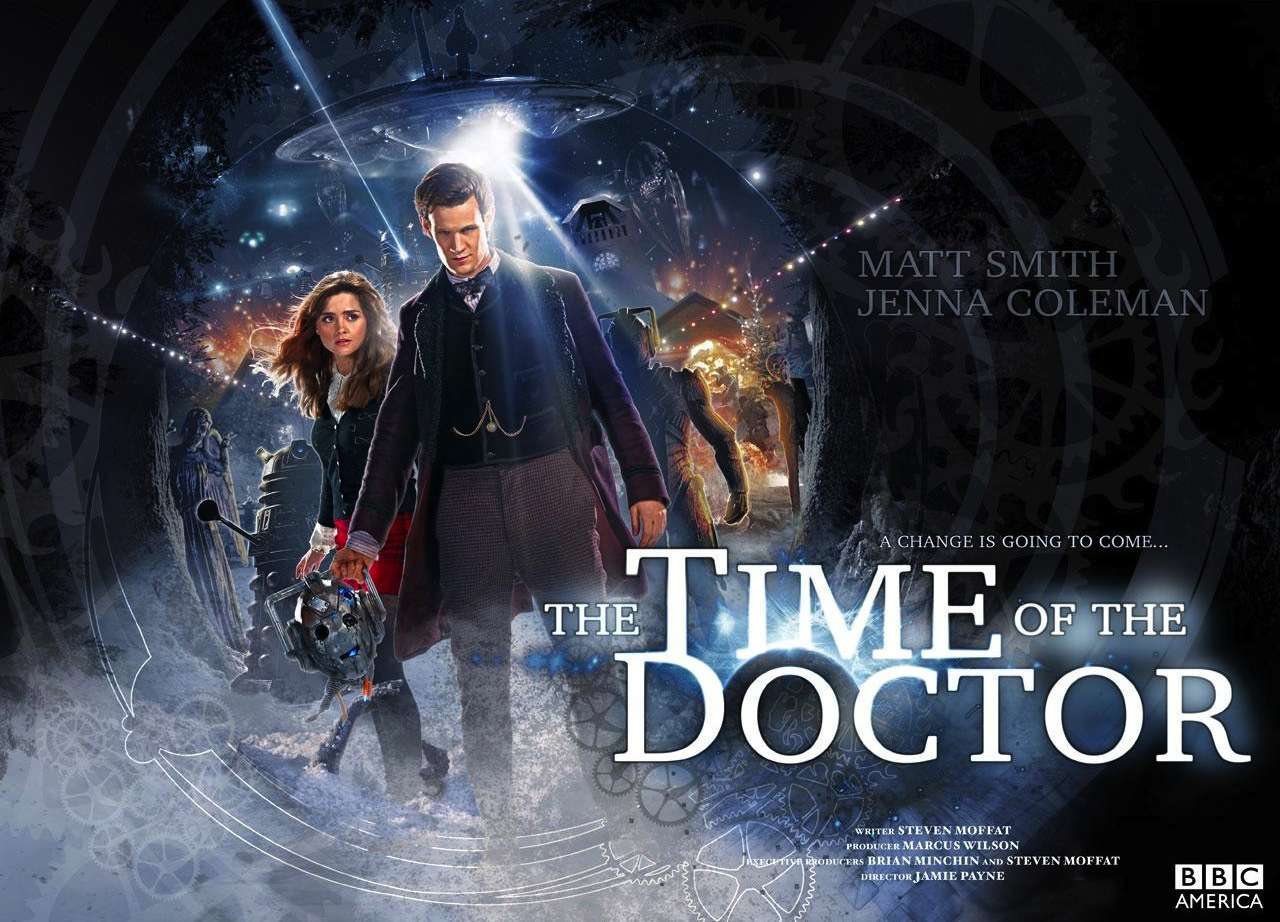
Doctor Who, 2013 Christmas Special - The Time Of The Doctor

THE QUICK, SPOILER FREE REVIEW

Excellent.  Matt Smith is given a worthy send-off and Steven Moffat manages to tidy up all the loose ends regarding The Eleventh Doctor's era.  Pity Jenna Coleman is given so little to do and so much of the action occurs off-camera.  Then again, this is very much Matt Smith's show.  And it is a good one.


SPOILERS FOLLOW AFTER THE IMAGE!


THE PLOT

A mysterious message broadcast across all of time and space brings about the gathering of the worst beings the universe has to offer around a mysterious planet.  Weeping Angels.  Sontarans.  Cybermen.  Even The Daleks!  And The Doctor, of course, because The Doctor always turns up wherever trouble is brewing.  Taking just enough time to snatch Clara away from an increasingly awkward Christmas dinner, The Doctor is soon on his way to the source of the signal - a crack in the wall of a bell-tower in a town called Christmas where no one can tell a lie.  The Doctor quickly learns the source of the message as well as the name of the mystery planet.  Trenzalore.  The planet where he is destined to fight his final battle!


THE GOOD PARTS


* Like Peter Davison, Matt Smith may have delivered his greatest performance as The Doctor in his final episode.  Simply put, Matt Smith nails every aspect of The Doctor's personality here.  I've never been the biggest fan of Smith's take on The Doctor but even I'm going to miss him after this episode.

* Steven Moffat's scripts can be hit or miss at times.  This one was definitely a hit.  As near as I can tell based on one viewing, every single plot thread involving The Siege of Trenzalore and all the prophecies regarding the Eleventh Doctor have been resolved.  Fans may debate how much of this The Grand Moff had planned in advance but I think everything - even the mystery of Gallifrey from the 50th Anniversary special - is addressed.  And yes Virginia, they figure out a way to give The Doctor a whole new regeneration cycle without any hand-waving or jiggery-pokerey.  It's all there in the Classic Series, clear as crystal. 

* The story itself is a truly fitting end to The Eleventh Doctor's story.  Smith's Doctor took great joy in the lives of ordinary people, loved children and dreamed about what it would be like for him to have an ordinary life with a real job somewhere.  How fitting then that he should finally - in a way - be granted that wish as he becomes the protector of Christmas.

* There's a lot of death and rebirth imagery throughout the episode and its very powerful symbolically.  I won't go into all of it here but there's a thesis paper out there for the Anglophile willing to compare/contrast this episode, Terry Pratchett's Hogfather and the wholesale mythology of Father Christmas and Odin.


THE PROBLEMS

* Granting that her actions save the day, Jenna Coleman isn't really given much to do.  She's great with what she does get but it seems like she's barely in the episode.

* Fans who dislike the idea of The Doctor as a romantic figure will find little to like in the character of Tasha Lem - Mother Superior of the Papal Mainframe and even I - who don't mind the idea of The Doctor snogging - thought this was a bit gratuitous after Queen Elizabeth and River Song.

* It's rather depressing - after what we saw of Clara's childhood and upbringing and how amazing her parents were in The Rings of Akhaten - to see her family reduced to sitcom fodder here.  Who the heck is the woman haranguing Clara about not having a boyfriend, anyway?  Step-mother?  I don't think they ever said.

*
Grand as it is, Moffat does violate the "show, don't tell" rule regarding television and we are told about The Doctor's grand battles against all of his enemies without being shown much of them.  We see a bit but we might have seen more.

*
Likewise, while I'm always glad to see more of Karen Gillan (minds out of the gutter, people!), it does seem kinda insulting to Clara that The Doctor drifts off thinking about The Girl Who Waited as his final thought without then turning to The Impossible Girl and the last face this face will see.


THE FINAL VERDICT


A fitting Christmas special and a fitting end to The Eleventh Hour.  Goodbye, Raggedy Man.

Saturday, November 23, 2013

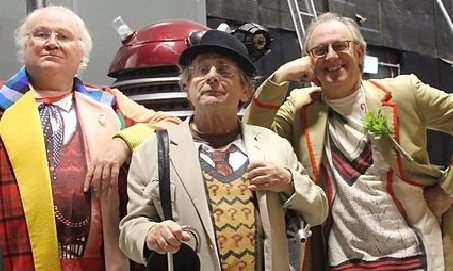
Doctor Who, 50th Anniversary Special - The Five(ish) Doctors

THE QUICK, SPOILER FREE REVIEW

An amusing diversion that left me having to pause the video because I was laughing so hard..  Some of the running gags run a bit long but this is more than made up for by the jokes you don't see coming from a mile away.  Well worth the watching, if only for the many, many, MANY cameos.  You will want to wait and see this until after The Day of The Doctor, if only so the final gag after the credits makes a bit more sense.  But once you have, you can see it here.


THE PLOT

The 50th Anniversary of Doctor Who is fast approaching and everyone is excited about the announcement of a special film being made for the event.  Particularly the surviving classic Doctors, who are eager to have a part in the proceedings.  Not that they're hurting for work, mind you.  Well, except for Colin.  Sylvester's doing The Hobbit.  Paul's doing a lot of television work  So is Peter.  And did Sylvester mention he's doing The Hobbit now?

When Steven Moffat refuses to return their calls, Peter suggests a bold plan - a protest that The Powers That Be at the BBC won't be able to ignore.  With his fellows behind him (at least when Paul's shooting schedule allows it) the Doctors begin a vigil before the BBC HQ in London... only to be reminded they shoot Doctor Who in Cardiff now.  So begins another quest... to get into the 50th Anniversary Special by hook or by crook.... no matter how many favors Peter has to call in to his son-in-law, David.


THE GOOD PARTS
  

* Granting that the actors are largely playing themselves (or at least, the public perception of them), the performances are all quite good.

*
The cameos are all amusing and the ones not immediately obvious to some fans (i.e. David Tenannt's wife being Peter Davison's daughter) are explained away easily enough in the text.

* My favorite gag?  The Tom Baker in Shada footage used to explain why Tom Baker isn't present.


THE PROBLEMS


* The running gags about the classic Doctors not being recognized and disrespected by their own families do run on a bit long.  

* The last gag leaves me wondering... was that really The Classic Doctors under the sheets in that one scene?


THE FINAL VERDICT


In a word, hilarious.

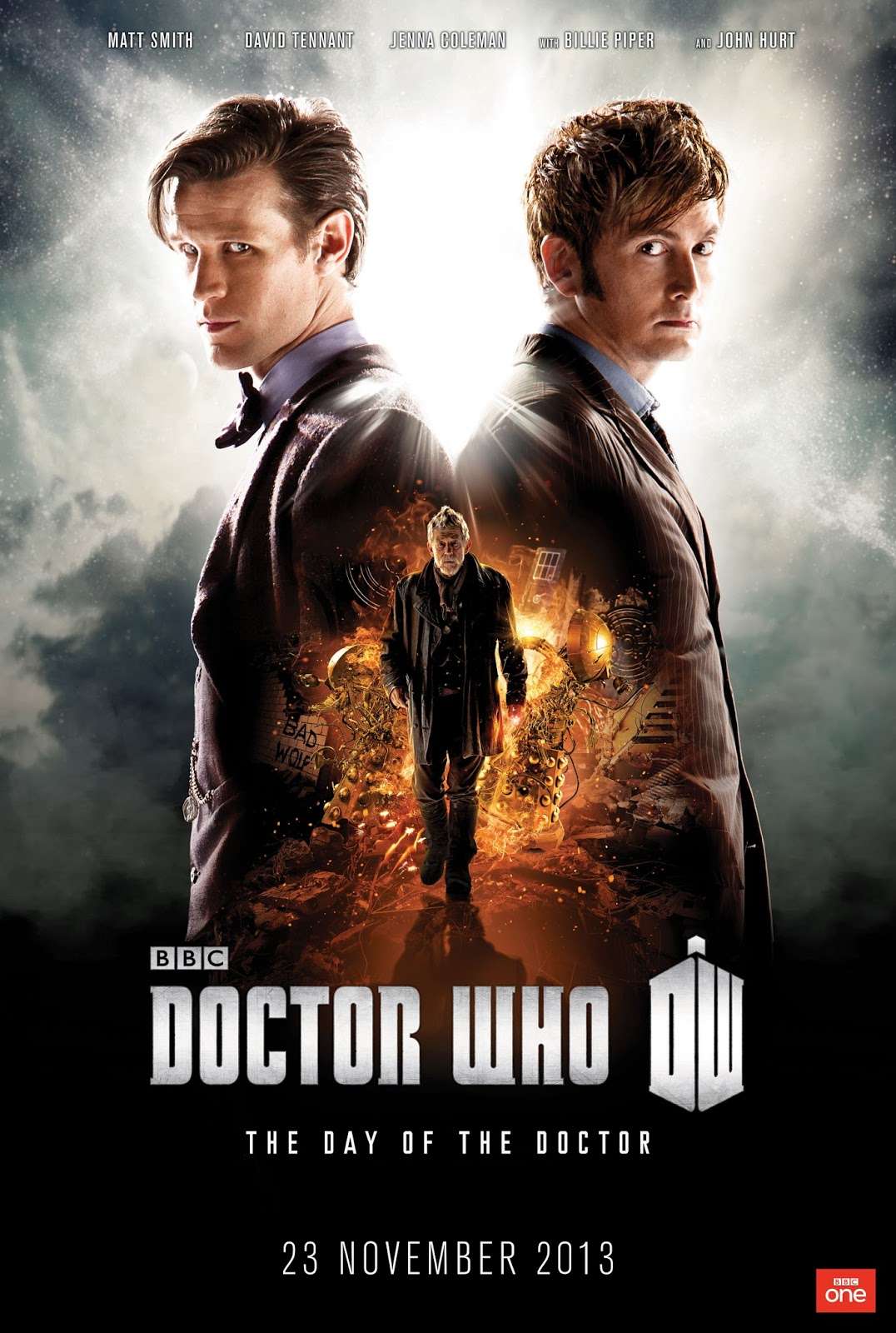
Doctor Who, 50th Anniversary Special - The Day Of The Doctor

THE QUICK, SPOILER FREE REVIEW

It is both fantastic and brilliant.  There are some nits that might be picked but old fans and new will be too busy blinking back the tears throughout to worry about the dodgy bits.  Smith and Tennant get along like a house on fire and John Hurt proves a worthy addition to the pantheon of Doctors.  There will be surprises aplenty, mighty sights and great wonders to behold.  In short, it is everything we could have hoped for and - for once - when they say nothing will be the same after this episode, they are telling the truth.


THE PLOT

In modern day England, Clara Oswald (newly hired as a teacher at the Coal Hill School) prepares for a weekend date with The Doctor.  Their plans are cut short when UNIT airlifts the TARDIS into The National Gallery, where a sealed envelope from Queen Elizabeth I awaits with orders regarding a secret gallery of three-dimensional paintings from Gallifrey.  A series of paintings from which the subjects have seemingly escaped into the waking world...

In Elizabethan England, The Doctor is trying to win free of the amorous of Queen Elizabeth I.  He's also trying to avert an invasion by the shape-shifting Zygons.  Both tasks are made even more difficult when one of the Zygons begins impersonating The Queen and all The Doctor's cunning proves ineffective in finding the imposter.

And in a place very far away and long ago, an old man - once a Doctor - seeks to put an end to the great Time War.  Pushed to desperate measures, he has stolen a weapon known as The Moment - a galaxy eater capable of destroying whole races throughout time and space.  But unbeknownst to him, The Moment has become sentient and before it will be used, it will test any who dare to make use of it.  So in the form of one who is or will be very dear to the one-time Doctor, The Moment shows him images of the men he will become.

Three men who are yet one man, united by a name, an ideal and a Moment in Time.  They will unite to fight a common enemy and more, to test the very limits of what time can take.  Because Time can be rewritten... and even fixed points in time can be broken.


THE GOOD PARTS   

* Smith and Tennant play off one another perfectly.  The two have a combative relationship similar to the one that existed between Two and Three with the difference being that Smith and Tennant act more like brothers squabbling than bickering colleagues.

* Not surprisingly, John Hurt is a fine Doctor.

* Lots of nods to the classic series in the background, including a picture of The Brigadier.

* For a moment, when The Doctor mentioned stone dust and the covered figures in the Under Gallery were revealed, I thought for sure we were going to see the return of The Weeping Angels.  Kudos to Steven Moffat for not bringing his most terrifying creations back when he easily could have.

* Jenna Coleman probably has the least out of all the cast to do but she does a remarkable job playing up Clara's cleverness with what little she has to work with.

* Billie Piper is similarly hobbled in her role as The Moment, but it is interesting watching her play a character through three filters - The Moment As Rose Tyler As The Bad Wolf.

* All The Doctors in the final battle to save Gallifrey.  ALL THE DOCTORS!!!

* The Curator.  Dear gods, The Curator.  I don't know if it was a nod to the Shada special, where an older version of The Fourth Doctor is seen wandering a museum devoted towards The Doctor's life... but it was a nice touch regardless.

* For once, the phrase "Nothing will ever bee the same again" seems accurate.  The revelation that Gallifrey has survived somewhere changes the dynamic of the modern show and gives The Doctor a goal to work toward in the coming series.  More, Moffat has managed this without contradicting The End of Time as The High Council was said to have broken off contact with the military, who we see in this episode.  Of course that does mean The Doctor will likely have to deal with them later... and it won't be pretty.

* The final shot of all The Doctors is a thing of beauty.


THE PROBLEMS  
* What we see of Galifreyian art in this episode doesn't quite jibe with what's been said on the subject in the past.  In City of Death, for instance, it was revealed that all Galifreyian art was done on computers.  True, the technology to capture a moment in time as a painting probably DOES involve computers on some level but the idea of something flat hanging on a wall seemed utterly shocking to Romana.

*
The plot with the Zygons is dropped completely after The War Doctor disappears to activate The Moment.  It would have been nice to see the final resolution of that thread.


THE FINAL VERDICT

Steven Moffat promised this episode would redefine the series.  For once, he was telling the truth.

Sunday, May 19, 2013

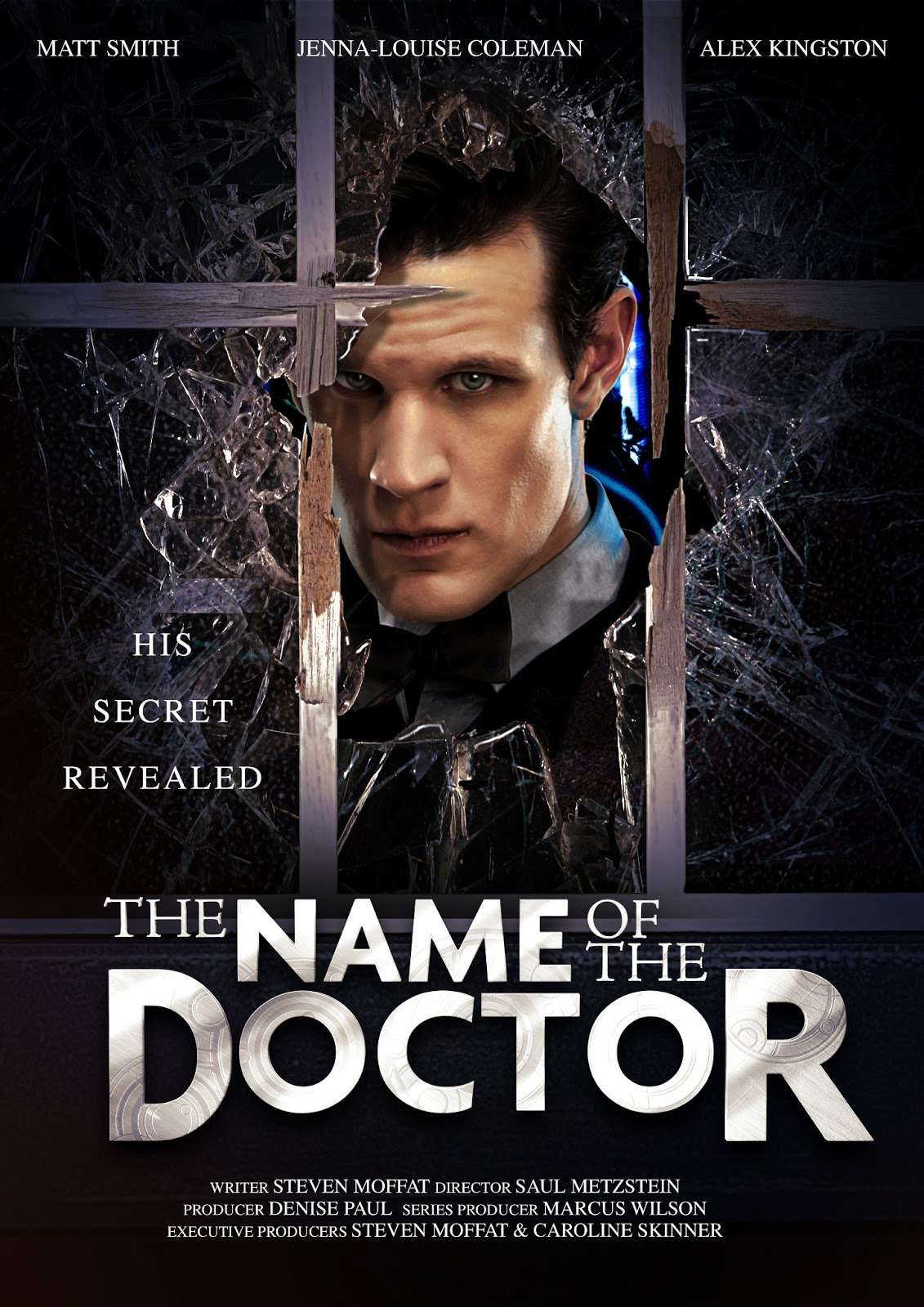
Doctor Who, Series 7 - Episode 13 - The Name Of The Doctor


THE QUICK, SPOILER FREE REVIEW

Last week, Neil Gaiman confirmed that the whole "Impossible Girl" concept was a last-minute addition to this year's scripts.  And boy did it ever show in this episode!  In the typical Moffat fashion, there's a lot of brilliant, high-concept ideas that are introduced but not deeply explored.  Also in the typical Moffat fashion, for every answer we get in this episode, we gain more questions.  Sadly, at least half of these questions will be "What the hell?".  Still, there are some good moments, created purely through the charisma of the cast.


THE PLOT

After a mad murderer gives a message to Madame Vastra regarding The Doctor and his greatest secret, she arranges a psychic conference call of her own entourage and two of The Doctor's greatest allies - Clara Oswald and River Song.  Somehow, their involvement was anticipated and Jenny and Strax quickly fall prey to the vicious Whispermen - the latest henchmen created by The Great Intelligence.  Now, to save his friends, The Doctor must violate the greatest rule of time-travel and cross his own time-line into his future.  He must journey to the fields of Trenzalore... the site of his final battle. 


THE GOOD PARTS   

* The episode title, naturally, proves to be misleading and its' true meaning obscure until the final moment.  Ditto the specific grammatical interpretation of the madman's words.

* The explanation for how Clara Oswald came to be The Impossible Girl is satisfying and logical - by Doctor Who standards anyway.  All of her out-of-character behavior (at least, relative to what we thought her personality was like) has can be explained away that she wasn't that awesome person she was in Asyluim of The Daleks or The Snowmen YET.

* If this is indeed River Song's goodbye (any takers on that bet?), then it is a good one.  Matt Smith and Alex Kingston do a fine job of playing it out.

* The Lovecraftian undertones to stories involving The Great Intelligence show up throughout the show.  Chief among these are the idea of astral-projection based time-travel through dreams, a mad killer somehow having access to cosmic wisdom and a spooky gothic graveyard setting.

* The opening scene, with Clara appearing alongside several of the previous Doctors (including a colorized William Hartnell!) is delightful.

* Apart from the classic footage, there's a lot of references to other episodes including Turn Left (the stars going out as a visible sign of the universe changing) and The Five Doctors (the idea that altering The Doctor's past will cause his present incarnation great physical pain).

* My favorite nod to the Classic Series?   The Doctor name-drops The Valeyard - an evil, future version of himself from the story The Trial of a Time Lord.

* There's some great little moments of acting from the whole cast.  I defy you not to be moved by Lady Vastra's distress over Jenny's death.   

* Strax is quickly becoming my favorite supporting character and I love that his idea of a day off involves bar-brawling in Glasgow.  One wonders if he'll go on to invent the concept of Football Hooliganism. 


THE PROBLEMS   

* Comment has been made before about how so many of Moffat's female characters are Mary Sues but his treatment of Clara tops them all!  One ordinary woman is now responsible for every single victory The Doctor ever had.  Just consider how many stories that is and boggle at that idea.  What is more, since Clara is now cast across the whole of The Doctor's time stream, her involvement can now be used as a Deus Ex Machina any time any future Doctor Who writer finds themselves in a corner.  I doubt few of them besides Moffat will take that route but the idea that such a plot device exists in the first place still troubles me.  It troubles me even more than the question of just how Clara is able to stop The Great Intelligence every single time it manifests. 

* Plot holes.  So many plot holes.  Why does The First Doctor respond to Clara calling him The Doctor, when he didn't adopt that name until later?  How does the madman learn that The Doctor's grave is imperiled in the first place?  How does Madam Vastra (to say nothing of Jenny and Strax's bodies) get to Trenzalore independent of The Doctor?  Why, if The Doctor can force The TARDIS to travel someplace it doesn't want to go, has he never done it before in all the other cases where The TARDIS was being temperamental?  How can The Doctor touch a non-corporeal telepathic construct?   

* Specific one that bugs me just because I love the Sontarans as a monster  - Why doesn't Strax instruct his bar-brawling buddy to hit him in the back of his head to knock him out?  In the one place Sontaran's can be knocked out easily?

* Did anybody else think of The Slender Man when they first saw The Whispermen?

* The Great Intelligence really doesn't have the gravitas to pull off the role here, though Richard E. Grant does give it his all in selling it.  I suppose The Great Intelligence might have many more battles down the line with The Doctor but as it stands the idea of T.G.I.sacrificing itself merely to undo The Doctor's every victory doesn't seem to fit what we know of the character and its' goals.  Can I believe The Master or Davros would take so drastic an action?  Absolutely!  The Great Intelligence?  Not so much. 

* Six months until the actual conclusion of this story!  AUUUUUUUUUGH! 


THE FINAL VERDICT

The charm of Steven Moffat's bait-and-switch stories has officially run out.  Succeeding largely due to the performances of the actors, this story almost manages to maintain it's momentum in skipping across the water like a stone.  Sadly, it sinks at the end as we are left with Clara being the biggest Mary Sue in history and a cliff-hanger ending after a season that was itself all cliff-hanger to this episode.  Is it too much to hope that Series 8 will have a series of simple stories with no overriding plot? 

Saturday, December 29, 2012

Doctor Who: Series 7 - A Mad Theory

WARNING: The following article, while highly speculative and wildly improbable in scope, does contain several spoilers regarding Series 7 of Doctor Who. Do not read further if you do not wish to have certain plot points from Asylum of the Daleks and The Snowmen revealed.


Right.  So here's what we know so far.

1. The phrase "Doctor Who?" has become the arc words for the new series, being repeated several times and held up as being significant. 

2. There is a woman named Clara Oswin Oswald who has been alive during at least three separate points in space and time and died in two of them.

3. One version of Clara was transmuted into a Dalek but proved to be strong-willed enough to resist their mental programming.  This Clara used her connection to the Pathweb - a hive-mind educating all Daleks - to erase all the information The Daleks had on The Doctor (Asylum of the Daleks).

4. The Daleks response to The Doctor introducing himself as they were stricken with amnesia regarding their greatest enemy?  "DOC-TOR, WHO?"

5. Another version of Clara was alive in 1892.  This version of Clara died thanks to the intervention of a being known as The Great Intelligence, which attempted to take over the world using killer snowmen (The Snowmen).

6. The Great Intelligence is an established Doctor Who villain, who fought The Second Doctor twice.  In their first encounter (The Abominable Snowmen) The Great Intelligence used robot yeti as minions.  In their second encounter (The Web of Fear), The Great Intelligence used the London Underground as part of its' plans.

7. It was suggested in The Snowmen, that The Eleventh Doctor's actions were responsible for inspiring The Great Intelligence's actions later, when The Second Doctor first confronted The Great Intelligence..  The older Doctor openly mocked the idea of using physically fragile men made of snow and ice as foot soldiers, thus inspiring the creation of the Yeti robots.  The Doctor also showed a map of the London Underground from the 1960s to The Great Intelligence while describing it as a strategic weakness for the London area, thus setting up the events of  The Web of Fear.

8. Also in The Snowmen, The Doctor seems to have trouble remembering The Great Intelligence and his encounters with it during his second incarnation, saying the name "Great Intelligence" over and over after he sees Mr. Simeon's business card as if trying to remember.  This may be a nod to the facet that the two serials featuring The Great Intelligence - The Abominable Snowmen & The Web of Fear are largely missing and considered lost, the "found" episodes consisting of one part out of six for both serials... or is it a hint of something greater?

9. Consider that - so far - both of the episodes involving Clara Oswin Oswald have also involved a theme of lost memories.  The future Oswin Oswald blocked out her memories of being turned into a Dalek and later removed all memory of The Doctor from the Dalek hivemind.  The Doctor later seems to have had his own memories altered.

10. According to Doctor Who Magazine, the mysterious disembodied mind House from Neil Gaiman's episode The Doctor's Wife was originally intended to be The Great Intelligence, but this was changed for some reason...

11. Neil Gaiman is writing another Doctor Who script for the later-half of Series 7 - one which has been revealed to be devoted toward making The Cybermen - another villain introduced during The Second Doctor's time on the show - into a serious threat once again.

12. A lot of Neil Gaiman's stories deal with the theme of the power of stories shaping reality.

13. The Cybermen, symbolically as villains, are devoted toward the destruction of human emotion and creativity.

14. Neil Gaiman has also written a lot of stories based on the Cthulhu Mythos, which are full of beings from beyond time and space who do not understand basic human emotions.

15. Another name used for The Great Intelligence is Yog-Sothoth - the name of one of the more prominent beings in The Cthulhu Mythos.


All that being said... here is my speculation.

1. Someone is altering the fabric of space and time in a fairly fundamental way. 

2. Either as a side-effect or a direct result, this is altering the memories of time-travelers as to personal events that already happened to them.

3. Clara Oswin Oswald, as a living paradox, is a symptom of the damage being done.

4. The Cybermen are going to be tied in to The Great Intelligence in some form or fashion.

5. Whatever is happening will be suggested to be tied into the destruction of The Doctor's "fictional" adventures in our reality.  I.E. The episodes "lost" to us are literally erased from time in The Doctor's personal continuity.  This destruction of time is being overseen by The Cybermen, who are mostly working at the points in time where they most frequently fought The Doctor (i.e. his 2nd incarnation).

6. The Doctor's battle for his own past will lead to the sudden discovery, secretly facilitated by the BBC just in time for the show's 50th anniversary, of all the lost Doctor Who stories ever.... perhaps recovered from a rumored cache in Zimbabwe? 


I freely admit this is a mad idea and that most of this is improbable and most likely all of it is untrue...

... but think about what a great story that would be!  The Doctor fighting for his own past and securing knowledge of his adventures for the people of a dimension where he isn't real?  Sounds like something Neil Gaiman would write, doesn't it?

Wednesday, December 26, 2012

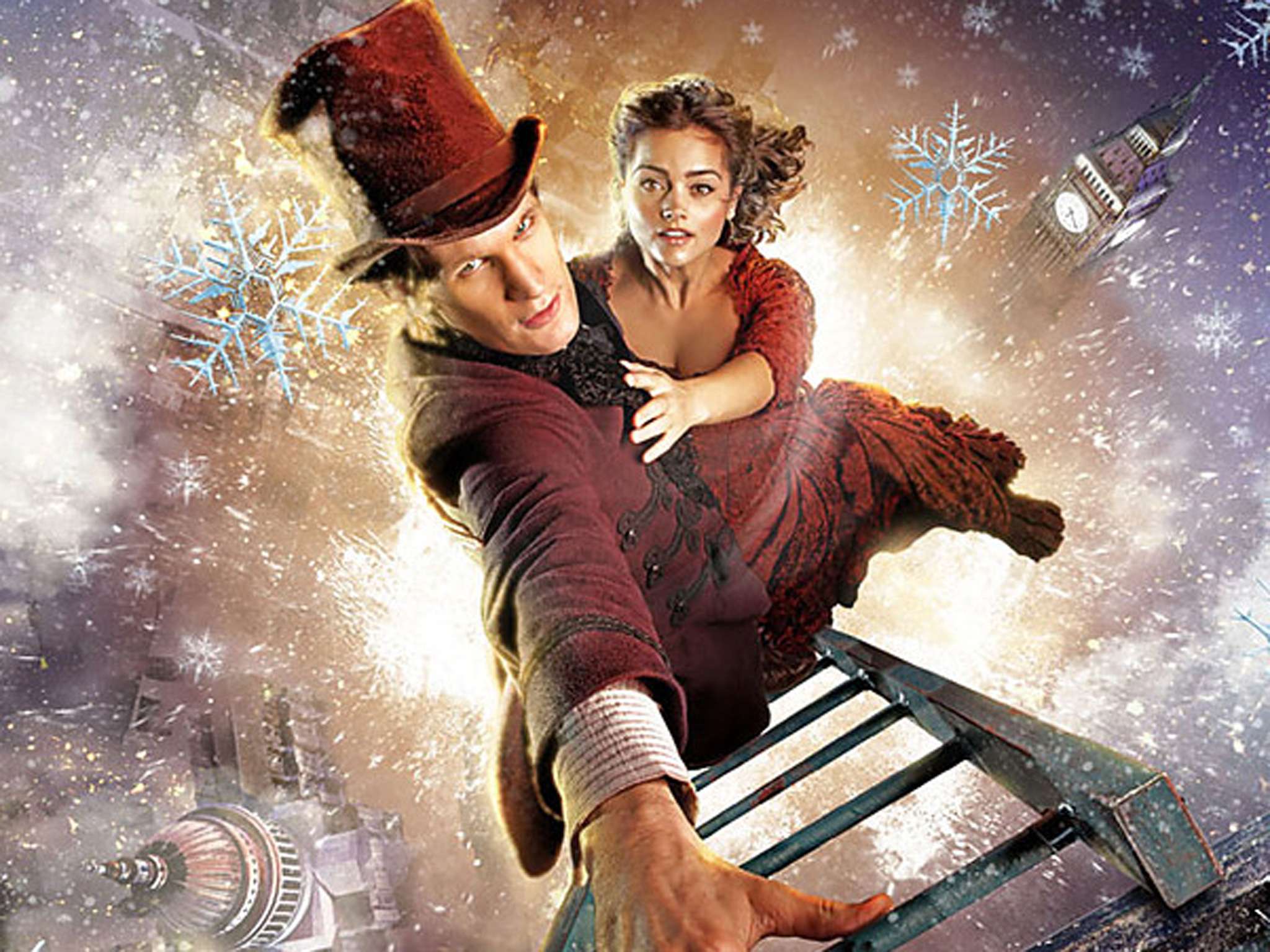
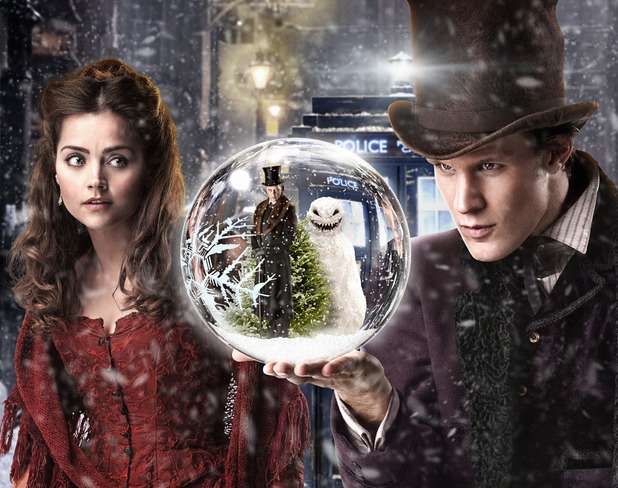
Doctor Who 2012 Christmas Special - The Snowmen


 SPOILERS TO FOLLOW


THE PLOT

England.  1842.  A cold young boy, who doesn't like playing with the other children, hears his snowman talk, assuring him he doesn't need anybody...

Fifty years pass.  The cold young boy is now a cold old man and a Doctor.  Doctor Simeon.  His company is wandering about London, gathering up snow and filling a great glass globe in the doctor's office.  He plans to save the world...

Elsewhere in London, an equally cold and even older man broods in his house in the clouds.  He too is a Doctor.  And he too has planned to save the world countless times in the past.  But he has put such things behind him and nothing the few friends he has left in this world can do will bring him forth to adventure or explore, much less save the world.

One woman may be able to bring forth one Doctor to stop another with a single word.  A woman who is both a barmaid and a governess.  A woman The Doctor met once before.  A woman who likes making souffles.  A woman who may offer a solver of mysteries the greatest mystery ever...


THE GOOD PARTS

* From the very moment we see snowflakes with fangs raining down on the Earth from space, we know this is going to be something special.  Steven Moffatt brings forth outlandish ideas and childish fears like a fountain gushes water but he usually makes them work.  The man who brought us life-stealing statues and shadows that eat people has now given us something new to be afraid of - carnivorous, telepathic snow that remembers.

* The new opening gave me chills.  It's the perfect thing for kicking off the 50th anniversary of Doctor Who, encompassing parts of the introductions to all the classic Doctor Who episodes.  The journey through space.  The flickering tunnel of light.  And Matt Smith's face looking back at us.  Perfection.

* Sir Ian McKellen's voice work, unsurprisingly, is brilliant.

* It's nice to see Madame Vastra and Jenny appear again.  It might be nicer to see them take the center stage.  Sherlock Holmes is big again - in no small part to Steven Moffat's other project right now.  Why not give Madame Vastra and Jenny their own spin-off ala Torchwood?

* On that note, every single Sherlock Holmes joke.

* Strax the Sontaran Butler.  Every bloody moment he's on screen is comedy gold.

* Matt Smith playing the Doctor as a more subdued figure.  It's too early to tell how long this may last (he seems manic enough at the end) but Smith does a grand job portraying how The Doctor's most recent losses have changed him yet again, reducing him to a state not dissimilar to where he was after the loss of Rose Tyler - the companion who also shook up a very old, very cold Doctor.  Perhaps it's no coincidence that the woman who shakes him out of his doldrums works in a bar called "The Rose and Crown"?

* Jenna-Louise Coleman.  I loved her back in Asylum of the Daleks.  I love her even more now.


THE PROBLEMS

* While Moffat's script is strong, it's also full of references to previous episodes.  While that's fine for long-time fans of the show, the Christmas Specials have usually been open and accessible, requiring no previous knowledge of the show in order to watch them. For all it does right, The Snowmen is still the middle of about three separate stories, making this poor fodder for trying to convert your family members who haven't heard of Doctor Who before this holiday season.

* The 'one word' test The Doctor has Madame Vastra is a bit unbelievable.  While it's totally believable that The Doctor would be so petulant about refusing to help people who fail to interest him or to get to the point (there's Sherlock again), we are damn lucky Clara chose the word "pond" instead of "pool".

* Clara could be shaping up to become another of Moffat's Mary Sue female characters, ala Amy and River.  A brilliant woman who has the added benefit of having some form of apparent immortality or reincarnation?  Doesn't get much more Mary Sue than that.


THE FINAL VERDICT

If you've been watching Series 7 so far, it's brilliant.  If you've never seen Doctor Who before, it'll be confusing.  If you have family who are just now hearing about the show or saw it on the cover of TV Guide, this is not the episode to use as an introduction to the series.  I'd suggest The Christmas Invasion for that.  But for those of us long-term Whovians, it is a delight.

Sunday, September 2, 2012

Doctor Who, Series 7 - Episode 1 - Asylum Of The Daleks

THE QUICK, SPOILER FREE REVIEW

Many Wholigans were nervous when it was announced that the first episode of the long-awaited Series 7 would involve The Daleks. Even after a full season without any Dalek-based episodes or appearances apart from brief cameos, a strong feeling exists within the fandom that that the Daleks have been overutilized in the new series. Thankfully, Steven Moffat makes this into more than "just another Dalek story" thanks to some thoughtful exploration of the core cast and a pair of upgrades that make The Daleks even scarier while still being true to the horror of the original concepts of Terry Nation. This episode was everything we could hope for in a season opener, save that the continuation of some of the drama involving The Ponds makes this a difficult one to use as an introductory episode for new viewers.


THE PLOT

Lured into a trap by a new breed of Dalek/Human hybrid, The Doctor finds himself held hostage along with a not-at-all-pleased to be seeing one another Amy Pond and Rory Williams. It seems The Doctor's favorite couple are having marital problems and were finalizing their divorce when they were captured by The Daleks. Sadly, any discussion on saving their marriage must be placed on hold as The Doctor is charged with a task he never thought he'd be be asked for, let alone accept: SAVE THE DALEKS!

It appears that the inmates have taken over the asylum world where The Daleks keep those members of their race too crazy to follow orders locked away. Since the concept of facing an army of crazed Daleks is scary too scary for even a sane Dalek to cope with, The Parliament of Daleks wisely elects to declare this Someone Else's Problem and send The Doctor and company to deactivate the force field protecting the world, so they can blow it up and eliminate the risk of posed by a bunch of out-of-control Daleks.

But the asylum world has far more dangerous things than even insane Daleks. Things like a nanotech virus that can animate the dead and turn living organic beings into Daleks! And in the midst of all this is a souffle-baking manic pixie dream girl computer hacker named Oswin, who has somehow managed to survive a starship crash onto the asylum world for over a year without getting absorbed...

THE GOOD PARTS

* Steven Moffat's scripts are always good for their concepts if nothing else. There's a lot of brilliant things in the script. Lots of nice little touches scattered throughout. But nothing is quite so glorious as the concept of Daleks having concepts for what constitutes insanity and standards of beauty. It also neatly explains away the key problem with why a compassion-free race like The Daleks - who normally destroy anything that is not useful to them - would bother with an asylum in the first place.

* On that note, the interplay between The Doctor and the Dalek Prime Minister is perfect and leads to the best verbal burn of The Doctor since "You would make a good Dalek."

* Moffat also deserves some credit for delivering what Evolution of the Daleks failed to bring about - Dalek/Human hyrbrids that were truly frightening. While the horror of humans beings transformed into Daleks hasn't been extensively explored (if for no other reason that that's more of a Cyberman trope) , Moffat manages to subtly convey the horror of that concept with something as simple as a mother who doesn't seem particularly concerned about her daughter being endangered. The effects for the Dalek/Human hybrids are also well utilized.

* Moffat has been accused - not unjustly in some cases - of writing many of his female protagonists as Mary Sues. I don't know if he's intentionally parodying himself with Oswin, who proves to be so utterly capable that even The Doctor (who usually goes manic over someone being as brilliant as him) begins picking her awesomeness apart. Still, the way Moffat handles her character makes the eventual twist truly surprising.

* Two words: Dalek Zombies.

THE PROBLEMS

* A lot of the clips from this episode that were used in the trailers, appear to have been written specifically for the trailer. The whole "On a scale of 1 to 10? 11." line and "Who killed all the Daleks?"/"Who do you think?" seem to have been taken from an American action movie rather than Doctor Who episode. And while those moments were awesome in the trailer, they stick out terribly in the context of the episode.

* Amy and Rory's marriage problems are given surprisingly little screen time and what little information we glean comes from an "As you well know" style info dump. Karen Gillian and Arthur Darvill play the scene well enough but it still comes off as being incredibly rushed, particularly given the revelations that Amy is infertile due to the events of A Good Man Goes To War.

* The resolution is similarly rushed and - as annoyed as I am by the continual Rory/Doctor/Amy triangle, I do not want this plot-line to be dismissed so easily.

* Speaking of plotlines that won't go away, can we please, PLEASE stop playing the "Rory is an idiot" card for cheap laughs? Time and again Rory has proven himself and the gags about him being slow on the uptake and ignored in the wake of his far more assertive wife and the more take-charge Doctor was old last season.

THE FINAL VERDICT

A solid opening for the new series, despite some rushed character moments. The cast continues to rock it and Moffat manages that most impossible of writing feats - a Dalek story that doesn't seem to be rehashing the same old territory.