Showing posts with label Doctor Who 50th Anniversary. Show all posts

Thursday, December 18, 2014

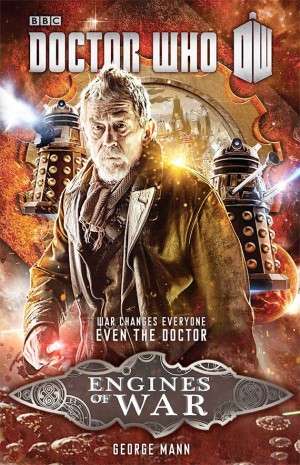
Doctor Who: Engines of War - A Book Review

The Great Time War has raged for centuries and across millenniums. Scores of worlds have been destroyed by the machinations of both The Daleks and The Time Lords. And it is in The Tantalus Eye - a nebula now dominated by Dalek forces - that the Time Lord once known as The Doctor crash-lands after the fleet of Battle TARDISes that he was leading is destroyed.

It is on the world of Moldox that he will meet Cinder - a human Dalek hunter rebelling against the occupying Dalek forces.  This puzzles the Time Lord, as Daleks never use slave labor unless they are building something. But what could they be building on the outskirts of the galactic rim?

The answers will unearth a terrifying secret and send the two warriors from the slums of Moldox to the gleaming towers of Gallifrey and back. For The Daleks are not alone in having secrets. And in order to save billions of lives, an embittered old soldier must become The Doctor once more.


The most regrettable thing about Engines of War is its finality. It spoils little to say that this story is The War Doctor's lead-up into the events of The Day Of The Doctor and we get to see the exact chain of events that lead to him uttering the immortal words 'No More". This does make the climax of the book somewhat predictable, as the exact ending is clearly foreshadowed.

The events leading up to that ending, however, are some of the best writing I've seen in any Doctor Who novel to date.  And George Mann is to be hailed for how much drama he wrings out of what could have been a dry, by-the-book pastiche. Gruff and crusty though he may be, The War Doctor is still a likable hero and Cinder is now on my top-ten companions list.

There's a fair amount of continuity for long-time fans of the series, but nothing newcomers will prove unable to cope with.  Fans of the classic series will no doubt enjoy the references to The Five Doctors and The Deadly Assassin. And if nothing else this book is noteworthy for confirming that the Rassilon we see in The End of Time is indeed THAT Rassilon and that the depravity he got up to behind closed doors was even worse than the plans he discussed openly.

Bottom Line: If you're a Doctor Who fan of any age or era, you should check out Engines of War.

Saturday, August 2, 2014

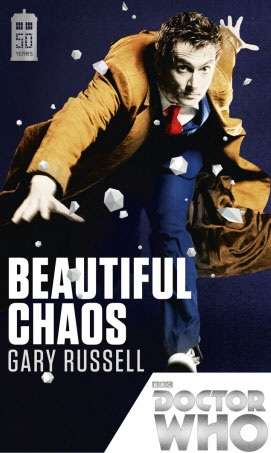
Doctor Who: Beautiful Chaos - A Book Review

Wilfred Mott is having a good week.  His beloved granddaughter Donna Noble has returned home from her travels with The Doctor for a quick visit.  More, the amateur astronomer has discovered a new star and is being honored with a dinner at the Royal Planetary Society, where the star will be officially named after him!  It almost makes the fights that are sure to spring up between Donna and his daughter Sylvia worth it.

The Doctor doesn't "do domestic" but he's all too eager to attend the dinner as Wilf's guest - if only to get away from Sylvia (who does NOT approve of her daughter running around with this Doctor fellow) for a few hours.  But The Doctor soon discovers that Wilf's new star is but one of several new stars suddenly lightning up the skies of Earth.  And what this means is that an old enemy has returned - an ancient force from The Dark Times who seeks revenge against The Doctor and all of humanity!


There is little I can say about how wonderful Beautiful Chaos is that is not already said in the book's introduction.  Actor Bernard Cribbins - who played Wilfred Mott and read the audiobook - is said to have thought the novel to have been written by Russel T. Davies under a pen-name because it did such a grand job of capturing the characters from the show.  High praise indeed!

Russell T. Davies himself said he found the story of Beautiful Chaos so touching it moved him to tears.  Writer Gary Russell may doubt RTD's sincerity on that point but what nobody can deny is that Davies apparently liked Wilfred Mott's lady-friend Henrietta "Netty" Goodheart enough to give her a mention in the final Tenth Doctor story The End Of Time - an honor I don't believe has ever been accorded to any character introduced in the Doctor Who novels!

It is Wilfred's relationship with Netty that is the core of this book.  Netty has Alzheimer's Disease and her bad days are beginning to outnumber the good ones, though Wilfred enjoys her company enough to muddle through things.  Theirs is a muted romance, with neither of them truly willing to push for a stronger commitment given the tragic ending they both know is coming.

Their relationship adds a welcome note of humanity to the tale, which would be a perfectly serviceable Doctor Who story without it.  Fans of the classic series will likely figure out the identity of the villain long before The Doctor thanks to Russell's masterful foreshadowing.  Fan of the new series will be glad to see The Doctor, Donna and Wilf captured in all their glory and the whole story acts as a welcome coda to Wilfred Mott's story in The End of Time.

Bottom Line: This book is a must read for all Whovians, great and small, classic and new, young and old.

Monday, July 14, 2014

Doctor Who: Nothing O'Clock - A Review

While the Time Lords of old were big on non-interference, there were some threats to space and time they did take seriously.  One of these threats was The Kin - a species who moved through time like sharks move through oceans.  The Time Lords constructed a special prison - one that would contain The Kin for so long as there were Time Lords to guard against them.  Unfortunately, there is now but a single Time Lord who knows nothing of The Kin's existence or their desire for revenge...


It should surprise no-one that Nothing O'Clock is as excellent as it is.  Writer Neil Gaiman - who wrote two very well received episodes of Doctor Who - is well familiar with The Eleventh Doctor and Amy Pond and perfectly captures their respective voices.  Also, this is Neil Gaiman writing a Doctor Who story without a budget to hold him back.  Of course this is story is brilliant!.

The best aspect of the story are The Kin themselves.  The Kin are monsters that couldn't possibly be as effective on-screen as they are in-print.  Not even a Hollywood film budget could do them justice!  The description of what they look like seems to have been tailor-made to evoke the nightmarish images born of a frightened child's mind that are Gaiman's stock-in-trade.  That sensation alone makes this story worth the reading, whether one is a fan of the show or Gaiman's work in general.

Doctor Who: The Mystery Of The Haunted Cottage - A Review

The TARDIS brings The Doctor and Martha Jones to a place that seems like Earth but isn't quite right.  At least that is what The Doctor says before they start seeing characters from Martha's favorite books go walking past!  Who has the power to create a whole world out of stories?  And more importantly, why would they bother to do so?


There seems to be something slightly off about Derek Landy's The Mystery of the Haunted Cottage.  His take on The Tenth Doctor, while possessing some of David Tennant's tics, is much more erratic in his behavior and seems far closer to Matt Smith's Eleventh Doctor in tone.  By the same token, Martha Jones doesn't seem to he herself, her dialogue being filed with sarcasm that seems more appropriate to Amy Pond or Donna Noble.

This incongruity may have been the result of last-minute editing.  Reportedly, Landy finished his script before receiving any editorial input or even approval for his story concept.  He was apparently unfamiliar with the Second Doctor story The Mind Robber and how his story was built on the same basic concept.  Text was added to explain away the similarities but the final effect leaves this story reading more like a Doctor Who fan-fic than a professional quality novelette.

Doctor Who: The Beast of Babylon - A Review

Like many teenage girls, Ali longs for adventure far away from her boring home-life.  A chance encounter with The Doctor gives her a shot at that dream, as she stumbles across a strange metal sphere that he claims he needs to stop a great disaster.  Reluctantly, The Doctor agrees to take Ali with him as he races back to the days of Hammurabi, where a planet-devouring monster threatens the Earth!


If nothing else, The Beast of Babylon is notable for confirming the long-held fan-theory that The Ninth Doctor went off and had a few adventures in the span of time between when he left Rose Tyler on Earth and when he came back a few seconds later (from her perspective) to tell her The TARDIS traveled in time as well as space.  Thankfully, Charlie Higson's story will please more than just the trivia-obsessed Whovians.  His take on The Ninth Doctor is good and Ali is an interesting companion - an odd combination of Leela and Rose in terms of personality and humor.

What I found most fascinating about this story is how it has a number of eerie parallels with some of the comments made about The Doctor and The Time War in The Day Of The Doctor.  Chief among these are the reasons The Doctor takes Ali home instead of letting her continue to travel with him at the story's end.  Little more can be said without spoiling the adventure but suffice it to say most Doctor Who fans will enjoy The Beast of Babylon.

Friday, July 11, 2014

Doctor Who: Spore - A Review

The Doctor tracks a falling space probe to the town of Fort Casey, Nevada.  By the time he gets within walking distance of the town, he discovers it is under quarantine and that the town has already fallen to an alien menace - a strange black goo that absorbs and destroys any organic life it touches!  But this is no ordinary alien menace - it is a sentient disease that nearly wiped out The Time Lords!  


Much like Tip Of The Tongue, Spore is a decent story that doesn't feel like a Doctor Who story.  Part of this may be due to the fact that The Eighth Doctor has always been the hardest incarnation to pin down in a written form, having had the smallest amount of screen time and the most erratic portrayal in the books, comics and audio plays.  As such, The Doctor in this story seems rather muted and there is little to distinguish him from any other incarnation save for a distinct lack of the other Doctors' usual tics.

The other problem with this story is that there is very little sense of drama.  The Doctor himself is immune to the alien menace in question, so there is no worry of him being imperiled.  His one-shot companion in this story - Captain Evelyn Chan - is a non-entity who serves no purpose other than to give The Doctor someone to talk to besides the spore itself.  Even the spore itself - which will doubtlessly remind comics fans of the Venom symbiote from Spider-Man - seems rather generic as far as alien menaces go.

I'm hard pressed to think of anyone but the most devout of Whovians who might enjoy this story.  It isn't bad but neither is it truly good.  It's just sort of... there.

Doctor Who: The Ripple Effect - A Review

As The Doctor once noted, "Every great decision creates ripples. Like a huge boulder dropping in a lake. The ripples merge and rebound off the banks in unforseeable ways. The heavier the decision, the larger the waves, the more uncertain the consequences."  At the time he was speaking philosophically but now it seems his words were prophetic as an attempt to free himself and his companion Ace from the time-traveler's equivalent of sargassum seem to have blown them into an alternate universe... or maybe changed their own universe completely!

Naturally The Doctor feels a need to undo his mistake.  Particularly given how this new universe possess the most unnatural abomination The Doctor can think of - peaceful Daleks who are renowned as scholars and philosophers across the universe!  Ace doesn't see a problem, until it becomes clear that all reality itself may be at risk!


More than any other incarnation, The Seventh Doctor pondered issues of morality on a philosophical level and tried to challenge the beliefs of those around him.  It is ironic then that The Ripple Effect depicts The Doctor for whom a question-mark emblem seemed most appropriate as being unwilling to question his actions in this story.  In many ways, this story is reminiscent of the Eleventh Doctor episode Victory of The Daleks save for two important distinctions - The Doctor is not eventually proven right and Mallorie Blackman's script is far better written.

Ace and The Seventh Doctor are well-portrayed and the story is a thrilling one.  The only real flaw is that there isn't truly a conflict in the story.  There's a lot of arguing, with Ace trying to plead the case of this new universe and the new friend she's made who will both cease existing if The Doctor has his way.  But there's never any real possibility that The Doctor is wrong and it takes all of reality starting to collapse before anyone takes his claims of something being wrong seriously.

Seventh Doctor fans will want to give this one a look but it's not quite as riveting a read as other stories in the 11 Doctors 11 Stories collection.

Thursday, July 10, 2014

Doctor Who: Something Borrowed - A Review

The people of the planet Koturia are unique among all the sentient species of the universe in several respects.  Physically, they resemble the people of Earth, save that Koturians' natural hair colors tends toward bright, neon tones.  Koturians are also one of the few species - apart from Time Lords - capable of total physical regeneration, though they only regenerate once and their regenerations are triggered by intense feelings of love rather than severe stress or injury.  

As such, weddings are serious business on Koturia and Lord Ervis Makshi is all too pleased when The Doctor and his companion Peri show up on Koturia just in time for the wedding of his son Jonos.  Jonos is getting on in years and fast approaching the point where he will no longer be able to regenerate and the family is so happy for Jonos they are able to overlook scandalous little details like his bride-to-be not being a Koturian.  But there is something mysterious about Jonos's intended Lania... and there are few mysteries that The Doctor can leave unsolved.


Richelle Mead succeeds in something few of the writers in the 11 Doctors: 11 Stories collection even attempted and creates a new species with an interesting culture as the background for Something Borrowed.  Described as Las Vegas in space (but with much more serious weddings), Koturia is a tangible reality to the point of being a character in and of itself.  This helps to make Something Borrowed a bit more interesting than the Earth-bound stories from earlier in the collection.

Another thing that separates this story from the rest of the collection is the fact that this is the only tale told from a first-person perspective.  Peri is our narrator and Mead does a fine job of capturing her voice, with Peri snarkily taking The Doctor down a peg when his pompous-side flares up.  Given that this is a Sixth Doctor story, that occurs quite often and Mead does a good job of capturing the essence of Colin Baker's performance.

This story is worth giving a shot for the difference in perspective alone.  An interesting villain also livens up the proceedings.  All in all, this story will be a pleasure for most anyone who reads it.

Doctor Who: Tip Of The Tongue - A Review

Maine, New England.  1945.  Nettie is a mixed-race tomboy who prefers working on cars to more feminine pursuits.  Jonny is doubly cursed to be Jewish and German in a time and place where neither is widely accepted.  The two have bonded together as only outcasts can but Jonny has designs on joining the popular crowd.  Or at least winning the attention of his crush, Marisa.  And he plans to do that with his newly acquired Truth Teller.

The Truth Teller is the latest fad -a  living creature that is strapped to one's chin and then immediately beings speaking the truth about whatever is in front of it.  Naturally the town's teenagers are easily amused by the trouble and pain such creatures can cause.  But the truth behind what The Truth Tellers really are proves far from playful, as Nettie and Jonny will discover when The Doctor pays their town a visit.


There is a good story at the heart of Tip Of The Tongue.  Unfortunately, it's not a good Doctor Who story.  Indeed, The Doctor's presence almost seems to be an afterthought.  We don't get to see The Doctor in action until the very end and even then he's just there to explain away what's been going on in the background to the story's main characters.  Nyssa is a non-entity, who receives no more description than "sounds British" and "wears trousers" and is given nothing to do save provide The Doctor with someone to talk to.

Patrick Ness might have written a good historical novel for young adults with Nettie and Jonny.  Indeed, I hope he does, for they are the best thing about this story and one can easily see why The Doctor would invite them to travel with him.  As a period piece, Tip Of The Tongue is enjoyable.  As a Doctor Who story, it falls flat.

Wednesday, July 9, 2014

Doctor Who: The Roots Of Evil - A Review

When The Doctor's current companion - the warrior woman Leela - expresses a desire to go somewhere with trees, The Doctor is all too happy to oblige.  The TARDIS takes them to The Heligan Structure - a massive moon-sized space-station that is composed of one massive genetically engineered tree!

The Doctor only knows of The Heligan Structure by reputation but it seems the tree's settlers are familiar with The Doctor.  And all of them bear names like "Vengeance-Will-Be-Ours-When-The-Doctor-Dies-A-Thousand-Agonizing-Deaths" or "Agony-Without-End-Shall-Be-The-Doctor's-Punishment.".  This leaves The Doctor feeling quite unwelcome even before people start threatening to kill him or plotting to torture him.  And that is before the station itself seems to come alive and start trying to destroy him... and everyone else!


The Roots of Evil is a fun little story that perfectly captures the feeling of a Fourth Doctor/Leela story.  One can hear Tom Baker's voice while reading Philip Reeve's dialogue for The Doctor and the entire script has a dark humor common to the stories of the era.  The novel's twist for just why the people and their home hate The Doctor so much is an honest surprise and it, as well as some references to the New Doctor Who series, will be sure to tickle the funny bones of younger fans.  This story is a must-read for all fans of the series, particularly Fourth Doctor fans.

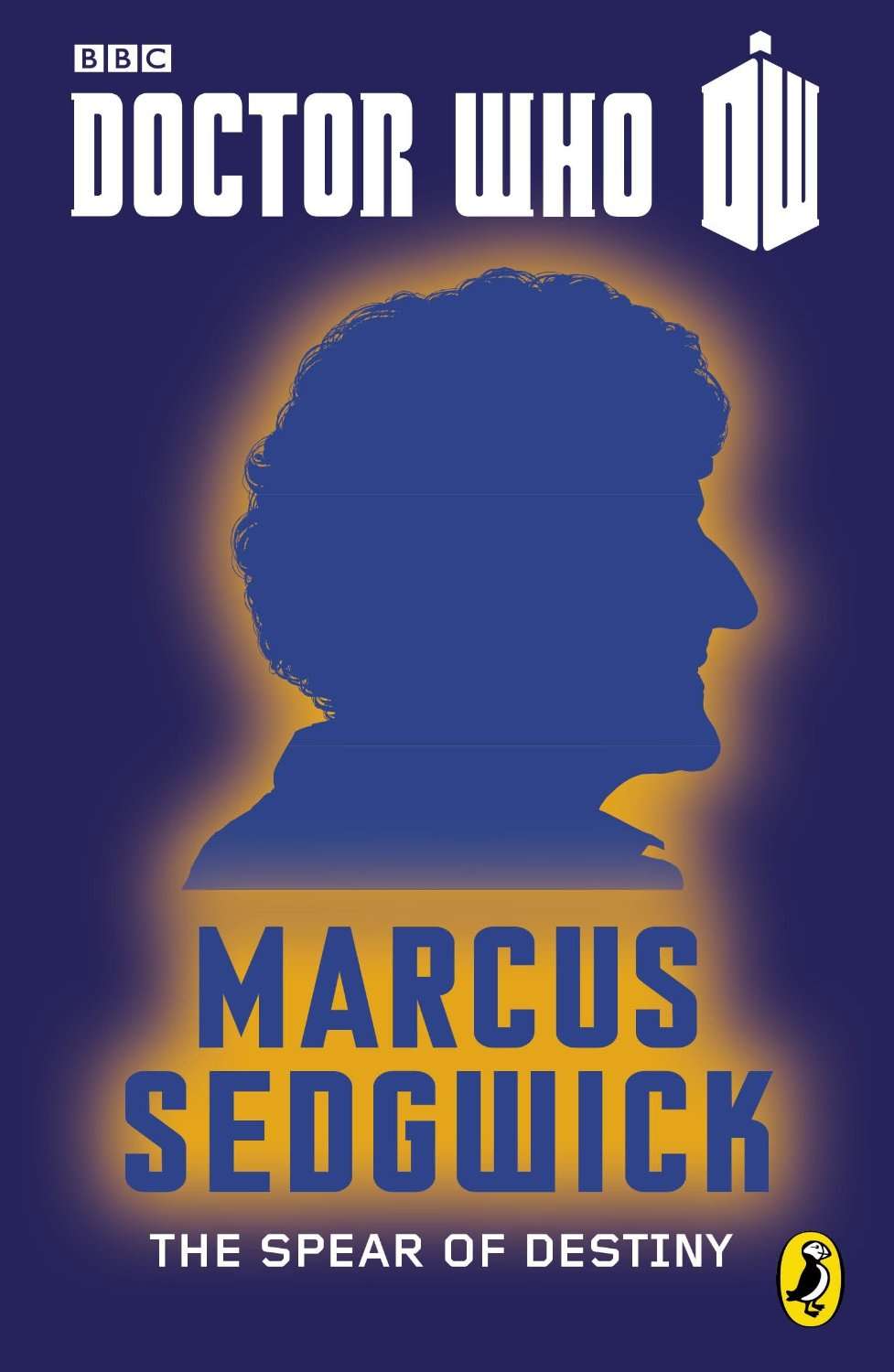
Doctor Who: The Spear of Destiny - A Review

The Doctor's knowledge of how to pilot The TARDIS has been restored!  But he is not yet free to wander the universe as is his wish.  He still has responsibilities - both to the Time Lords and to UNIT.

Those responsibilities coincide when The Doctor is given orders to retrieve a Physical Temporal Nexus - an object which allows its holder some ability to alter the flow of space and time - from a London Museum.  When The Doctor's attempt at burglary is thwarted, he will have to go back to the time of the Vikings to retrieve the objection in question - an ancient spear which may have inspired the legends of the Norse gods!  But there are many dangers awaiting The Doctor in the past, including a familiar old enemy...


If The Spear Of Destiny has a flaw, it is that it is a little too good at capturing the spirit of The Jon Pertwee era of Doctor Who.  Marcus Sedgwick perfectly portrays the personalities of both The Doctor and Jo Grant as well as the rest of the usual suspects.  The story itself feels like it could be a lost script from the show's tenth Season, and Sedtwick sneaks in a little educational content on Viking culture for the kids at home.

The irony is that Sedgwick does such a fine job of emulating the classic Third Doctor stories that The Spear of Destiny is a tad predictable as a result.  Fans of the show will not be at all surprised what classic villain shows up to torment The Doctor and Jo.  Still, Sedgwick does a masterful job of keeping things interesting in spite of this and in blending various aspects of the Doctor Who mythos to suit viking myth.

The Spear of Destiny is a must-read for all Third Doctor fans.  Those fans of the new series who have yet to experience a Jon Pertwee story would do well to start with this spirited tale.  And of course it will appeal to anyone who loves a good story involving vikings and the truth behind myths.

Monday, July 7, 2014

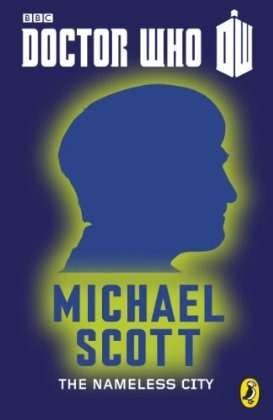
Doctor Who: The Nameless City - A Review

Jamie McCrimmon is a man of action, not thought.  This is why, when he came across a man in the street being mugged, he thought nothing of stepping in to protect the older gentleman and thought even less of the old leather-bound book the man offered him as a gift.  Jamie had no way of knowing that the book was a trap and that it would take him and The Doctor to the edge of the universe, where an ancient race waits to wreak their revenge...


Some blanch at the idea of mixing the universes of Doctor Who and H.P. Lovecraft.  What few realize is that the two mythos are already intertwined, with The Great Intelligence (the primary villain of the second half of Series Seven) having originally been given the name Yog-Sothoth back in The Second Doctor era.  Indeed, the episode The Web of Fear mentioned The Great Old Ones by name!

A lesser writer might have limited themselves to the gimmick of The Doctor getting his hands on a copy of a forbidden book but Michael Scott does far more to take this story beyond its novel concept.  The characters of The Second Doctor and Jamie are perfectly captured.  And Scott's prose perfectly emulates the weird horror of the Lovecraftian setting.

If you're a fan of Lovecraft who isn't familiar with Doctor Who, this story is a wonderful introduction.  If you're a fan of Doctor Who in general and The Second Doctor in particular, it is a must read.

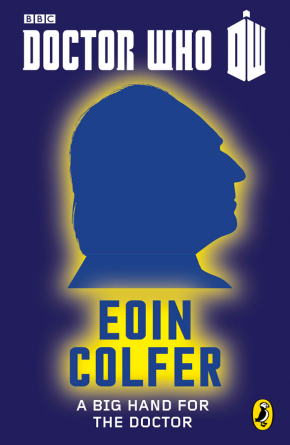
Doctor Who: A Big Hand For The Doctor - A Review

The place is London.  The time is the Victorian era.  And The Doctor is fresh off an encounter with the infamous Soul Pirates, who kidnap children for the power their spirits generate and the riches their bodies can provide.  An encounter he barely survived, having lost a hand in the process!  Once again The Doctor must face these evil men - this time armed with a slightly over-sized prosthetic-  before any more innocent young people disappear forever!


A Big Hand For The Doctor is not a good First Doctor story.  With some alterations, it might be a good story but not - I believe - a good Doctor Who story.  The whole affair is reminiscent of Eoin Colfer's And Another Thing...  where Colfer tried to alter his usual style to write like Douglas Adams.  Here, Colfer seems to be trying to ape Terrance Dicks and it might have worked if he were writing any Doctor but the first one.

The high-action, swashbuckling tone of this story is completely at odds with the persona of the William Hartnell's Doctor.  And if we wanted to be truly pedantic, we might note how unlikely it is that The Doctor of this era - for this story MUST take place sometime before the show started - would be going off on adventures fighting beings like The Soul Pirates in the first place given The First Doctor's unwillingness to get involved in the affairs of others at that time.  Worst of all is the "twist" at the end of the story, in which we find out just how badly Colfer was willing to twist the characters to fit his story and the point he was trying to make.

This story is not worth a download.  And if one has the 11 Doctor, 11 Stories collected edition, this chapter may be easily skipped.  Nothing of value will be missed.

Monday, April 21, 2014

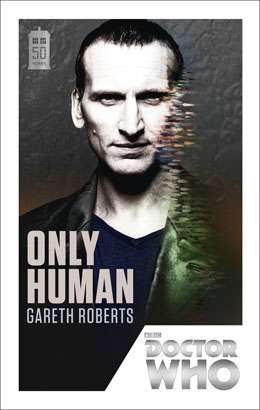
Doctor Who: Only Human - A Book Review

When the TARDIS' disturbance alarm goes off, The Doctor is quick to investigate.  With Rose Tyler and Captain Jack Harkness in tow, The Doctor travels to modern day London, where a young Neanderthal man named Das has suddenly appeared some twenty-eight thousand years after humanity wiped out his species.  Unfortunately, due to the cheap and nasty method of time travel responsible, The Doctor cannot take Das home since he is so chronologically unstable that another trip through time will vaporize him.

As Captain Jack sets about the difficult task of acclimating Das to the culture of the early 21st century, The Doctor and Rose follow the trail back to the dawn of humanity.  It is there they find a hidden colony of humans - all of them with movie-star good looks and glazed, emotionless expressions.  They also find Chantal Osterberg, whose plans for humanity can't be properly called "mad" as she has eradicated madness along with all of the other deviant mental states, such as depression, anger and unhappiness.

Can our heroes save the human race from extinction?  Yes, but not unless The Doctor becomes the God of the Horses, Rose introduces manicures to humanity several thousand years early and Captain Jack manages to explain that Mrs. Slocombe from Are You Being Served is not real to a crisp-addicted caveman.


Gareth Roberts has fast become one of my favorite Doctor Who writers, not only for his wit but for his versatility.  Even if you don't enjoy the multiple media of Doctor Who, you've likely chuckled at his work in episodes such as The Shakespeare Code and The Unicorn and The Wasp.  He's written novels, audio plays, a stage-play and comics as well as episodes of the show and proven equally capable of writing in all mediums skillfully.

Reading Only Human, one wishes that Roberts had been on the writing team for Series One.  This would have been a great story to see adapted into a shooting script.  Roberts does a grand job of capturing the essence of the characters and one wishes we could have seen Christopher Eccleston trying to be sarcastic towards a villain who has chemically removed his ability to be sarcastic.

Despite that, I can't help but think perhaps it is best that this story stayed a novel, as the greatest moments of the book involve elements that would not translate well to other media.  For example, rather than writing out the action of Jack and Das' misadventures in modern London, Roberts' relates these events to us through the personal diaries of both men.  Roberts also avoids the easy jokes one might expect from a film like Encino Man and derives just as much humor from Jack's frustration at being stuck in such a primitive (from his perspective) and boring point in time as he does from Das' failure to grasp basic concepts such as lying and fiction.  One wonders how much of this sequence and the base idea of a time-traveler trying to acclimate to an ordinary existence inspired Roberts' later work on The Lodger.

If this book has a flaw, it is that the character moments and comedy are far more riveting than the actual plot.  The story is fairly standard stuff for Doctor Who and the villain is ultimately a bargain basement Davros.  But readers are likely to forgive this since Roberts disguises the drab plot with such glorious moments as Captain Jack streaking to provide "one of the biggest distractions you'll ever see", the swear-filter on the TARDIS translator causing a group of primeval humans to sound like the cast of EastEnders and the revelation that psychic paper also works on animals.

Bottom Line: Only Human perfectly captures the feeling of a Ninth Doctor era story.  If you like New Who, you'll love it.

Friday, April 18, 2014

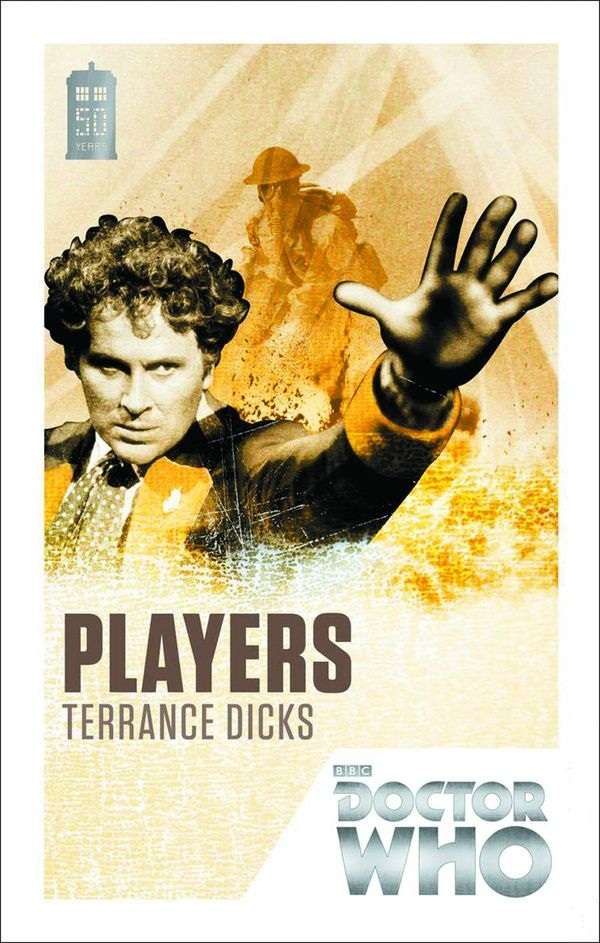
Doctor Who: Players - A Book Review

1915.  Major Winston Churchill is attacked by renegades in No Man's Land.  After the death of his driver and bodyguard, The Major thinks he's found salvation twice - once when he is rescued by a funny little man named Dr. John Smith and once again when they find a nearby chateau at which to take refuge.  Pity the chateau is owned by hostile nobles ready to hand Major Churchill over to The Kaiser!

1899.  The height of the Boer War.  A young war correspondent named Winston Churchill is on a military patrol stopped by a rockslide on the train tracks.  It seems a routine delay until a sniper in the hills tries to take-out the young writer.  Only the timely arrival of The Doctor and his companion Peri Brown saves Churchill's life, though it also sees the three of them locked away in a South African prison...

His interest piqued after recalling the tale of how his second incarnation met Winston Churchill, The Doctor concludes that some unseen player is trying to kill the great leader at a young age to alter the course of history.  With Peri Brown in tow, The Doctor journeys to 1936 at the height of The Abdication Crisis and assumes the identity of Ambassador John Smith.  It will take all of The Doctor's cunning to ensure Winston Churchill's survival as well as his own, as unseen hands pave the path for an alliance between the empire of King Edward VIII and Adolph Hitler!  


I've heard a number of criticisms leveled at Terrance Dicks as a writer.  He's incredibly dull.  He writes women badly and depends too heavily on rape threats and cliched peril whenever a female companion gets captured.  He writes every Doctor exactly the same, regardless of incarnation.  I've even heard differing opinions that he depends too much on the continuity of the show in his writing and that he ignores it completely!

None of those complaints seem evident to me in Players, though it must be admitted that the concept of some unknown figure meddling with the time-stream is perhaps the closest thing to a stock-plot one can find in Doctor Who.  The titular Players, however, are unique in that they seem to have no motivation past seeing what changes they can cause through the most simple and basic of manipulations.  True, this is reminiscent of The Meddling Monk, but his schemes were not so subtle as what we see the Players attempt.

I don't think the female characters are treated badly at all in this story. Indeed, I thought Peri better acquitted herself as a companion in this story than she ever did in any of the episodes  where she was paired up with The Sixth Doctor.  No bouncy California girls in this story.  This is the Peri who starred down The Master and told him that she could shout just as loud as he could!  

Terrance isn't as overly-demonstrative in his depiction of the various quirks of different versions of The Doctor as some writers.  Yet I do think Dicks does a fair job of putting a few fine details in the text, here and there.  For instance, his Second Doctor rubs his hands together when he is working out a problem and responds to veiled threats from villainous captors with a polite, clownish enthusiasm that belies his strong mind.  And his Sixth Doctor has a fondness for bad puns, a snarky wit and a habit of playing at pretending he is someone he isn't.

Dicks does lean heavily on the continuity of the show but not at the expense of the story.  The 1915 flashback scene is based on Dicks' story The War Games but no familiarity with that episode is required to enjoy the sequence.  More often than not these references are just in-jokes to amuse the devout fan or, failing that, Dicks himself.  One of the better ones involves Pinkerton detective Tom Dekker (a character from Dicks' novel Blood Harvest) who notes that he once knew a Doc Smith who hung out with a girl named Ace back in Chicago. When Peri asks if there's a chance that might be a future incarnation, The Doctor bristles and says that he doubts his future includes "being a 'funny little guy' running a speakeasy in Chicago during Prohibition!'

The most amazing aspect of this story is that Dicks does a fair job of making as educational as it is thrilling.  As an American, I'm largely unfamiliar with Winston Churchill's life before the second World War.  Dicks plays up the adventurous aspects of Churchill's youth, going out of his way to tie The Doctor into real events such as Churchill's escape from a Boer prison in 1899.  It must be said that the exposition The Doctor must recite doesn't seem quite so forced as Peri, being an American, is as equally unfamiliar with The Boer War and The Abdication Crisis as the average American reader.  Dicks also does an effective job of playing off the real-world events and playing up how very fortunate we were not to have wound up with an English King who was friendly to the Nazi regime.

Bottom Line: Players is a grand game from start to finish.  Highly recommended for all Doctor Who fans.

Monday, March 24, 2014

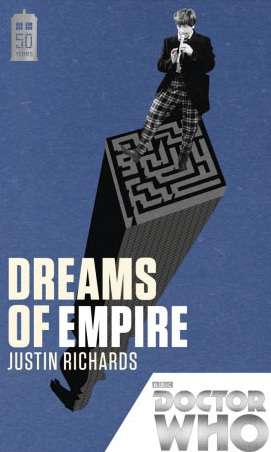
Doctor Who: Dreams Of Empire - A Book Review


The once-great Haddron Republic stands on a knife's edge.  A civil war has shaken the government to the breaking point, with Consul General Kesar having tried - and failed - to lead a military revolution that would have made him Emperor.  His fellow Consuls - both close friends since childhood - elected to see Kesar exiled rather than executed, thinking their friend more dangerous as a martyr than as a prisoner.

Now confined to the distant asteroid of Santespri, Kesar himself is hidden away behind an iron mask and special life-supporting armor.  This was, it was said, a necessary step following Kesar's disfigurement and near-fatal wounding following an assassination attempt after his sentencing.  Yet there are those who share Kesar's Dreams of Empire and believe that though he is wounded and weakened, Kesar is still the only man capable of restoring the glory days of the Republic.

It is into this conflict that The Doctor and his companions Jamie and Victoria wander, arriving on Santespri on the same day that Kesar's old friend and military opponent Consul Trayx has come to inspect the facility.  Questions arise immediately, as the crew of the TARDIS uncover a dead body in the heart of the heavily secured facility.  And far above them all, a silent ship approaches the prison with an unknown crew and unknown goals...


Your opinion of Dreams of Empire may depend upon how you feel about adherence to certain tropes in Classic Doctor Who.  It is fair to say that author Justin Richards succeeded in capturing the feeling of a classic Second Doctor story.  Unfortunately the story he chose to emulate was not a particularly memorable one, the action of this story being centered upon yet another Base Under Siege.

That said, Richards has a number of good ideas that do dress up the standard plot.  The basic conceit of the story, as Richards explains in his introduction, came from him wondering what might have happened had Julius Cesar not ridden a wave of popularity onto the Emperor's Throne.  Hence the Roman Empire becomes the Haddron Republic, the Legionaries are replaced with kill-bots and all the other names and dates are filed off.  Thrown in a bit of The Man In The Iron Mask ala Darth Vader and a metric ton of chess metaphors and you have yourself a Doctor Who story!

This works much better than it should because Richards takes the time to develop Kesar, Trayx and the rest of the supporting cast as individuals before introducing The Doctor and his companions into the mix.  It is a small thing but it does help to increase the reader's interest.  It also helps that Trayx, in defiance of every other trope regarding military leaders in a Doctor Who story, is a competent, intelligent man who is not ready to shoot first and ask questions later when three oddly-dressed civilians appear in the middle of his prison at the same time a guard turns up dead.

This, ironically, is the book's greatest problem - the supporting cast are much more interesting and proactive than The Doctor and his companions!  It is clear that Richards had great fun thinking up these characters and there is a good deal of human interest - from the subplot involving Trayx's wife and her dark secret to the forbidden romance between Kesar loyalist Haden and Republican soldier Darlking.   It's a shame then that he gives Victoria and Jamie so little to do as the story progresses and even The Doctor is largely passive for the majority of the book.

Then again, while this is aggravating from a writer's perspective, it is also indicative of the Doctor Who stories of the era.  Victoria was always one of the more passive, scream-prone female companions and Jamie - even at his best - has rarely been utilized anything other than dumb muscle, existing only to do The Doctor's heavy lifting and to give him someone to be talked at when things need explaining.  Allowing for those limits, Richards does perfectly capture the voices of both characters and he does a particularly fine job of capturing the essence of Patrick Troughton's "cosmic hobo" antics.

Bottom Line: If you're a Second Doctor fan, you'll love it.  Everyone else will probably like it too, if they can suffer through Victoria's constant screaming and Jamie's constant grumbling while everyone else gets on with the plot.

Sunday, February 2, 2014

Doctor Who: Ten Little Aliens - A Book Review

Deep in the heart of a hollowed-out asteroid, The Doctor and his companions - socialite Polly Wright and sailor Ben Jackson - stumble into the middle of a military exercise.  More, they stumble across a mystery - ten alien corpses, belonging to the most wanted anti-human terrorists of the era. 

Their discovery could help end the war between the Earth empire and the enemy Schirr... if only they can survive.  For whatever killed the Schirr terrorists is still lurking in the tunnels around them.  And the asteroid itself is moving toward the home world of another hostile group of aliens with sinister plans for the human race...


When I read the introduction to Ten Little Aliens, I began to dread reading further.  According to author Stephen Cole, his original pitch for this book was summed up, rather neatly, as "Starship Troopers meets Agatha Christie".  For someone like me who loathes militaristic science fiction in general (Heinlein in particular) and is generally indifferent to the parlor mystery genre, there is little - save the phrase "Written by Stephenie Meyer" - to turn me away from a work of fiction faster.

Apart from my desire to read all of the Doctor Who 50th Anniversary Collection of novels, only one thing kept me going - the fact that the companions in attendance for this tale were Polly and Ben.  I've found the two of them oddly compelling ever since I saw The War Machines and was saddened to discover that most of the episodes featuring the young couple were lost in time along with much of the rest of the later First Doctor stories and early Second Doctor stories.

Thankfully, Stephen Cole does a fine job of capturing the character's voices and not descending into cliches.  There is a tendency in some Classic Who stories for the male companions to be dumb muscle that exist only to protect The Doctor from physical threats as the female companions' only purpose is to scream at the monsters and be rescued.  While Polly and Ben do fill these roles somewhat, they also go beyond simple stock characters.  At first Polly seems to be a girly girl whose chief moment of excitement in exploring an alien world involves her discovery that The TARDIS has a number of space suits in designer colors but she is shown to be an intelligent and resourceful young woman as well as a fashionista.  Similarly, Ben fits the scrapper profile save for the fact that he is of below-average stature and is determined to prove that he can make up in heart what he lacks in height.

Shockingly, Cole's script also manages to avoid cliches in other regards.  Admittedly, the first fifth of this book reads like a dreadful Starship Troopers fanfic overlapped with a slow Doctor Who episode.  There's even a roster of the soldiers, complete with faux-patriotic quotes about this universe's equivalent of the bugs - a necessary evil, as you'll have a hard time telling the soldiers apart at first without it.  And, of course, we have the requisite scenes of the soldiers not trusting The Doctor and company but gradually coming to release that We Are All In This Together.

However, things start moving beautifully once the danger is established and the soldiers begin splitting up to figure out just what is going on.  By the time the third act begins, the reader will be well and truly involved in the action of the piece.  It is here that Stephen Cole adds yet another literary device into the mix - a Choose Your Own Adventure style section of the book, where the reader jumps between the viewpoints of multiple characters and sees the action through their eyes as multiple events occur simultaneously. 

This gimmick works far better than it has any right to, which is a fair statement about this book in general.  It combines two sub-genres driven by cliches that have no business being mixed.  And yet it works.  It all works.  Somehow, in defiance of all logic, this book works.  As such, its well worth slogging through the slow start to get to the excitement at the end.   

Thursday, January 9, 2014

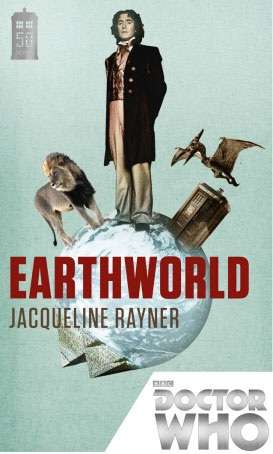
Doctor Who: EarthWorld - A Book Review

Anji Kapoor has just had the worst week of her life, having lost her boyfriend Dave to alien invaders. 

This week is not looking any better.

Trapped on board the TARDIS, The Doctor was trying to get Anji home.  The problem is The Doctor isn't feeling quite himself and is incapable of operating his sonic screwdriver much less piloting the TARDIS.  Fitz, The Doctor's companion, is in a similarly useless state of mind. 

Perhaps this is why they wind up somewhere far away from Anji's office in modern London.  Someplace with robot dinosaurs, poorly researched exhibits inspired by "real Earth history", a trio of psychotic preteen princesses running the show and a group of teenage terrorists trying to shut the thing down.  Only one thing is certain - Anji will never complain about reporting to her office on Monday morning again!  Assuming she lives...


One wonders if they could have chosen a more accessible Eighth Doctor story for inclusion in this collection.  EarthWorld is not a bad story but it is largely dependent upon the reader being familiar with a number of earlier stories.  Writer Jacqueline Rayner gamely tries to explain things in both the introduction to this reprint volume and throughout the novel, yet it is still too much for a neophyte Whovian to cope with.

Anji is perhaps the best example of this.  Rayner makes use of a neat literary device by having Anji write e-mails to her deceased Dave in the midst of all the chaos that is occurring around her.  While this does an effective job of building sympathy for Anj and giving the reader insight into her mind, it gives the reader surprisingly little detail about Dave and the circumstances of his death, presuming the reader has already read the previous novels in the series.

The subplot involving The Doctor's other companion Fitz suffers from similar problems.  Without giving too much of the game away, Fitz undergoes an identity crisis that mirrors The Doctor's current troubles with amnesia while simultaneously conflicting with them.  Whereas The Doctor cannot remember, Fitz cannot forget.  Of the two companions, Fitz's conflict is definitely the more interesting and his plight is a more sympathetic one.  Yet Fitz's problems are even more dependent on an encyclopedic knowledge of Fitz's actions in the stories leading up to this one!

Thankfully, the final execution rises far above the rote plot.  The story moves at a brisk pace, managing to reach the conclusion before the reader is likely to notice just how thin everything is.  All in all, I'd say EarthWorld is worth reading but it might be best read as part of the whole of the Eighth Doctor Adventures than as one part of the 50th Anniversary Reprints series. 

Thursday, December 26, 2013

Doctor Who, 2013 Christmas Special - The Time Of The Doctor

THE QUICK, SPOILER FREE REVIEW

Excellent.  Matt Smith is given a worthy send-off and Steven Moffat manages to tidy up all the loose ends regarding The Eleventh Doctor's era.  Pity Jenna Coleman is given so little to do and so much of the action occurs off-camera.  Then again, this is very much Matt Smith's show.  And it is a good one.


SPOILERS FOLLOW AFTER THE IMAGE!
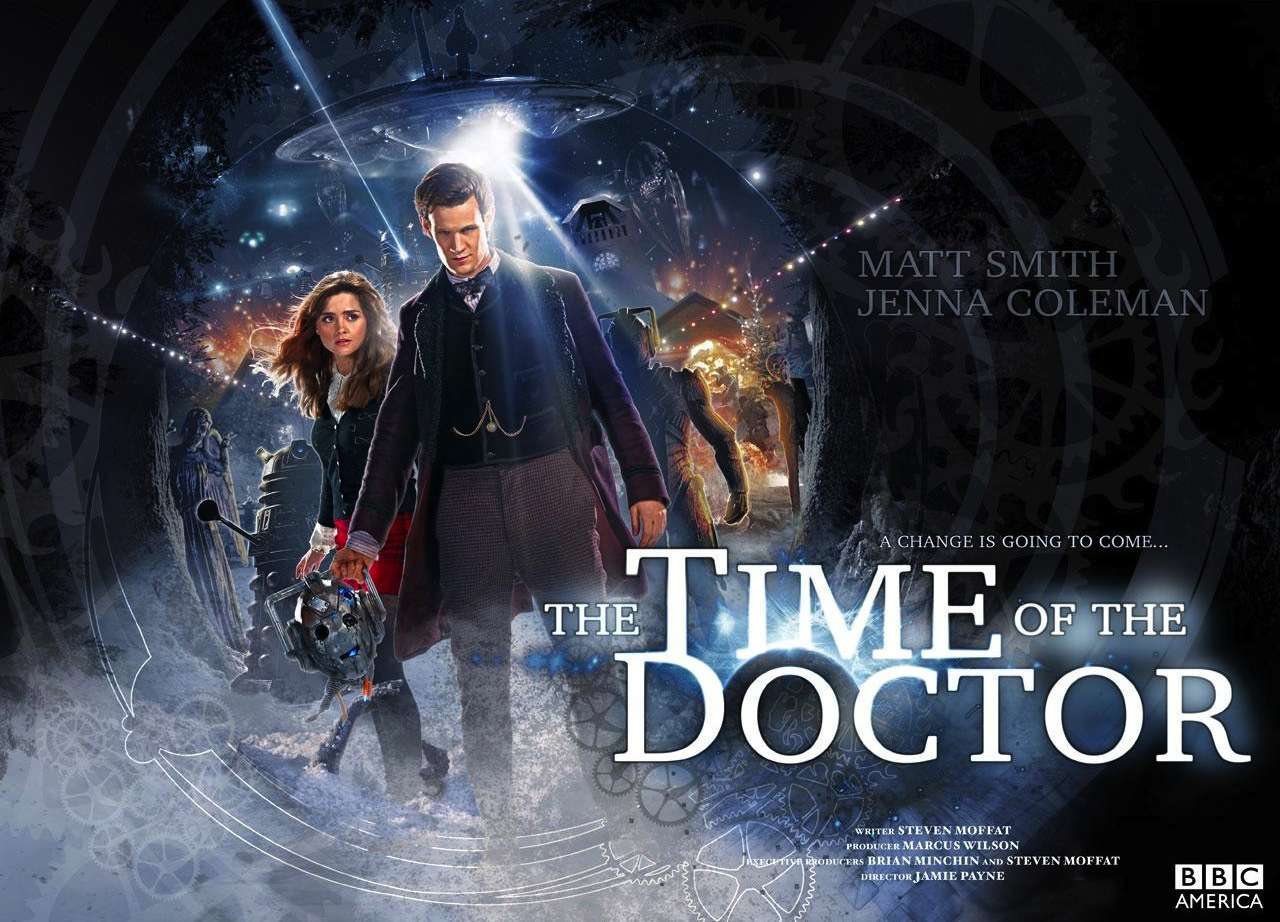


THE PLOT

A mysterious message broadcast across all of time and space brings about the gathering of the worst beings the universe has to offer around a mysterious planet.  Weeping Angels.  Sontarans.  Cybermen.  Even The Daleks!  And The Doctor, of course, because The Doctor always turns up wherever trouble is brewing.  Taking just enough time to snatch Clara away from an increasingly awkward Christmas dinner, The Doctor is soon on his way to the source of the signal - a crack in the wall of a bell-tower in a town called Christmas where no one can tell a lie.  The Doctor quickly learns the source of the message as well as the name of the mystery planet.  Trenzalore.  The planet where he is destined to fight his final battle!


THE GOOD PARTS


* Like Peter Davison, Matt Smith may have delivered his greatest performance as The Doctor in his final episode.  Simply put, Matt Smith nails every aspect of The Doctor's personality here.  I've never been the biggest fan of Smith's take on The Doctor but even I'm going to miss him after this episode.

* Steven Moffat's scripts can be hit or miss at times.  This one was definitely a hit.  As near as I can tell based on one viewing, every single plot thread involving The Siege of Trenzalore and all the prophecies regarding the Eleventh Doctor have been resolved.  Fans may debate how much of this The Grand Moff had planned in advance but I think everything - even the mystery of Gallifrey from the 50th Anniversary special - is addressed.  And yes Virginia, they figure out a way to give The Doctor a whole new regeneration cycle without any hand-waving or jiggery-pokerey.  It's all there in the Classic Series, clear as crystal. 

* The story itself is a truly fitting end to The Eleventh Doctor's story.  Smith's Doctor took great joy in the lives of ordinary people, loved children and dreamed about what it would be like for him to have an ordinary life with a real job somewhere.  How fitting then that he should finally - in a way - be granted that wish as he becomes the protector of Christmas.

* There's a lot of death and rebirth imagery throughout the episode and its very powerful symbolically.  I won't go into all of it here but there's a thesis paper out there for the Anglophile willing to compare/contrast this episode, Terry Pratchett's Hogfather and the wholesale mythology of Father Christmas and Odin.


THE PROBLEMS

* Granting that her actions save the day, Jenna Coleman isn't really given much to do.  She's great with what she does get but it seems like she's barely in the episode.

* Fans who dislike the idea of The Doctor as a romantic figure will find little to like in the character of Tasha Lem - Mother Superior of the Papal Mainframe and even I - who don't mind the idea of The Doctor snogging - thought this was a bit gratuitous after Queen Elizabeth and River Song.

* It's rather depressing - after what we saw of Clara's childhood and upbringing and how amazing her parents were in The Rings of Akhaten - to see her family reduced to sitcom fodder here.  Who the heck is the woman haranguing Clara about not having a boyfriend, anyway?  Step-mother?  I don't think they ever said.

*
Grand as it is, Moffat does violate the "show, don't tell" rule regarding television and we are told about The Doctor's grand battles against all of his enemies without being shown much of them.  We see a bit but we might have seen more.

*
Likewise, while I'm always glad to see more of Karen Gillan (minds out of the gutter, people!), it does seem kinda insulting to Clara that The Doctor drifts off thinking about The Girl Who Waited as his final thought without then turning to The Impossible Girl and the last face this face will see.


THE FINAL VERDICT


A fitting Christmas special and a fitting end to The Eleventh Hour.  Goodbye, Raggedy Man.

Monday, December 16, 2013

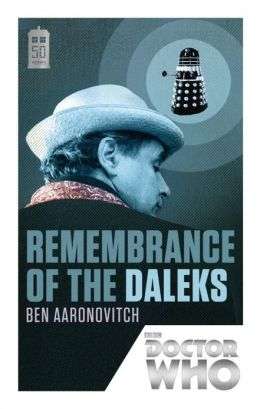
Doctor Who: Remembrance of the Daleks - A Book Review

Coal Hill School. 1963. About 700 years (relative time, of course) after he left it, The Doctor returns with his newest companion, Ace, to take care of some unfinished business. Before he left Earth with his granddaughter and two of her teachers, The Doctor left something behind - a powerful Time Lord artifact known as The Hand of Omega, which holds the power the power to move the stars themselves.

Such power does not exist with notice and it has, much to The Doctor's chagrin, been noticed. Two rival factions of his greatest enemies - The Daleks - are even now taking root in the area around Coal Hill School. One has taken over the school itself and its headmaster. The other has recruited the aid of a neo-Nazi businessman. Both will stop at nothing to retrieve The Hand of Omega and, with it, the secrets of controlled time travel!

Can The Doctor recover The Hand before the Daleks get their plungers on it? If so, can he stop them from destroying London and The Earth in the process?  Time will tell.  It always does.


The television episode Remembrance of the Daleks is held as one of the best episodes of the Classic Doctor Who Series and is considered by many to be the best Seventh Doctor story of all.  The novelization - written by series writer Ben Aaronovitch - enjoys a similar reputation.  It was one of the first of the Target line of Doctor Who novels to be written with older readers in mind, making it a spiritual precursor to the Virgin New Adventures book-line.

As Aaronovitch notes in his introduction to this reprint edition, one can't take a television script and just add in "he said" or "she said" to turn it into a novel.  At the very least, HE couldn't do that.  Depth has been added to many of the characters in this novel version of Remembrance of the Daleks.  At the very least, they've been giving more detailing if not actual depth of character.

Perhaps the best example of this is the relationship between Ace and Mike - an army sergeant with secret ties to the neo-Nazi group aiding the Imperial faction of Daleks.  There is a hint of romance between the two characters before Mike's true colors are revealed and Ace turns on him.  Ace turning violently upon a racist is hardly surprising but the novel gives her a personal reason for loathing racists beyond culture shock.  Mike is likewise made into a more sympathetic figure, being painted not as a truly hateful man but a decent bloke who is led astray by a hate-monger, who plays on his fears of bad things happening to his friends and family.

Curiously, the only character who doesn't benefit from this increased depth is The Doctor himself.  Apart from one scene where The Doctor wonders why The Earth can't seem to go one day without it needing him to save it, we never really get into The Doctor's head at all and very little of his dialogue is offset with adjectives to describe how he says things.  This makes sense given that The Doctor's thoughts and actions for much of this episode are meant to be a mystery to everyone.  Still, this lack of perspective causes many of the best scenes in the television episode to fall flat in the novel.  Many readers will be left with a greater appreciation of how much depth Sylvester McCoy gave The Doctor through pure physicality.

My advice?  Treat this novel like the extras on a DVD.  Watch the classic episode and then read this book.