Showing posts with label Justice League of America. Show all posts

Thursday, February 16, 2017

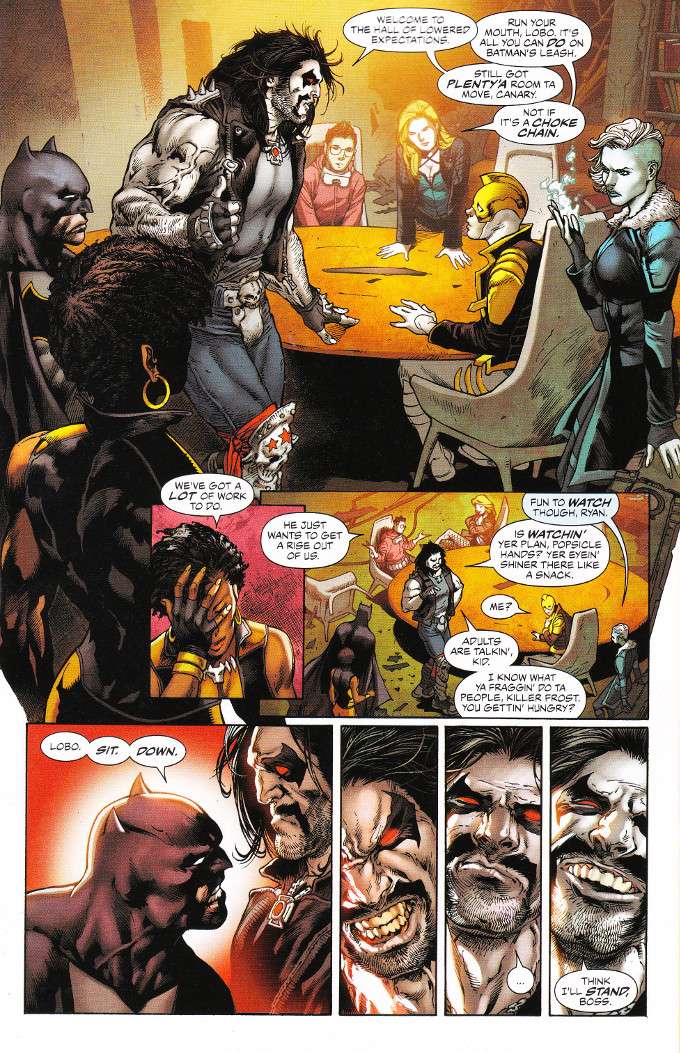
Justice League of America: Rebirth #1 - A Review

In the wake of the Justice League's battle with The Suicide Squad, Batman has come to realize the power of redemption and the need for heroes to act as a source of inspiration rather than mere peacekeepers. To that end, he has begun assembling a team, starting with a reformed Killer Frost. Their mission? To show that anyone can be a hero.

I missed this book the week it came out and I really did miss out! This first issue does little beyond introducing our cast and setting up some of the conflicts between the various volatile personalities. Standard fare for a superhero team book, of course, but Steve Orlando's command of the personalities in play makes this engaging reading despite the standard set-up.

The artwork proves equally amazing. This is no surprise given the creative team involved. I've been a big fan of Ivan Reis since his work on Green Lantern. His work with Oclair Albert and Joe Prado on the New 52 Justice League book was fantastic and it is good to see Marcelo Maiolo - whose colors were one of the few bright spots (no pun intended) of the New 52 Green Arrow series - at work again.

This book hooked me with the first issue. Hopefully it will prove as engaging once the plot kicks in.

Thursday, June 18, 2015

Justice League of America #1 - A Review

A mysterious corporation that is sitting on a pile of Superman corpses, all pulled from various alternate timelines.

A prophet who appears in an old Atlantean temple, speaking of the coming of "the one true god".

A plot to release The Parasite on an unsuspecting Justice League.

What do all of these things have in common?  It will fall to The Justice League of America to solve that mystery or die trying. And for once that statement is not hyperbole, for if Superman dies then all of humanity - past, present and future - will die with him!


One can't accuse Brian Hitch of doing things by halves! His script for this first issue is reminiscent of Grant Morrison's run on JLA in that it also feels like an over-the-top summer blockbuster with high-stakes and high-adventure. Yet there are also some nice character moments and I greatly enjoyed little touches like Aquaman addressing the United Nations as a world leader.

Taken as a big, dumb action movie, this issue is a fun read. However, fridge logic kicks in after a second reading. And one wonders why, if Batman suspected the team was walking into a trap, did he wait until the rest of the team had arrived at the site of the ambush to announce that fact?


The artwork is similarly weak upon close examination. Hitch's pencils are enhanced by three different inkers and two different colorists and it shows. The look of this issue is very inconsistent. Still, that can't be blamed entirely on the large production team. Hitch's artwork features a number of continuity errors, such as Wonder Woman's choker disappearing in some panels.

Given all that, I think this first issue of JLA will be my last.

Monday, October 21, 2013

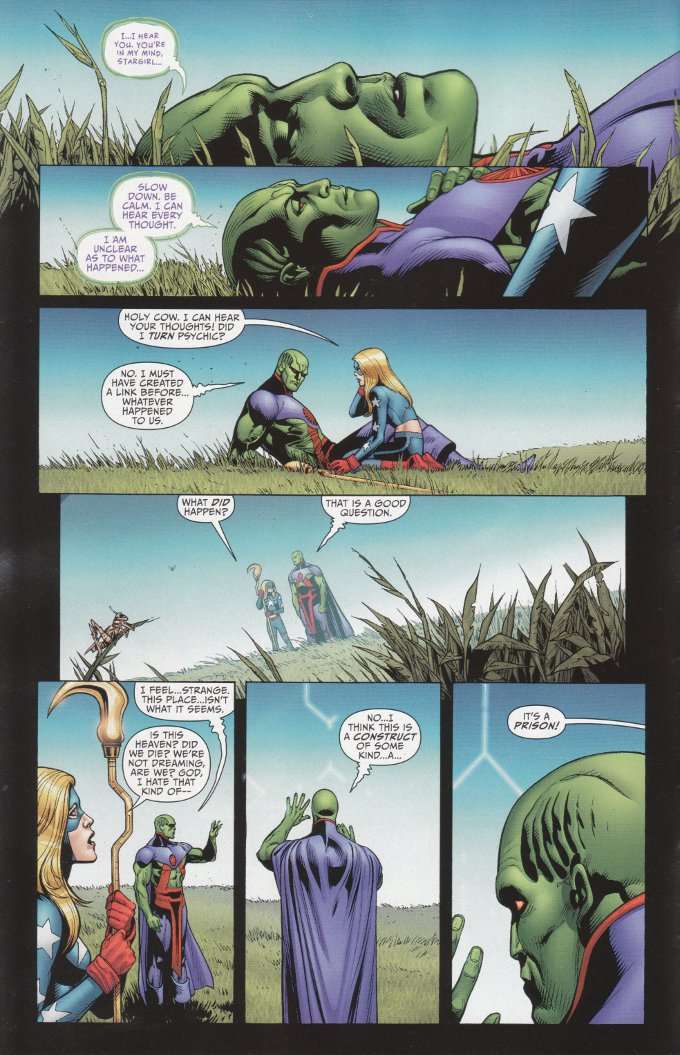
Justice League of America #8 - A Review

Justice League of America #8 starts promisingly enough, with Martian Manhunter and Stargirl awakening in a field and quickly becoming aware that they are trapped in some kind of prison.  This apparently is the fate of all the world's greatest superheroes in the wake of Trinity War. Placing these two heroes together is a brilliant conceit and one that plays wells to Kindt's experience writing Martian Manhunter.

The main problem is the story fails to build past this concept.  Most of the issue depicts Martian Manhunter as he explores the prison and discovers the ingenious ways that most of the other heroes are being held captive.  There's very little plot or action here, though the ways in which the various heroes are trapped are interesting academically for those fans who like to discuss these sorts of things.


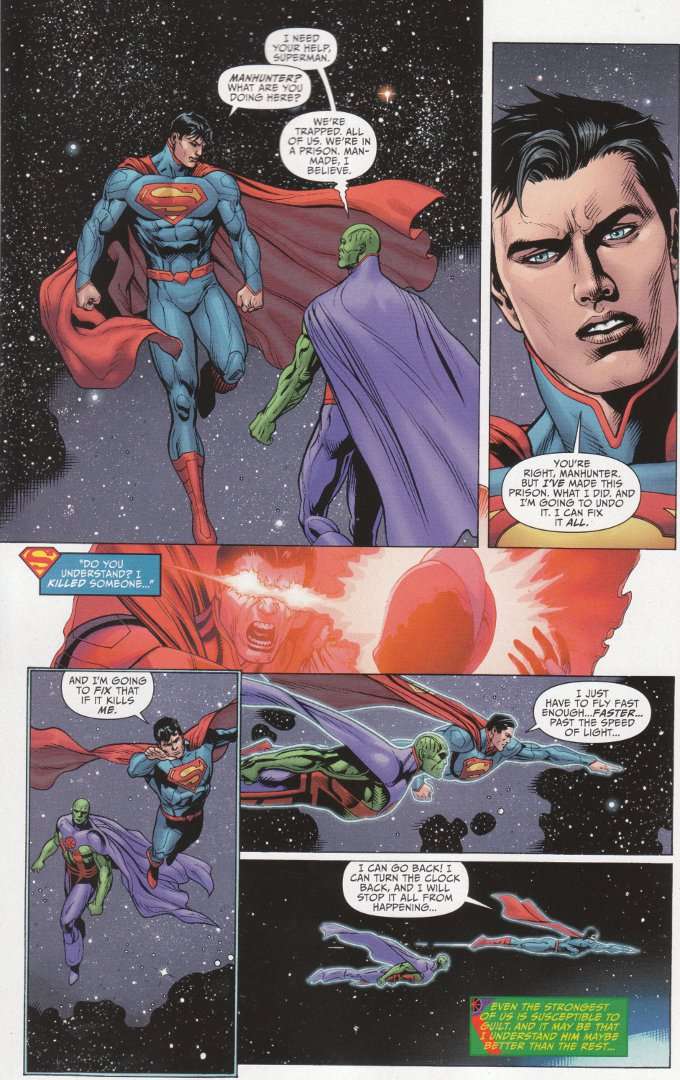
Indeed, Kindt may well be offering some of the best metaphysical examination these characters have received in years.  Superman, for instance is bound both by his belief that he cannot take a life and his desire to make things right.  This has him trapped in a never-ending orbit around the Earth, desperately trying to fly fast enough to go back in time and prevent the mistakes he believes started his current problems.  Why?  Because he's Superman and he has to be perfect.  In just one page, Kindt has exposed the folly of the classicist Superman fans who would have Superman literally running around in circles to remain perfectly pure. 

Wonder Woman is in a similar bind, trapped fighting two armies - Amazons and the US Army - to save her two appointed love interests - Superman and Steve Trevor.  Diana decries how the whole situation has left her paralyzed by her feelings, "simpering (and) weak".  These are the last things Wonder Woman should ever be and the idea of her fighting her own people to save a love interest - much less two of them - is similarly anathema though similarly rooted in the classic stories of the Silver Age.  Thus we have the problem of the modern Diana, who is also forced into contrived and unnatural situations based on what people think her character should be.      


As before, the artwork is largely excellent.  Doug Mahnke continues to show the same skill and quality that he did during his time on Green Lantern.  The only problem is that the general look of his work throughout the book is inconsistent due to four different inkers being employed to handle the shading and detail work.  None of this looks bad as such but it does make the whole affair seem erratic. 

Sunday, August 18, 2013

Justice League of Ameica #7 - A Review

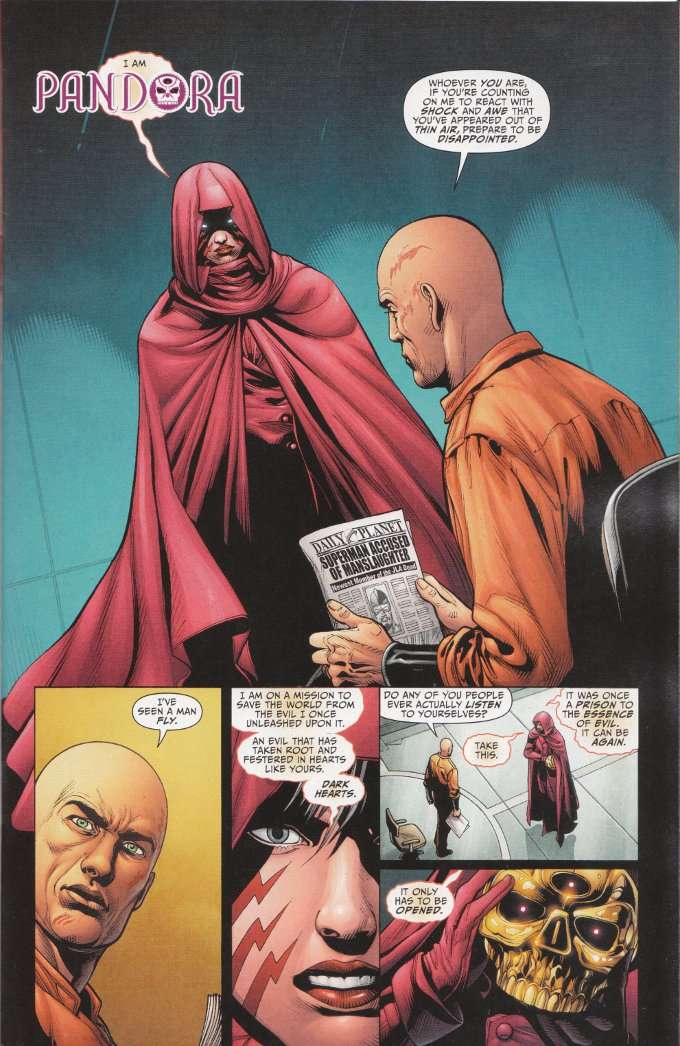
As with the previous chapters of The Trinity War, the best moments of Justice League of America #7 are those brief character moments unconnected to the main plot. Nowhere is this better illustrated than in the opening scene where Pandora confronts an imprisoned Lex Luthor.  Lex is his gloriously snide self and Pandora is... well, a living plot device with no purpose but to push the story forward.


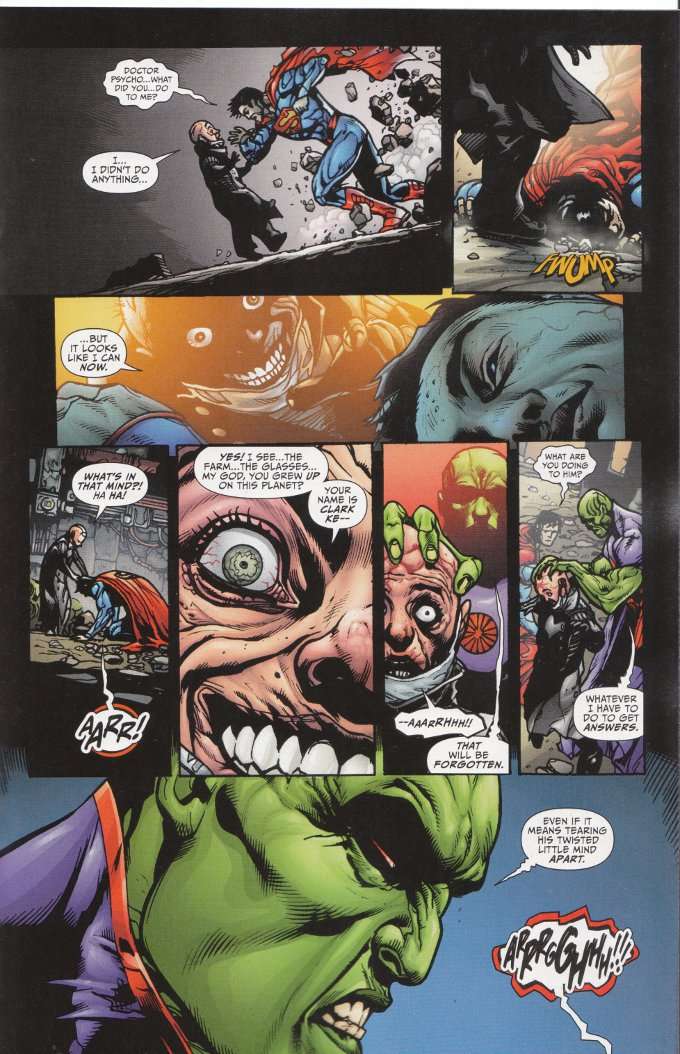
The action of the issue plays out well enough but the moments readers are most likely to find memorable are the quieter scenes where the characters are allowed to talk and play off one another.  Yet Johns and Lemire do find ways to sneak character-development into the action.  Consider the scene where Question's team of League members confronts Dr. Psycho and Martian Manhunter is given a chance to distinguish himself from Superman in terms outside of his super powers.  


The artwork of Doug Mahnke continues to amaze.  His pencils are clear enough and offer a goodly portion of detail without becoming cluttered in the smaller panels.  The book's inking continues to be it's biggest flaw, with a team of five inkers with differing styles rendering the final look of the book inconsistent despite there only being one penciler.

Saturday, July 20, 2013

Justice League of America #6 - A Review

Justice League of America #6 is far less than the sum of its' parts.  This is not to say that the book is totally without merit - far from it!  Geoff Johns and Jeff Lemire give us many great character moments and some wonderful drama but all of this is incidental to the rather lackluster plot involving the so-called Trinity of Sin and Pandora's Box.


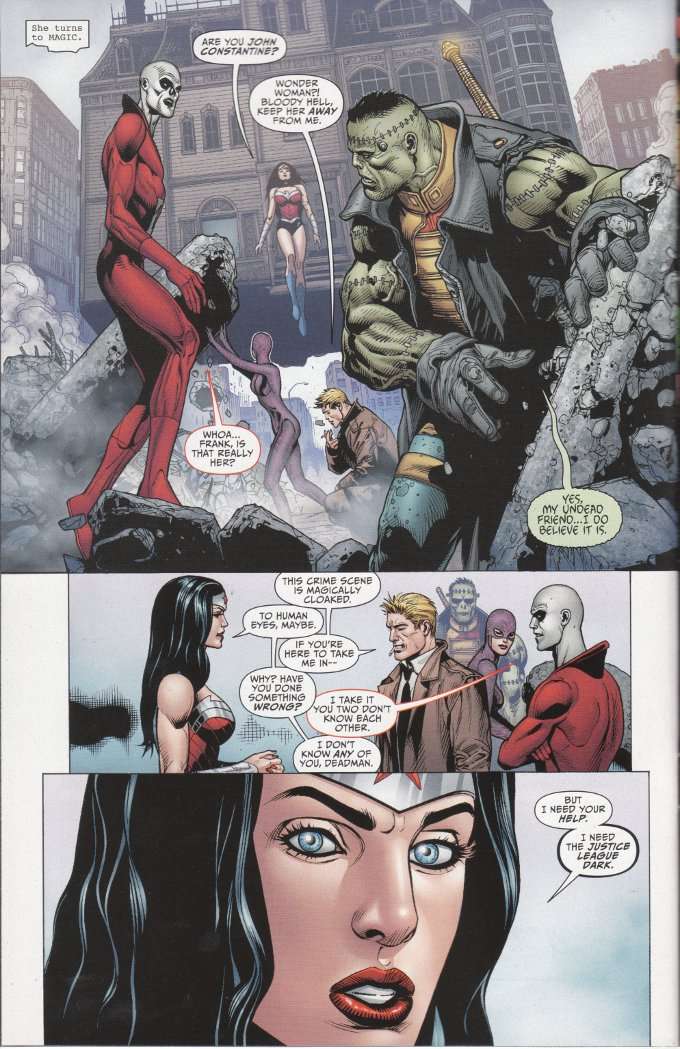
Honestly, this book would be much more enjoyable if Johns and Lemire were free to ignore the big epic battles between vaguely defined supernatural forces and just focused on letting the characters be themselves for a time.  Many of these characters are green and undefined, particularly in the case of the new Justice League members.  Throwing these characters we've had no chance to get to know and less time to care about beating each other senseless is nowhere near as interesting as watching a brief interaction between Wonder Woman and John Constantine. 

The Goddess of Truth and a magical conman being forced to work together?  Now, THAT is interesting!  I also have to give the writers credit for making Wonder Woman the main focus of this issue and letting her be the one to start investigating the case in earnest.  Diana rarely gets to take the center stage in these big events and I for one am glad to see her in the spotlight!    


The artwork of this issue is as uneven as the story.  DC Comics really needs to stop putting teams of multiple inkers to work on single books.  Doug Mahnke's pencils look decent enough from what I can tell but they are rendered quite differently depending on which of the book's four inkers are working on what pages.  Anyone who doubts the power an inker has on the final look of a book would do well to study this issue and learn the error of their ways.  

Monday, July 1, 2013

Justice League Of America #4 & #5 - A Review

WARNING: SPOILER HEAVY REVIEW.


I resisted reviewing Justice League of America #4 last month, during the height of some rather heated discussion during a major controversy.  The subject of "fridging" (i.e. killing off, depowering or otherwise causing bad things to happen to a female character purely to create drama for a male character) had come up and this time the victim was Catwoman - apparently killed in action as she was infiltrating the hideout of the Secret Society of Super-Villains.  I say apparently because I suspected from the start that the death would be some kind of fake-out. 

Why?  Well, I couldn't discuss the clues without spoiling the whole story but there was some cynicism at play as well.  You can't kill off a major character well-known to the public without the comic publisher releasing a press release these days and Catwoman's "death" took everyone completely off-guard.  If they were really going to kill off Selina Kyle, they would have made a bigger deal about it.

I was also reluctant to review the book because I disagreed with discussing the "death" and labeling it as a fridging, because the larger part of the issue lacked the unsubtle sexism that lies at the heart of every fridging I've ever seen.  For the majority of the issue, I thought Catwoman was portrayed as the adaptable badass she should be.  She was able to free herself from captivity easily enough and was continuing her mission without needing to be rescued by the team that was coming in after her.  She even took down one super-villain by herself before superior numbers proved her undoing.
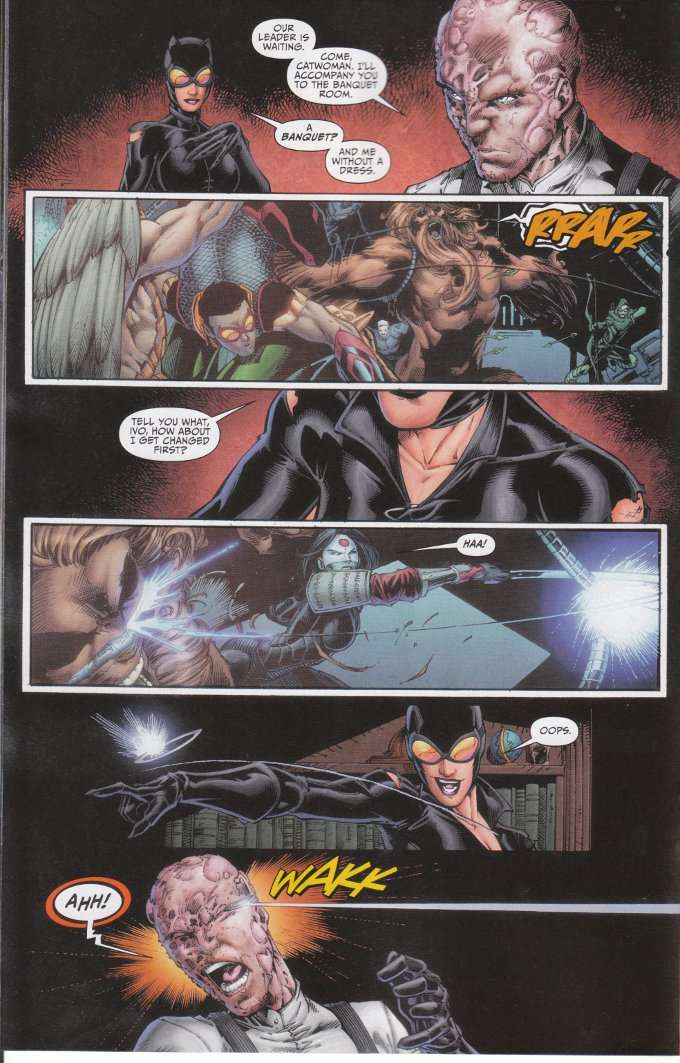

After being captured, Catwoman tried to play off of the fears of her captors, knowing as well as Batman that criminals are a superstitious, cowardly lot.   She said that killing her would only bring Batman down upon them like a ton of bricks.  To her surprise, this gamble achieved the opposite of what she wanted..  The leader of the villains said that getting Batman's attention was their entire goal just before shooting Catwoman in the head.

I didn't consider this scene to be a fridging by the technical definition.  While the bad guys said that killing her was a means toward creating drama for a male character (i.e. kill her to make Batman angry) they had just as much reason to kill Catwoman for what she had done and what she had seen as a result of her actions throughout the issue.  Annoying Batman was just a bonus.  

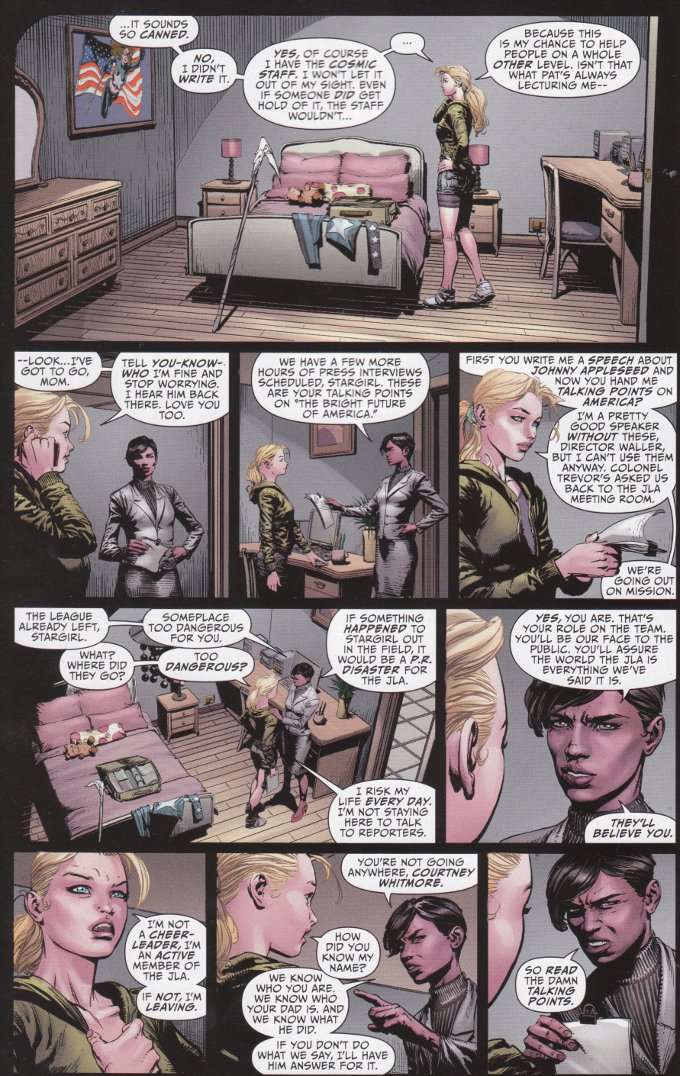
Now, I DID find the artwork and layout of the scene to be incredibly exploitative.  The final shot of a dead Selina was particularly disturbing, being almost fetishistic in how it was drawn by artist Brett Booth. And yet, I resisted writing a review and condemning the book on that point because it didn't add up.  I couldn't believe that Geoff Johns - who is usually so good about avoiding this sort of thing in his writing - would allow the fridging of a major heroine this early in a major storyline.  Particularly given that another major subplot of Justice League of America #4 involved Stargirl's rebelling against her assigned role as the team's poster-girl/spokesperson and sneaking along on an actual combat mission.


As you can see from the above scan, Justice League of America #5 rewarded my faith.  Stargirl kicks major ass and proves her worth to the team beyond Public Relations.  And I shan't spoil how but rest assured that Catwoman is alive and kicking and the rumors of her death have been greatly exaggerated.  I'm still not too crazy about how the fake-out was milked but I must admit some honest surprise at the resolution, despite some foreshadowing that was obvious in retrospect.      
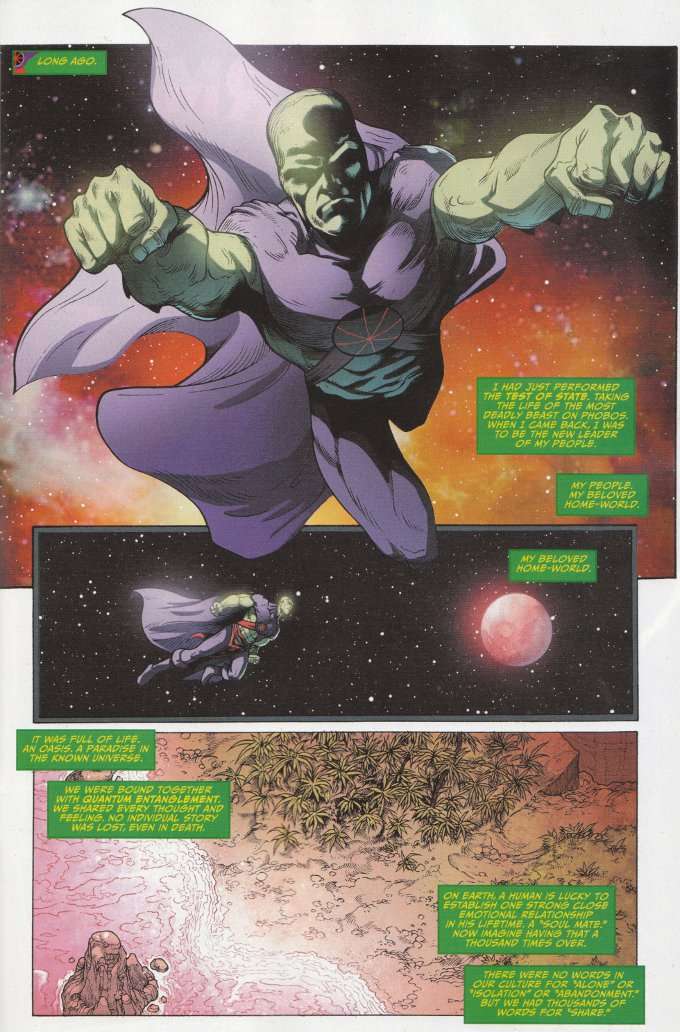

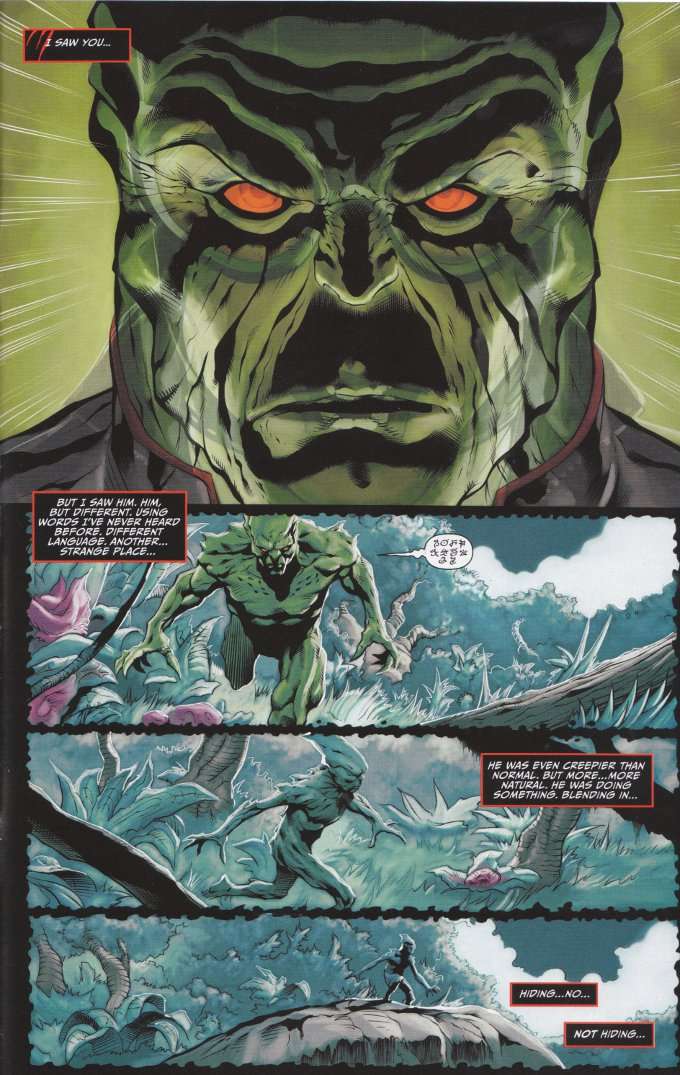
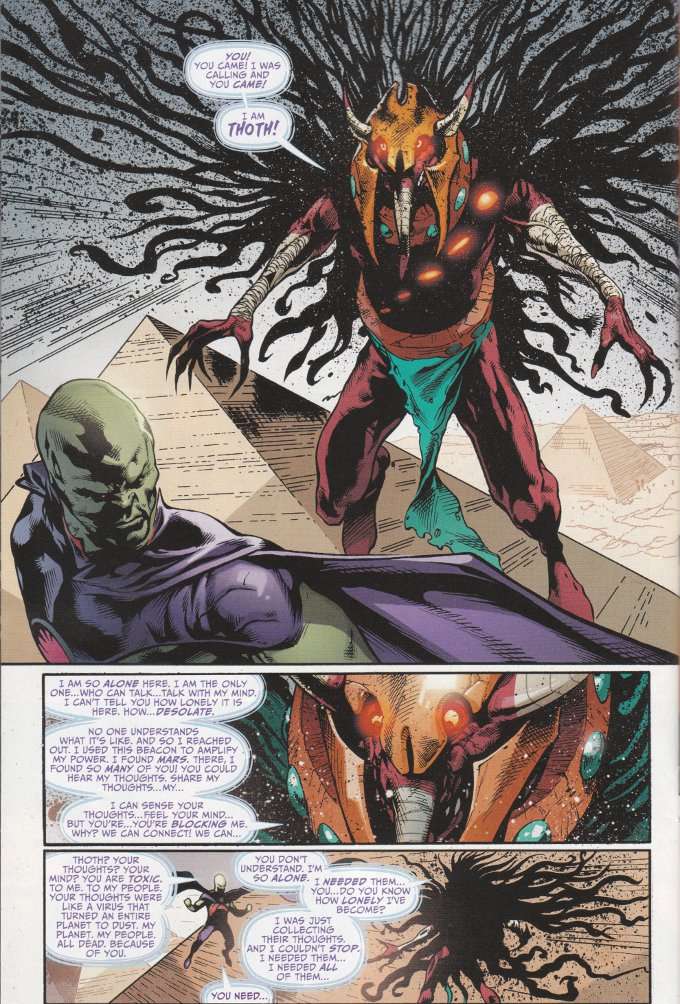
The back-up story by Matt Kindt, focusing upon the origins of The Martian Manhunter is impressive as well.  Kindt has revamped the origin somewhat, changing the specific cause of death for the entire Martian race and giving The Martian Manhunter a new means of traveling to Earth.  Issue #4 gives us a look at a Martian culture that is truly alien yet instantly recognizable and sympathetic once it is lost.  Issue #5 has him following the trail of the killer to Earth and discovering a malevolent telepath who may prove to be his greatest enemy ever.  Issue #4 and Issue #5 have different art teams, but they're both top-notch and incredibly good.


Bottom Line: If you were scared away from Justice League of America because of any fears of sexism, I'd say you should give it a shot.  I'm not happy about how the otherwise skillful Brett Booth laid out the aforementioned scene but otherwise I found his art to be quite good.  Apart from that one Trigger-Warning worth scene, there's nothing objectionable in this book and between Stargirl, Catwoman, Katana and Amanda Waller there's a lot for lovers of strong female characters to enjoy.  Now, if only it had Black Canary too...

Monday, May 27, 2013

Justice League of America #3 - A Review

Justice League of America #3 is the kind of story Geoff Johns writes best, in my humble opinion. Johns is best known today for his grand space epics yet my favorite Johns' stories were always his smaller, more character-driven works.  Our main story here reminds me quite a bit of Johns' JSA and Hawkman, featuring a lot of small scenes which unveil more of our less-developed cast members as the team continues to investigate a secret society of super-villains. 

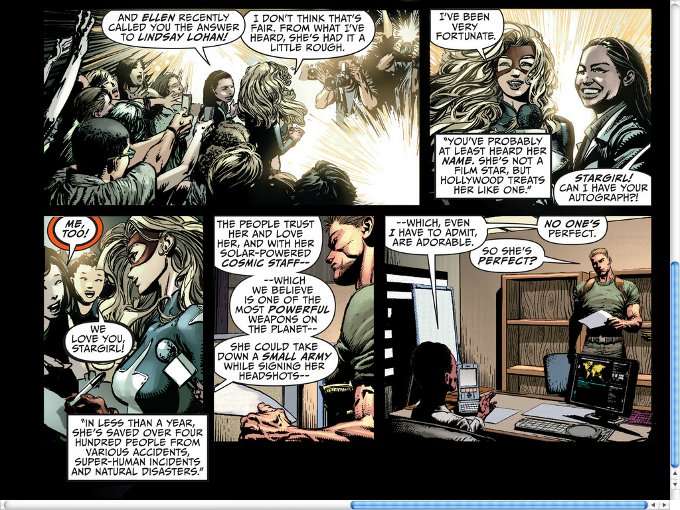
My favorite moment, perhaps out of an obvious personal bias, involves Stargirl and some discoveries regarding her family and home-life that definitely set her apart from the character Johns created for Stars and S.T.R.I.P.E. as a fledgling writer.  I still want to know where her Cosmic Staff came from since there isn't a Ted Knight on this Earth to have built it.  Is there?  Maybe? 


David Finch does his usual excellent job on the pencils, with Richard Friend offering a friendly assist on the inks.  Finch's style approaches photo-realism without seeming traced or posed.  His inks subtly shade the surroundings in a way that adds to the drama of Johns' script.  Consider in the above page how Stargirl is always in the light while Walker's face is always half-shadowed or turned away from the reader, symbolizing both their roles on the new Justice League of America team - The Star and The Shadow.  Face and Hand.

The back-up story by Matt Kindt is a rousing good read as well.  This story focuses upon Martian Manhunter performing a mind-scan on Catwoman to confirm her motivations and trustworthiness before she is allowed to join The Justice League of America.  This sequences serves as a far better introduction to Catwoman's character than anything else I've seen in the New 52 thus far.  It reminded me somewhat of Jim Butcher's descriptions of a wizard's soul-gaze in The Dresden Files books even before the bit where Selina is somehow able to stare back into J'onn's mind and gets a glimpse of just how alien he truly is.


This second story is ably illustrated by Manuel Garcia with inks by David Beaty.  The team does a fine job of depicting both the dark alleys and urban sprawl that makes up most of Catwoman's memories as well as the otherworldly forest that make up J'onn's memories of hunting on another world.  It is a perfect complement to Matt Kindt's story.

Justice League of America is everything you could hope for in a JLA book.  If you haven't started reading it already, it's not too late to catch up.  I think you'll enjoy it.

Tuesday, March 26, 2013

UPDATED: ARGUS To Feature In Arrow


SOURCE: THE CW’S ‘ARROW’ SEASON 2 TO INTRODUCE DC COMICS ORGANIZATION A.R.G.U.S.

Arrow Executive Producer Marc Guggenheim tweeted the above image to his followers, with the comment "Coming Soon To Arrow".  Already speculation is rife about what this may mean.

A.R.G.U.S., for those of you not following the New 52 comics, is an organization funded as an off-shoot of the Department of Homeland Security.  Originally founded under the command of Col. Steve Trevor, the purpose of ARGUS was to allow the United States government to offer logistical and military support to The Justice League.  When the JL decided to go independent, Trevor was removed from power and replaced with Amanda Waller.  At present, the two are working together to build a new Justice League of America with Trevor acting as the team's field commander.

Why is this significant?  Because in the lead-up to Justice League of America, Oliver Queen was recruited by Steve Trevor to go undercover and investigate rumors of an organized body of super-villains - a Secret Society, if you will.  And in addition to acting as the government's go-to person with organized superhero groups, Amanda Waller is also in charge of The Sucide Squad - a government project that puts convicted super-criminals to work on covert operations in exchange for time taken off their sentence.  One of the most prominent members of the Suicide Squad is Deadshot.

See where I'm going with this?

The original acronym was Advanced Research Group Uniting Superhumans - obviously a different acronym than what we see above.  So why the change?  Clearly they don't want to go bringing super-powers into the reality of Arrow just yet.  But having a government agency put Ollie to work would be in keeping with the theme in the current Green Arrow and Justice League comics to say nothing of the Mike Grell comics that had a hand in inspiring the current show.

So... does this mean we're going to see The Suicide Squad with some non-powered villains and maybe some other no-powered heroes? 

UPDATE:
Marc Guggenheim contacted me on Twitter personally to make the following corrections.

1. ARGUS will be showing up during Season 1.  NOT Season 2.

2. The upcoming SHIELD show has nothing to do with the decision to bring ARGUS into Arrow.  "Just saw a cool opportunity and took it."

Personally, I'm relieved.  Arrow is a great show as is and enough of a success on its' own terms that it doesn't need to go aping the formula of another show that hasn't even aired yet.

Saturday, March 23, 2013

Justice League of America #2 - A Review

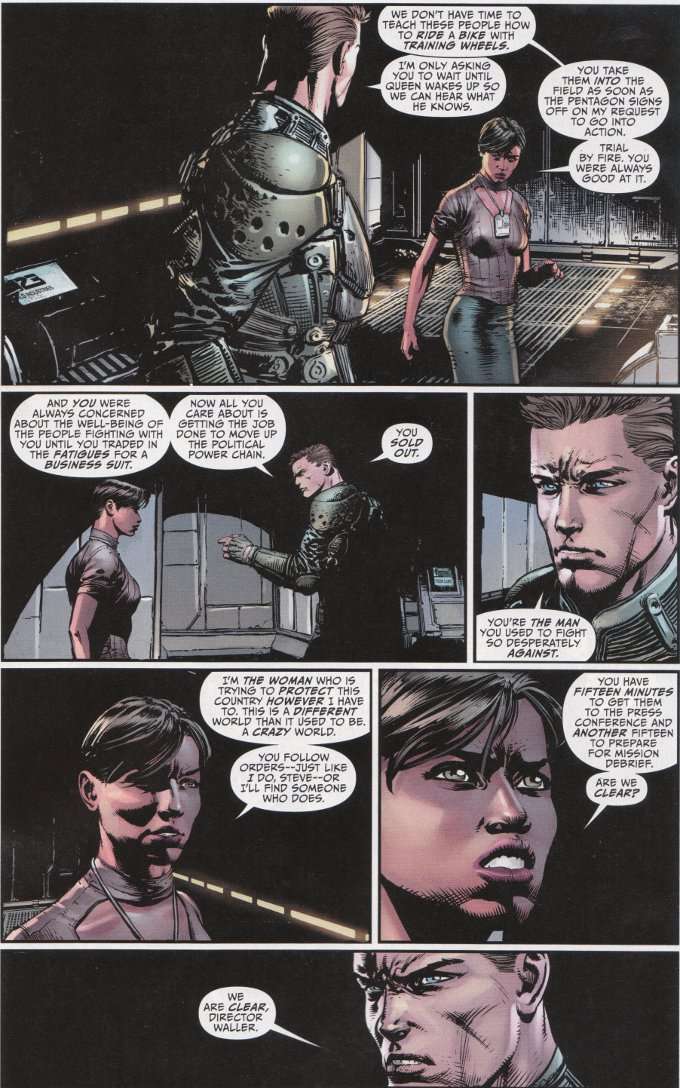
Justice League of America #2 sees our new team, sponsored by the US Government, being thrown into the field after they've barely had time to meet one another.  It seems the pressure is on to prove the new team's worth and they're being sent out to search for the rumored Secret Society of Super-Villains and stop them before the independent Justice League can get the job done.  Naturally, all of this is the doing of government liaison Amanda Waller, who pushes for the team to be sent out over the objections of the team's field commander, Steve Trevor.  


This issue doesn't advance its' plot very far but what this issue lacks in pacing it more than makes up for in character development.  There are many great scenes of two people talking to one another where we learn more about our characters and the dynamics between them.  Scenes like this are a specialty of writer Geoff Johns, who is always at his best when he's letting the characters be real people with super-powers rather than the generic superheroes that dominate so many team-centered books. 

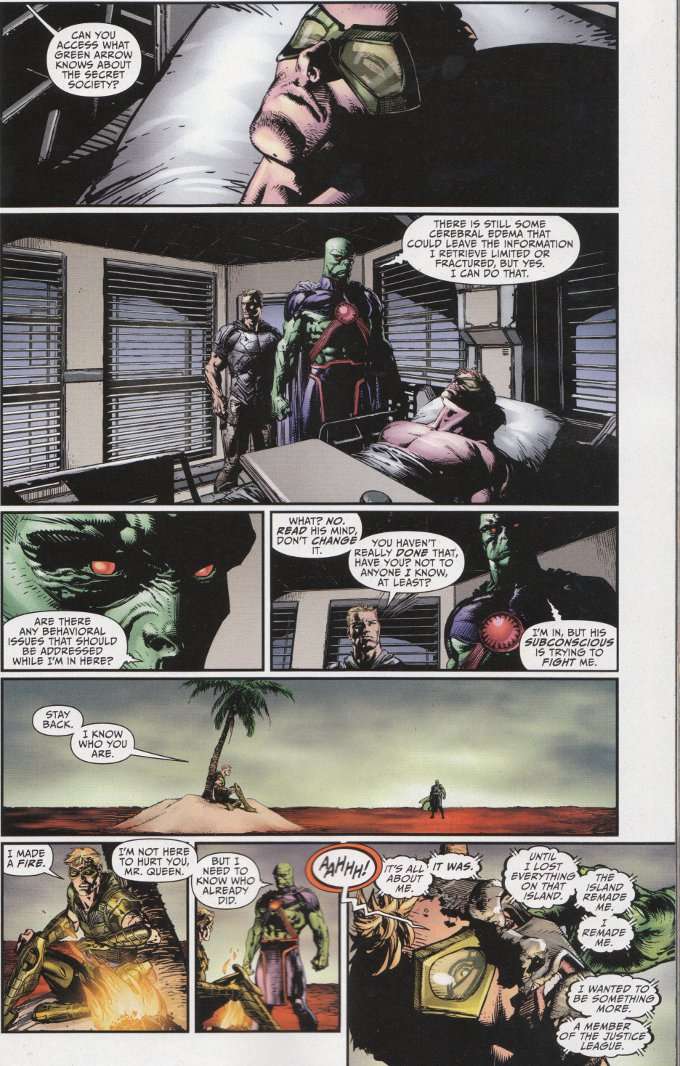
I'm hard pressed to pick a favorite moment in this issue but if pushed I'd probably pick the scene where we see Martian Manhunter reading a comatose Green Arrow's mind, trying to learn what he found out about The Secret Society of Supervillains while working undercover.  In just a few panels, Johns captures the essence of Oliver Queen - a survivor who will continue to fight, no matter how bad the odds.  Can he stop Martian Manhunter from invading his mind?  Of course not.  Does that mean that his subconscious won't at least try and put up a token resistance and set a fire in the hopes that it will stop the pyrophobic Martian?  Damn right, it won't!    


David Finch illustrates the main story with all the detail one would expect given his past work.  There are few artists working today who can put this level of intricacy into a small series of panels.  One must admire the craft, even if they do not enjoy Finch's grittier style.  Personally, I love it.

This issue also features a wonderful back-up story by writer Matt Kindt, artist Scott Clark and inker David Beaty.  I shan't spoil the story, except to say that it involves one hero taking matters into his own hands to prove the need for an American superhero team in a rather direct manner involving the life of the U.S. President.  Kindt deserves praise for the pacing of the story as well as the thought that went into depicting the safeguards a security team would have to account for a world with superpowers (i.e. a floor that detects suddenly shifting weights in the people walking on it to protect against shape-shifters).  Clark and Beaty's artwork perfectly captures the story and proves comparable in terms of style and quality to David Finch's work earlier in the issue.

If you haven't given this series a shot yet, it's not too late.  The cast of characters is interesting, the writing is smart and the artwork is amazing.  I'll call it a must read for any fan of the genre.

Tuesday, February 26, 2013

Justice League #17 - A Review

There's little I can say about Justice League #17 that I haven't said already about the other issues in the Throne of Atlantis mini-series.  There is much I fear to say for the sake of spoiling a story that did manage an honest twist or two in the tale.  However, I think I can safely say that this final chapter does rock the status quo of both the Aquaman title as well as Justice League.  Big changes are afoot - that much is certain!


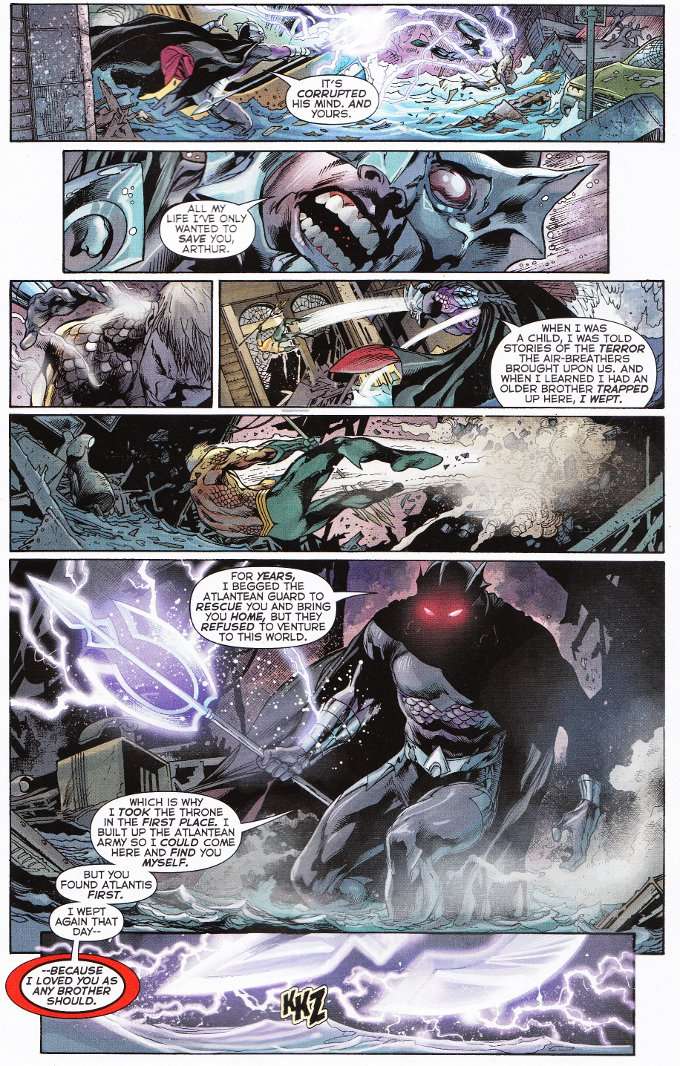
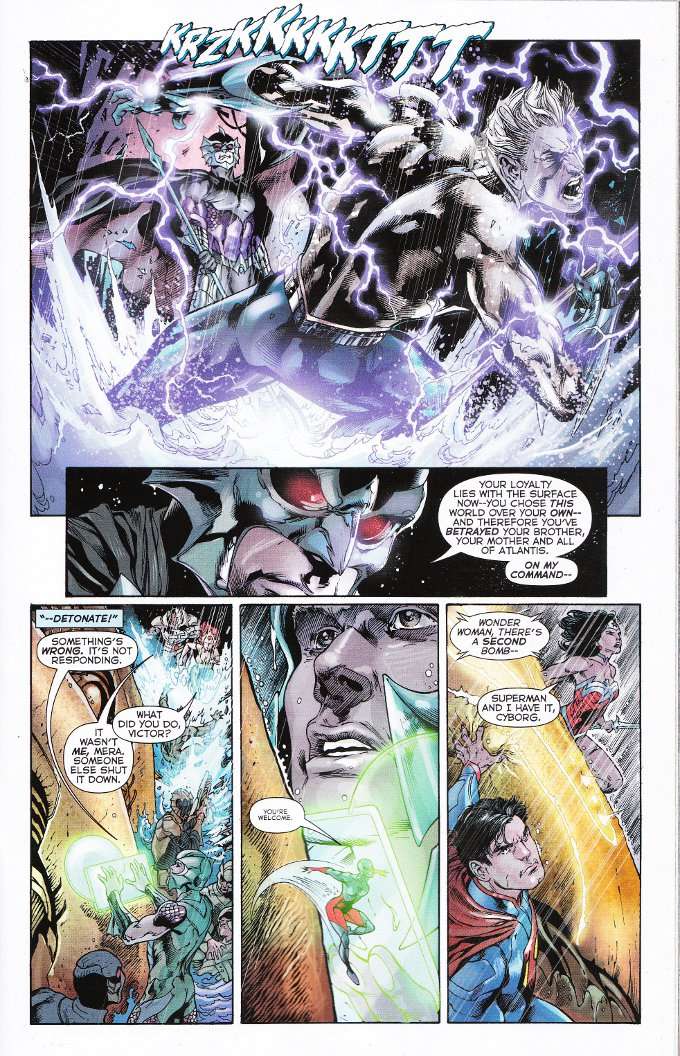
The plot is as good as one would expect from Geoff Johns.  The drama between Aquaman and his brother Orm is cranked up to 11 as the two do battle with words as well as with magical artifacts.  Johns has given Orm far greater depth than I think he's ever had in any other story and I thank him for it.  Indeed, Orm has become so sympathetic a figure, I find myself sympathizing with him more than I do Aquaman.


The excellent artwork of  Paul Pelleiter and  Ivan Reis brings this series to bed.  There's some amazing, poster-worthy pages here, my favorite being a spread of The League charging into battle.  And yet it's the little details - such as The Atom escaping from the inside of an Atlantean doomsday device - that make Reis' art so interesting.   

Thursday, February 21, 2013

Justice League of America #1 - A Review

Expectations were high going into this book, written as it was by veteran writer Geoff Johns with art by popular artist David Finch.  Thankfully, those expectations were met.  And then they were exceeded. 

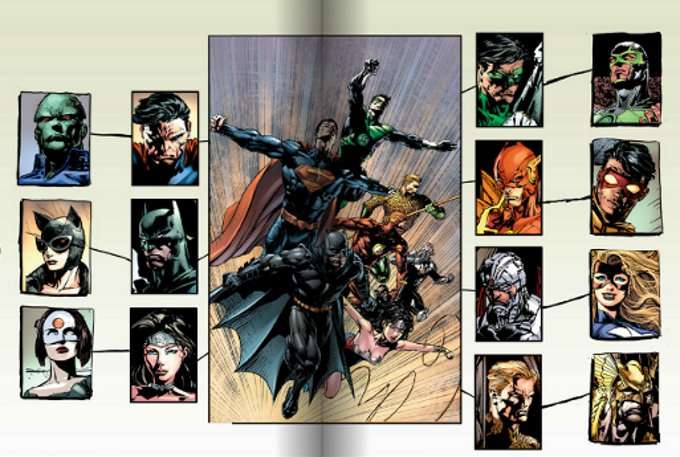
Johns' script does a grand job of explaining the status quo of the DCU at the moment and giving the reader a rundown of all the players, for those of you who might not have been reading Justice League or any of the other titles whose characters this issue involves.  No previous experience with Stormfront, Hawkman, Catwoman, Green Arrow or Birds of Prey is needed.  It may help you appreciate some of the past events that are referred to but you don't have to have been reading six or seven different books to understand this one.


Here's the story so far.  Iit's been five years since the Justice League was formed.  In the wake of several disasters, The United States government has grown nervous about the League's independence and what might happen should they begin to actively work against the USA's interests.  To that end, they've fired Steve Trevor from his position as the government's liaison to the Justice League, having decided that maybe having Wonder Woman's ex-boyfriend acting as their go-between might be diplomatically questionable. 

In his place is Suicide Squad director Amanda Waller, who is tasked with putting together a team that can match the Justice League 1 to 1 should it be necessary.  Her first recruit?  Steve Trevor, who has proven himself a capable field commander and the one man who knows the Justice League better than anyone.    The rest of her picks are selected based purely on their potential to match the other team in terms of power - a motley assortment of mysterious vigilantes, wanted criminals and promising newcomers.


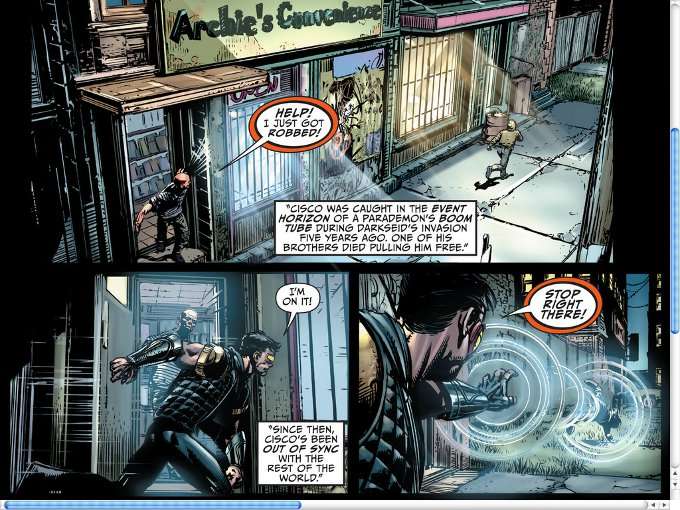
It is the newcomers - Vibe and Stargirl - who Johns spends the most time developing. There's no surprise there as, being new characters, they require the most development.  There's also the little matter of Johns being the writer on Vibe's new solo-title and Stargirl being Johns' original creation, dating back to the classic Stars and STRIPE series.  Yet this version of Courtey Whitmore is greatly changed from Johns' original concept, apparently suffering from night terrors regarding the death of the hero who wielded her Cosmic Staff before.  And Johns' take on Vibe, in just two pages, receives far more respect and development than the original character ever did. 


I've found that you either hate David Finch's art or you love it.  Personally?  I love it.  His famous eye for detail is as strong as ever but I think he's lightened up his usual shadowy inks somewhat.  There's still a hint of darkness in every corner, fitting considering the conspiracy-minded tone of the book so far.  Yet all of the high-action superhero moments are big and bright, with the inks enhancing the pencils rather than obscuring them.

Rejoice, comics fans!  This is the Justice League book we've been waiting for.