Showing posts with label Oclair Albert. Show all posts

Thursday, February 16, 2017

Justice League of America: Rebirth #1 - A Review

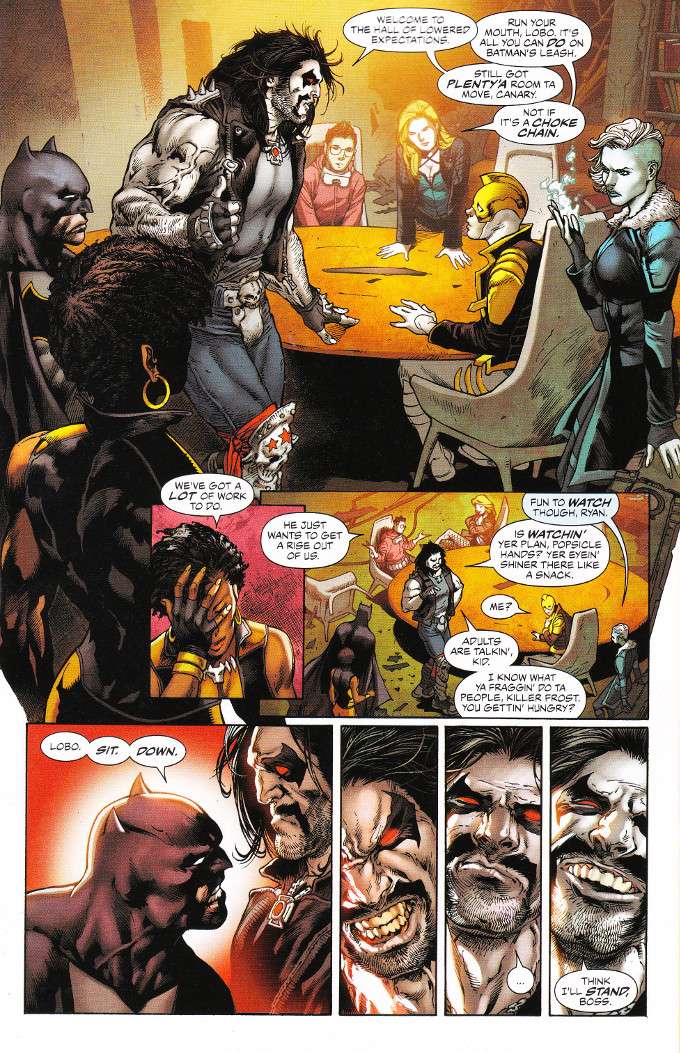
In the wake of the Justice League's battle with The Suicide Squad, Batman has come to realize the power of redemption and the need for heroes to act as a source of inspiration rather than mere peacekeepers. To that end, he has begun assembling a team, starting with a reformed Killer Frost. Their mission? To show that anyone can be a hero.

I missed this book the week it came out and I really did miss out! This first issue does little beyond introducing our cast and setting up some of the conflicts between the various volatile personalities. Standard fare for a superhero team book, of course, but Steve Orlando's command of the personalities in play makes this engaging reading despite the standard set-up.

The artwork proves equally amazing. This is no surprise given the creative team involved. I've been a big fan of Ivan Reis since his work on Green Lantern. His work with Oclair Albert and Joe Prado on the New 52 Justice League book was fantastic and it is good to see Marcelo Maiolo - whose colors were one of the few bright spots (no pun intended) of the New 52 Green Arrow series - at work again.

This book hooked me with the first issue. Hopefully it will prove as engaging once the plot kicks in.

Sunday, November 13, 2016

The Flash #10 - A Review

The Flash has a new partner in the younger Wally West. Unfortunately, Wally is not as quick to think as he is to act and has started skipping school to go chasing down new super-villains like Papercut. Perhaps Wally will quickly learn the error of his ways... assuming he survives an encounter with a strange, shadowy figure...


The main plot of this issue is a solid piece of classic superhero conflict - the eager sidekick overstepping the boundaries set by his mentor. Joshua Williamson keeps the story fresh, despite its potential to be cliched. New Rogue Papercut is likewise an interesting twist on a classic superpower.

What really makes this issue interesting, however, is the hint at the return of classic Flash villain The Shade. There's enough here to suggest that Shade's characterization put forth in the classic 1990s Starman series may not be wholly forgotten but that changes are afoot for everyone's favorite shadowy gentleman thief. I look forward to seeing what Williamson does next.


The artwork for this issue is top-notch. Felipe Watanabe's kinetic style is a fine fit for The Flash and the colors by Chris Sotomayor are appropriately eye-catching. It is Oclair Albert's inks, however, that make the finished artwork pop, particularly in the sequences involving "the shadow man".

Sunday, August 28, 2016

The Flash #5 - A Review

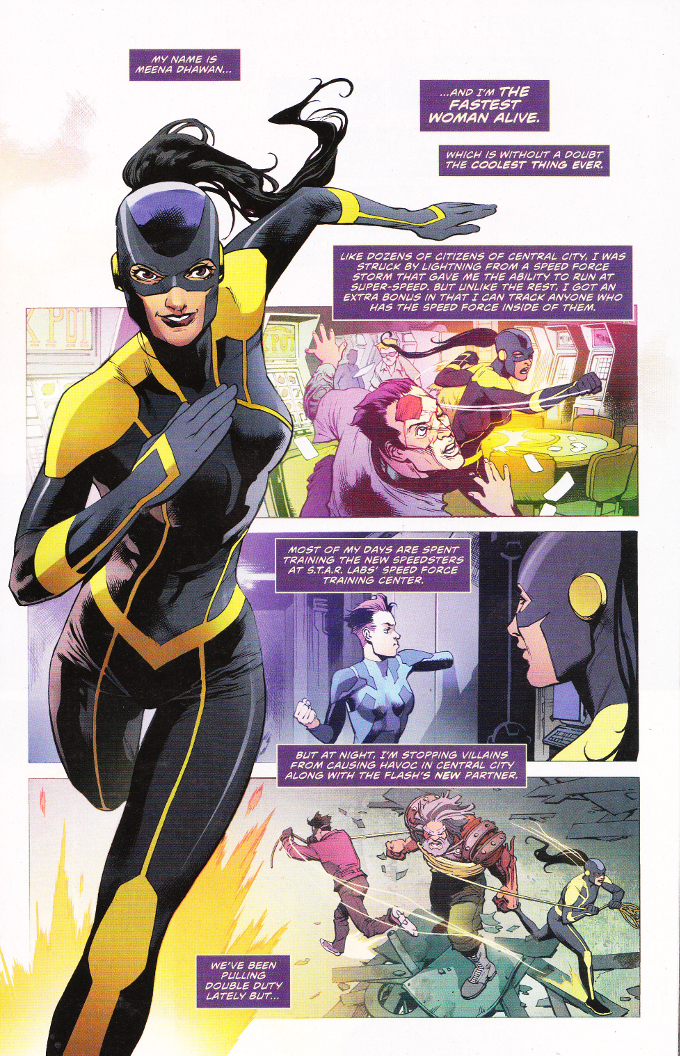
Thanks to the Speed Force storm stirred up by the criminal gang known as The Black Circle, STAR Labs scientist Meena Dhawan has become The Fastest Woman Alive! She's also become Barry Allen's new girlfriend, what with the two having become quite close as they taught the next generation of speedsters. This teaching - along with her newfound ability to sense the presence of the Speed Force in others - will lead Meena to an unwilling pupil named Wally West, just as the new villain dubbed Godspeed shows himself again.


Joshua Williamson's script for this issue is a real treat, shifting the focus from Barry Allen and giving some much needed development to both Meena and Wally. The artwork proves equally strong, with a uniform look throughout despite two inkers working on this issue. Felipe Watanabe's action scenes look amazing and Ivan Plascencia's colors are well-applied as always.

Wednesday, February 12, 2014

Earth 2 #20 - A Review

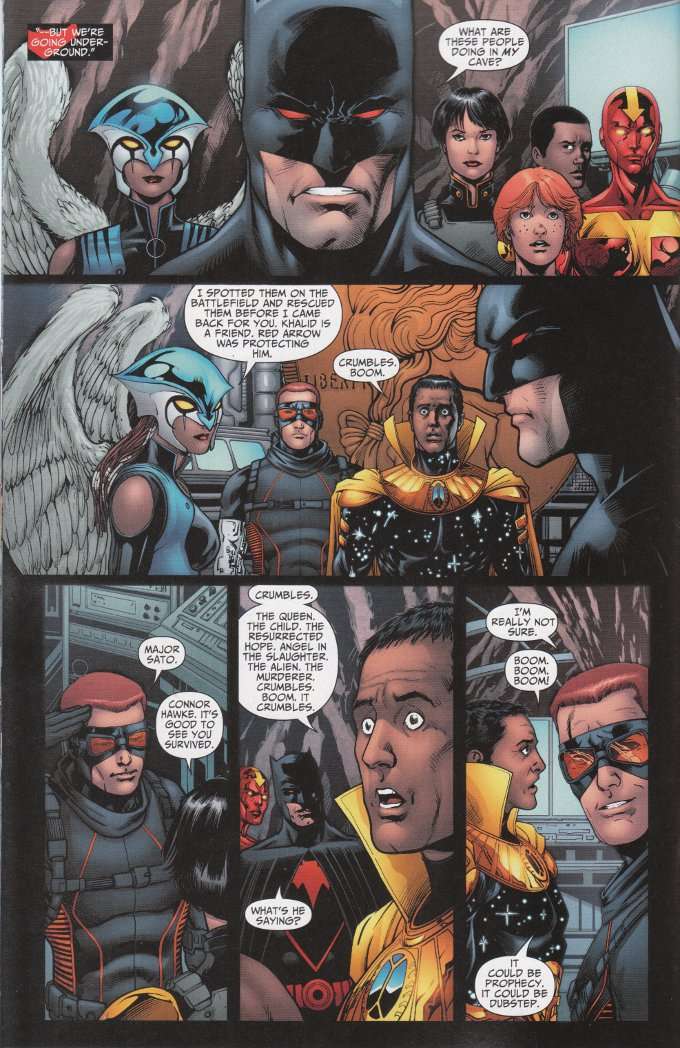
I heard about the controversy regarding Earth 2 #20 long before I got a chance to read it.  The problem stemmed from the revelation that The Red Arrow - a hero who had gone unnamed and largely undefined apart from a snarky personality - was named Connor Hawke.

For those who don't know, Connor Hawke was the name of Oliver Queen's illegitimate son and the second Green Arrow in the pre-New 52 DC Universe.  He was also of mixed-heritage, his mother being half-African/half-Korean.  Unfortunately, many artists and colorists did not bother to portray this and Connor was frequently depicted as a light-skinned, clean-shaven clone of his father despite being meant to be quite different physically and in terms of personality.

Some are bothered that Connor Hawke would be revived looking more like Roy Harper - with white skin and red hair - than as he appeared before.  I understand that and agree with it to a point.  However, I'm reluctant to label this as a case of "white-washing" given the nature of the Earth 2 series and the personal track record of the creator involved.


The world of Earth 2 has taken many characters and combined them, creating new characters that may seem familiar while offering new twists on classic formula.  For instance, multiple versions of The Atom have been condensed into one character with the name of the original Atom (Al Pratt) and the size-changing powers of his successor (Al Rothstein).  Taking Oliver Queen's two sons and combining them in a similar fashion honors both.

Would I have preferred a visibly mixed-race Connor Hawke?  I think so, yes.  But I'm reluctant to scream racism at a series that has done so much to give us a more diverse DC Universe.  So far, this series has given us a Hispanic Hawkgirl, an Arabian Doctor Fate, an Indian World Army commander, a gay Green Lantern, a senior-citizen Batman and - if the end of this issue is any indication - a black Superman.  To complain about one character going from mixed to Caucasian in the face of all that seems short-sighted to me, particularly when we know so little about the character and his background so far.  And it's ludicrous to call Tom Taylor a racist when the independent comic series he's created and is currently developing into an animated series is based around the adventures of a mixed-race family of super-scientists.

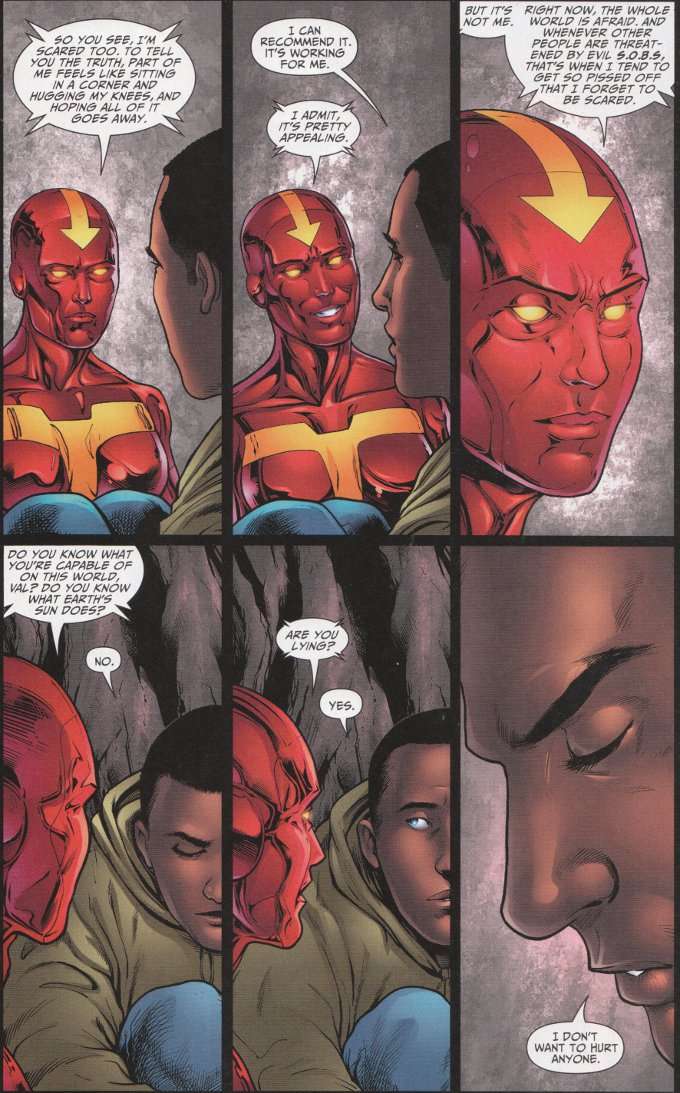
Ignoring all the controversy, this is a damn fine issue.  Taylor is a great writer of dialogue and he has a great grasp on the classic characters of the DC Universe.  The best moments in this book involve Lois Lane - now inhabiting a robot body - attempting to comfort a young Kryptonian named Val who is agoraphobic thanks to his having spent virtually his entire life either trapped inside his Kryptonian birthing matrix or locked inside a government facility.  These scenes offer a glimpse at a Lois Lane long absent from the most recent Superman books - the Lois Lane with an iron will and nerves of steel who was as strong as Superman in all the ways that matter.


The artwork by Barry Kitson is a match for Taylor's script.  Kitson is a skillful artist and inker and a tremendous visual storyteller, who gives a certain sense of emotional power to alll of the scenes in this issue where people are just talking.  Robson Rocha and Oclair Albert are less skilled in depicting the issue's lone action scenes, in which the villain Brutale orders all the holy sites on Earth destroyed in the name of Darkseid, but the work here is competent if not as fine as Kitson's.

Tuesday, October 29, 2013

Justice League #24 - A Review

Is it possible for a good fight scene to salvage an otherwise uninspired comic?  Perhaps, but Justice League #24 is not the book to make that case.  Geoff Johns has written many great books but this, I'm sad to say, is not one of them.

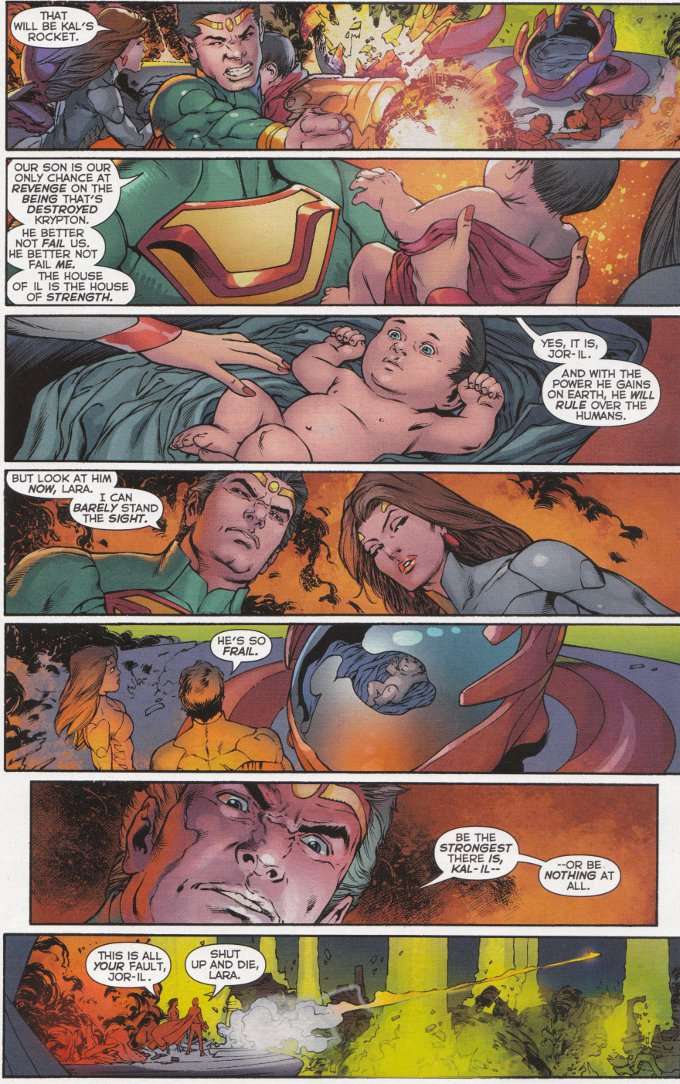
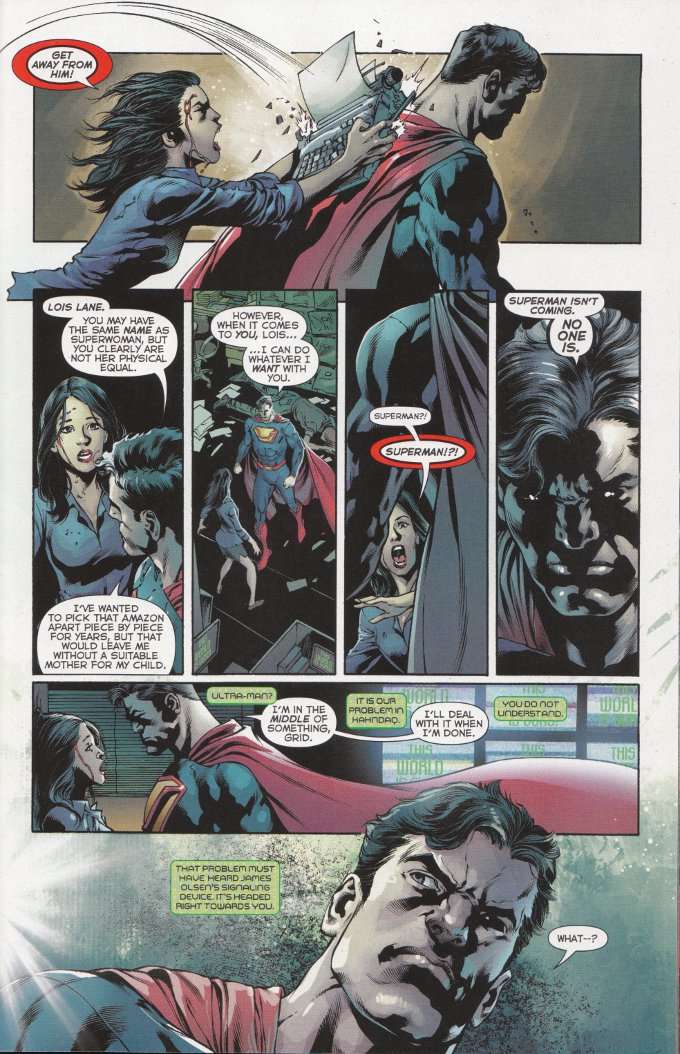
Most of the issue is devoted toward telling the detailed origins of the villainous Ultraman - Superman's evil counterpart from the parallel Earth Three.  Alert fans will note that this story is largely identical to the origins of Superman as depicted in Johns' own Superman: Secret Origin, with a little bit of Grant Morrison's Earth 2 thrown in for good measure.  We see Jor-Il (gedit?) fighting the equally evil masses of Krypton over the last escape pod off their world and The Kents as opportunistic drug addicts rather than as good and decent farmers. 


If this sounds bleakly depressing, it should.  Johns goes over the top in showcasing what a miserable a place Earth Three is and in establishing Ultraman as a conscienceless rapist and murderer.  The whole affair is technically well-written yet seems drab and dull in spite of that.  Most readers are already familiar with this story and discussing the details of how Superman and Ultraman's backgrounds differ, while undoubtedly a fun intellectual exercise for comic geeks, makes for a dull story.

Johns almost manages to salvage this affair with the eleventh-hour arrival of an unexpected hero.  Fans of Johns' excellent JSA run will appreciate this sequence and it is a good, old-fashioned superhero fight.  And yet, it is not enough to forgive the monotony of the early parts of the book. 


The artwork is similarly mixed.  Ivan Reis' pencils are excellent as always but this book proves that an inker can make or break your artwork.  Three different inkers worked on this book and the differences in their styles are obvious.  The Krypton sequences are under-inked.  The sequences where Ultraman terrorizes the staff of The Daily Planet are over-inked.  A few pages manage to be just-right but the credits page annoyingly offers no details as to which inkers are responsible for which pages.

All in all, this book is giving me little reason to continue reading Justice League and further reinforcing my opinion that skipping Forever Evil was a good idea.  With an uneven and overly familiar story backed by confoundedly inked artwork, there is little to recommend this book.

Monday, July 15, 2013

Justice League #22 - A Review And A Rant

Remember when super-heroes fought super-villains in the big crossover events?

Seriously.  When was the last time we had a big event book where the heroes fought actual villains rather than other heroes?  And no, alternate universe versions or alien clones of themselves don't count, Flashpoint and Secret Invasion fans.  It's been a while, hasn't it?

I have no objection to heroes fighting other heroes but it seems like that's all the heroes do anymore.  Have we come to the future Mark Waid predicted in Kingdom Come where the villains are underground running the world in secret and the heroes are fighting turf wars over who gets to protect what?  Reading Justice League #22, it's hard to argue that we haven't.

While the plot does feature some random bits involving the Trinity of Sin (i.e. The Question, The Phantom Stranger and Pandora), the main focus of the issue is upon the inevitable battle between The Justice League and the newly formed Justice League of America.  Inevitable, at least, in the eyes of Amanda Waller, who create the JLA specifically to counter the abilities of the original Justice League should they ever work against the interests of the USA.  When the entire Justice League travels to the enemy nation of Kahndaq after newbie hero Shazam crosses the border, Waller sees her chance and sends the JLA in to enforce America's embargo.  Hilarity ensues.   
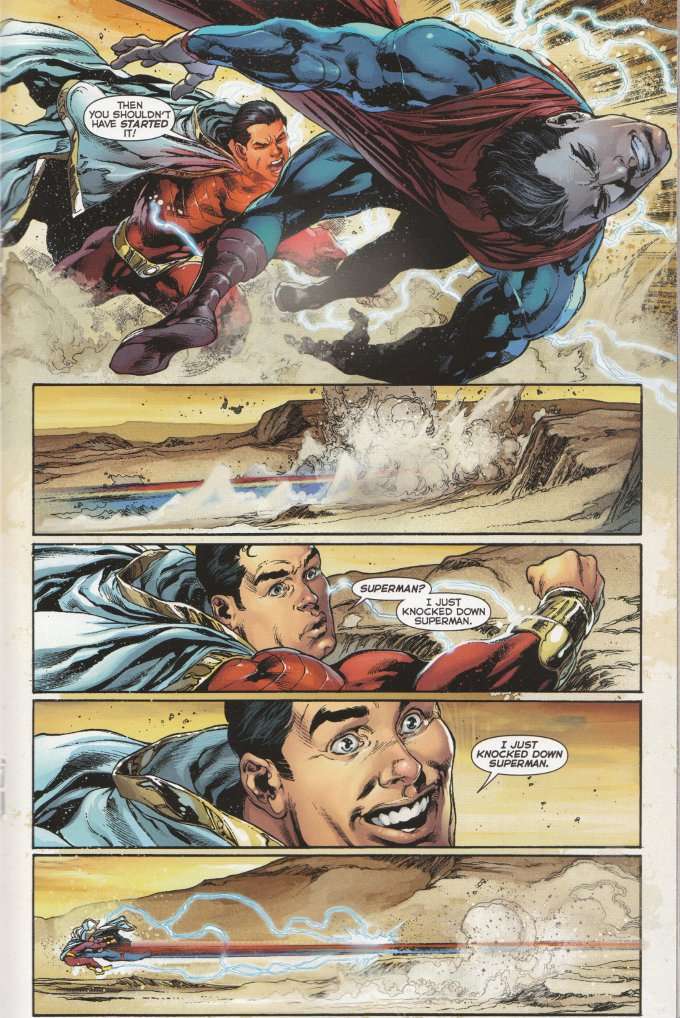


Thus far, Trinity War seems to be DC Comics' answer to Avengers Vs. X-Men -  a violent free-for-all born out of disagreements that could be solved in five minutes if the characters weren't written like complete imbeciles because that is what the plot demands.  While it isn't out of character for Amanda Waller to see The Justice League as a threat to the nation she serves, it seems uncharacteristically short-sighted for "The Wall" to send a group largely made of untested newbies like Vibe, Stargirl and the new Dr. Light into the field against a more experienced enemy.  Superman charges into battle against Shazam without trying to find out if the other hero instigated a battle with the Kahndaq Army - a question you'd think Superman would consider given that he and Wonder Woman were fighting the same army several issues earlier.  And if there was any doubt that the New 52 version of Billy Batson did not have The Wisdom of Solomon, this issue obliterated it.

Ironically, the only thing that makes this story tolerable and indeed prevents it from being  Avengers Vs. X-Men Starring The Justice Leagues  is same thing that makes it so aggravating - the writing of Geoff Johns.  Johns succeeds where Bendis and Company failed by evoking real ethos in a series of short scenes amid all the strum und drang.  Whereas it was hard to find sympathy for either the fascist Captain America or the single-minded Cyclops, one can't help but feel Billy Batson's guilt and admire his determination to do the right thing even as he goes about it in the worst way possible. 

Where Johns fails is by falling into the same trap of manipulation that turned off so many comic readers when Brad Meltzer pulled it in Identity Crisis.  With a single issue, Meltzer was able to do what so many writers had failed to do and make Ralph and Sue Dibny into something beyond a joke - characters who had earned their seemingly accidental place in The Justice League.  He then destroyed the miracle by setting us up to care about Sue and Ralph only to kill one off and turn the other into an shell of their former self.  Johns does the same thing here, sacrificing the brilliant conceit of turning Dr. Light - perhaps the most hated villain of the past 10 years of DC Comics - into a loving family-man, moralist and would-be hero.  There's no small irony that Dr. Light is the one who pleads for peace and tries to get everyone to discuss their differences before his sudden and grisly death, which triggers the superhero smackdown we were promised. 


Rest In Peace, Dr. Light.  We Hardly Knew Ye. 

The artwork by Ivan Reis, Joe Prado and Oclair Albert is as good as one might expect.  I haven't seen a bad issue yet from Reis in the past year, be it on Aquaman or Justice League.  But in this case the artwork is like a candy shell on a rabbit pellet.  Sure, it may look good... but it will leave a bad taste in your mouth.

Despite this, I will attempt to finish this crossover so that you, my readers, do not have to.  Not that I have much choice with it dominating so many of the books I read on a monthly basis.  Still, I will endure even as I wonder how two writers I enjoy so much can create something that leaves me so disgusted.


Wednesday, April 24, 2013

Justice League #19 - A Review

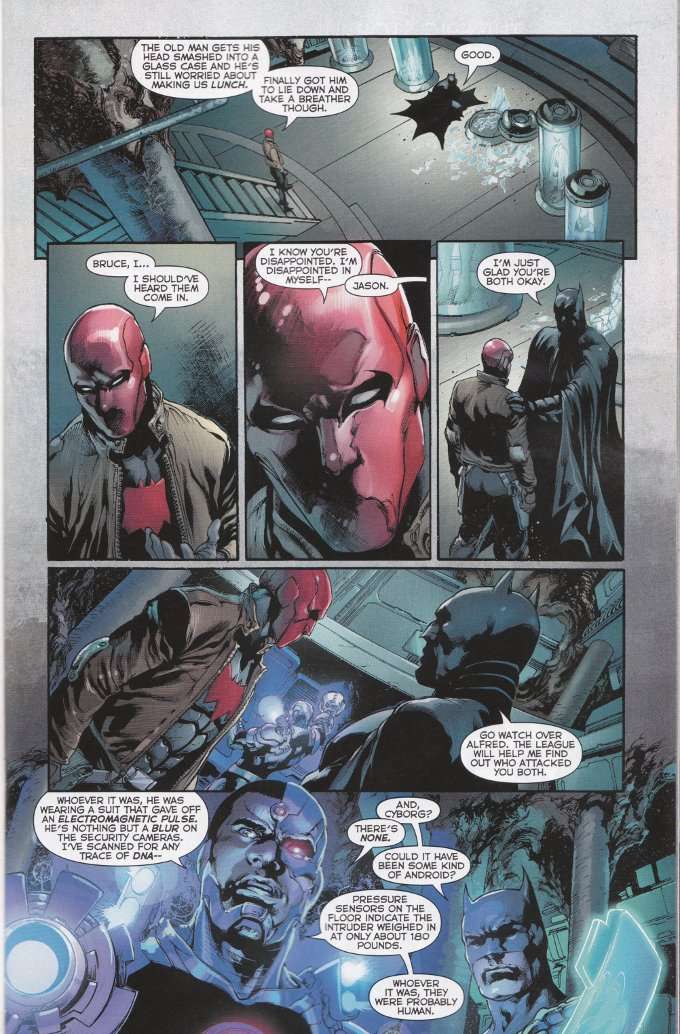
It is a credit to Geoff Johns' skill as a writer that he manages to do in two pages what Scott Lobdell and Judd Winick failed to do in two years - make Jason Todd into a sympathetic figure.  This is perhaps the most minor of the subplots we see in Justice League #19 yet it is perhaps the most compelling.  It's certainly more interesting than watching Ronnie Raymond and Jason Rusch arguing with one another (honestly, didn't we get enough of this in Brightest Day?) or the revelation that the new Atom can use her powers to play her favorite MMORPG from the inside... I think.  That sequence isn't particularly clear, though it is a nice nod to the old Sword of The Atom series.


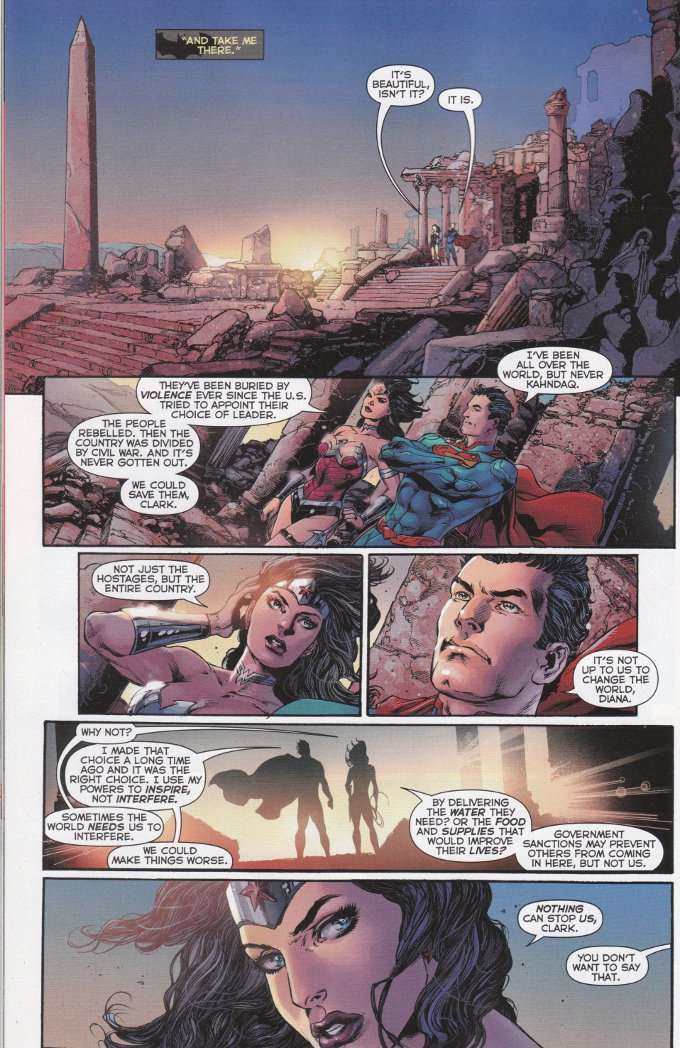
The actual meat of the issue is more enjoyable, with Batman coping with a burglary in the Batcave that bodes ill for the entire team and Wonder Woman encouraging Superman towards a more proactive approach to crime-fighting.  There's a lot going on here and Johns is no doubt setting things up for the upcoming Trinity War storyline.  Thankfully, he does a good job keeping his ducks in a row.  I just wish he hadn't bothered with some of the story-lines that do little to develop the already well-established characters.

Ivan Reis continues to flourish as the series' new penciler, despite being somewhat crippled by a team of three inkers.  Does the book look bad?  No, but you can tell that three different artists were handling the inking duties.  There's little sense of continuity and cohesion visually.  Any who doubt the power of an inker to completely change the feeling of a penciler's work would do well to check out this issue.


I shan't bother offering my two cents on the Shazam back-up anymore.  You all know what I'm going to say at this point and I'm sick of saying it, over and over and over again..  Johns' script is good, but I loathe the new take on Billy Batson, who doesn't feel at all like he should.  Gary Frank's art is far better than the story deserves.  They had to call this Shazam because this mess sure isn't Captain Marvel.  Blah blah yakkity smackity. 

Tuesday, February 26, 2013

Justice League #17 - A Review

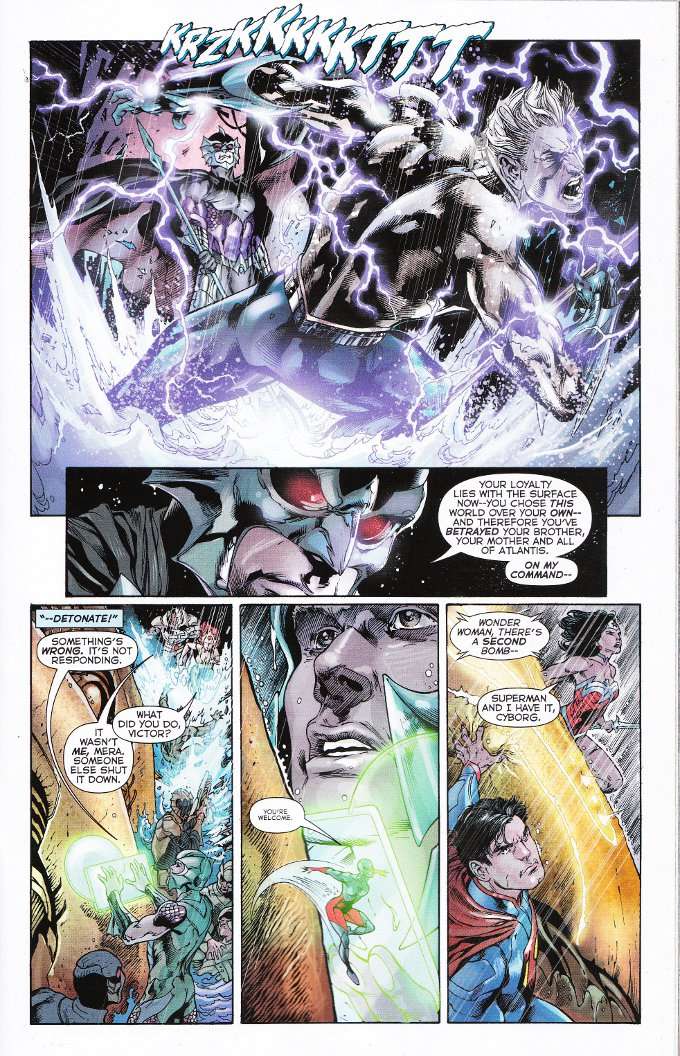
There's little I can say about Justice League #17 that I haven't said already about the other issues in the Throne of Atlantis mini-series.  There is much I fear to say for the sake of spoiling a story that did manage an honest twist or two in the tale.  However, I think I can safely say that this final chapter does rock the status quo of both the Aquaman title as well as Justice League.  Big changes are afoot - that much is certain!


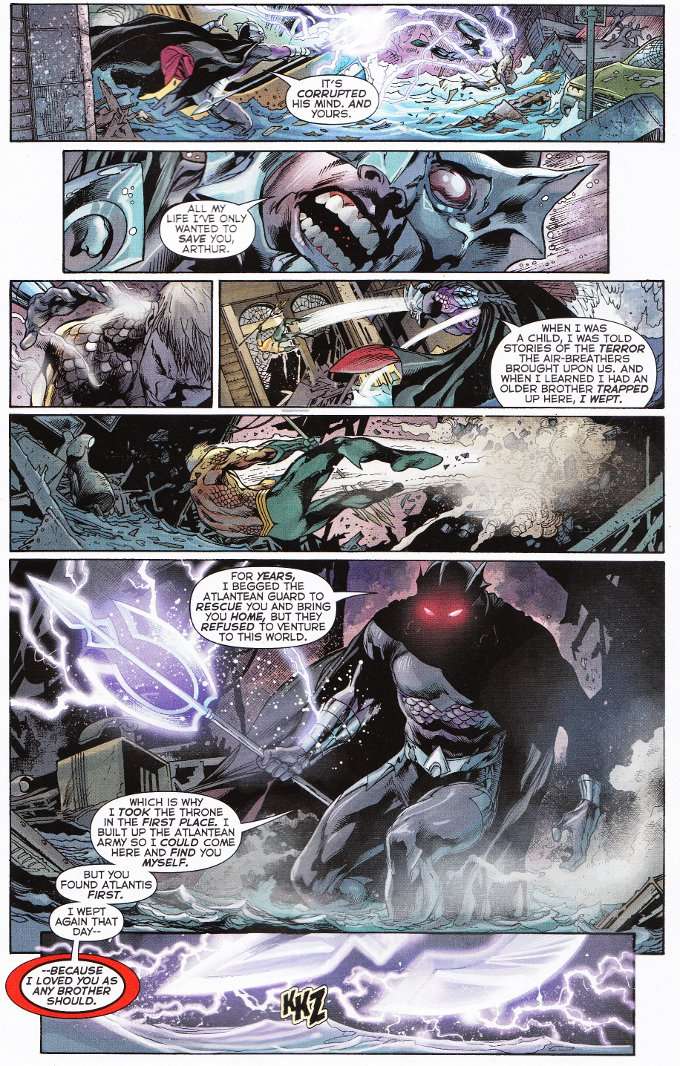
The plot is as good as one would expect from Geoff Johns.  The drama between Aquaman and his brother Orm is cranked up to 11 as the two do battle with words as well as with magical artifacts.  Johns has given Orm far greater depth than I think he's ever had in any other story and I thank him for it.  Indeed, Orm has become so sympathetic a figure, I find myself sympathizing with him more than I do Aquaman.


The excellent artwork of  Paul Pelleiter and  Ivan Reis brings this series to bed.  There's some amazing, poster-worthy pages here, my favorite being a spread of The League charging into battle.  And yet it's the little details - such as The Atom escaping from the inside of an Atlantean doomsday device - that make Reis' art so interesting.   

Friday, June 8, 2012

Aquaman #7-9: A Review


In the 45 years since his creation, Black Manta has been many things.  An abused child driven to hate the sea after being trapped on a boat. An autistic man who found comfort in the texture of water while being tortured in Arkham Asylum by an incompetent psychiatrist.  A Black Separatist who wanted to form a new nation, free of the White Man's oppression under the sea.  And even a half-man/half-fish monstrosity.  But despite all this, there's one thing Black Manta has never really been - threatening.  Small wonder then that having established Aquaman as the badass as should be with his first story arc on this title, Geoff Johns should use his second story arc to build upon the background of both hero and villain and turn Black Manta into a villain worthy of the King of the Seven Seas.


These three issues move smoothly through four different story-lines.  Two are set in the modern day DCU.  Two are told in flashback.  In the first storyline, we focus upon Black Manta himself as he hunts and kills a series of superheroes - all of whom apparently draw power from Atlantean artifacts and all of whom were once part of an unofficial super-group called "The Others".


 The second arc focuses upon Aquaman, who was - not surprisingly - one of The Others.  He joins forces with Ya'Wara - a jungle-queen style heroine who was also a member of The Others -  and the two begin to track Black Manta.  This greatly annoys Aquaman's wife Mera, who doesn't seem to wholly believe that the only connection Aquaman and Ya'Wara ever shared was a telepathic one.


The third arc, depicted in flashback, showcases the adventures of The Others in the past.  We see exactly how Arthur and his fellow heroes used to work together and how they were all united in their efforts to stop Black Manta from exploiting the power of ancient Atlantis.  We also see how much Aquaman has changed in six years times, becoming much less savage and kinder in aspect - a scary prospect for those who remember that Aquaman is one of the few who can out-gruff Batman.


In the fourth arc, Mera is told of Aquaman's  life on the surface world as a child by Dr. Stephen Shin - a doctor to whom we have already been introduced.  We learn a little more of his background with The Curry Family and how he came to be hated by Aquaman mixed up with Black Manta.  I'll spare you any more details than that.  Suffice it to say that those familiar with how Geoff Johns rebuilt the Green Lantern mythos from the ground-up will not be surprised at how well Johns is beginning to do the same for Aquaman.

Ivan Reis continues to impress with his pencils, fitting more fine detail into several single panels than many artists attempt over whole pages.  He is ably assisted by inkers Joe Prado, Oclair Alber and Andy Lanning, whose work further refine Reis' pencils without becoming overly dark.  Colorist Rod Reis also deserves special praise, particularly for the sequences where he uses a water-down palette in conjunction with lighter inks in the flashback scenes showing Aquaman's childhood.  The effect seems to perfectly suggest the past without resorting to sepia tones or black-and-white imagery.

If you aren't already giving Aquaman a shot, now is the time to come on-board.