Showing posts with label Doctor Who Series 7. Show all posts

Thursday, December 26, 2013

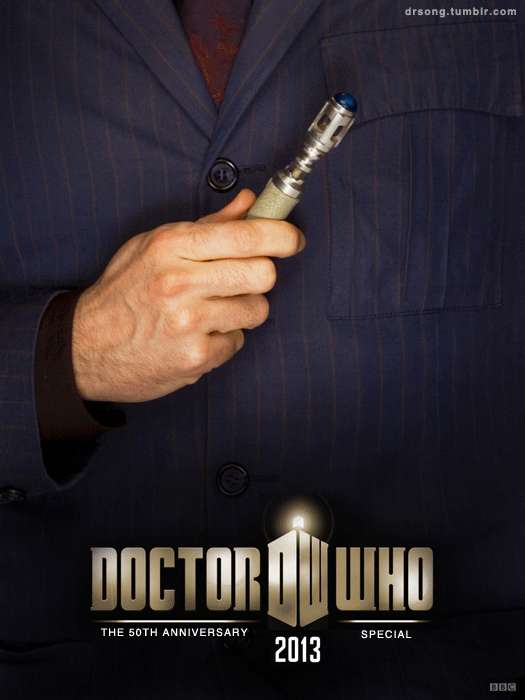
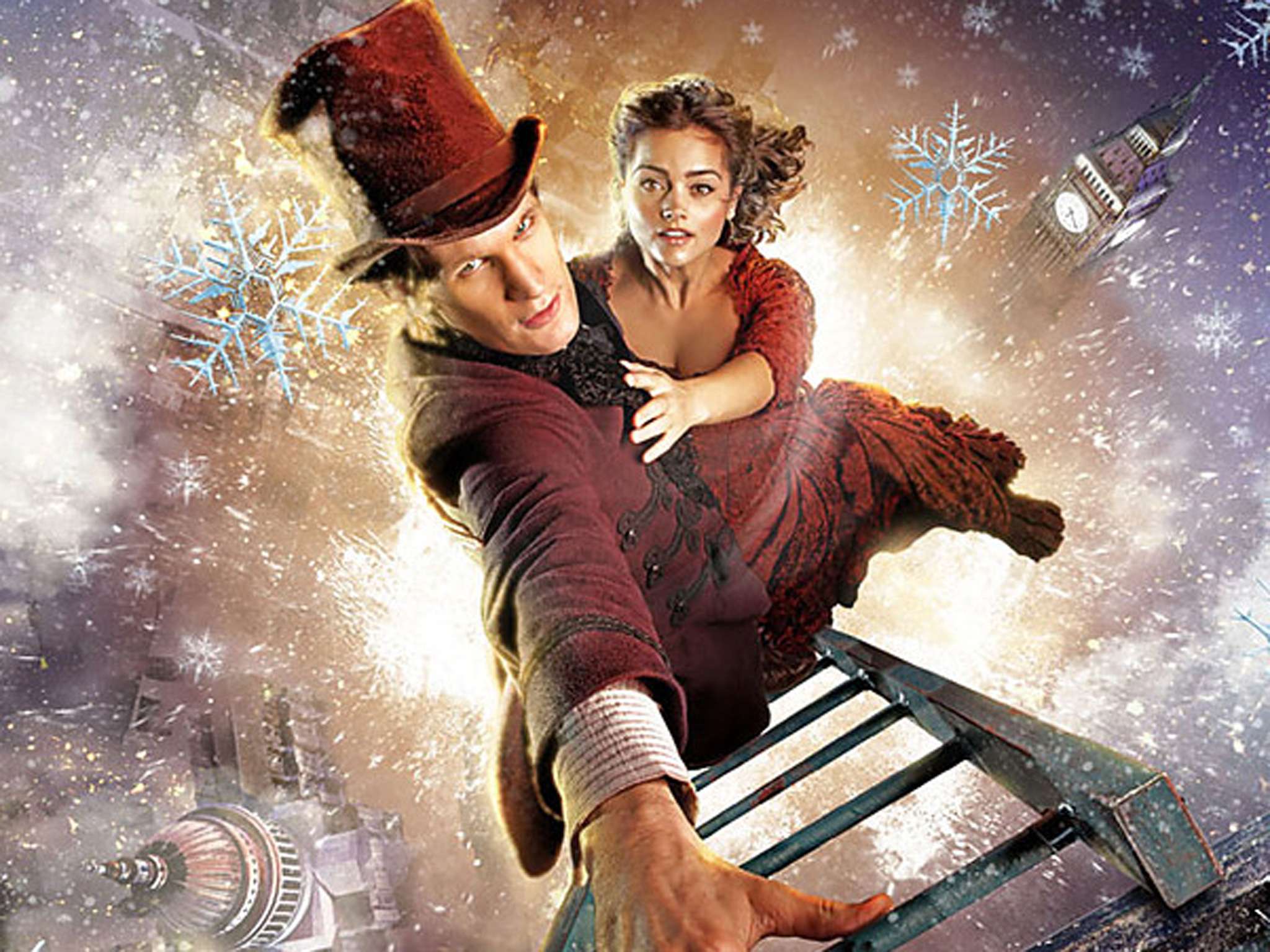
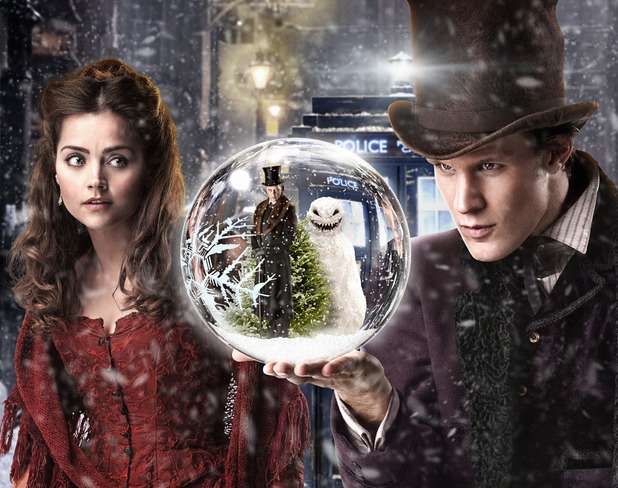
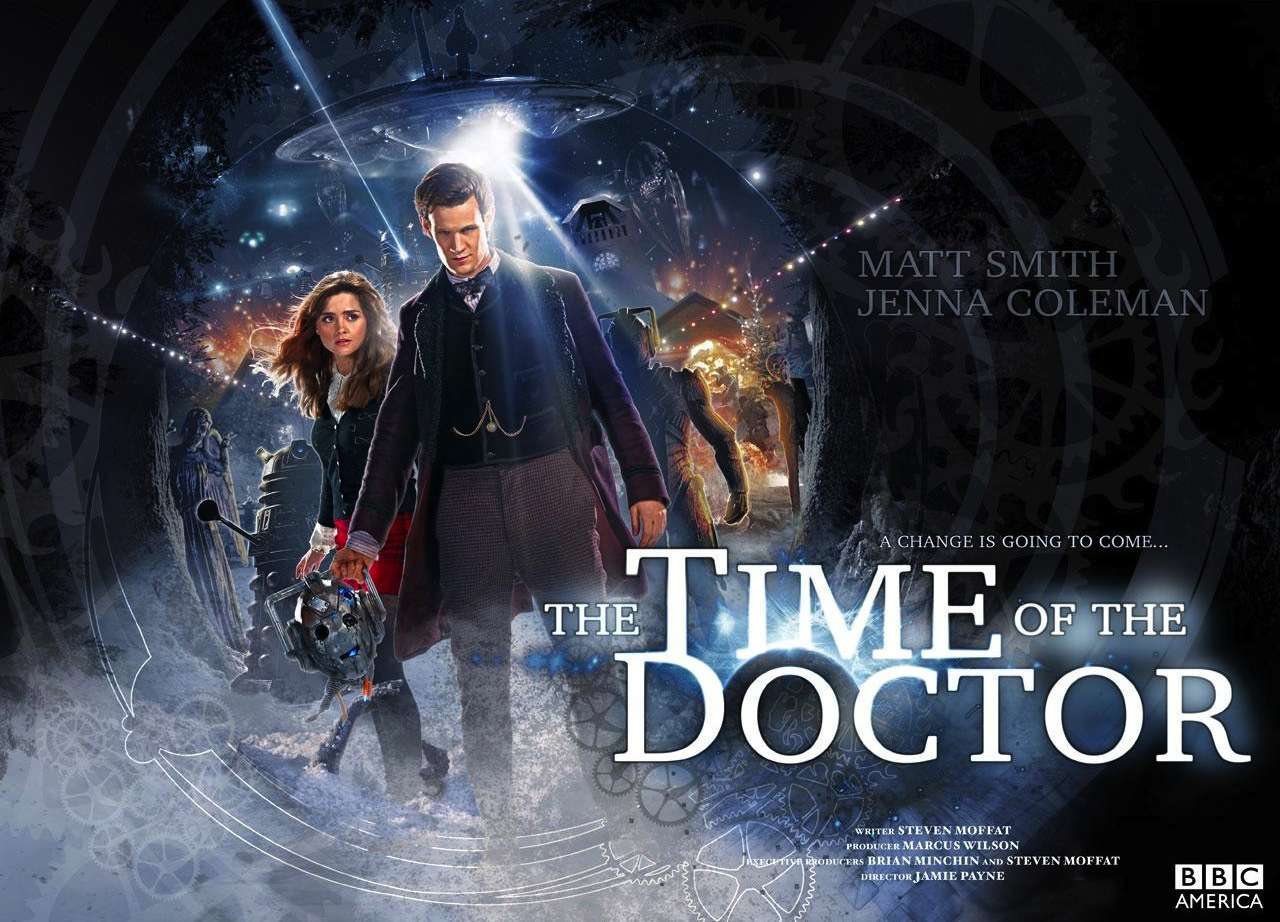
Doctor Who, 2013 Christmas Special - The Time Of The Doctor

THE QUICK, SPOILER FREE REVIEW

Excellent.  Matt Smith is given a worthy send-off and Steven Moffat manages to tidy up all the loose ends regarding The Eleventh Doctor's era.  Pity Jenna Coleman is given so little to do and so much of the action occurs off-camera.  Then again, this is very much Matt Smith's show.  And it is a good one.


SPOILERS FOLLOW AFTER THE IMAGE!


THE PLOT

A mysterious message broadcast across all of time and space brings about the gathering of the worst beings the universe has to offer around a mysterious planet.  Weeping Angels.  Sontarans.  Cybermen.  Even The Daleks!  And The Doctor, of course, because The Doctor always turns up wherever trouble is brewing.  Taking just enough time to snatch Clara away from an increasingly awkward Christmas dinner, The Doctor is soon on his way to the source of the signal - a crack in the wall of a bell-tower in a town called Christmas where no one can tell a lie.  The Doctor quickly learns the source of the message as well as the name of the mystery planet.  Trenzalore.  The planet where he is destined to fight his final battle!


THE GOOD PARTS


* Like Peter Davison, Matt Smith may have delivered his greatest performance as The Doctor in his final episode.  Simply put, Matt Smith nails every aspect of The Doctor's personality here.  I've never been the biggest fan of Smith's take on The Doctor but even I'm going to miss him after this episode.

* Steven Moffat's scripts can be hit or miss at times.  This one was definitely a hit.  As near as I can tell based on one viewing, every single plot thread involving The Siege of Trenzalore and all the prophecies regarding the Eleventh Doctor have been resolved.  Fans may debate how much of this The Grand Moff had planned in advance but I think everything - even the mystery of Gallifrey from the 50th Anniversary special - is addressed.  And yes Virginia, they figure out a way to give The Doctor a whole new regeneration cycle without any hand-waving or jiggery-pokerey.  It's all there in the Classic Series, clear as crystal. 

* The story itself is a truly fitting end to The Eleventh Doctor's story.  Smith's Doctor took great joy in the lives of ordinary people, loved children and dreamed about what it would be like for him to have an ordinary life with a real job somewhere.  How fitting then that he should finally - in a way - be granted that wish as he becomes the protector of Christmas.

* There's a lot of death and rebirth imagery throughout the episode and its very powerful symbolically.  I won't go into all of it here but there's a thesis paper out there for the Anglophile willing to compare/contrast this episode, Terry Pratchett's Hogfather and the wholesale mythology of Father Christmas and Odin.


THE PROBLEMS

* Granting that her actions save the day, Jenna Coleman isn't really given much to do.  She's great with what she does get but it seems like she's barely in the episode.

* Fans who dislike the idea of The Doctor as a romantic figure will find little to like in the character of Tasha Lem - Mother Superior of the Papal Mainframe and even I - who don't mind the idea of The Doctor snogging - thought this was a bit gratuitous after Queen Elizabeth and River Song.

* It's rather depressing - after what we saw of Clara's childhood and upbringing and how amazing her parents were in The Rings of Akhaten - to see her family reduced to sitcom fodder here.  Who the heck is the woman haranguing Clara about not having a boyfriend, anyway?  Step-mother?  I don't think they ever said.

*
Grand as it is, Moffat does violate the "show, don't tell" rule regarding television and we are told about The Doctor's grand battles against all of his enemies without being shown much of them.  We see a bit but we might have seen more.

*
Likewise, while I'm always glad to see more of Karen Gillan (minds out of the gutter, people!), it does seem kinda insulting to Clara that The Doctor drifts off thinking about The Girl Who Waited as his final thought without then turning to The Impossible Girl and the last face this face will see.


THE FINAL VERDICT


A fitting Christmas special and a fitting end to The Eleventh Hour.  Goodbye, Raggedy Man.

Saturday, November 23, 2013

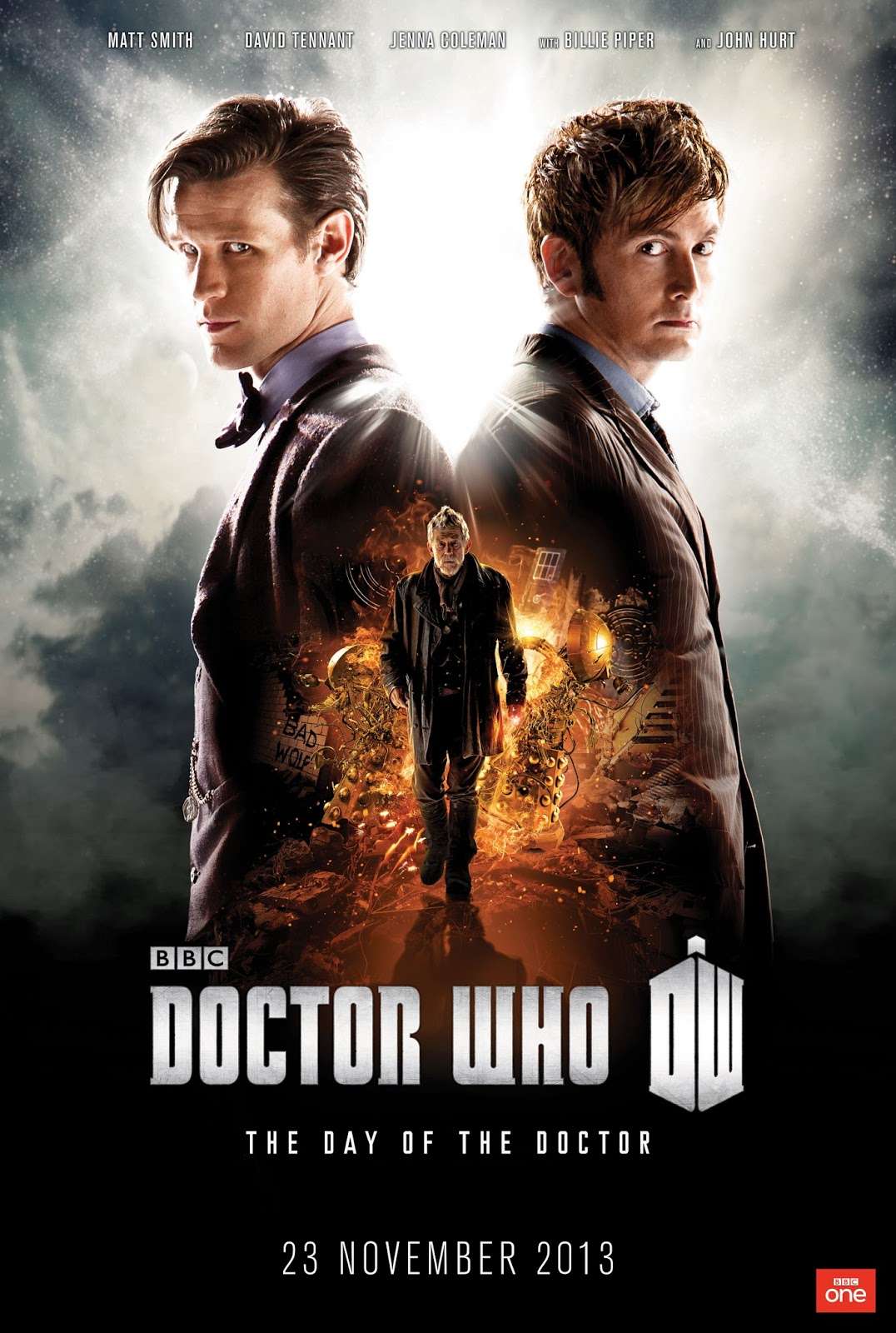
Doctor Who, 50th Anniversary Special - The Day Of The Doctor

THE QUICK, SPOILER FREE REVIEW

It is both fantastic and brilliant.  There are some nits that might be picked but old fans and new will be too busy blinking back the tears throughout to worry about the dodgy bits.  Smith and Tennant get along like a house on fire and John Hurt proves a worthy addition to the pantheon of Doctors.  There will be surprises aplenty, mighty sights and great wonders to behold.  In short, it is everything we could have hoped for and - for once - when they say nothing will be the same after this episode, they are telling the truth.


THE PLOT

In modern day England, Clara Oswald (newly hired as a teacher at the Coal Hill School) prepares for a weekend date with The Doctor.  Their plans are cut short when UNIT airlifts the TARDIS into The National Gallery, where a sealed envelope from Queen Elizabeth I awaits with orders regarding a secret gallery of three-dimensional paintings from Gallifrey.  A series of paintings from which the subjects have seemingly escaped into the waking world...

In Elizabethan England, The Doctor is trying to win free of the amorous of Queen Elizabeth I.  He's also trying to avert an invasion by the shape-shifting Zygons.  Both tasks are made even more difficult when one of the Zygons begins impersonating The Queen and all The Doctor's cunning proves ineffective in finding the imposter.

And in a place very far away and long ago, an old man - once a Doctor - seeks to put an end to the great Time War.  Pushed to desperate measures, he has stolen a weapon known as The Moment - a galaxy eater capable of destroying whole races throughout time and space.  But unbeknownst to him, The Moment has become sentient and before it will be used, it will test any who dare to make use of it.  So in the form of one who is or will be very dear to the one-time Doctor, The Moment shows him images of the men he will become.

Three men who are yet one man, united by a name, an ideal and a Moment in Time.  They will unite to fight a common enemy and more, to test the very limits of what time can take.  Because Time can be rewritten... and even fixed points in time can be broken.


THE GOOD PARTS   

* Smith and Tennant play off one another perfectly.  The two have a combative relationship similar to the one that existed between Two and Three with the difference being that Smith and Tennant act more like brothers squabbling than bickering colleagues.

* Not surprisingly, John Hurt is a fine Doctor.

* Lots of nods to the classic series in the background, including a picture of The Brigadier.

* For a moment, when The Doctor mentioned stone dust and the covered figures in the Under Gallery were revealed, I thought for sure we were going to see the return of The Weeping Angels.  Kudos to Steven Moffat for not bringing his most terrifying creations back when he easily could have.

* Jenna Coleman probably has the least out of all the cast to do but she does a remarkable job playing up Clara's cleverness with what little she has to work with.

* Billie Piper is similarly hobbled in her role as The Moment, but it is interesting watching her play a character through three filters - The Moment As Rose Tyler As The Bad Wolf.

* All The Doctors in the final battle to save Gallifrey.  ALL THE DOCTORS!!!

* The Curator.  Dear gods, The Curator.  I don't know if it was a nod to the Shada special, where an older version of The Fourth Doctor is seen wandering a museum devoted towards The Doctor's life... but it was a nice touch regardless.

* For once, the phrase "Nothing will ever bee the same again" seems accurate.  The revelation that Gallifrey has survived somewhere changes the dynamic of the modern show and gives The Doctor a goal to work toward in the coming series.  More, Moffat has managed this without contradicting The End of Time as The High Council was said to have broken off contact with the military, who we see in this episode.  Of course that does mean The Doctor will likely have to deal with them later... and it won't be pretty.

* The final shot of all The Doctors is a thing of beauty.


THE PROBLEMS  
* What we see of Galifreyian art in this episode doesn't quite jibe with what's been said on the subject in the past.  In City of Death, for instance, it was revealed that all Galifreyian art was done on computers.  True, the technology to capture a moment in time as a painting probably DOES involve computers on some level but the idea of something flat hanging on a wall seemed utterly shocking to Romana.

*
The plot with the Zygons is dropped completely after The War Doctor disappears to activate The Moment.  It would have been nice to see the final resolution of that thread.


THE FINAL VERDICT

Steven Moffat promised this episode would redefine the series.  For once, he was telling the truth.

Saturday, August 24, 2013

Doctor Who #12 (IDW Vol. 3) - A Review

WARNING: The following review does contain spoilers for Series 7, Part 2 of the Doctor Who TV Series. It might also contain spoilers regarding the upcoming 50th Anniversary Special. Read no further if you wish to remain unspoiled and know that this comic is bloody brilliant and well worth reading, even if it is read a few months from now.


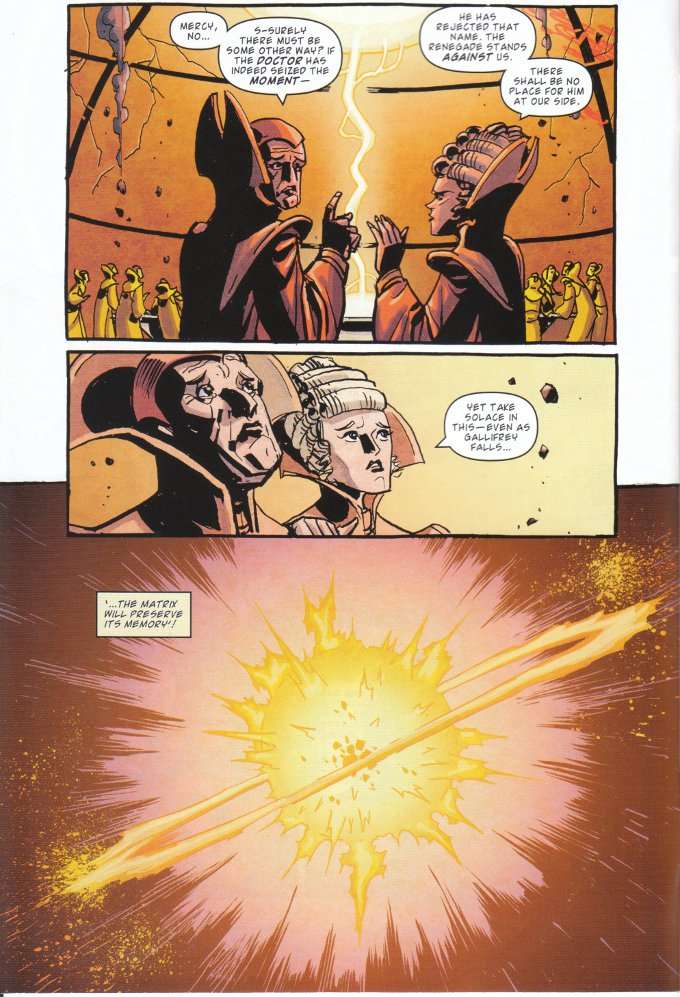
This month's issue of Doctor Who will be of interest to fans of the show for one reason above all others. A flashback at the start of the comic seems to confirm what, so far, had only been speculated - that the Time Lord we saw at the end of The Name of The Doctor was an incarnation of The Doctor from the time of The Time War.  One who refused the name of The Doctor and who fired the metaphorical bullet that removed The Time Lords from the universe. 


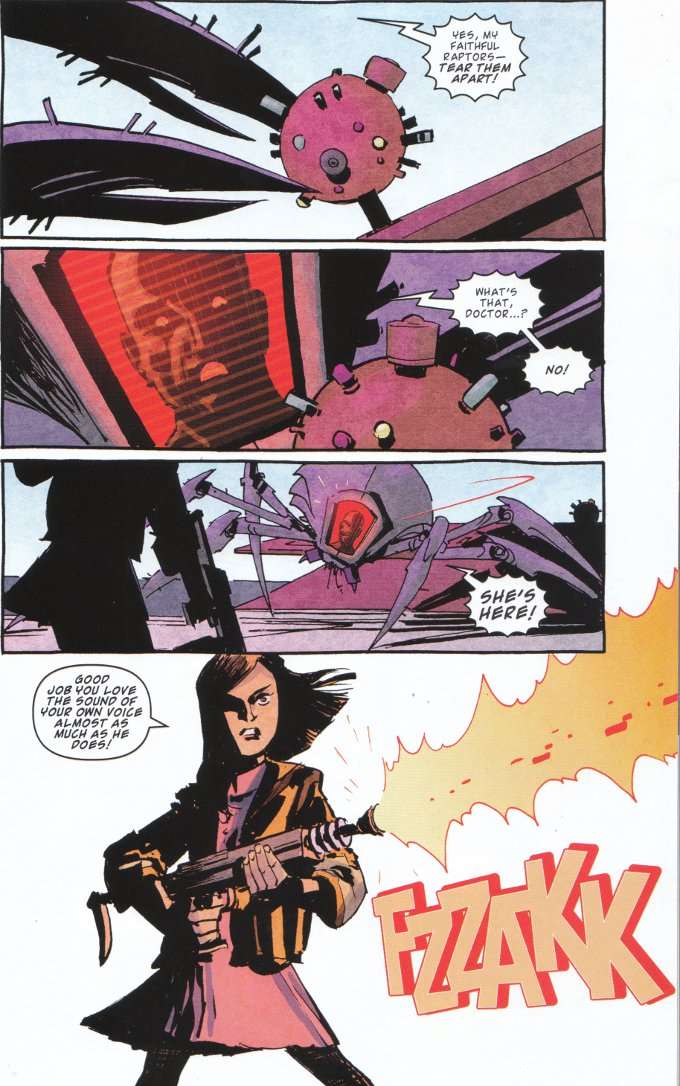
Ignoring even that factoid, there is much to admire in this issue.  Writers Andy Diggle and Eddie Robson have built upon Diggle's story The Hypothetical Man and created a villain truly worthy of The Doctor.  More, they give a depth of character - and dare I say, a level of sheer awesomeness - to Clara Oswald that she did not receive in the television program.


If this issue has a weakness, it lies in the artwork of Andy Kuhn.  Khun's style is good and a worthy fit for the Steampunk aesthetic of this story but his work in this final part of the Sky Jacks storyline does seem somewhat rushed and uneven at times compared to previous issues.  Still, the overall affect is a good one and this issue has more good than bad and a few parts that are honestly great. 

Sunday, August 4, 2013

Peter Capaldi Is The New Doctor!


SOURCE: BBC - Exclusive Video: Peter Capaldi is the New Doctor!

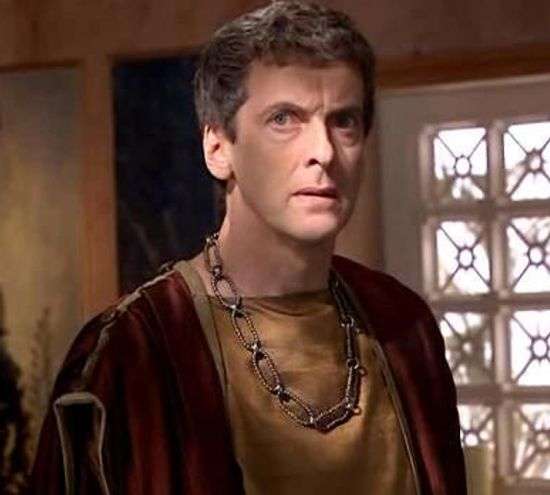
So who is Peter Capaldi?  Doctor Who/Torchwood fans likely recognize him from the Series Four Doctor Who story Fires of Pompeii where he played the marble merchant Caecilius or for his role as John Frobisher in the Torchwood movie Children of Earth.  The 55-year old Scottish actor/director is probably best known in the UK for the role of  Malcolm Tucker in the BBC comedy series The Thick of It.

So yeah.  Another white male as The Doctor.  Comments? 

Sunday, May 19, 2013

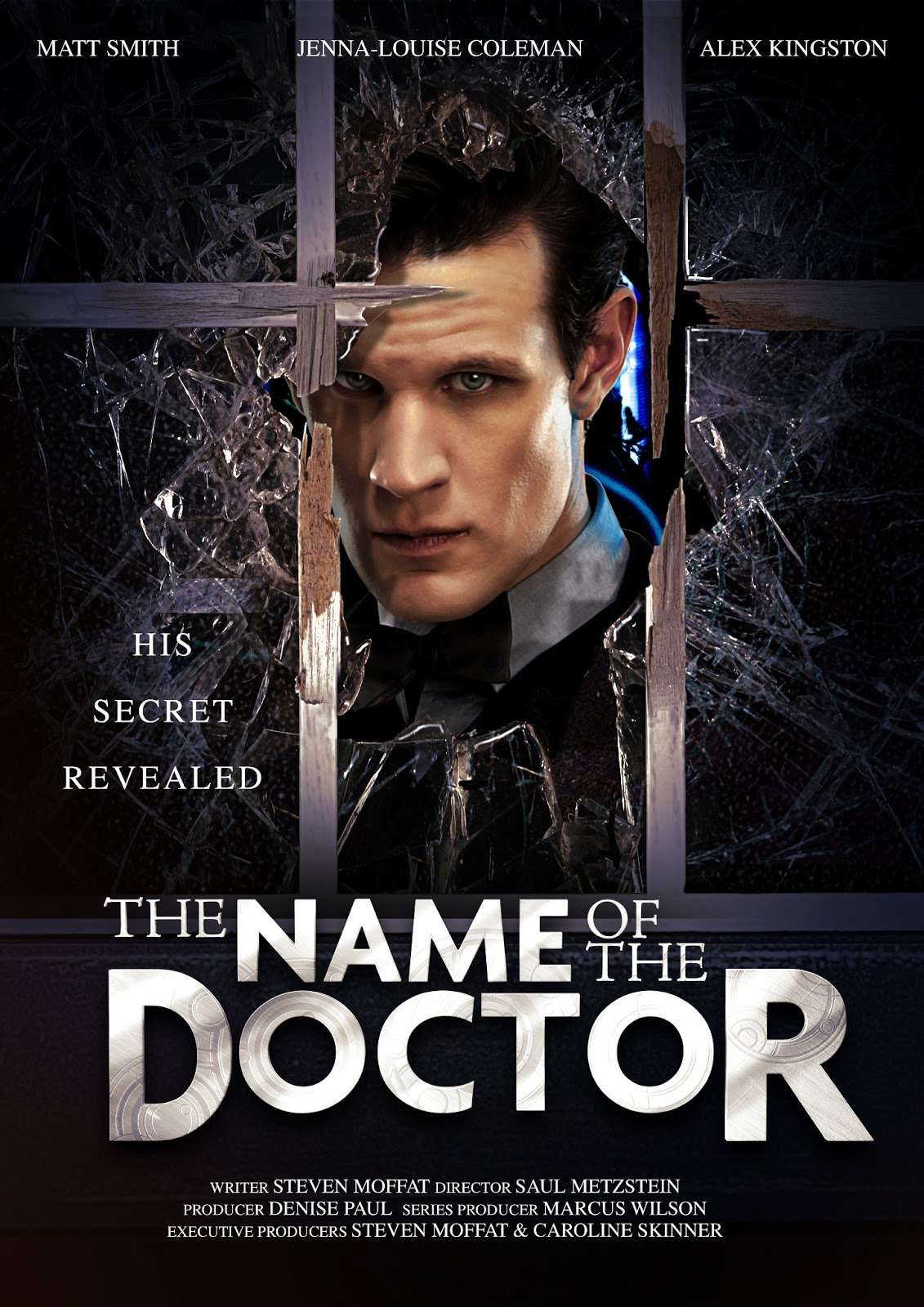
Doctor Who, Series 7 - Episode 13 - The Name Of The Doctor


THE QUICK, SPOILER FREE REVIEW

Last week, Neil Gaiman confirmed that the whole "Impossible Girl" concept was a last-minute addition to this year's scripts.  And boy did it ever show in this episode!  In the typical Moffat fashion, there's a lot of brilliant, high-concept ideas that are introduced but not deeply explored.  Also in the typical Moffat fashion, for every answer we get in this episode, we gain more questions.  Sadly, at least half of these questions will be "What the hell?".  Still, there are some good moments, created purely through the charisma of the cast.


THE PLOT

After a mad murderer gives a message to Madame Vastra regarding The Doctor and his greatest secret, she arranges a psychic conference call of her own entourage and two of The Doctor's greatest allies - Clara Oswald and River Song.  Somehow, their involvement was anticipated and Jenny and Strax quickly fall prey to the vicious Whispermen - the latest henchmen created by The Great Intelligence.  Now, to save his friends, The Doctor must violate the greatest rule of time-travel and cross his own time-line into his future.  He must journey to the fields of Trenzalore... the site of his final battle. 


THE GOOD PARTS   

* The episode title, naturally, proves to be misleading and its' true meaning obscure until the final moment.  Ditto the specific grammatical interpretation of the madman's words.

* The explanation for how Clara Oswald came to be The Impossible Girl is satisfying and logical - by Doctor Who standards anyway.  All of her out-of-character behavior (at least, relative to what we thought her personality was like) has can be explained away that she wasn't that awesome person she was in Asyluim of The Daleks or The Snowmen YET.

* If this is indeed River Song's goodbye (any takers on that bet?), then it is a good one.  Matt Smith and Alex Kingston do a fine job of playing it out.

* The Lovecraftian undertones to stories involving The Great Intelligence show up throughout the show.  Chief among these are the idea of astral-projection based time-travel through dreams, a mad killer somehow having access to cosmic wisdom and a spooky gothic graveyard setting.

* The opening scene, with Clara appearing alongside several of the previous Doctors (including a colorized William Hartnell!) is delightful.

* Apart from the classic footage, there's a lot of references to other episodes including Turn Left (the stars going out as a visible sign of the universe changing) and The Five Doctors (the idea that altering The Doctor's past will cause his present incarnation great physical pain).

* My favorite nod to the Classic Series?   The Doctor name-drops The Valeyard - an evil, future version of himself from the story The Trial of a Time Lord.

* There's some great little moments of acting from the whole cast.  I defy you not to be moved by Lady Vastra's distress over Jenny's death.   

* Strax is quickly becoming my favorite supporting character and I love that his idea of a day off involves bar-brawling in Glasgow.  One wonders if he'll go on to invent the concept of Football Hooliganism. 


THE PROBLEMS   

* Comment has been made before about how so many of Moffat's female characters are Mary Sues but his treatment of Clara tops them all!  One ordinary woman is now responsible for every single victory The Doctor ever had.  Just consider how many stories that is and boggle at that idea.  What is more, since Clara is now cast across the whole of The Doctor's time stream, her involvement can now be used as a Deus Ex Machina any time any future Doctor Who writer finds themselves in a corner.  I doubt few of them besides Moffat will take that route but the idea that such a plot device exists in the first place still troubles me.  It troubles me even more than the question of just how Clara is able to stop The Great Intelligence every single time it manifests. 

* Plot holes.  So many plot holes.  Why does The First Doctor respond to Clara calling him The Doctor, when he didn't adopt that name until later?  How does the madman learn that The Doctor's grave is imperiled in the first place?  How does Madam Vastra (to say nothing of Jenny and Strax's bodies) get to Trenzalore independent of The Doctor?  Why, if The Doctor can force The TARDIS to travel someplace it doesn't want to go, has he never done it before in all the other cases where The TARDIS was being temperamental?  How can The Doctor touch a non-corporeal telepathic construct?   

* Specific one that bugs me just because I love the Sontarans as a monster  - Why doesn't Strax instruct his bar-brawling buddy to hit him in the back of his head to knock him out?  In the one place Sontaran's can be knocked out easily?

* Did anybody else think of The Slender Man when they first saw The Whispermen?

* The Great Intelligence really doesn't have the gravitas to pull off the role here, though Richard E. Grant does give it his all in selling it.  I suppose The Great Intelligence might have many more battles down the line with The Doctor but as it stands the idea of T.G.I.sacrificing itself merely to undo The Doctor's every victory doesn't seem to fit what we know of the character and its' goals.  Can I believe The Master or Davros would take so drastic an action?  Absolutely!  The Great Intelligence?  Not so much. 

* Six months until the actual conclusion of this story!  AUUUUUUUUUGH! 


THE FINAL VERDICT

The charm of Steven Moffat's bait-and-switch stories has officially run out.  Succeeding largely due to the performances of the actors, this story almost manages to maintain it's momentum in skipping across the water like a stone.  Sadly, it sinks at the end as we are left with Clara being the biggest Mary Sue in history and a cliff-hanger ending after a season that was itself all cliff-hanger to this episode.  Is it too much to hope that Series 8 will have a series of simple stories with no overriding plot? 

Saturday, May 11, 2013

Photoshop Comedy Inspired by Nightmare in Silver

Doctor Who, Series 7 - Episode 12 - Nightmare in Silver

THE QUICK, SPOILER FREE REVIEW

Another episode that would have been much improved by being a two-parter and I'm not just saying that because more of Neil Gaiman's writing is always a good thing.  There's a lot of good ideas here but very few of them are fully carried out.  Still, Gaiman does succeed in his goal of upgrading The Cybermen into a credible menace.  Not as good as The Doctor's Wife but not a bad episode at all.


THE PLOT

Apparently blackmailed into taking Clara's two charges along with them on their next trip, The Doctor plans a journey to Hedgewick’s World of Wonders- the galaxy's finest fun fair!  Of course we all know The TARDIS tends to have trouble getting The Doctor when or where he wants to be, even when it isn't taking him where he needs to be.  So it's no surprise that the company arrive at Hedgewick’s World of Wonders sometime past its' heyday.

The larger part of the amusement park is run down and guarded over by a suicide squad of soldiers with orders to blow up the planet at the first sign of invasion.  The only attractions left open are a shabby museum of wax figures and a chess-playing dwarf named Porridge, who pretends to be a chess-playing Cyberman.  But there is much in the World of Wonders that is not what it seems to be and even now a sleeping evil is stirring...
      

THE GOOD PARTS   

 * In the publicity leading up to this episode, Neil Gaiman said his ultimate goal with this story was to make The Cybermen scary again.  I dare say he was successful.  Even if The Cybermen aren't scary, it can't be denied they're still far more effective as villains now than they've been at any point in the New Series.

* One way the Cybermen are more effective - Gaiman makes the logical leap (and it's a wonder nobody thought of this before) that if The Cyberman's motivating factor is to upgrade themselves beyond the limits of their fleshy human bodies, that they should be able to upgrade themselves a good deal faster through the network that connects all Cybermen.  Sick of that annoying gold allergy clogging your respiratory system?  There's an app for that.

* Another upgrade to The Cybermen - the Cybermites.  Miniaturized Cybermats - insect sized and capable of altering non-humanoid organics.  As human technology became smaller and more efficient, it only makes sense for the Cybermen of the future to be looking into miniaturizing their tech as well.

* Matt Smith does a fantastic job in this episode, playing the dual roles of The Doctor and Mr. Clever.  Or whatever name the new Cyber Planner ultimately decided on.  Smith sells the idea of a Time Lord's intelligence and The Doctor's own erratic nature melding with the cool efficiency of a Cyberman's brain stunningly well, making that concept the most unsettling aspect of this episode and that is saying something! 

* Another Classic Series nod - the quick mention of the Tomb of the Cybermen and The Moonbase.

* Lots of great interplay between The Doctor and Clara.  Lots of good dialogue in general, really.

* For the first time since The Snowmen, Clara actually seems to be as awesome as we're told she is.  Maybe its' her charges being endangered that brings out the badass Mary Poppins?

* Warwick Davis, always a delight, has a brief but nice part as the carnie Porridge.  The scene with Clara where he ponders the hole in the night sky where a thriving galaxy used to be is the most emotionally honest moment in the whole episode.  


THE PROBLEMS   

* Clara's charges are still incredibly annoying and stupid.  I know Gaiman is paying tribute to Roald Dahl somewhat but was it really necessary to bring back Verruca Salt and Mike Tevee back in the form of Angie and Artie?  At least they spend most of the episode standing around silently and are easily bought off telling their dad about how they were nearly killed while time-traveling by giving them new phones.

* While Gaiman has made the Cybermen into a credible threat, the episode still has them largely falling back into the same old rut with no explanation.  For instance, the sudden burst of Matrix-style "bullet-time" speed, allowing one Cyberman to snatch a child out of the middle of a crowd is terrifying.  So if the Cybermen are capable of that kind of speed, even only in short bursts, why are still shuffling around slowly, in formation, as per usual for most of the episode? 

* On a similar note, consider the new Cybermites.  They are terrifying and well-utilized but one wonders why the frell The Cybermen bother with that big clunky robot design when they have tiny electric insects that are capable of moving unnoticed and infecting a populace in a far more subtle manner than by sending armies of clockwork men around to touch everyone.

* Granting that Doctor Who has never had the best record when it comes to depicting the military in a positive light, The Imperial Army prove that old adage about military intelligence being an oxymoron.  Actually, the rank and file soldiers seem to be okay but one has to wonder about the top brass.  The punishment platoons seem to be woefully under-armed, even allowing that they're supposed to be on a suicide mission to blow up whole planets.  And whose bright idea was it to send soldiers who didn't follow orders out on missions where the fate of the human race was potentially dependent upon their following orders?

* Thematically, this episode is all over the place.  As in most Cybermen stories, The Doctor's victory comes out of his ability to out-think The Cybermen, either by turning their own logic against them or by besting them with his own illogical behavior.  Likewise, the lives of everyone involved are ultimately saved only because of the soldiers who choose not to mindlessly obey their orders to blow up the planet - i.e. not acting like Cybermen.  And of course the day is saved by The Emperor who is only there to save everyone because he defied the order of his own empire.  Yet most of the problems with the episode are caused by a pair of children who cannot follow basic instructions and Clara cites herself as someone to listen to because she is someone who has survived by doing precisely what The Doctor tells her to do. 

* While Clara does come off better in this episode than anything since The Snowmen, her portrayal in this episode does seem at odds with what we've seen of her throughout this season.  Is this short, bossy girl with the funny nose who has a better head for strategy than the career soldiers really the same woman who had trouble looking an Ice Warrior in the eyes?  At this point, my new theory for Clara's background is that she's a long-lost Time Lady called The Nanny.


THE FINAL VERDICT

An uneven but ultimately entertaining episode that manages to make The Cybermen menacing again but accomplishes little else.  Warwick Davis is criminally under-utilized and the best bits of the episode involve Matt Smith talking to himself.  Still, the special effects are good and there's a lot of fun dialogue and enough action to keep things from being boring.  Not quite the instant classic we'd hoped for with Neil Gaiman writing but not bad at all.


Sunday, May 5, 2013

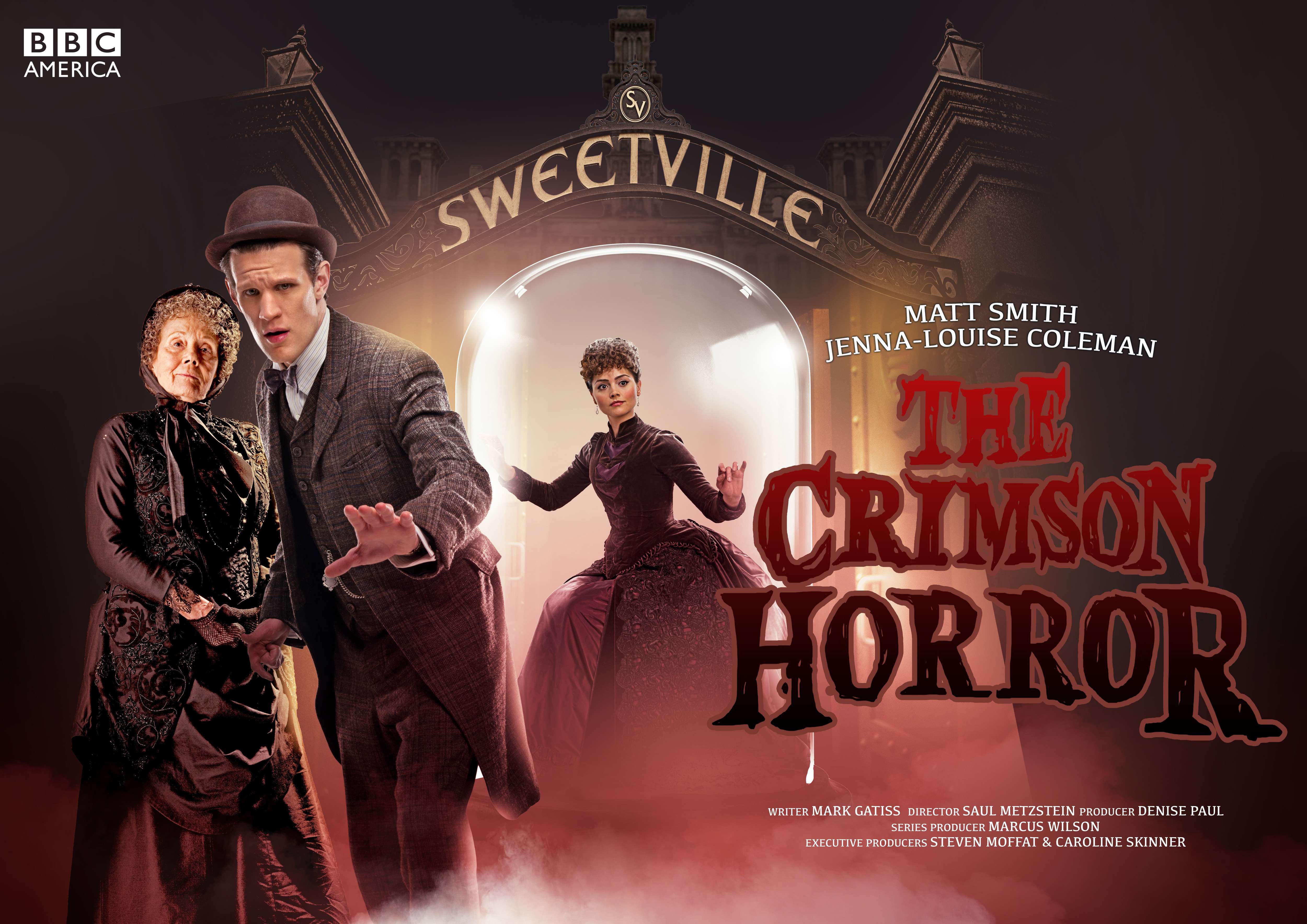
Doctor Who, Series 7 - Episode 11 - The Crimson Horror

THE QUICK, SPOILER FREE REVIEW

I don't know if Mark Gatiss wrote this as a pilot for a spin-off series for Madame Vastra and her entourage but it would work quite well in the capacity should the BBC decide a regular series mixing elements of Doctor Who and Sherlock by the same creators might be a hit.  If he had, I doubt he could do better than this episode.  A wonderful tribute to penny dreadful novels. As good as The Talons of Weng Chiang without any of the bothersome racist elements. 


THE PLOT
 
Yorkshire.  1893.  Corpses are being pulled from the river with dark-red skin - a condition dubbed The Crimson Horror by those who have seen the bodies.  This matter, while disturbing, does little to interest The Great Detective Madame Vestra until she is presented with a photograph of one of the victims' eyes, seemingly having captured the last thing the man saw... a screaming Doctor.

The trail leads to the town of Sweetville, where Jenny Flint infiltrates the evangelical community run by one Winifred Gillyflower and her blind daughter, Ada.  What horrible secret lies at the heart of the seemingly perfect community, that prevents anyone from ever leaving?  What terrible fate has befallen The Doctor, seemingly trapped within Sweetville's walls himself.  And what of Mr. Sweet himself - Winifred Gillyflower's silent partner? 


THE GOOD PARTS  

* More Madame Vastra, Jenny Flint and Strax.  Especially Strax!  Here's hoping we can get a Doctor Who spin-off with the three of them at some point ala Torchwood.

* From the very beginning we know what we're in for - a penny dreadful in film form.  Stylistically, the episode works well, with lots of gothic imagery and appropriately grotesque elements. Tragically scarred young women.  Chained up monsters in the basement.  Mysterious plagues chuckled at by hideous coroners.  Apart from the time travel, there's nothing here that would be out of place in an Edgar Allan Poe story.

* Interesting note about Madame Vastra's residence - it has a blue door that looks like The TARDIS.

* Another reference to the classic series, as The Doctor tells Clara (who complains about how inaccurate The TARDIS is) that it's much better than it used to be and how he once spent an unbelievable amount of time trying to get "a gobby Australian" to Heathrow airport.  Clearly a reference to Tegan - a stewardess accidentally abducted by the Fourth Doctor, who became The Fifth Doctor's most frequent companion.

* "Brave heart, Clara".  Another nod to Tegan, as "Brave heart, Tegan" was The Fifth Doctor's frequent admonishment to Tegan whenever she complained about something dangerous occurring.  It's funny because Clara reminds me a bit of Tegan out of all the classic series Companions in terms of personality, being argumentative and more often disturbed than not about all the strangeness around her.

*
Another classic series nod - Doctor and Mrs. Smith as an alias.

* Dame Diana Rigg - Miss Peel herself - is a magnificently melodramatic villain.

* Talking of Miss Peel - awesome moment with Jenny stripping down to reveal her leather catsuit before showing off her martial arts skills.


THE PROBLEMS  

* Much as I love Madame Vastra and company, something did just occur to me thinking of them starring in a Torchwood-style spin-off - where the bloody hell is Torchwood right now?  I checked the dates and Torchwood was established roughly a decade before we started seeing The Great Detective, her wife and their Sontaran butler.  Even if we accept that they can't openly move against Madame Vestra due to her prominence in the city, you'd think they'd take an interest in red-skinned bodies turning up in the river.  (Maybe they're not as powerful as they once were in the current timeline due to... timey wimey stuff?)


* I'm not sure having a girl pretend to faint three feet away from you is an effective distraction when you're attempting to pick a lock in a hurry, at least in my considerable experience playing fantasy RPGs.  

* The final two minutes or so with Clara returning home and being confronted by children she's watching..  How the heck did the kids  find all the pictures of her on the Internet, much less make the leap to "your boyfriend has a time machine"?  Why is there a full color picture of the Victorian London Clara?  (An adventure Clara had in the past that hasn't happened to her yet?)  Besides, how exactly is telling her father that the babysitter is a time-traveler a threat?  Would their dad really take them seriously?  Honestly, this plot development would worry me save for one thing - the next episode involving the kids is written by Neil Gaiman and I trust him to find a way to make this magical.


THE FINAL VERDICT

It would have been a perfect episode had it ended two minutes earlier with Madame Vastra's client fainting as The TARDIS disappears.  Still a great episode in spite of the seemingly tacked-on ending we got.

Sunday, April 28, 2013

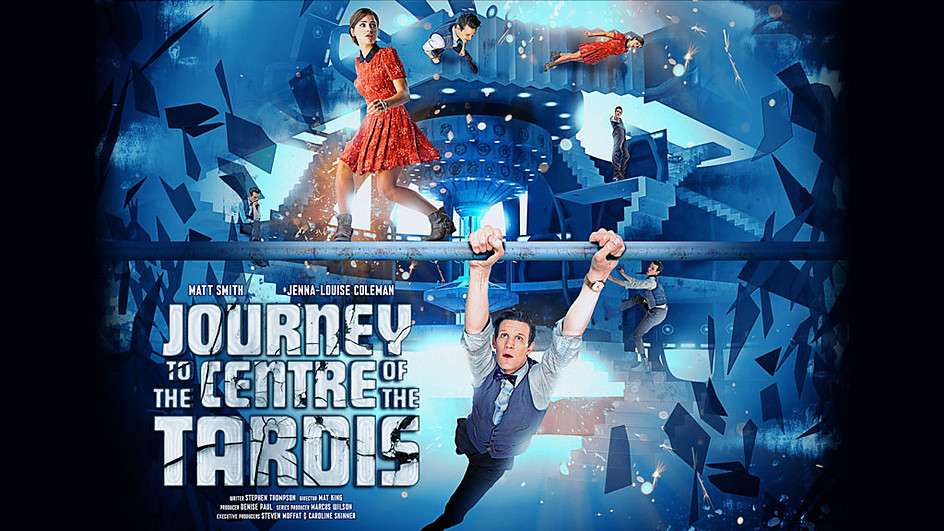
Doctor Who, Series 7 - Episode 10 - Journey To The Centre Of The TARDIS.

THE QUICK, SPOILER FREE REVIEW

This is one Journey where everyone involved should have stayed home.  The script reads like someone trying to write a Douglas Adams novel and failing miserably.  This would be bad enough if the whole affair didn't feel subtly racist and sexist while also being tedious.  The first definite miss of Series Seven, Part Two.   


THE PLOT 

The Doctor is attempting to acclimate The TARDIS and Clara by offering the later a driving lesson of the former when The TARDIS is injured by a magnetic tractor beam.  With The TARDIS wounded and Clara lost inside, The Doctor will force the greedy wreckers responsible to help him save the day... even if he has to blow up The TARDIS to do it.


THE GOOD PARTS 

* This episode has something a Douglas Adams feeling to it.  Ignoring The Doctor's quite specific request "Don't Panic" and the plot device of a Big Friendly Button (no doubt inspired by "Don't Panic" being written in "Large friendly letters" on the cover of The Hitchhiker's Guide To The Galaxy), the story itself has many Adamsesque ideas and themes.  Chief among these are the unchanging nature of man no matter how advanced technology becomes (i.e. Even once we achieve space-travel, people will still be jerks to one another for no good reason), advanced technology failing to work properly in a spectacular fashion (i.e. The Doctor fakes a self-destruct only to discover that the TARDIS is going to blow up anyway) and the general absurdity of the universe.

* The rooms of the TARDIS interior we get to see (including the oft-mentioned but never before seen library) are quite neat.

* More nods to the classic series.  There's a lot of dialogue borrowed from older episodes and we get to see The Eye of Harmony - the star on the verge of becoming a black hole that powers the TARDIS.  At least, that's what it is at the moment.  Seriously.  Go read up on the ever changing nature of just what The Eye of Harmony is and marvel at how this explanation, while possibly explaining everything, may not actually satisfy anyone.


THE PROBLEMS 

* When you get right down to it, this episode was just a lot of running down the same hallway set while being chased by the monster of the week.  While that can be said of many Doctor Who episodes from the classic era, the show has largely progressed beyond that and all the timey-wimey talk in the world can't hide that.

* While the above might have been tolerable had the episode tried to play off of the meta-plot and have some fun with things, it doesn't.

* The subplot with Tricky being a human tricked into thinking he's an android - while a nice twist on the sci-fi theme where it turns out a human is really a robot - is wholly unnecessary to the larger story.

* The Time Zombies (as they are credited in the show credits) are lame, resembling a slightly higher-budget version of The Putties from Mighty Morphin Power Rangers.

*There's several aspects of the story that don't make sense in retrospect.  In no particular order...

** How can Tricky sense the TARDIS is in pain if he isn't really an android?  Is mechanical empathy a standard option that goes along with having mechanical eyes? 

** If so, why don't his brothers pay more attention to what he's noticing about the dangers of the TARDIS with his enhanced senses?  And why are they so committed to keeping their joke about their brother being an android going in the face of almost certain death? 

** Why are the Van Baalens so greedy/stupid as to start trying to take apart the ship from the inside after having been shown they can't escape it?  Even if they don't believe The Doctor will make good on his promise to see them paid with the haul of a lifetime, it's not like they can get away with what they're stealing having already proven they can't break the lock on the TARDIS exit and their tools can't cut through her exterior.

** Why is The Doctor so committed to forcing The Van Baalen Brothers into helping him find Clara in the first place?  Why doesn't The Doctor have them split up immediately after clearing the toxic fumes out of the console room?  Does he really expect three men to be able to find Clara in an infinite space any faster than he can do it alone without them knowing the territory and needing to be watched so they don't get lost/cause trouble?

** Why is The TARDIS able to shift itself around and keep Clara moving back to the safe areas but unable to clear a pathway to its' heart, thus saving The Doctor a rather lengthy and dangerous journey through zombie-infested corridors? 

* While I doubt this was intentional on the part of the casting director or anyone involved in the show, it is slightly worrying that this week's supporting cast - a group of dishonest scrap-scrounging ship thieves - is portrayed exclusive by black male actors.

* Clara is largely reduced to the role of "Panicky Girl #1" for the greater part of the episode, even if she does get to punch The Doctor several times for being an ass. Case In Point - what the hell was up with The Doctor making this smug face after Clara asked if he was putting the TARDIS in basic mode because he didn't think a girl could drive and he said "no"?  Maybe the intent was suggesting he was amused at being accused of sexism or at Clara's pouting but that wasn't projected well.


THE FINAL VERDICT

Most of the episodes of Series Seven, Part Two have felt like Classic Doctor Who for all the right reasons.  This one felt like all the old episodes we'd rather forget about.  Strip away all the Douglas Adams references and Timey-Wimey bits and ultimately this episode is just a lot of running around the same corridor over and over, whilst being chased by a monster in an unconvincing costume.  All that was missing was a chase through a quarry.  The whole affair feels contrived and there's a lot of logic problems in the script.  Throw in the problematic aspects with Clara being a damsel in distress for most of the episode and the undoubtedly evil intergalactic scrappers being cast with black actors and you have an episode that everyone will probably skip over when rewatching the series later.

Saturday, April 20, 2013

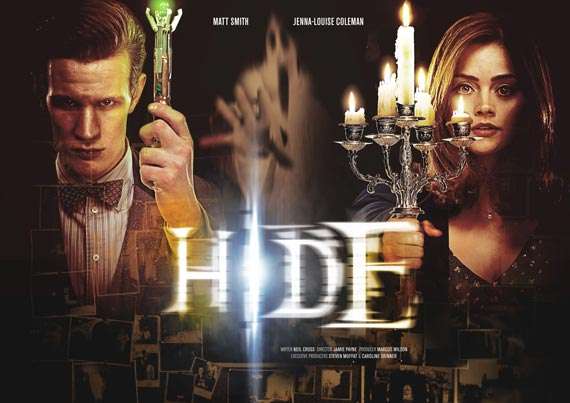
Doctor Who, Series 7 - Episode 9 - Hide

THE QUICK, SPOILER FREE REVIEW

Another solid episode in the Classic Who mold, with a seemingly standard genre story being twisted around into a science-fiction epic that works on multiple levels.  Those who were disappointed by last week's episode not contributing much in the way of character development for Clara or continuing the storyline regarding The Doctor trying to solve her mystery will not find this episode as lacking.


THE PLOT 

It was a dark and stormy night on November 25, 1974, as Professor Alec Palmer and his assistant - the psychic Emma Grayling - are investigating reports of a local ghost known as The Witch of the Well.  They are surprised - but not displeased - when a mysterious Doctor (who knows far more about them than even The Ministry should) shows up with his assistant, Clara.  He goes along with their guess that he's come to make sure everything is going okay on behalf of the government.  But Emma can't shake the feeling that there's more to it than that and that there's a cold liar's heart behind the joking exterior of The Doctor.  Worse, she can't shake the feeling that The Witch is talking to her.  And then there's the matter of a strange, crooked man lurking in the shadows of the house...


THE GOOD PARTS 

* The Classic Who fans will have a field day with this episode.  Neil Cross' script feels like an old Robert Holmes piece in all the right ways, with lots of dark, mysterious elements.  There's also another Pertwee-era reference, as The Doctor requires a blue crystal from Metebelis III (which The Third Doctor was continually trying to take Jo Grant on a day trip to visit) to build a stargate.

* Lots of amazing visuals, particularly the images of the various points in time with The Doctor moving around time while staying in one space.  There are many moments in this episode that, captured in still-frame, would make a brilliant wallpaper for a phone or computer background.

* The mystery of Clara and her relation to the other Clara's deepens quite a bit in this episode.  Ignoring the revelation that she is psychically ordinary at the end, we also see more evidence that Present Clara is quite different than The Snowmen Clara.  Last week, we saw that she was actually willing to follow The Doctor's orders about staying put and not wandering off on her own.  This time, we see her actually being scared to go off even when The Doctor asks her too - a definite change from most of the companions in the Modern Doctor Who stories

* Despite Clara showing a cowardly streak, the banter between The Doctor and her is much improved.  Indeed, I dare say the interplay between Matt Smith and Jenna-Louise Coleman is the best we've seen since The Snowmen.


THE PROBLEMS 

* Some of the digital effects are a bit dodgy, particularly the wormhole. 

* Similarly, The Crooked Man costume also doesn't look that great when we get a clear look at it.  Thankfully this doesn't happen until the very end.


THE FINAL VERDICT

Like Cold War last week, Hide is another formulaic episode reminsicent of many classic Doctor Who episodes.  What it lacks in originality, it makes up in everything else.  The acting is wonderful across the board.  The on-going storyline for the half-season progresses beautifully.  The only weak spots are the special effects and the costume, which are far from the worst the series has ever seen.  A great episode!

Saturday, April 13, 2013

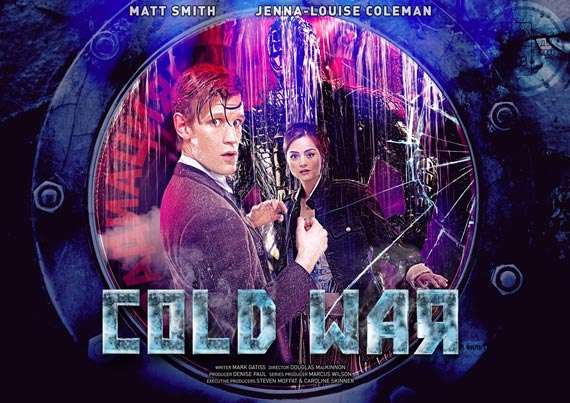
Doctor Who, Series 7 - Episode 8 - Cold War

THE QUICK, SPOILER FREE REVIEW

Easily the best episode of the season so far and the best Doctor Who script ever written by Mark Gatiss.  The drama is well paced and backed by an amazing supporting cast.  The redesigned monster looks menacing while still being true to the original design from the classic series.  Really, the only flaw with this episode is that it feels a bit rushed.


THE PLOT

It is 1983.  A Russian submarine is returning home with an rock-music loving professor and his recent find - a frozen figure he believes to be a mammoth.  But the truth is far stranger and the TARDIS materializes on-board the sinking sub as The Doctor quickly recognizes what the scientist has truly found - a cryogenically frozen Martian!  Introducing himself as Grand Marshal Skaldak, it seems the Ice Warrior has been trapped in the ice for over 5000 years.  Displeased by this revelation, Skaldak's shock becomes rage after he is attacked by the fearful soldiers of the submarine's crew.  Now it's up to the Doctor to stop Skaldak from arming the submarine's nuclear missiles and triggering World War III in retaliation for the assault on his person.


THE GOOD PARTS    

 * Mark Gatiss' script is brilliant, perfectly capturing the feeling of a classic Third-Doctor era Doctor Who episode.  The Ice Warriors were used surprisingly little in the classic series which I personally found to be a shame as The Ice Warriors have one of the most memorable developments out of all the alien races on the show.  They started out as your typical would-be alien conquerors but later evolved into a no less dangerous but far more peaceful race.  Indeed, The Doctor was forced to confront his own prejudices regarding The Ice Warriors and what they were versus what they had become in The Curse of Peladon and we see a lot of references to that episode here, with The Doctor talking about how the Martians were presumed dead but they are merely scattered and will one day rebuild their empire.

* The re-designed Ice Warrior costume looks amazing, both with helmet and without.  I always felt the classic Ice Warriors had one of the best designs in the classic series and the new look resembles their old costumes well enough while still looking far more high-budget.

* This episode is aided by an amazing supporting cast.  The highly-underrated David Warner's excellent performance as the Duran Duran-loving Professor Grisenko is a real treat.  Likewise, Tobias Menzies (Brutus on HBO's Rome) is suitably treacherous as the cowardly Lieutenant Stepashin and Liam Cunningham (Davos on HBO's Game of Thrones) is perfectly cast as the submarine Captain.  Skaldak himself requires the combined efforts of two talented actors, with Spencer Wilding as the Ice Warrior's imposing physical form and actor Nicholas Briggs providing Skaldak's sibilant speech.

* Matt Smith is in top form.  He doesn't get any big speeches this time, but it is nice seeing him play against type.  Usually The Doctor gives the alien menage a speech about how awesome humanity is and why they deserve to be spared.  Here, he appeals to Skaldak's sense of honor, basically arguing that humanity isn't worth the trouble.  It's an interesting twist on the usual theme. 
 

THE PROBLEMS   


* Your enjoyment of this episode may be dependent upon your tolerance for certain classic Doctor Who tropes, particularly the aliens being less monstrous than they appear and the cliche that the soldiers always make things worse by presuming everything is a threat as The Doctor and the other scientist characters plea for peace, talking problems out and using your brain before using a gun.

* A frequent problem with many classic Doctor Who stories is that they were overly padded and went on too long.  This episode suffers from the opposite problem.  Between Professor Grisenko and his talks with Clara, the subplot with the lieutenant trying to curry favor with The Ice Warrior to strike a blow against his American enemies and The Doctor's negotiations with both sides over giving peace a chance, this is one of the few New Who episodes that might have benefited from a second episode to let the characters play a while longer.

* Clara seems awfully dismissive of the power of music, given her experiences last week in The Rings of Akhenaten. 


THE FINAL VERDICT


My opinion may be biased as a long-time fan of the Ice Warriors, but I loved this episode the best of any thus far in Series 7.  The script is fast-paced - perhaps a little too fast paced given all the various stories playing out at once.  Still, the supporting cast is wonderful and Mark Gatiss' script true to the original concept and portrayal of The Ice Warriors.  Hopefully we won't have to wait another 38 years for their next appearance. 


Saturday, April 6, 2013

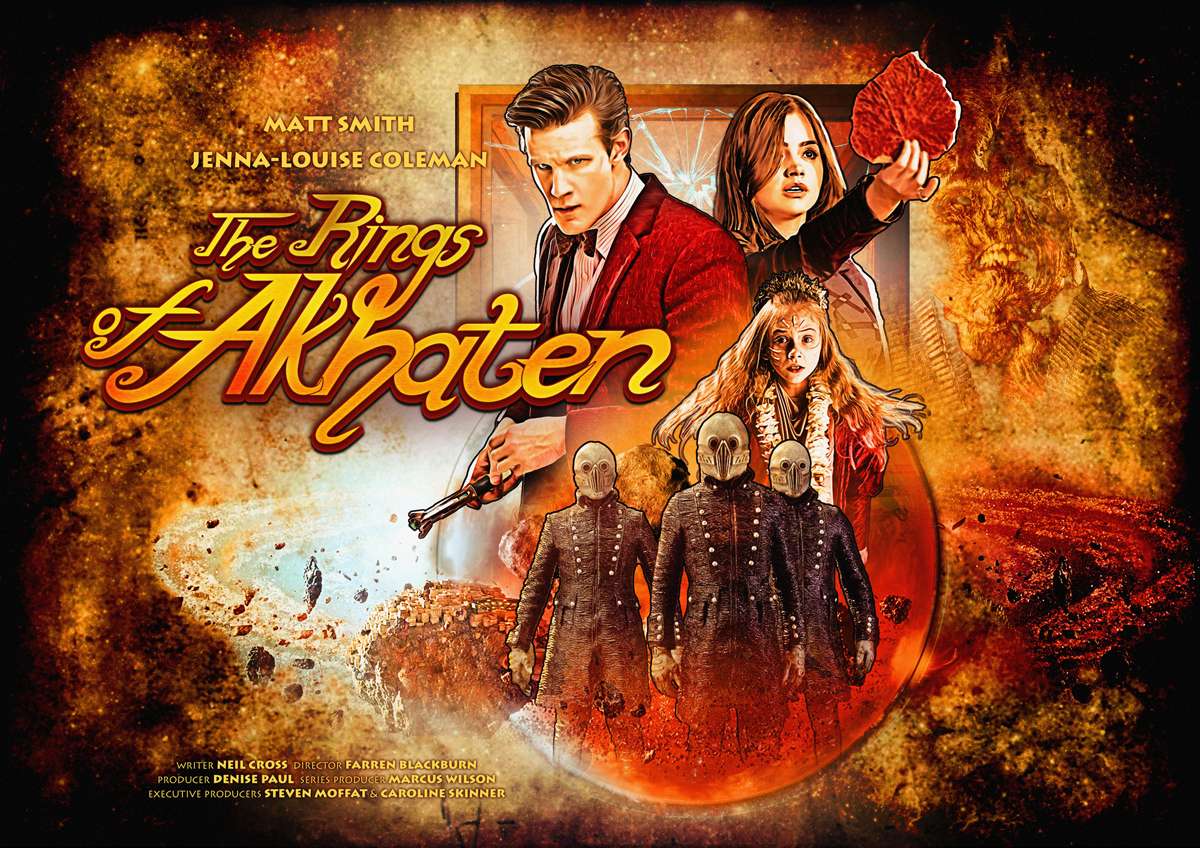
Doctor Who, Series 7 - Episode 7 - The Rings Of Akhenaten

THE QUICK, SPOILER FREE REVIEW

Slow to get started, this episode becomes more action packed but also far less interesting at its' halfway point.  What starts out as a unique look at an alien culture devolves into a series of cliches.  Despite this, the action is engaging and Matt Smith continues to impress in his slightly darker Doctor persona while Jenna-Louise Coleman's Clara gets some much needed definition.  Good but not great. 


THE PLOT

After taking several quick trips to the past to examine how Clara Oswald's parents met, fell in love, had her and raised her, The Doctor is more confused than ever about The Impossible Girl.  Despite everything, Clara seems to have had a perfectly normal childhood apart from her mother dying at a young age.  He's on somewhat firmer ground when he returns to take Clara on a trip to see "something awesome" and delivers her to see the inhabited rings of Akhaten and the golden pyramid where some say all life in the universe originated.

Wandering around an alien marketplace proves to be an adventure in itself for Clara after The Doctor runs off without her and she finds herself trying to help an equally lost little girl.  The girl, dubbed The Queen of Years, has a large role to play in the upcoming Festival of Offerings, where she must sing to appease The Old God who sleeps inside the pyramid.  The girl is afraid of making a mistake with her song but by the day's end she will have much greater reason to fear.  For The Old God is awakening... and he demands a sacrifice.... 


THE GOOD PARTS   

* Lots of nods to the classic series, with The Doctor assuming a Venusian Karate stance after being startled while spying on Clara's parents.  He also refers to having visited Akhaten before with his granddaughter.  The Doctor's speech as he confronts The Old God may be a reference to The Cartmel Masterplan or at least the idea that The Doctor is thousands of years old, as The Third Doctor once said. 

* There's also a nice mythology gag with The Doctor apparently turning off the TARDIS' ability to act as a translator so as to impress the variety of languages on Clara.  Or, more likely, trying to impress her with his ability to speak the language.  (The Third Doctor did this a few times too.)

* Matt Smith's Doctor seems to have changed - for the better, by my reckoning.  Snatches of the silly man-child are still there but we're seeing far more of the old Time Lord.  Forget the new pair of brainy specs - I never would have imagined the Eleventh Doctor shushing someone during a church service before this episode, much less found it believable!


* Looking back, I think the most successful Doctor Who companions were given a chance to show their capability and personality without The Doctor's presence.  Sarah Jane Smith had her moment in The Time Warrior where she proved perfectly capable of surviving in medieval times without The Doctor's aid.  Leela was cast out by her people and shown surviving in the wild for a time before she ever met The Doctor in The Face of Evil.  Rose Tyler spent most of The End Of The World wandering around a space-station and just talking to people, showcasing her natural empathy and dislike of elitists.  I mention this because Clara is finally given a moment like this in this episode, as she helps The Queen of Years escape from the people that are hunting for her and tries to cheer this little girl up with a story of when she was young and scared.  It's a magical moment and it tells us far more about Clara than anything we've seen yet in the show.

* It's rare for Doctor Who to examine religion and rarer still for it to be done in a positive light.  Whenever an alien religion has been depicted, it's usually been run by a corrupt priesthood trying to crush all resistance to their power and most of the followers portrayed as easily-duped fools who stood in the way of The Doctor's helping them with the power of reason and science.  The first half of this episode breaks away from that trope, with The Doctor - usually snide about archeologists and other people who try to determine the past by examining old relics and legends - referring to the Akhaten's view on how life in the universe was created as "a nice story".  He also appears genuinely enraptured by the ceremony at the Festival of Offerings... at least up until things go wrong.


THE PROBLEMS   

* ... and when things start to go wrong at the festival, that's when this episode becomes like every other story we've seen before where The Doctor confronts a false god and destroys it.  A real shame considering the episode opens up with the promise to be something different.


THE FINAL VERDICT

It starts out as something unique and original and ends up much the same as many other episodes.  Still, half a unique episode is better than none and the performances continue to be quite excellent.  Fans of the Third and Fourth Doctors will probably enjoy this episode, as there's a lot of nods to The Third Doctor's tenure and the story reads like something Robert Holmes would have written at the height of his Gothic Horror phase. 

Saturday, March 30, 2013

Doctor Who, Series 7 - Episode 6 - The Bells Of Saint John

THE QUICK, SPOILER FREE REVIEW

Amazing visuals and some stellar acting on the part of Matt Smith and Jenna Louise-Coleman can't quite hide the fact that we've seen this all before.  It's not bad but it's unoriginal and lifeless and the anti-technology menace seems at odds with the central themes of Doctor Who.


THE PLOT

Having retired to a quiet place (a 13th century monastery) to consider the problem of The Girl Who Died Twice, The Doctor is surprised when she calls him on the TARDIS's exterior phone looking for technical support.  Tracking her across time to modern London, The Doctor arrives in the nick of time to save her from a "Spoonhead" - a self-camouflaging robot that is using public wi-fi signals to trap people's minds in the computers of a mysterious company working for an even more mysterious client.


THE GOOD PARTS 

* While I'm sure at least one Doctor Who novel has gone into the subject before, this is the first television story I think has gotten into the sub-genre of Ghost In The Machine/William Gibson-style cyberpunk science-fiction and it's interesting to see those tropes applied to the Doctor Who universe.

* Nice nod to the classic series with The Doctor being known as "The Mad Monk" to the monks he is guesting with in this episode.

* New Mystery - who is the woman in the shop who gave Clara the phone number for the TARDIS?  River Song is the obvious answer but I suspect it's TOO obvious.

* "...human souls, trapped like flies in the World Wide Web..." - great line, at least until the crack about Twitter users.  (Incidentally, expect a day or so of Whovians tweeting "I don't know where I am.  Help me." on their Twitter feeds.)

* The whole sequence where The Doctor flees into the TARDIS pulling Clara after him, coffee cup still in her hand, and then into the aisle of an airplane that's about to crash... all seemingly in one long take... is gloriously laid out.

* Another good line - "It's a time machine.  You never have to wait for it." 

* Blatant Lies from The Doctor - "I don't take the TARDIS into battle!  I don't want it falling into the wrong hands."  Except for all those times you did.  And apart from that one time with The Master, it hasn't.

* Matt Smith as The Doctor seems much more confident, more serious, less weirdly alien for the sake of being an alien.  And then he goes and licks something he finds pressed between the pages of a book.  Brilliant!

* Jenna-Louise Coleman is as wonderfully charming as in her first two appearances.  Still a bit early to judge but I do like her giving The Doctor a hard time as no one has since Donna Noble.  ("Down boy.") 


THE PROBLEMS 

* Modern Setting aside, this story is basically the same story as The Idiot's Lantern - technology being used by an alien intelligence to steal "souls".  Come to think of it, that episode also featured The Doctor tooling around London on a motorbike and weird faceless people as the main "monster"

* While this may not be/probably isn't quite her first outing as a companion, Clara really isn't all that useful as a companion in this, her first outing in this particular incarnation.  True, she's able to use newly acquired hacking skills to track down the villains but since those skills don't really belong to the real "her", it seems sort of false to have that be her main contribution to the story apart from being a plot device of interest to The Doctor.

* Traditionally, Doctor Who has always been pro-science and futurist.  And yet the theme of this episode is primarily built upon the most anti-futurist message in science-fiction - i.e. technology will steal your soul.  I believe this is why the story of this episode and the menace of soul-drinking wi-fi just seemed more odd than frightening to me.

* On that note, I can't help but wonder how much of this episode and it's negative view toward social media was inspired by Steven Moffat's rather violent departure from social media in any form.

* Everybody just cowers before the Spoonheads.  Even if they know what's going to happen once the beam hits them.  Especially if they know what's going to happen!  Clara does it when she gets zapped the second time and even Miss Kislet, who really should know better, just kneels on the floor begging for mercy.

* Two odd things about UNIT at the end.  First, they appear to be back to being mostly a military group in spite of what we were told back in The Power of Three about them having progressed into becoming a more science-based organization.  Next, nobody seems to have heard of UNIT when they storm the building - even before all the workers under Miss Kislet have their memories erased.  I thought UNIT was acting openly in the modern day? 


THE FINAL VERDICT


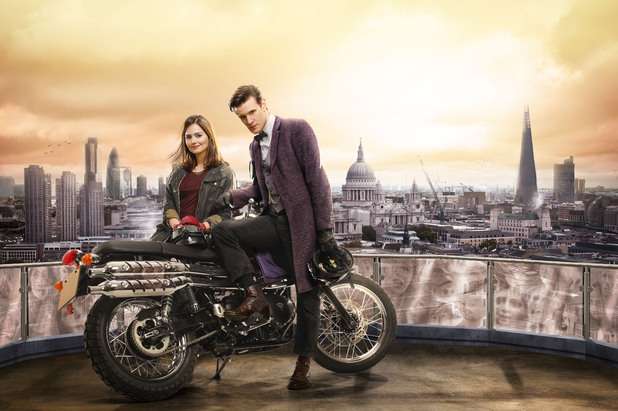
I'm reminded of a line I heard attributed to Oscar Wilde - "There is much to admire here but on close examination I find that everything admirable has been imported from elsewhere."  This is hardly the worst episode ever made but it isn't original by any means.  The basic theme of the episode - that technology will steal our humanity - is hardly a new one to Doctor Who, even if Moffatt fills the script with stabs at Twitter users and references to smart phones and Wi-Fi.  Yet the fearful take on modern technology being turned upon us as depicted here seems to violate much of the spirit of Doctor Who which has always depicted our current advances in a positive light.  Still, there are some magical moments here that are quite enjoyable and the Third Doctor fan in me got a thrill at Matt Smith riding a suped-up motorbike.  Here's hoping we hear it called Bessie Too at some point.   It's worth watching but I doubt this will be anyone's favorite episode ever.


Thursday, March 28, 2013

Several Doctor Who Trailers/Previews

I'm several days behind on these, I fear, but I still wanted to get these out for anyone who might have missed them.

First, a Doctor Who webisode starring Madame Vastra, Jenny, and Strax.  This is set between when we saw them in A Good Man Goes To War and The Snowmen and answers several questions about how they came to team-up.


Next, a teaser trailer for the upcoming first episode of Series 7, Part 2 - The Bells of Saint John.


Finally, three scenes from The Bells of Saint John.  These are quite a bit SPOILER-EY, so you have been warned.

a


Tuesday, January 8, 2013

David Tennant - BBC is "sending out spies to shut me up from telling you things I don't know!"

SOURCE: Tennant says the BBC is 'terrified' he'll reveal Who 50th spoilers


Not a real promo poster... unfortunately.


Officially, like every other actor who ever played The Doctor before, David Tennant has denied having any involvement in any sort of Doctor Who special episodes being prepared for the show's 50th Anniversary.  But David Tennant - by design or by sheer virtue of being a bad liar - has proven rather good about managing to spoil the BBC's surprises in the past with some curiously specific denials or failing to maintain a poker face.  So what are we to make of his recent announcement on The Jonathan Ross Show?

"I'll tell you how terrified they are. In make-up, this lovely lady from the BBC came in and she said 'I've been sent to say that anything about the Doctor Who 50th anniversary must not be mentioned on television.' That's how scared they are! I don't know anything and they're sending out spies to shut me up from telling you things I don't know!"

Is it likely the BBC would send someone to tell David Tennant not to say something if he didn't know anything?  Presumably they would know if he knew something or didn't know anything... so he must know something, even if he's saying nothing.  Because by saying nothing, he's saying something and telling us everything and I've just gone all cross-eyed.  So it must be true!

Saturday, December 29, 2012

Doctor Who: Series 7 - A Mad Theory

WARNING: The following article, while highly speculative and wildly improbable in scope, does contain several spoilers regarding Series 7 of Doctor Who. Do not read further if you do not wish to have certain plot points from Asylum of the Daleks and The Snowmen revealed.


Right.  So here's what we know so far.

1. The phrase "Doctor Who?" has become the arc words for the new series, being repeated several times and held up as being significant. 

2. There is a woman named Clara Oswin Oswald who has been alive during at least three separate points in space and time and died in two of them.

3. One version of Clara was transmuted into a Dalek but proved to be strong-willed enough to resist their mental programming.  This Clara used her connection to the Pathweb - a hive-mind educating all Daleks - to erase all the information The Daleks had on The Doctor (Asylum of the Daleks).

4. The Daleks response to The Doctor introducing himself as they were stricken with amnesia regarding their greatest enemy?  "DOC-TOR, WHO?"

5. Another version of Clara was alive in 1892.  This version of Clara died thanks to the intervention of a being known as The Great Intelligence, which attempted to take over the world using killer snowmen (The Snowmen).

6. The Great Intelligence is an established Doctor Who villain, who fought The Second Doctor twice.  In their first encounter (The Abominable Snowmen) The Great Intelligence used robot yeti as minions.  In their second encounter (The Web of Fear), The Great Intelligence used the London Underground as part of its' plans.

7. It was suggested in The Snowmen, that The Eleventh Doctor's actions were responsible for inspiring The Great Intelligence's actions later, when The Second Doctor first confronted The Great Intelligence..  The older Doctor openly mocked the idea of using physically fragile men made of snow and ice as foot soldiers, thus inspiring the creation of the Yeti robots.  The Doctor also showed a map of the London Underground from the 1960s to The Great Intelligence while describing it as a strategic weakness for the London area, thus setting up the events of  The Web of Fear.

8. Also in The Snowmen, The Doctor seems to have trouble remembering The Great Intelligence and his encounters with it during his second incarnation, saying the name "Great Intelligence" over and over after he sees Mr. Simeon's business card as if trying to remember.  This may be a nod to the facet that the two serials featuring The Great Intelligence - The Abominable Snowmen & The Web of Fear are largely missing and considered lost, the "found" episodes consisting of one part out of six for both serials... or is it a hint of something greater?

9. Consider that - so far - both of the episodes involving Clara Oswin Oswald have also involved a theme of lost memories.  The future Oswin Oswald blocked out her memories of being turned into a Dalek and later removed all memory of The Doctor from the Dalek hivemind.  The Doctor later seems to have had his own memories altered.

10. According to Doctor Who Magazine, the mysterious disembodied mind House from Neil Gaiman's episode The Doctor's Wife was originally intended to be The Great Intelligence, but this was changed for some reason...

11. Neil Gaiman is writing another Doctor Who script for the later-half of Series 7 - one which has been revealed to be devoted toward making The Cybermen - another villain introduced during The Second Doctor's time on the show - into a serious threat once again.

12. A lot of Neil Gaiman's stories deal with the theme of the power of stories shaping reality.

13. The Cybermen, symbolically as villains, are devoted toward the destruction of human emotion and creativity.

14. Neil Gaiman has also written a lot of stories based on the Cthulhu Mythos, which are full of beings from beyond time and space who do not understand basic human emotions.

15. Another name used for The Great Intelligence is Yog-Sothoth - the name of one of the more prominent beings in The Cthulhu Mythos.


All that being said... here is my speculation.

1. Someone is altering the fabric of space and time in a fairly fundamental way. 

2. Either as a side-effect or a direct result, this is altering the memories of time-travelers as to personal events that already happened to them.

3. Clara Oswin Oswald, as a living paradox, is a symptom of the damage being done.

4. The Cybermen are going to be tied in to The Great Intelligence in some form or fashion.

5. Whatever is happening will be suggested to be tied into the destruction of The Doctor's "fictional" adventures in our reality.  I.E. The episodes "lost" to us are literally erased from time in The Doctor's personal continuity.  This destruction of time is being overseen by The Cybermen, who are mostly working at the points in time where they most frequently fought The Doctor (i.e. his 2nd incarnation).

6. The Doctor's battle for his own past will lead to the sudden discovery, secretly facilitated by the BBC just in time for the show's 50th anniversary, of all the lost Doctor Who stories ever.... perhaps recovered from a rumored cache in Zimbabwe? 


I freely admit this is a mad idea and that most of this is improbable and most likely all of it is untrue...

... but think about what a great story that would be!  The Doctor fighting for his own past and securing knowledge of his adventures for the people of a dimension where he isn't real?  Sounds like something Neil Gaiman would write, doesn't it?

Wednesday, December 26, 2012

Doctor Who 2012 Christmas Special - The Snowmen


 SPOILERS TO FOLLOW


THE PLOT

England.  1842.  A cold young boy, who doesn't like playing with the other children, hears his snowman talk, assuring him he doesn't need anybody...

Fifty years pass.  The cold young boy is now a cold old man and a Doctor.  Doctor Simeon.  His company is wandering about London, gathering up snow and filling a great glass globe in the doctor's office.  He plans to save the world...

Elsewhere in London, an equally cold and even older man broods in his house in the clouds.  He too is a Doctor.  And he too has planned to save the world countless times in the past.  But he has put such things behind him and nothing the few friends he has left in this world can do will bring him forth to adventure or explore, much less save the world.

One woman may be able to bring forth one Doctor to stop another with a single word.  A woman who is both a barmaid and a governess.  A woman The Doctor met once before.  A woman who likes making souffles.  A woman who may offer a solver of mysteries the greatest mystery ever...


THE GOOD PARTS

* From the very moment we see snowflakes with fangs raining down on the Earth from space, we know this is going to be something special.  Steven Moffatt brings forth outlandish ideas and childish fears like a fountain gushes water but he usually makes them work.  The man who brought us life-stealing statues and shadows that eat people has now given us something new to be afraid of - carnivorous, telepathic snow that remembers.

* The new opening gave me chills.  It's the perfect thing for kicking off the 50th anniversary of Doctor Who, encompassing parts of the introductions to all the classic Doctor Who episodes.  The journey through space.  The flickering tunnel of light.  And Matt Smith's face looking back at us.  Perfection.

* Sir Ian McKellen's voice work, unsurprisingly, is brilliant.

* It's nice to see Madame Vastra and Jenny appear again.  It might be nicer to see them take the center stage.  Sherlock Holmes is big again - in no small part to Steven Moffat's other project right now.  Why not give Madame Vastra and Jenny their own spin-off ala Torchwood?

* On that note, every single Sherlock Holmes joke.

* Strax the Sontaran Butler.  Every bloody moment he's on screen is comedy gold.

* Matt Smith playing the Doctor as a more subdued figure.  It's too early to tell how long this may last (he seems manic enough at the end) but Smith does a grand job portraying how The Doctor's most recent losses have changed him yet again, reducing him to a state not dissimilar to where he was after the loss of Rose Tyler - the companion who also shook up a very old, very cold Doctor.  Perhaps it's no coincidence that the woman who shakes him out of his doldrums works in a bar called "The Rose and Crown"?

* Jenna-Louise Coleman.  I loved her back in Asylum of the Daleks.  I love her even more now.


THE PROBLEMS

* While Moffat's script is strong, it's also full of references to previous episodes.  While that's fine for long-time fans of the show, the Christmas Specials have usually been open and accessible, requiring no previous knowledge of the show in order to watch them. For all it does right, The Snowmen is still the middle of about three separate stories, making this poor fodder for trying to convert your family members who haven't heard of Doctor Who before this holiday season.

* The 'one word' test The Doctor has Madame Vastra is a bit unbelievable.  While it's totally believable that The Doctor would be so petulant about refusing to help people who fail to interest him or to get to the point (there's Sherlock again), we are damn lucky Clara chose the word "pond" instead of "pool".

* Clara could be shaping up to become another of Moffat's Mary Sue female characters, ala Amy and River.  A brilliant woman who has the added benefit of having some form of apparent immortality or reincarnation?  Doesn't get much more Mary Sue than that.


THE FINAL VERDICT

If you've been watching Series 7 so far, it's brilliant.  If you've never seen Doctor Who before, it'll be confusing.  If you have family who are just now hearing about the show or saw it on the cover of TV Guide, this is not the episode to use as an introduction to the series.  I'd suggest The Christmas Invasion for that.  But for those of us long-term Whovians, it is a delight.

Friday, December 21, 2012

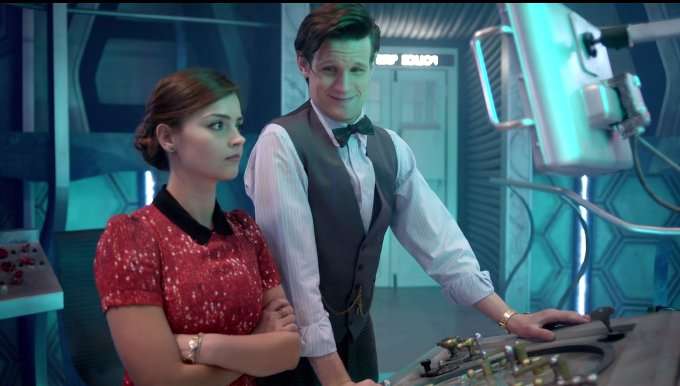
Doctor Who: A New TARDIS Set For Christmas!

 
SOURCE: New TARDIS Interior Unveiled

Why the change?  Showrunner Steven Moffat explained at a screening of this year's Christmas special...

“I thought we’d been getting progressively whimsical with the interior of the TARDIS. And I started to think, ‘Well, why is that? It’s not a magical place. It’s actually a machine.’

“And actually potentially, as you’ll see more spectacularly later, quite a scary place sometimes. We make a lot of use of that.”

Personally, I rather like the new look.  There's a nice nod to the classic look with the honeycomb in the background and the console looks like it did in the Tom Baker era.  And the cool blue lights make everything look mysterious.

What do you all think?