
Showing posts with label Rafael Albuquerque. Show all posts
Showing posts with label Rafael Albuquerque. Show all posts
Wednesday, November 23, 2016
Batgirl #5 - A Review
Face to face with the mysterious Teacher, Barbara Gordon is in for the fight of her life. With her senses enhanced by a cutting-edge treatment, Teacher is capable of anticipating every move Batgirl can make! Yet Barbara's new training may give her the edge she needs to win if she is ready to forget everything she knows...
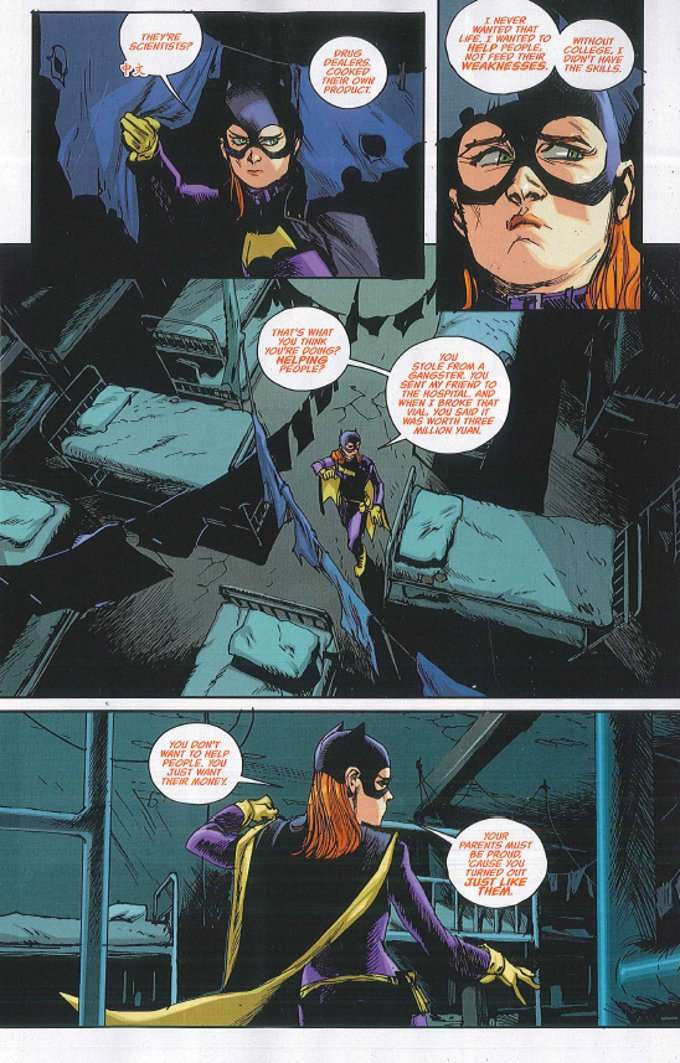
Beyond Burnside concludes in an epic fashion with this issue. Hope Larson spun a golden tale about the Barbara Gordon we all know and love - a confident, smart heroine who overcomes obstacles on her own. And while it took some time to win me over, the artwork by Rafael Albuquerque and Dave McCaig proved perfectly suited to portraying the action-movie aesthetic of Larson's story.


Monday, October 31, 2016
Batgirl #4 - A Review
Having learned just what sort of bad business her old friend Kai has gotten involved in - and just why he's being hunted across Asia by a gang of newbie super-villains - Barbara Gordon turns her attentons to tracking down the gang's leader, the mysterious figure known only as Teacher!
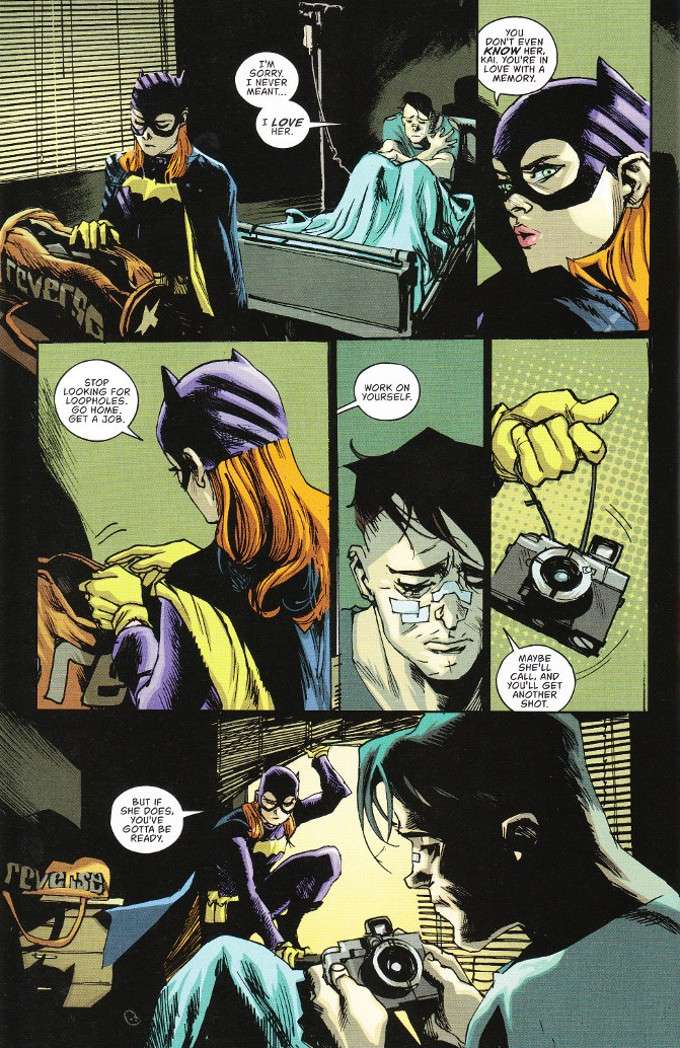
I love Hope Larson's take on Barbara Gordon. Larson's scripts have restored the super-genius detective that seems to have been absent since Gail Simone's run on the series. The plot is a thrilling thing that shows Barbara to be a capable heroine even outside her usual comfort zone in Gotham. And the noir tone of the mystery is perfectly brought to life by Rafael Albuquerque and Dave McCaig.
I love Hope Larson's take on Barbara Gordon. Larson's scripts have restored the super-genius detective that seems to have been absent since Gail Simone's run on the series. The plot is a thrilling thing that shows Barbara to be a capable heroine even outside her usual comfort zone in Gotham. And the noir tone of the mystery is perfectly brought to life by Rafael Albuquerque and Dave McCaig.
Sunday, October 2, 2016
Batgirl #3 - A Review
Barbara Gordon is still puzzling out the mystery of the female fighters targeting her old friend, Kai. The trail leads to Seoul, South Korea but could Batgirl be heading into a trap?

I had my concerns about Rafael Albuquerque acting as the artist on this title, having gotten so used to seeing Batgirl rendered by artists whose style was more exaggerated than realistic. His work here, however, has grown on me and - coupled with Dave McCaig's colors - perfectly simulates the aesthetic of a 1970s Hong-Kong action movie. This proves a good match to the action-packed script by Hope Larson, which present a side of Barbara Gordon we've never seen before that showcases her talents as a solo operator rather than as part of a larger team. Barbara Gordon is finally out of the shadow of The Bat and we're all the better for it.
I had my concerns about Rafael Albuquerque acting as the artist on this title, having gotten so used to seeing Batgirl rendered by artists whose style was more exaggerated than realistic. His work here, however, has grown on me and - coupled with Dave McCaig's colors - perfectly simulates the aesthetic of a 1970s Hong-Kong action movie. This proves a good match to the action-packed script by Hope Larson, which present a side of Barbara Gordon we've never seen before that showcases her talents as a solo operator rather than as part of a larger team. Barbara Gordon is finally out of the shadow of The Bat and we're all the better for it.
Thursday, August 25, 2016
Batgirl #2 - A Review
Continuing her travels around Asia, Barbara Gordon travels to Singapore following the advice of a vigilante called The Fruitbat. It is here that Barbara elects to train as an MMA fighter while searching for the origins of the criminal gangs that seemed to be after her old friend Kai. She also begins to consider the possibility of a romance with Kai, who seems to be having similar thoughts about her.

I don't know if the creative team on Batgirl is intentionally trying to evoke the feeling of a Shojo Manga. All I know is that they're succeeding, whether that was their intention or not. And the book is fantastic as a result!
Ironically, by taking Barbara Gordon outside of her usual environment, Hope Larson has cut to the core of the character in a way no writer on this series has managed since Gail Simone's run. Larson's take on Barbara is a genius detective akin to Sherlock Holmes and we get a few neat sequences of Barbara accessing her "memory banks" in order to recall specific clues. At the same time, this Barbara is also somewhat socially awkward but in the manner of someone who prefers computers and forensics to small talk rather than the cliche shy, stammering geek girl.
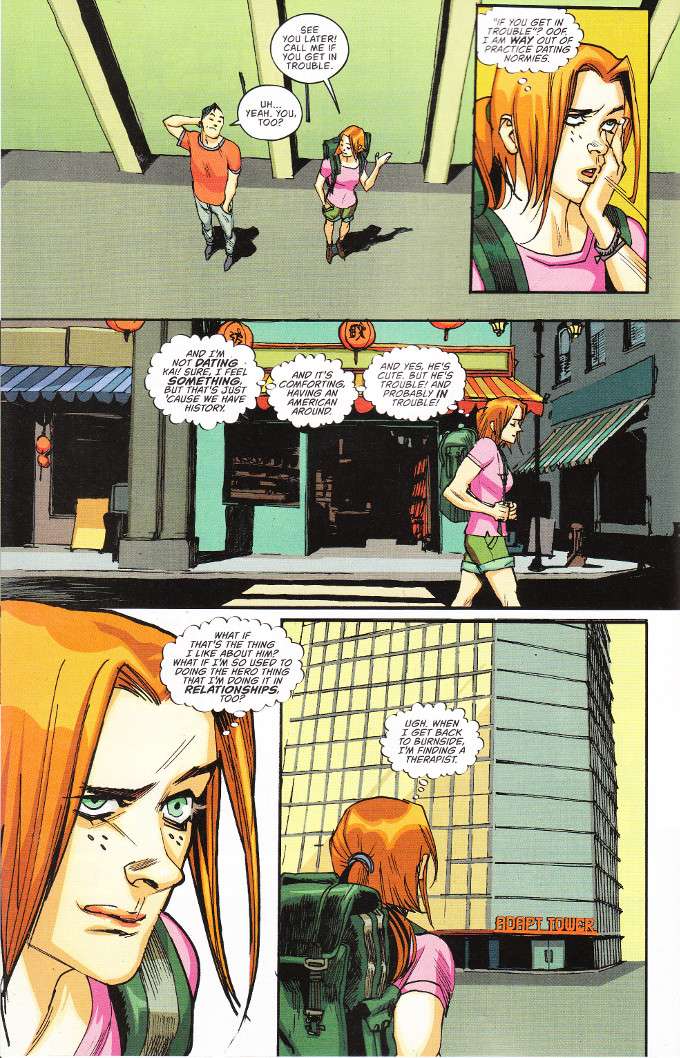
I was somewhat concerned about Rafael Albuquerque being the artist on this series, being familiar with his work on American Vampire. Albuquerque's style, however, proves surprisingly well-suited to Larson's scripts and the action of the issue. Dave McCaig's color art is also praiseworthy, lending a bright, kinetic aura to Albuquerque's inks and pencils that completes the Shojo aesthetic.
I don't know if the creative team on Batgirl is intentionally trying to evoke the feeling of a Shojo Manga. All I know is that they're succeeding, whether that was their intention or not. And the book is fantastic as a result!
Ironically, by taking Barbara Gordon outside of her usual environment, Hope Larson has cut to the core of the character in a way no writer on this series has managed since Gail Simone's run. Larson's take on Barbara is a genius detective akin to Sherlock Holmes and we get a few neat sequences of Barbara accessing her "memory banks" in order to recall specific clues. At the same time, this Barbara is also somewhat socially awkward but in the manner of someone who prefers computers and forensics to small talk rather than the cliche shy, stammering geek girl.
I was somewhat concerned about Rafael Albuquerque being the artist on this series, being familiar with his work on American Vampire. Albuquerque's style, however, proves surprisingly well-suited to Larson's scripts and the action of the issue. Dave McCaig's color art is also praiseworthy, lending a bright, kinetic aura to Albuquerque's inks and pencils that completes the Shojo aesthetic.
Sunday, July 31, 2016
Batgirl #1 = A Review
In need of a vacation from her day job and a new direction as Batgirl, Barbara Gordon has traveled to Asia. It is here at a hostel that she runs into an old friend named Kai, whose life took a decidedly different path from Barbara's. And when he's attacked by a clown-faced school-girl assassin, it's clear that he needs Batgirl's help.

I want to enjoy Batgirl #1 more than I did. It isn't a bad book but it just didn't click with me. Hope Larson writes Barbara Gordon well, presenting Batgirl as the smart, capable heroine I love. I am somewhat troubled at the amount of coincidence this opening issue requires (what are the odds of Barbara's hostel roommate halfway around the world being an old friend?) and the fact that Barbara's opening story arc here is now focused on saving a potential love interest. I admit I may be reading too much into the relationship between Kai and Barbara, but there's enough similar to the good girl comics of old in that regard to have me nervous.

I'm similarly conflicted about the artwork. Rafael Albuquerque is a fine artist and I've enjoyed his work on American Vampire, yet I have to wonder if he's the right artist for Batgirl. There's something about Albuquerque's gritty aesthetic that just seems at odds with Larson's story and a few panels where it seems like he's trying to imitate Babs Tarr. The neon-fueled coloring of Dave McCaig doesn't help matters, leaving the finished artwork looking faded and muted.
I'll continue to give Batgirl a chance.to hook me. The work here is high quality and I like what I see enough to see if it all clicks into place for me later. If nothing else, it's an interesting thing to see creators I respect craft something I'm not quite sure works for me which I still recognize as technically proficient.
I want to enjoy Batgirl #1 more than I did. It isn't a bad book but it just didn't click with me. Hope Larson writes Barbara Gordon well, presenting Batgirl as the smart, capable heroine I love. I am somewhat troubled at the amount of coincidence this opening issue requires (what are the odds of Barbara's hostel roommate halfway around the world being an old friend?) and the fact that Barbara's opening story arc here is now focused on saving a potential love interest. I admit I may be reading too much into the relationship between Kai and Barbara, but there's enough similar to the good girl comics of old in that regard to have me nervous.
I'm similarly conflicted about the artwork. Rafael Albuquerque is a fine artist and I've enjoyed his work on American Vampire, yet I have to wonder if he's the right artist for Batgirl. There's something about Albuquerque's gritty aesthetic that just seems at odds with Larson's story and a few panels where it seems like he's trying to imitate Babs Tarr. The neon-fueled coloring of Dave McCaig doesn't help matters, leaving the finished artwork looking faded and muted.
I'll continue to give Batgirl a chance.to hook me. The work here is high quality and I like what I see enough to see if it all clicks into place for me later. If nothing else, it's an interesting thing to see creators I respect craft something I'm not quite sure works for me which I still recognize as technically proficient.
Sunday, March 22, 2015
Batgirl #40 - A Review
I think enough has been said about the alternate cover that almost was that I don't need to say anything more about it here. Heaven knows I've said enough on Facebook and Twitter already. And if you don't know what I'm talking about, there's an excellent article, complete with timeline and references, up on Polygon.
Suffice it to say, while I thought the cover in question was well done, I do think it was rather at odds with the story being told in this series. And to utilize a cover like that in connection to a light-hearted, just-plain fun comic like Batgirl... well, it would be like putting Rainbow Dash snuff porn from DeviantArt on the cover of IDW's My Little Pony comic.
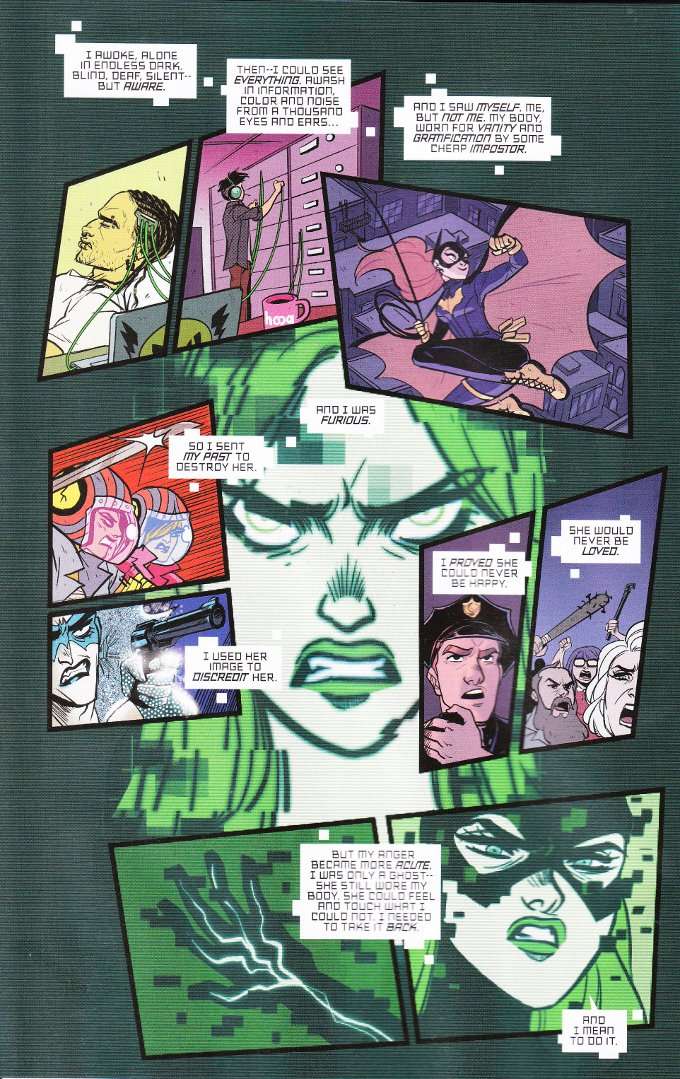
So what do we have in this book, which many have stood up to protest the censorship of but few have professed to reading? Barbara Gordon vs. Barbara Gordon in a no-holds-barred battle for the body and soul of Barbara Gordon!
Confused? That's to be expected, as this is the final issue of the books' first major story arc under Cameron Stewart and Brenden Fletcher. But while this isn't a good issue to jump on with and find out just what the heck all the fuss is about, it is a fitting conclusion to the storyline at hand.
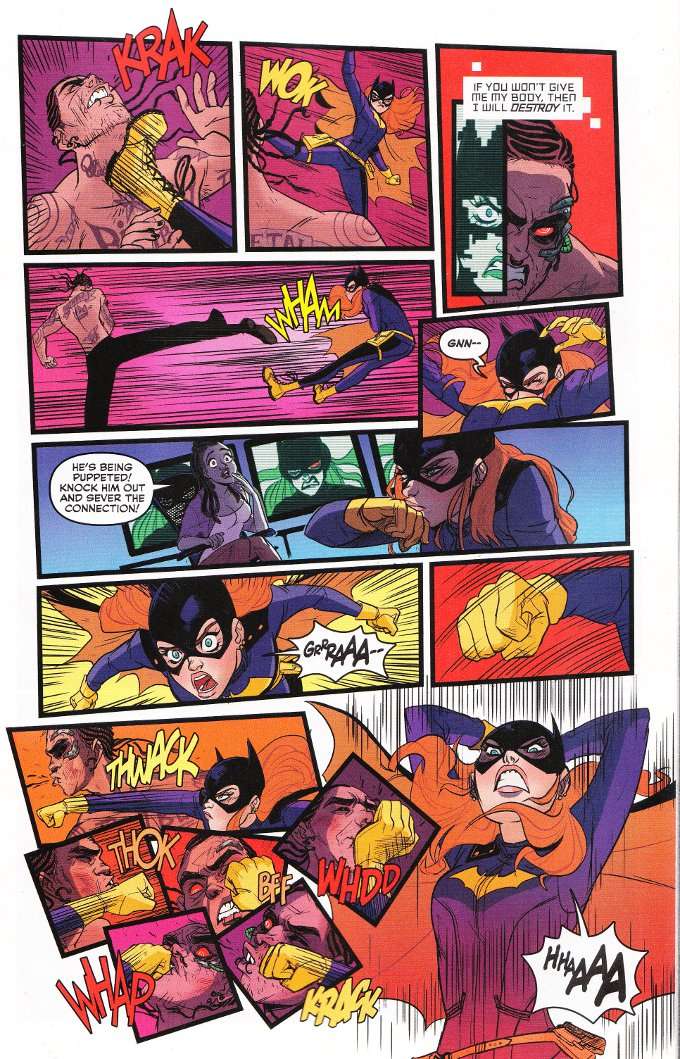
What can I say about Babs Tarr's artwork? Quite a bit. But in keeping with the general positive vibe we have going here, I think I will just say that I love it. Love it. Love it. Love it. Just as I love everything else about this book and would encourage all of you to track down the back issues and read it.
Suffice it to say, while I thought the cover in question was well done, I do think it was rather at odds with the story being told in this series. And to utilize a cover like that in connection to a light-hearted, just-plain fun comic like Batgirl... well, it would be like putting Rainbow Dash snuff porn from DeviantArt on the cover of IDW's My Little Pony comic.
So what do we have in this book, which many have stood up to protest the censorship of but few have professed to reading? Barbara Gordon vs. Barbara Gordon in a no-holds-barred battle for the body and soul of Barbara Gordon!
Confused? That's to be expected, as this is the final issue of the books' first major story arc under Cameron Stewart and Brenden Fletcher. But while this isn't a good issue to jump on with and find out just what the heck all the fuss is about, it is a fitting conclusion to the storyline at hand.
What can I say about Babs Tarr's artwork? Quite a bit. But in keeping with the general positive vibe we have going here, I think I will just say that I love it. Love it. Love it. Love it. Just as I love everything else about this book and would encourage all of you to track down the back issues and read it.
Sunday, October 13, 2013
Batman #24 - A Review
Visually, Batman #24 is a stunning book from start to finish. This should prove no surprise to regular readers, who have grown used to amazing imagery on a regular basis thanks to penciler Greg Capullo and inker Danny Miki. Yet this issue seems even stronger for the contributions of colorist FCO Plascencia, whose vibrant watercolor-style gradients lend a cinematic aura to the artwork, with alternating oranges and blues dominating most of the palette.
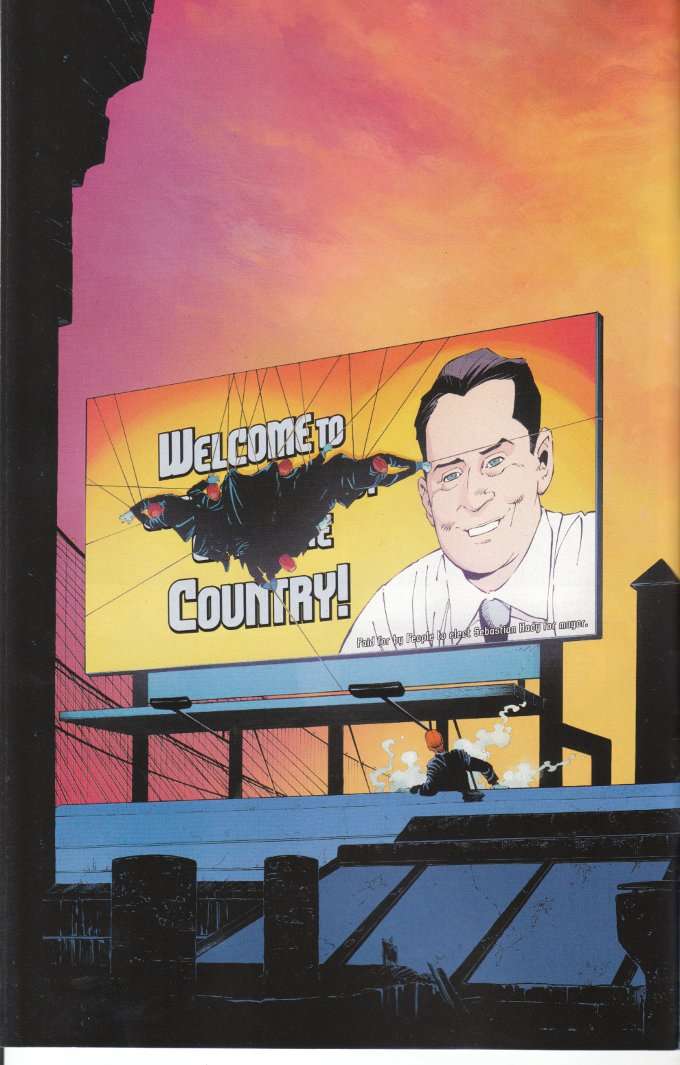 This may be the first Hunter S. Thompson reference in a mainstream DC Comics book ever.
The issue's imagery borrows a lot from the Batman films of Christopher Nolan. The idea of Bruce Wayne marking his territory with his symbol is a reoccurring theme. It comes off somewhat better here than in the Nolan films, however, as Bruce has good reason to announce his presence beyond showy displays of force. There's also a greater element of fun, as Bruce creates a Bat-symbol out of squirming members of the Red Hood gang not only to announce his presence but also because it amuses him to do this behind the back of one minion and then whisper into the thug's ear "My bat... it still needs a head."
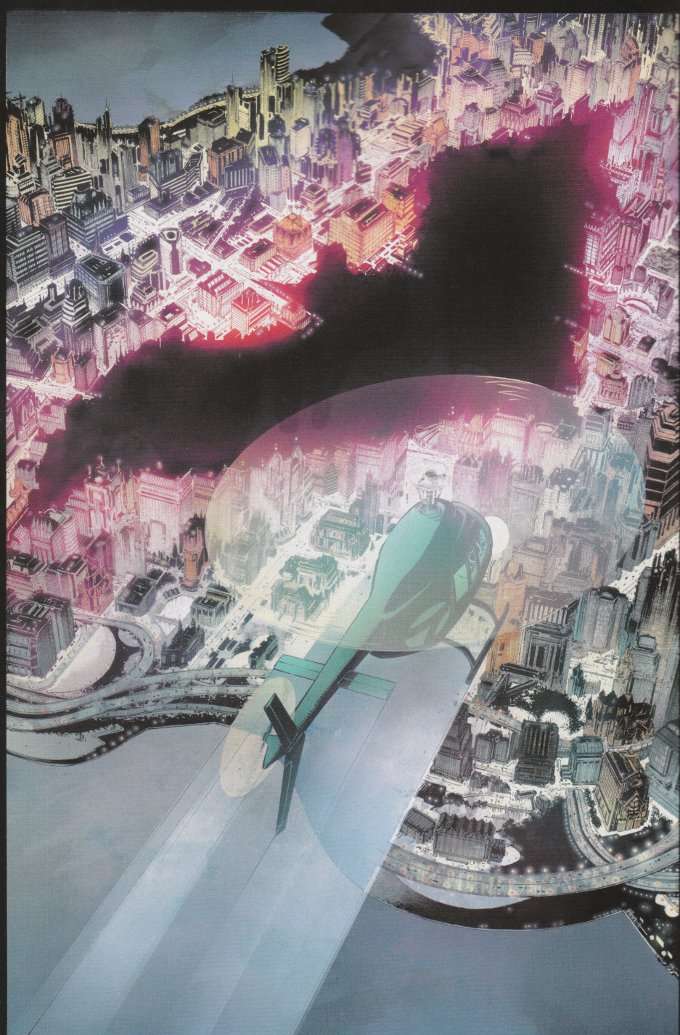 Sure, he knocked out power to a good portion of the city to do this... but it's still awesome!
Scott Snyder's plot and dialogue also borrow heavily from the Nolan films and herein lies the issue's one weakness - unoriginality. We've seen this same origin story for Batman and The Joker played out ad nauseam. We've heard The Joker - still in his guise as The Red Hood - give similar speeches about the futility of hope. The fact that the whole affair is well-written does nothing to change the fact that we've heard this story before.
Thankfully, Snyder does include enough original ideas to make the familiar scenes bearable for long-time Bat-fans. The best of these is the conceit of Bruce Wayne becoming as much a symbol of Hope in Gotham City as Batman. Snyder previously established the death of Thomas and Martha Wayne as the inspiration for The Red Hood's philosophy of nihilistic absurdism and Bruce Wayne speaking publicly of Gotham City as a place where people can be made better through adversity is as much a blow to The Red Hood's work and world view as anything Bruce Wayne had done before as a faceless vigilante.
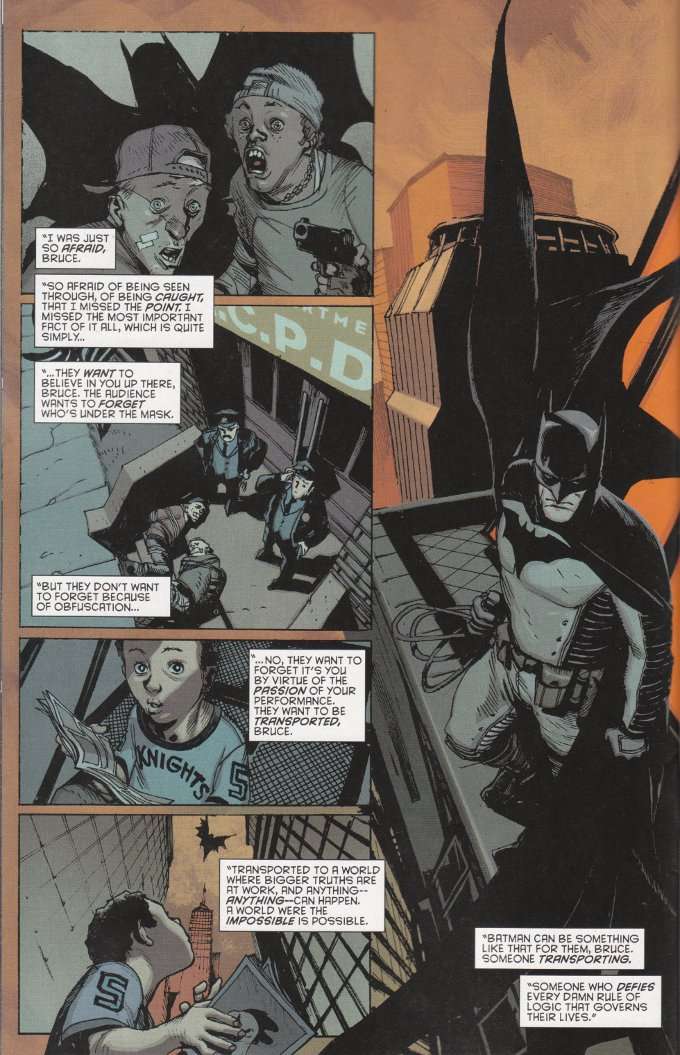
These ideals come full-circle in the back-up story by Snyder and James Tynion IV, with art by the equally awesome Rafael Albuquerque of American Vampire fame. The story does little more than set-up the next big story detailing Batman's first battle with The Riddler but it does feature a very good speech by Alfred. On the surface it's about the nature of masks and theater but really it's about fiction and the power of a good story. It works on both levels and it alone would make this comic a must-read, even if the rest of the issue weren't excellent as well.
This may be the first Hunter S. Thompson reference in a mainstream DC Comics book ever.
The issue's imagery borrows a lot from the Batman films of Christopher Nolan. The idea of Bruce Wayne marking his territory with his symbol is a reoccurring theme. It comes off somewhat better here than in the Nolan films, however, as Bruce has good reason to announce his presence beyond showy displays of force. There's also a greater element of fun, as Bruce creates a Bat-symbol out of squirming members of the Red Hood gang not only to announce his presence but also because it amuses him to do this behind the back of one minion and then whisper into the thug's ear "My bat... it still needs a head."
Sure, he knocked out power to a good portion of the city to do this... but it's still awesome!
Scott Snyder's plot and dialogue also borrow heavily from the Nolan films and herein lies the issue's one weakness - unoriginality. We've seen this same origin story for Batman and The Joker played out ad nauseam. We've heard The Joker - still in his guise as The Red Hood - give similar speeches about the futility of hope. The fact that the whole affair is well-written does nothing to change the fact that we've heard this story before.
Thankfully, Snyder does include enough original ideas to make the familiar scenes bearable for long-time Bat-fans. The best of these is the conceit of Bruce Wayne becoming as much a symbol of Hope in Gotham City as Batman. Snyder previously established the death of Thomas and Martha Wayne as the inspiration for The Red Hood's philosophy of nihilistic absurdism and Bruce Wayne speaking publicly of Gotham City as a place where people can be made better through adversity is as much a blow to The Red Hood's work and world view as anything Bruce Wayne had done before as a faceless vigilante.
These ideals come full-circle in the back-up story by Snyder and James Tynion IV, with art by the equally awesome Rafael Albuquerque of American Vampire fame. The story does little more than set-up the next big story detailing Batman's first battle with The Riddler but it does feature a very good speech by Alfred. On the surface it's about the nature of masks and theater but really it's about fiction and the power of a good story. It works on both levels and it alone would make this comic a must-read, even if the rest of the issue weren't excellent as well.
Saturday, August 24, 2013
Batman #23 - A Review
Batman: Zero Year continues to impress even as it renovates. Curiously, this series is doing less to define the past and character of Batman than it is to explore the history and motivations of his rogues' gallery. Then again, perhaps that isn't such a surprise given that Batman is defined as much by his enemies as he is by his history.
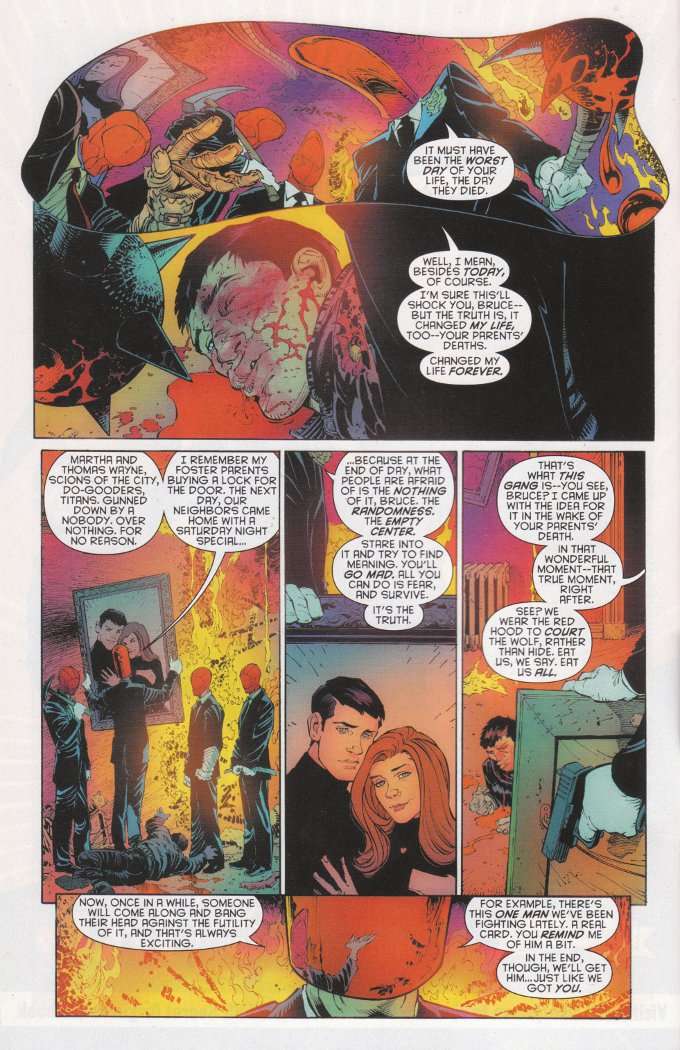
If there were any doubts that Scotty Snyder's new take on The Red Hood was intended to be The Joker before he became The Joker, they were eliminated with this issue as we learn the nihilistic philosophy behind The Red Hood's crimes. I'm uncertain how to feel about how Snyder has tied The Red Hood's origins, albeit indirectly, to the same incident that inspired Bruce Wayne's war on crime. I do, however, approve of Snyder's revamped Riddler, who begins his career as a consulting criminal ala Jim Moriarty in the BBC Sherlock series.
The back-up story by Snyder and James Tynion IV is brief but memorable. Another flashback tale of Bruce Wayne's travels around the world, this one finds Bruce Wayne learning the art of combat in what is meant to be a battle-to-the-death pit fight. "The Queen" who oversees the arena means to teach Wayne a lesson in how one must be ready to kill to be a warrior. Yet Wayne learns another lesson and teaches one of his own by issue's end.
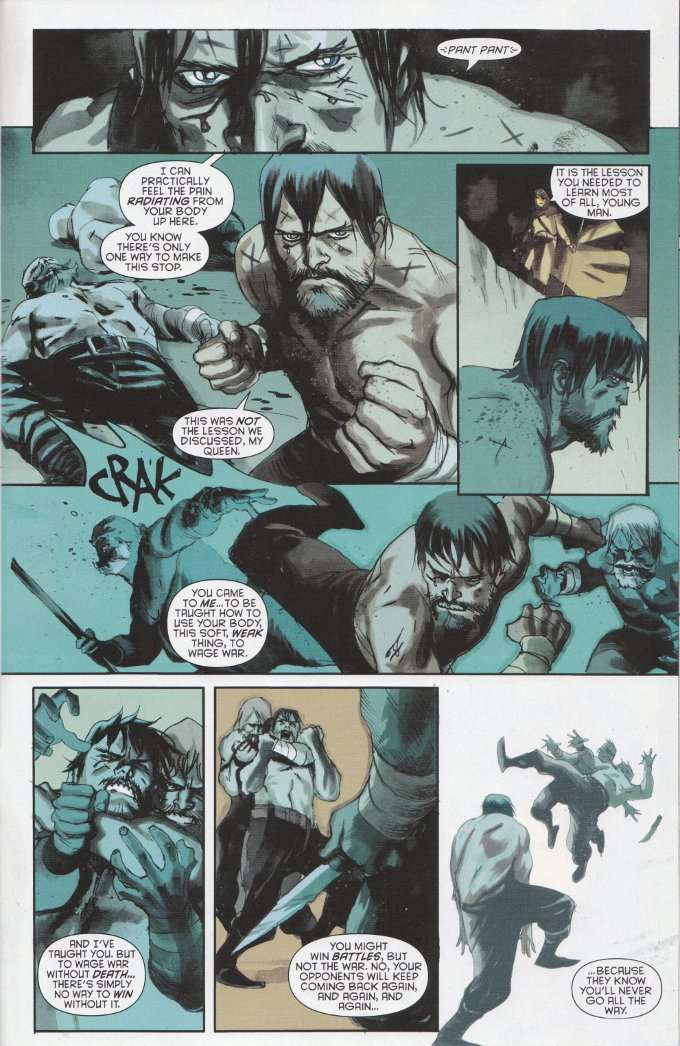
The artwork is amazing in both stories. Greg Capullo and Danny Miki give the greater part of the comic their usual stunning neo-Noir aesthetic. American Vampire artist Rafael Albuquerque goes even darker for his flashback tale, which almost looks like it was taken from a Conan The Barbarian comic. This book looks as well drawn as it is well-written and it should be required reading for all comics fans.
If there were any doubts that Scotty Snyder's new take on The Red Hood was intended to be The Joker before he became The Joker, they were eliminated with this issue as we learn the nihilistic philosophy behind The Red Hood's crimes. I'm uncertain how to feel about how Snyder has tied The Red Hood's origins, albeit indirectly, to the same incident that inspired Bruce Wayne's war on crime. I do, however, approve of Snyder's revamped Riddler, who begins his career as a consulting criminal ala Jim Moriarty in the BBC Sherlock series.
The back-up story by Snyder and James Tynion IV is brief but memorable. Another flashback tale of Bruce Wayne's travels around the world, this one finds Bruce Wayne learning the art of combat in what is meant to be a battle-to-the-death pit fight. "The Queen" who oversees the arena means to teach Wayne a lesson in how one must be ready to kill to be a warrior. Yet Wayne learns another lesson and teaches one of his own by issue's end.
The artwork is amazing in both stories. Greg Capullo and Danny Miki give the greater part of the comic their usual stunning neo-Noir aesthetic. American Vampire artist Rafael Albuquerque goes even darker for his flashback tale, which almost looks like it was taken from a Conan The Barbarian comic. This book looks as well drawn as it is well-written and it should be required reading for all comics fans.
Monday, July 15, 2013
Batman #22 - A Review
When I first heard about Batman: Year Zero, I must admit a part of me rolled my eyes. Aren't we all familiar enough with the origins of Batman by this point that we don't need to retell them anymore? What more can possibly be said?
Plenty, it turns out.
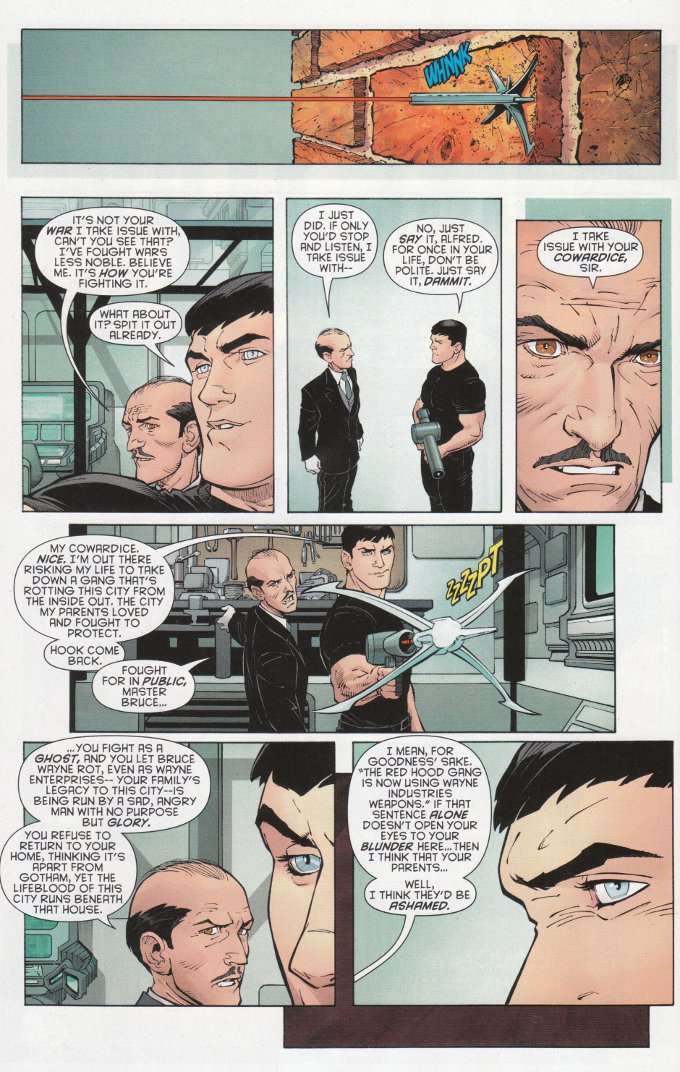
Scott Snyder avoids the usual traps by focusing not on Batman and the villains he fights but on Bruce Wayne before he even conceived of the idea of a Batman. The conflict here is not between Batman and the mysterious Red Hood gang - it is between who Bruce Wayne is becoming and who Bruce Wayne should be. This conflict is beautifully summarized by Alfred, who makes the point echoed by so many critics of the superhero genre - couldn't Bruce Wayne do more good with his fortune than through vigilante justice?
The stylized artwork by Greg Capullo and Danny Miki remains as strong as Snyder's scripts. Capullo has a unique sense of aesthetics and design, which is given free reign to play throughout the issue. Perhaps the best example of this is a sequence where an ancient Eygptian board game becomes the panels for a circular conversation between Bruce Wayne and a pre-Riddler Edward Nygma.

The back-up story, with art by American Vampire artist Rafael Albuquerque proves equally skilled and enjoyable. Co-written with collaborator James Tynion IV, Snyder tells another brief tale of a young Bruce Wayne's travels around the world. This time, the young Wayne is learning the fine arts of mechanical engineering with an ex-Soviet scientist who also teaches Bruce an important lesson on the value of creative thinking.
Plenty, it turns out.
Scott Snyder avoids the usual traps by focusing not on Batman and the villains he fights but on Bruce Wayne before he even conceived of the idea of a Batman. The conflict here is not between Batman and the mysterious Red Hood gang - it is between who Bruce Wayne is becoming and who Bruce Wayne should be. This conflict is beautifully summarized by Alfred, who makes the point echoed by so many critics of the superhero genre - couldn't Bruce Wayne do more good with his fortune than through vigilante justice?
The stylized artwork by Greg Capullo and Danny Miki remains as strong as Snyder's scripts. Capullo has a unique sense of aesthetics and design, which is given free reign to play throughout the issue. Perhaps the best example of this is a sequence where an ancient Eygptian board game becomes the panels for a circular conversation between Bruce Wayne and a pre-Riddler Edward Nygma.
The back-up story, with art by American Vampire artist Rafael Albuquerque proves equally skilled and enjoyable. Co-written with collaborator James Tynion IV, Snyder tells another brief tale of a young Bruce Wayne's travels around the world. This time, the young Wayne is learning the fine arts of mechanical engineering with an ex-Soviet scientist who also teaches Bruce an important lesson on the value of creative thinking.
Sunday, June 16, 2013
Batman #21 - A Review
There's no small irony that I should read this story on what is Father's Day in America because the scene in this first chapter of Batman: Zero Year that most surprised and delighted me involves fathers. It's a short flashback where we see a young Bruce Wayne with his father, as the elder Wayne works on a car and lectures Bruce about wandering off and exploring the city. Before this moment, I never really thought about how very little we see Bruce interact with his father in all the various retellings of Batman's origins and how this moment, more than any scene I can think of, shows the depth of love required to make Bruce choose to become Batman.
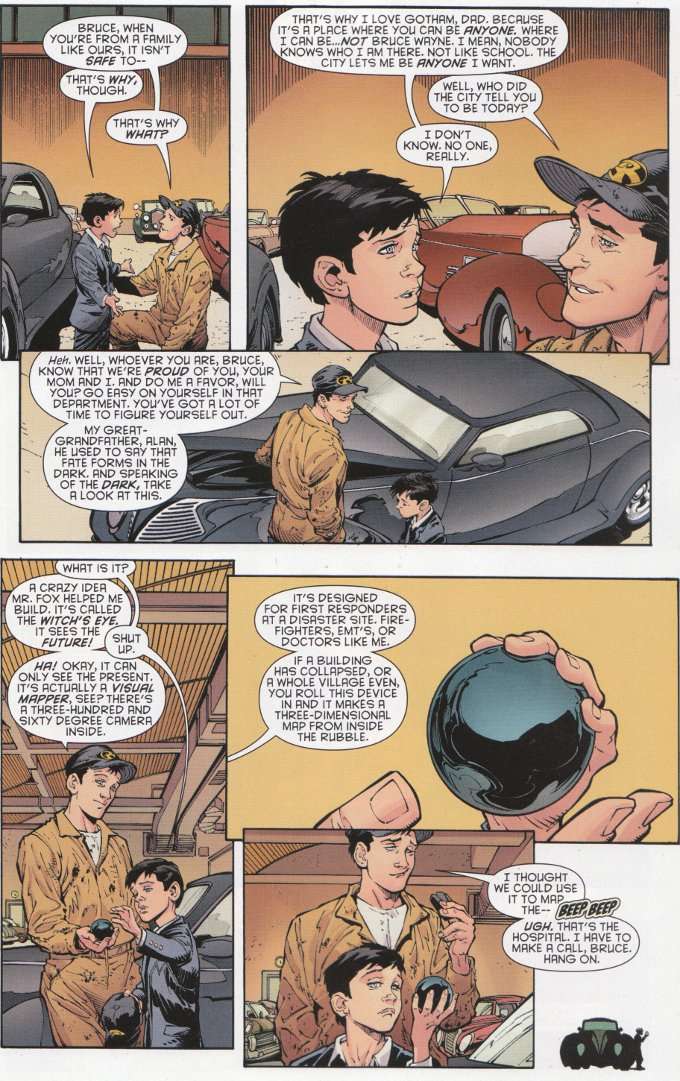
Of course there's far more action to Scott Snyder's story than that. There's a flash-forward depicting a Gotham besieged, Batman's first encounter with The Red Hood and an entirely different threat in the form of Bruce Wayne's treacherous uncle. All of this will be pleasing to Bat-Fans, of course, but the heart of the issue lies in the aforementioned flashback and the art team of Greg Capullo and Danny Miki do their usual stellar job in depicting it all.

The back-up story by Snyder and James Tynion IV proves equally enjoyable. This story tells another tale from Bruce Wayne's past as he wandered the world seeking out the teachers and trainers who would help shape The Bat. In this case, Bruce learns how to drive from a master thief in Rio. The action and excitement of this story, set entirely during a high-speed police chase, is perfectly depicted by American Vampire artist Rafael Albuquerque.
Of course there's far more action to Scott Snyder's story than that. There's a flash-forward depicting a Gotham besieged, Batman's first encounter with The Red Hood and an entirely different threat in the form of Bruce Wayne's treacherous uncle. All of this will be pleasing to Bat-Fans, of course, but the heart of the issue lies in the aforementioned flashback and the art team of Greg Capullo and Danny Miki do their usual stellar job in depicting it all.
The back-up story by Snyder and James Tynion IV proves equally enjoyable. This story tells another tale from Bruce Wayne's past as he wandered the world seeking out the teachers and trainers who would help shape The Bat. In this case, Bruce learns how to drive from a master thief in Rio. The action and excitement of this story, set entirely during a high-speed police chase, is perfectly depicted by American Vampire artist Rafael Albuquerque.
Saturday, May 11, 2013
American Vampire, Vol. 1 - A No Flying, No Tights Review
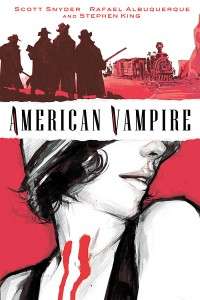
The introduction to this book informs us that Stephen King was so impressed by the idea behind American Vampire that when Scott Snyder approached him about writing a promotional blurb for the series King asked if he might write for the series instead. Reading this book, it is not hard to understand King’s enthusiasm. At a time when the vampire mythos has been played out and (pardon the pun) revamped into every conceivable genre, American Vampire offers a fresh new take on the classic formula.
The vampires of Snyder’s universe — and there are, as we eventually discover, many different varieties of vampire — are not nice people. Many of them don’t even qualify as people by the most liberal standard of what constitutes humanity. There are no brooding Byronic figures, pining away for a lost love of centuries past. There are no tormented ex-soldiers seeking redemption by using their dark powers to protect humanity from their own kind. And there are certainly no sparkly-skinned immortal teenagers seeking a perfect little swan to help them tame the beast within. These vampires are undoubtedly monsters and most of them are bastards.
Skinner Sweet is a bastard, too, and was something of a monster even before he became a vampire back in 1880. A bandit by trade, Sweet is on his way to stand trial when he is fed upon by the vampire railroad tycoon whose trains and banks he’d robbed. Left for dead, Sweet awakes days later with a powerful hunger for something besides his ever-present peppermint stick — revenge! And blood, too, of course. Sweet’s victims quickly realize he’s come back as something beyond human, beyond vampire: a new breed of American vampire, immune to the touch of sunlight or wooden stakes.
It is this tale of Skinner Sweet’s fall and rise that Stephen King spins across five chapters of this volume. These chapters alternate with Scott Snyder’s story, which is set in Hollywood, California, in 1925. It is here that Sweet creates his first “child,” Pearl Jones. Pearl is an aspiring actress who runs afoul of the very Old Boy network that runs Hollywood, literally chewing up and spitting out beautiful young women. Not that Sweet really cares, save that the vampire studio moguls on are on his hit-list and another one like him could only help make things in town more chaotic, just the way Sweet likes it.
Rafael Albuquerque illustrates both stories with a vitality to match the scripts by both King and Snyder. Forgive me another pun when I say that Albuquerque’s artwork has real bite. Describing it as visceral, while accurate, may not be much better. Regardless, this graphic novel looks as good as it reads.
In case this being a Vertigo title, and Stephen King being one of the two authors, isn’t a big enough warning sign, let me state this clearly: “This Book Is Suggested For Mature Readers” for a reason. There’s a lot of ultra-violence, bad language, uncovered naughty bits, and a fair bit of disturbing imagery, such as our first look at Pearl Jones as she wakes up in a charnel pit. Keep this book firmly in your adult fiction section.
American Vampire, vol. 1
by Stephen King, Scott Snyder
Art by Rafael Albuquerque
ISBN: 9781401229740
Vertigo Comics, 2011
Publisher Age Rating: Suggested For Mature Readers (18+)
Sunday, June 17, 2012
Batman #10 - A Review
In my review of the Batman Annual, I said that while Scott Snyder's writing is technically proficient I still did not enjoy the story that he told. I find myself in a similar state of mind regarding Batman #10. As before, it will be all but impossible for me to discuss this issue and my problems with it without a heaping helping of spoilers. So if you haven't read the issue yet, know this - Batman is, as it was before, well-illustrated and well-told even if I find the latest plot-twist to be somewhat repetitive in the wake of other recent events. It is worth reading, if only to form your own opinions on a story that is already sparking some intense conversations.
Now, if you fear no spoilers, read on.

Can we all please agree on a ten-year ban on any more stories involving a lost friend or family member of Bruce Wayne, who is part of some secret society or conspiracy, coming out of the woodwork to make Batman's life a living hell? It was done with Bruce Wayne's childhood best-friend Tommy Elliot in Hush. It was done more recently with a character who may or may not have been a not-quite-dead Thomas Wayne in Grant Morrison's Batman run. And now, in what turns out to have been a nod to both Grant Morrison's Earth 2 and an old World's Finest storyline, we find that the leader of the Court of Owls is Bruce Wayne's long-lost brother Thomas Wayne Jr.
I'll spare you the details save to say that this revelation is something of a shock and the pages leading up to it are well-paced and thrilling. But the idea that this new "Owl Man" is a long-lost Wayne brother smacks of the worst kind of melodrama, even if there is a precedent for it. At this rate, I wouldn't be shocked if it was revealed that Alfred hired actors to play the part of super-villains in order to keep his young master away from real, dangerous criminals and that Alfred himself was The Joker. Don't laugh - Neil Gaiman put forth that idea in "Whatever Happened To The Caped Crusader?" and it has just as much pedigree as World's Finest #223. Besides, the back-up story - involving a tale of Alfred's father's time as the Wayne Family butler - has hinted at some dark secret that Alfred has been hiding from Bruce for years involving The Court of Owls and his own mother's conflict with them.

Now, if you fear no spoilers, read on.
Can we all please agree on a ten-year ban on any more stories involving a lost friend or family member of Bruce Wayne, who is part of some secret society or conspiracy, coming out of the woodwork to make Batman's life a living hell? It was done with Bruce Wayne's childhood best-friend Tommy Elliot in Hush. It was done more recently with a character who may or may not have been a not-quite-dead Thomas Wayne in Grant Morrison's Batman run. And now, in what turns out to have been a nod to both Grant Morrison's Earth 2 and an old World's Finest storyline, we find that the leader of the Court of Owls is Bruce Wayne's long-lost brother Thomas Wayne Jr.
I'll spare you the details save to say that this revelation is something of a shock and the pages leading up to it are well-paced and thrilling. But the idea that this new "Owl Man" is a long-lost Wayne brother smacks of the worst kind of melodrama, even if there is a precedent for it. At this rate, I wouldn't be shocked if it was revealed that Alfred hired actors to play the part of super-villains in order to keep his young master away from real, dangerous criminals and that Alfred himself was The Joker. Don't laugh - Neil Gaiman put forth that idea in "Whatever Happened To The Caped Crusader?" and it has just as much pedigree as World's Finest #223. Besides, the back-up story - involving a tale of Alfred's father's time as the Wayne Family butler - has hinted at some dark secret that Alfred has been hiding from Bruce for years involving The Court of Owls and his own mother's conflict with them.
Is this issue worth reading? Absolutely. While I detest this "twist", I must admit that the writing around it is well-crafted. And the artwork is - as always - some of the best we've seen on any Bat-book in years. Greg Capullo was born to drawn Batman and the back-up story artwork by Rafael Albuquerque employs the right sort of grotesque distortion. Whatever else I may say about this book, it is not dull and it is not bad.
Sunday, May 20, 2012
Batman #9 - A Review
When it comes to the most recent issue of Batman, I could be repetitive. I could reword what I said in previous reviews about Scott Snyder's masterful conceit of the Court of Owls - a secret society with assassins called Talons, who have been secretly ruling Gotham City for years. I could wax philosophical yet again regarding the Gothic majesty of Greg Capullo's pencils backed by Jonathan Glapion's inks. I could do all that, but I think - on the off chance you still aren't reading this book despite my earlier recommendations - it would be more effective for me to show you this one page.

The dinosaur we usually see depicted as a trophy in the Bat Cave? It's a functional part of the defenses.
Funny, yes. But more than that, it speaks to the idea that when you get right down to it, Bruce Wayne is still an angry eight-year-old boy at heart. Because what would an angry eight-year-old boy use to rain terror and vengeance upon his enemies? Why, a dinosaur robot, of course!
The main part of the issue showcases this epic battle as both Batman and Alfred defend the Bat Cave from a hostile army of invading Talons. It is as grand an action sequence as you could hope to find in any big-screen blockbuster. The back-up story is an interesting little number, which promises big changes for the status quo of the Batman universe as we go back in time to Alfred's father, Jarvis Pennyworth, and discover a dark secret that binds both the Waynes and Pennyworths together.

I've said it before and I will say it again. This is the best Batman comic I've seen in years and it should be required reading for all fans of the genre.
The dinosaur we usually see depicted as a trophy in the Bat Cave? It's a functional part of the defenses.
Funny, yes. But more than that, it speaks to the idea that when you get right down to it, Bruce Wayne is still an angry eight-year-old boy at heart. Because what would an angry eight-year-old boy use to rain terror and vengeance upon his enemies? Why, a dinosaur robot, of course!
The main part of the issue showcases this epic battle as both Batman and Alfred defend the Bat Cave from a hostile army of invading Talons. It is as grand an action sequence as you could hope to find in any big-screen blockbuster. The back-up story is an interesting little number, which promises big changes for the status quo of the Batman universe as we go back in time to Alfred's father, Jarvis Pennyworth, and discover a dark secret that binds both the Waynes and Pennyworths together.
I've said it before and I will say it again. This is the best Batman comic I've seen in years and it should be required reading for all fans of the genre.
Subscribe to:
Posts (Atom)