Showing posts with label Brent Anderson. Show all posts

Wednesday, July 10, 2013

Astro City #2 (2013 volume)

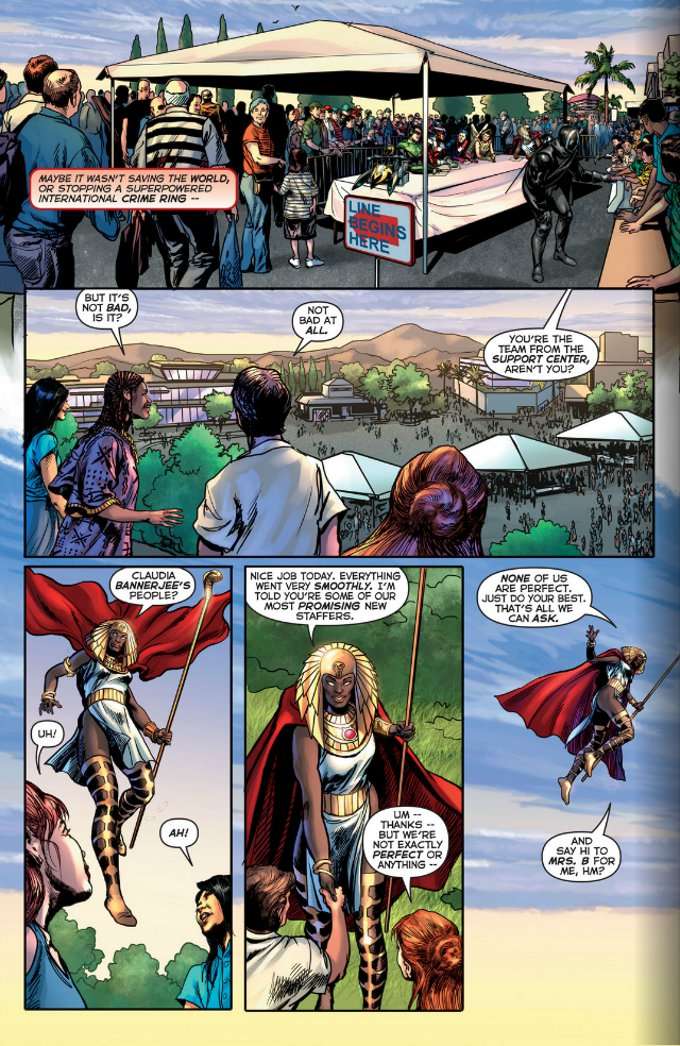
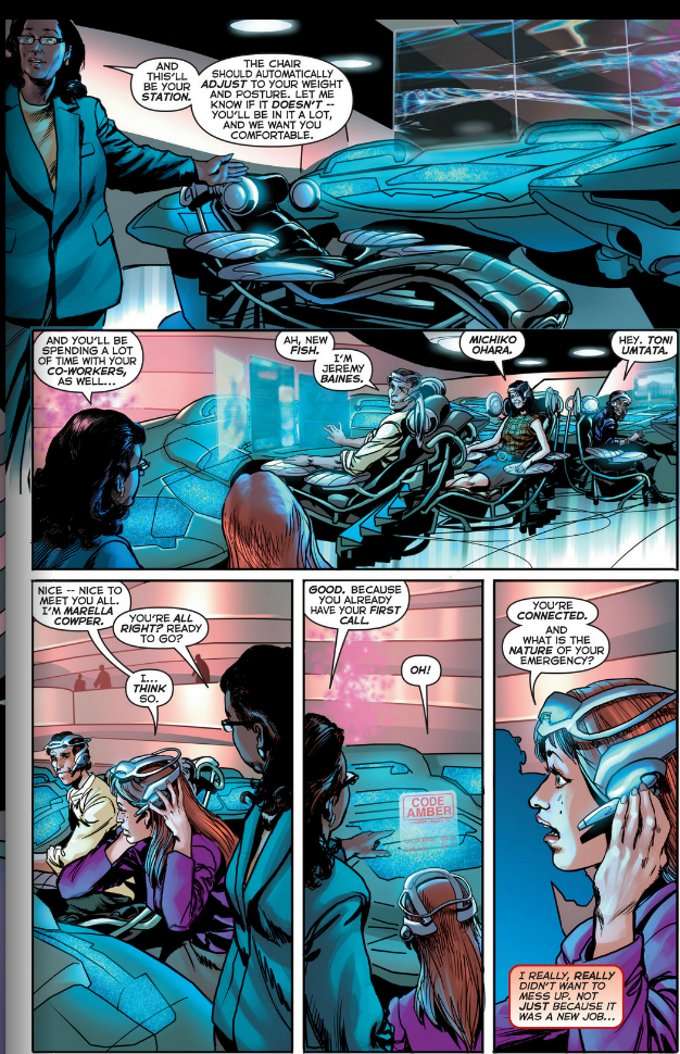
Fans of Damage Control would do well to check out this month's issue of Astro City.  As Dwayne McDuffie answered the oft asked question "How DO they repair all the damage to the buildings after super-villain attacks so quickly?", Kurt Busiek answers the question of how one would go about contacting a superhero in your time of need.  After all, the Superfriends' Trouble Alert can only handle so much and it's not like Batman has a Bat-Site where he'll take on work as a consulting detective for any case that interests him. 


Enter Marella Comper - the latest hire for the call-center of the superhero team The Honor Guard.  When super-villains are trashing your neighborhood or you think you've contracted Venusian Bird Plague, who are you going to call?  Well, yes - The Honor Guard.  But who is it that handles the call and decides if they need to call in the cavalry, the cops or the CDC?  Marella or one of her co-workers - that's who!  This issue follows Marella as she learns the ropes and comes to value the small but important role she has in helping the world's greatest heroes do their jobs.


I'm kicking myself for not having found this series sooner.  The scripts are well-written.  The interior art and covers are amazing.  I have no excuse for having waited as long as I did to give this series a shot.  If you haven't visited Astro City yet, do so immediately.  You'll be glad you did. 

Wednesday, June 5, 2013

Astro City #1 (2013 volume)

I have a confession, dear readers.  I may well have to hand in my geek card and leave Internet Comic Critics Local 401 in shame once this review is over.  But I am nothing if not honest and honesty demands that I come clean upon this matter.

...

Until today, I've never read a single issue of Astro City.

I know!  I know!  I have no good reason for this, save the same reasons everyone has (money is tight, time is limited, etc.) for never reading a classic.  And make no mistake - Astro City is a classic.  While I've never read the series, I'm broadly familiar with it, the themes behind it and a few of the major characters. 

When it first premiered in 1995, Astro City was a beacon in the midst of The Dark Age of Comics.  It was one of the first Modern Age comic books, which mixed the sophisticated storytelling techniques that became more commonplace during The Dark Age with the trappings and optimism of The Silver Age.  It was a love letter to everything about superheroes and comic books that inspires hope and makes us feel like kids again.    


Kurt Busiek speaks to new and old readers alike in his afterword on the title page of this issue.  He apologizes to long-time fans for the delays in bringing this volume about and explains to the newbies how, despite this issue having a big #1 on the cover, there's 59 issues of Astro City before this.  He then assures the new readers that every effort has been made to make this new series accessible to them.

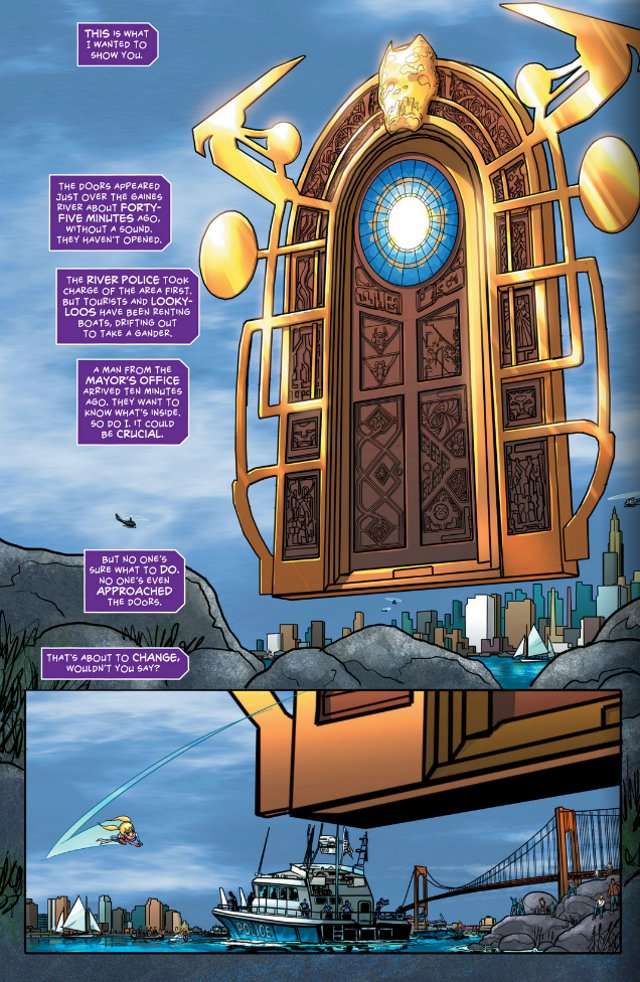
For the most part, this first issue is successful in that goal  We do have a lot of characters thrown at us that a new reader won't recognize but it's not important toward the overall plot.  And what is the plot you ask?  Classic comic book craziness, as a mysterious set of doors appears in the harbor over Astro City's port and proves resistant to all the local superheroes' efforts to open it. 

All of this is watched over by a figure who calls himself The Broken Man, who informs the reader that they are now working for him and goes on to describe his efforts to stay off the radar of an unseen menace called Oubor.  The Broken Man then bids us turn our attention away from the heroes towards a common man named Bill Pullam, who may have a greater part to play in the story to come if we all just think hard enough...
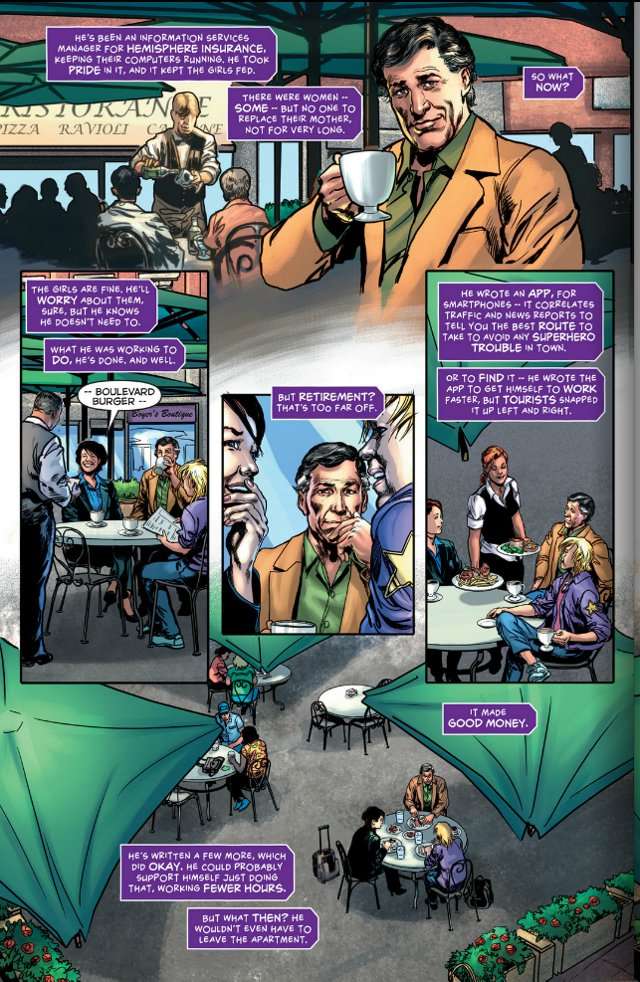

While I'm new to Astro City, I'm well familiar with Kurt Busiek's writing and the grand master is still in fine form.  I know enough to know that this series is less about superheroes and more about people - the people behind masks and the people they save - and this issue is indicative of that theme, with more attention being paid to one ordinary man than to the more colorful characters behind him.  The overall effect is one that will leave new readers wanting to track down the older Astro City stories so they'll know who the heroes in the background are rather than feeling annoyed that we get no explanation or introduction to them here.

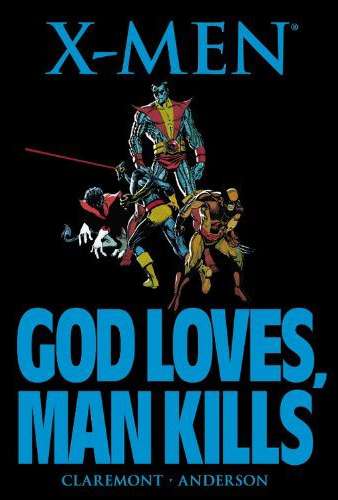
Artist Brent Anderson matches Kurt Busiek for quality and creativity.  Best known for his work on the classic X-Men story God Loves, Man Kills, Anderson is a great artist in his own right and - it turns out - no mean mimic of other artistic styles.  My favorite moment of the issue involves a bit that I shan't reveal here but it simultaneously manages to be both a hilarious parody of/glorious tribute to the works of Jack Kirby.

Bottom Line: This is a great read and a wonderful introduction to Astro City.  I'm kicking myself for not having visited it sooner and encourage you all to avoid my mistake. On that note, Comixology currently has the very first Astro City story free for download and a lot of the other issues for sale at $1.99 each.  I know I'll be downloading as much of the series as I can come pay-day and I'm sure I won't be alone!

Sunday, September 9, 2012

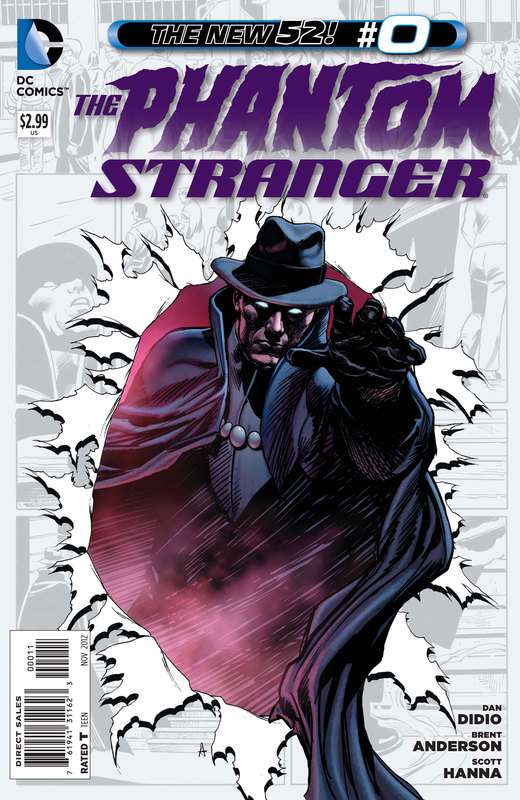
Phantom Stranger #0 - A Review


The Phantom Stranger exists purely as an enigma. By definition, he is undefined. He possesses great magical powers but no one knows the source of his power or his limits. No one calls him friend or knows of his origins or ultimate goals. He is forever cursed to be... a stranger.

The central appeal of The Phantom Stranger lies in this concept. By being nothing specific, he can be everything and anything a writer needs him to be. Need a prophetic warning delivered but don't want the all-knowing wizard solving all your problems? Bring out The Phantom Stranger, who is allowed to share knowledge but frequently forbidden to help directly. Want a straight-man for the hero questioning his resolve o to speak to? The Phantom Stranger's your man. Find yourself needing a magical cavalry to show up and tip the balance of battle at the last minute? The Phantom Stranger will be there.

At least, that is how it was before Phantom Stranger #0...


To sustain interest, a protagonist must hook either our sympathy o r our interest. The Phantom Stranger depends upon an aura of mystery to work as a character. The mystery of who he is was and what he might do at any time inspires interest. With this issue, Dan Didio gives definition and a full back-story to a character that never had any. And The Phantom Stranger suffers greatly for it.

By taking away that mystery, Dan Didio has taken away the very core of the character. This might have worked to the character's favor had Didio found a way to establish sympathy for The Phantom Stranger and reforged him into a character people could relate to. It would be completely missing the point of his being as much a stranger to the reader as the other characters in the DCU but it would, at least, be something. It is hard, however, to imagine many readers being able to sympathize with The Phantom Stranger when his background now says , n no uncertain terms, that he is the most infamous traitor in the whole of Western literature.


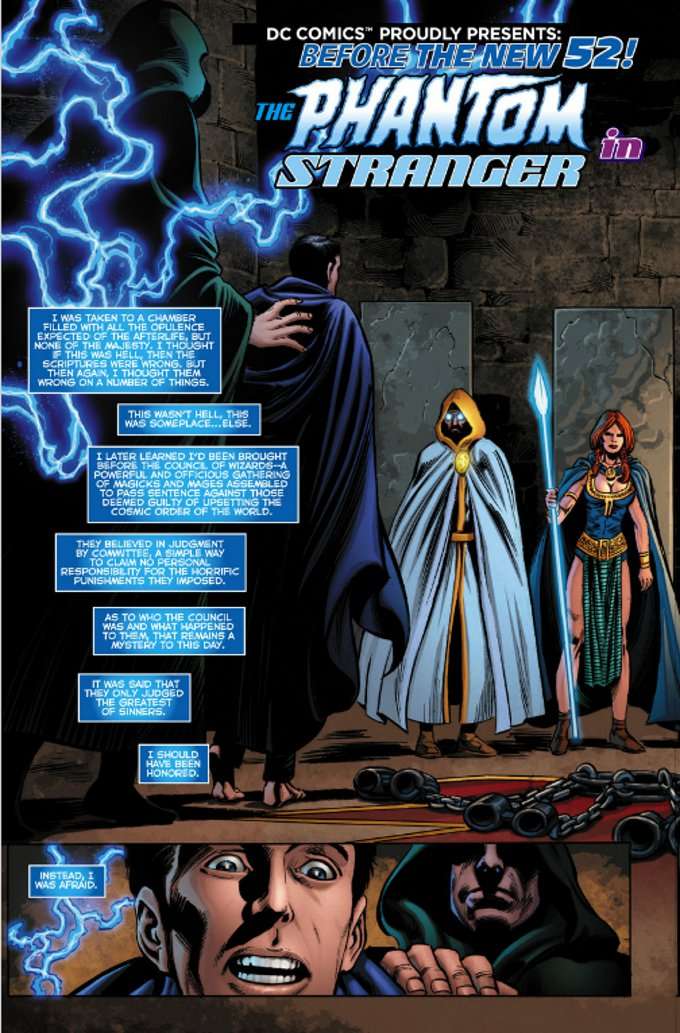
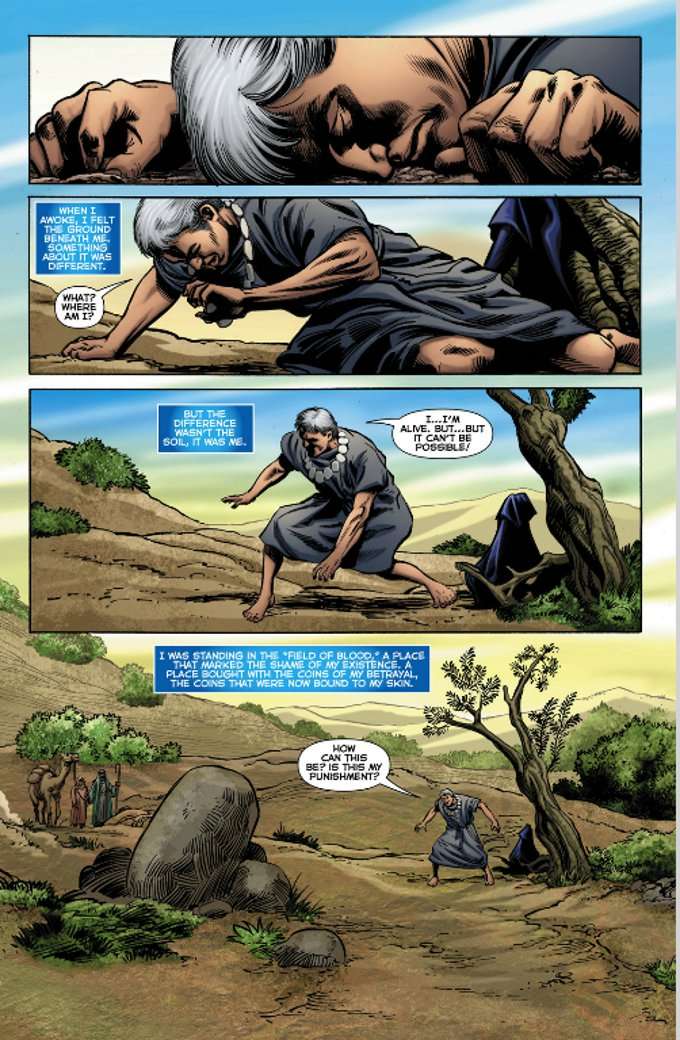
Yes, you read that right. The Phantom Stranger now wears a necklace of silver coins along with his famous blue cloak - the price he was paid for betraying his best friend. The name is never said but between that hint and the fact that The Phantom Stranger hung himself in shame for his betrayal of his best friend, it is safe to say that he was originally Judas Iscariot.

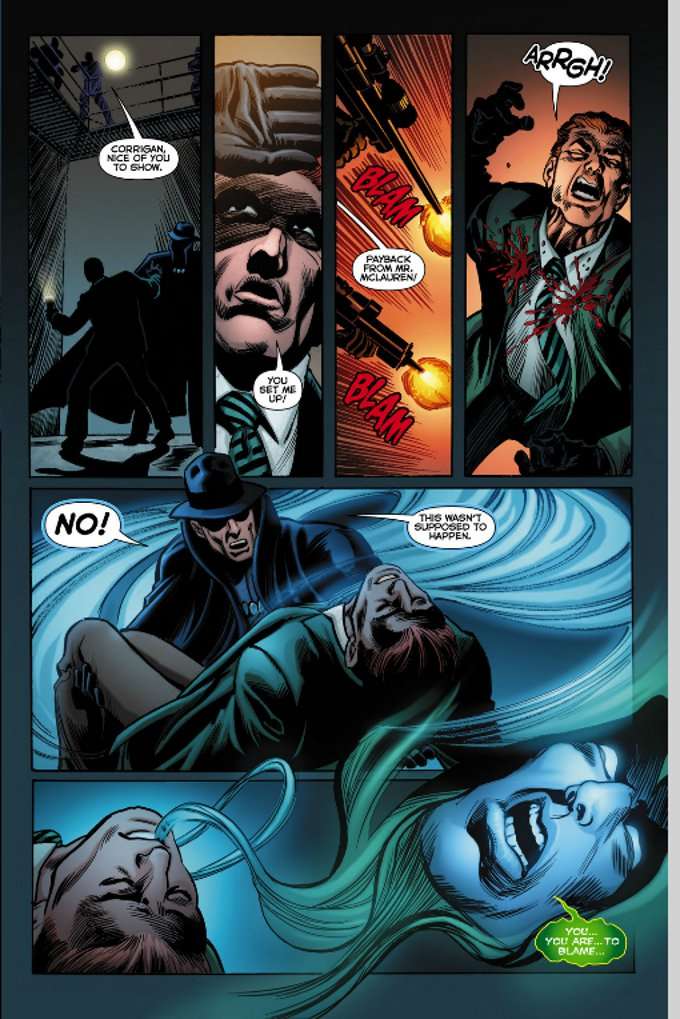
To say that this is theologically uncomfortable is an understatement. And all of this is before the main plot, where The Phantom Stranger - under direction from a voice that could be either a higher being or the council of wizards that judged him - is instructed to lure a cop named Jim Corrigan into a trap. Why? To bring about the birth to an angel of vengeance... a.k.a. The Spectre. And it is at this point, we move past the theologically uncomfortable and into outright blasphemy.


Why? Why is Judas being judged by a council of magicians rather than God himself? If you're going to imply The Phantom Stranger is Judas, why chicken out on him receiving orders from God himself? Why is the New Testament God creating an Old Testament angel of vengeance? Why is God actively encouraging one man's Wrath by empowering him while condemning another man for his Greed? And who is going to care enough about these questions to read another issue of this dreck? Not me, folks. Not even morbid curiosity can drive me to look at this train wreck again. Still, I must complement Brent Anderson and Scott Hanna. They make this stinker of a story look far better than it has any right to.

Phantom Stranger #0 is perhaps the closest thing I have ever seen to a perfect failure. From base concept to final execution, no portion of this book manages to be satisfying. This book succeeds only as a symbol of everything that is wrong with DC Comics in the New 52 era. You know there's something wrong seriously with a universe where Roy Harper does not have a clear background but The Phantom Stranger does.

Tuesday, August 14, 2012

X-Men: God Loves, Man Kills - A No Flying, No Tights Review

SOURCE: X-Men: God Loves, Man Kills


Since the death of his wife and infant son, soldier turned preacher William Stryker has been convinced that mutants – those rare human beings naturally born with unusual powers – are the secret servants of Satan. Secretly financing a vigilante army known as The Purifiers, Reverend Stryker intends to cleanse the Earth of the mutant menace once and for all.

With no small sense of irony, Reverend Stryker means to do this through the kidnapping of prominent mutant-rights activist Professor Charles Xavier. Why? Because through his secretive government contacts Stryker has learned that Professor Xavier is secretly a powerful mutant telepath as well as the leader of the superhero team known as The X-Men. With the finest technology money can buy and a bit of old-fashioned brainwashing, it is Stryker’s intent to turn Professor Xavier upon the people he wishes to protect, transforming Charles Xavier’s telepathic mind into a weapon of mass destruction.

Now, with their mentor and field commanders captured, it will fall to the few remaining X-Men to do the unthinkable. To save their mentor and the lives of millions, they must form an alliance with their greatest enemy. He is the most powerful mutant on Earth and an unashamed terrorist. He is the Master of Magnetism, Magneto!

Despite being published 30 years ago this summer, the message of this graphic novel is as strong and as relevant today as when it was first published. While the X-Men have always been used, directly and allegorically, as a metaphor for real-life civil rights issues, God Loves, Man Kills was one of the first graphic novels to deal with the issues of religious extremism in America and the dangers posed by those who use religion to justify acts of violence. Writer Chris Claremont has tackled this theme repeatedly in his X-Men stories, but for what this reviewer’s money is worth, Claremont never tackled it with quite so much panache as he did in this story.

Truly, there have been few scenes in comics as powerful as the moment when Reverend Stryker points to the demonic-looking Nightcrawler and asks how anyone can dare call “that thing” human. The usually soft-spoken Kitty Pryde is the one who speaks up in defense of her friend, citing Nightcrawler’s noble heart and good humor as reason enough to believe that Stryker’s dogma is wrong. What makes the scene all the more powerful is that Claremont does not play up the religious element, with Kitty Pride’s Jewish beliefs going unmentioned along with Nightcrawler’s devout Catholicism. That is not the point of this story, which is about the good people do in spite of their faith and the evil others do in the name of theirs.

The artwork by Brent Anderson is finely detailed, being more heavily inked than many Marvel Comics of the time period. The heavy shading, coupled with the darker palette used by colorist Steve Oliff, gives this story a moody feeling. This is fitting, given the more mature subject matter.

God Loves, Man Kills is proof positive that one can tell a serious, relevant story with superheroes. More, it is a must-have for any Young Adult graphic novel collection.

X-Men: God Loves, Man Kills
by Chris Claremont
Art by Brent Anderson
ISBN: 9780785157267
Marvel Comics, 2011
Publisher Age Rating: T (13 & Up)